
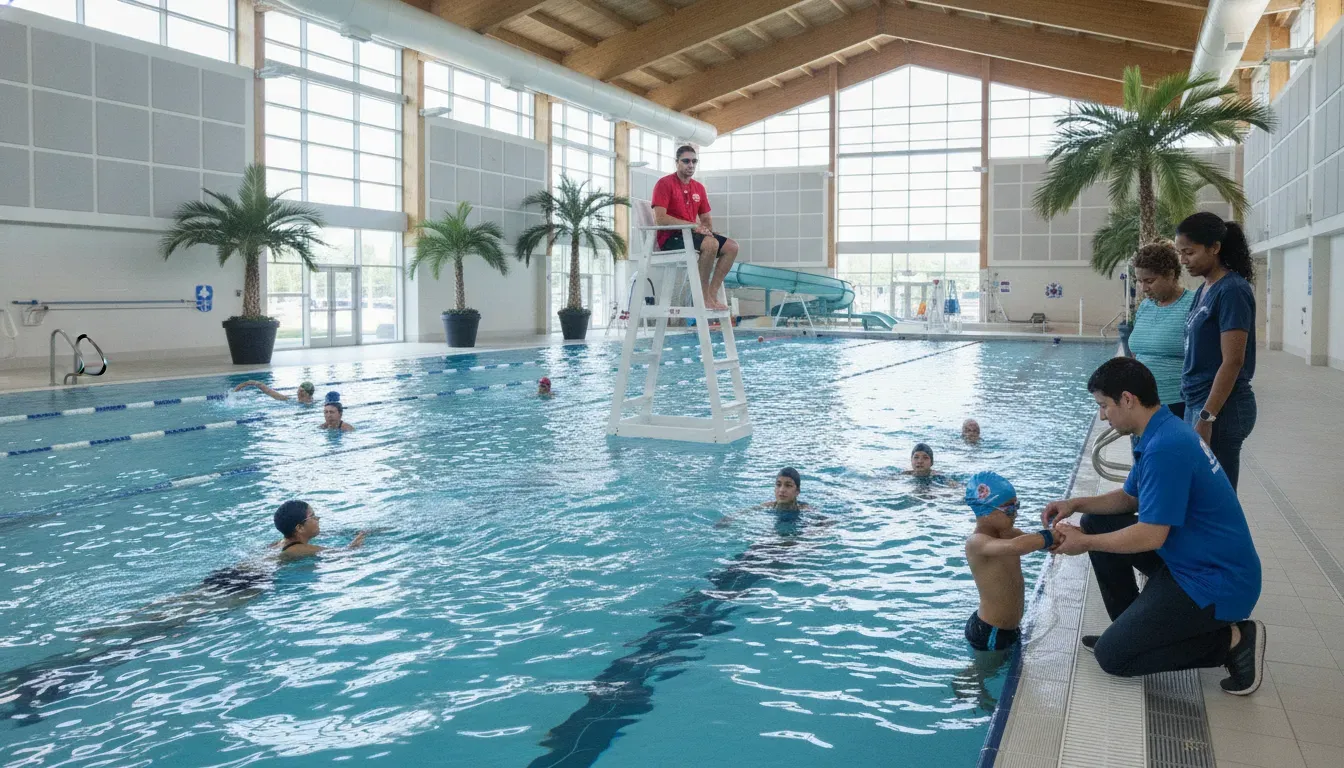
When facility leaders search for drowning-detection technology, they may encounter camera systems, wearable sensors, alert software, and claims about artificial intelligence. These categories overlap in conversation, but they do not perform the same job. Understanding the difference helps aquatics directors evaluate technology based on coverage, workflow, and how quickly staff can verify a concern.
An artificial intelligence lifeguard is best understood as technology that may analyze visual or sensor data to identify a possible aquatic emergency and alert staff. It is not an autonomous lifeguard. Cameras and algorithms sense conditions, alert systems route information, and trained lifeguards make decisions and respond within a supervised safety plan.
A system's sensing method shapes what it can observe and where it can operate. It also shapes how alerts reach the people responsible for action. The first step is defining this phrase in practical aquatic safety.
What does artificial intelligence lifeguard mean in aquatic safety?
Artificial intelligence lifeguard is a broad phrase for technology that uses artificial intelligence, machine learning, or related sensing. It identifies signs of possible swimmer distress and notifies people who can respond. In practice, the phrase most often describes camera-based computer vision. Drowning-detection technology can also use sensors and wireless communication. A facility should ask what the system senses, what event it recognizes, and how the alert reaches a trained staff member.
A 2024 review of drowning-detection research separates image-processing methods from sensor-based methods, while also examining the role of AI, machine-learning algorithms, and robotics. Image-processing systems analyze visual information from cameras. Sensor-based systems collect information about a swimmer's condition and send it to a processing unit through wired or wireless communication. Those are different technical approaches, even when both are described casually as an artificial intelligence lifeguard.
The distinction matters when evaluating a system for a supervised aquatic facility. The same review describes image-processing approaches as resource-intensive and complex to implement, while characterizing sensor-based approaches as practical, cost-effective, and widely applicable. Selection should account for cost, complexity, and practicality rather than relying on the label alone. You can review how drowning-detection technology works for a broader look at these sensing models.
Most importantly, an artificial intelligence lifeguard is not an autonomous lifeguard. Detection technology can identify a possible event and support faster awareness. Staff must interpret the alert, locate the swimmer, and follow the facility's emergency response plan. The Centers for Disease Control and Prevention notes that drowning can happen quickly and is often silent. Clear alert routing is valuable, but it does not remove active supervision or human judgment. WAVE describes its technology as an added layer of support for lifeguards, not a replacement. Its broader AI lifeguard technology guide provides additional context without treating every detection system as computer vision.
Artificial intelligence lifeguard usually means AI-enabled technology that detects possible distress and alerts aquatic staff. It describes a support function, not a replacement for lifeguards, supervision, or emergency response judgment.
How do AI lifeguard systems detect possible distress?
Camera-based systems begin by observing the water through fixed or overhead views rather than relying on a swimmer to wear a device. Computer-vision software analyzes images for patterns associated with possible distress, such as unusual posture, limited movement, or a person remaining underwater. A model then classifies the event against programmed thresholds and sends an alert to the people responsible for monitoring the facility.
The workflow can sound simple, but the technology operates in a demanding environment. A 2024 review identifies image processing, machine learning, and related artificial intelligence methods as active areas in drowning detection research. It also notes that image-processing approaches can require substantial resources and sophisticated machine-learning algorithms. That can make implementation complex. The research review on drowning-detection technology provides useful context for evaluating those systems.
Detection quality depends on what the camera can actually see. Underwater cameras may have blind spots. Overhead views can be affected by refraction, glare, and water quality. Pool layout, mounting position, lighting, network capacity, and camera coverage also shape practical reach. Some installations may require significant infrastructure, specialized housings, or restricted operating zones. These are design considerations, not universal defects. Facility leaders should ask how a specific system performs in their water, sightlines, and operating conditions.
When software identifies a possible event, the next step is alert routing. Notifications may appear in a monitoring interface or reach staff through audio, visual, or mobile channels. The alert is an attention cue, not a final diagnosis. A lifeguard or trained staff member must verify the situation, assess the swimmer, and follow the emergency plan. False alerts can occur when normal activity resembles a risk pattern. A camera may also miss an event outside its view.
For that reason, an AI lifeguard system should be evaluated as an additional observation and alert layer within active supervision. Compare its sensing range, installation requirements, alert workflow, and staff training needs with the facility's existing plan. For a broader explanation of sensing and alert models, read how drowning-detection technology works.
Camera-based AI lifeguard systems analyze visible water activity, flag patterns that may indicate distress, and route alerts to staff. Human lifeguards still verify the event and decide how to respond.
How is WAVE different from a camera-based AI lifeguard?
Camera-based systems and wearable systems observe aquatic activity in different ways. A camera-based artificial intelligence lifeguard typically analyzes visual information, while a wearable system uses device-level signals associated with a swimmer's submersion. Neither model removes the need for trained supervision, clear response procedures, and human judgment when an alert occurs.
A 2024 review describes sensor-based drowning detection as practical, cost-effective, and broadly applicable, with information transmitted to a processing unit through wired or wireless communication. That model is distinct from image-processing approaches that may require substantial resources and sophisticated machine-learning systems. The right choice depends on the facility's coverage needs, operating environment, infrastructure, and response workflow, not on whether one technology sounds more advanced.
WAVE uses AquaSense swimmer wearables to monitor underwater activity and communicate with the GUARDian system. When a wearable goes underwater, WAVE says the GUARDian Hub starts a timer and waits for the preset submersion window before escalating the event. This adjustable timing is intended to help distinguish ordinary underwater activity from a possible emergency. The system then routes an alert to vibrating lifeguard bracelets, while spoken-word notifications can tell other facility staff that assistance is needed.
That workflow does not require a camera to interpret posture, movement, visibility, or water-surface imagery. WAVE also states that its wearable-and-hub approach is designed for different water conditions and can be deployed without permanent installation. Those are WAVE's product claims, so facility leaders should validate coverage and performance in their own environment before implementation. The GUARDian Hub system connects swimmer wearables, lifeguard alert devices, and staff notifications into one response layer.
The practical distinction is sensing and alert routing. Camera-based systems may identify visual patterns across an area, while WAVE provides a direct signal from participating wearables and sends that signal to staff. In both cases, an alert is a prompt for lifeguards and facility personnel to assess the situation and respond. WAVE is a lifeguard-support technology, not an autonomous lifeguard or a substitute for supervision.
Camera-based AI analyzes visual information, while WAVE uses wireless swimmer wearables and GUARDian alerts to support lifeguards with submersion notifications. The two approaches should be evaluated by coverage, water conditions, deployment requirements, and staff response workflow.
| Evaluation area | Camera-based AI | WAVE wearable approach |
|---|---|---|
| Primary signal | Visual information from cameras | Submersion and water-entry signals from wearables |
| Coverage question | Which views, zones, and water conditions can cameras observe? | Which swimmers and staff members will wear devices? |
| Alert path | Software routes a possible visual event to staff | GUARDian Hub routes wearable events to bracelets and facility alerts |
| Human role | Staff verify the situation and lead the response | |
What happens after a detection or submersion alert?
An alert is the start of a response workflow, not the response itself. The system first identifies a signal, applies the configured timing or event rules, and routes information to the people responsible for the water. Lifeguards and facility staff then verify what is happening, communicate as needed, and apply their training and judgment.
For WAVE, the sequence begins when an AquaSense swimmer wearable remains underwater long enough to reach the preset window. The GUARDian Hub (w3000) can then activate the alert path, helping direct attention without asking staff to watch a separate screen continuously. The GUARDian Hub system connects the wearable, hub, staff alerts, and response workflow.
After a submersion or water-entry event reaches its configured threshold, WAVE routes alerts to staff so they can verify the situation and respond according to facility procedures.
From the signal to the staff alert
The adjustable timer is important because brief underwater activity does not automatically mean an emergency. When the preset window is exceeded, vibrating bracelets can alert lifeguards directly. Spoken-word announcements, sirens, or visual indicators can also communicate that an event is underway and request assistance from other facility staff. This layered approach helps put the information where people are working, rather than relying on one alert channel.
Lifeguard tags support a related workflow. When a tagged lifeguard enters the water, the system can notify other staff that a rescue may be underway. That signal helps the team understand the changing situation and coordinate support while the entering lifeguard focuses on the swimmer.
Verification and response remain human responsibilities
Staff still need to locate the swimmer, assess the circumstances, and follow the facility's emergency action plan. A camp-pool study of WAVE reported that alerts were sometimes associated with risky underwater play or leaving the pool area. Staff found the system easy to learn. They also identified fit and comfort as implementation considerations. The study concluded that WAVE may supplement lifeguard monitoring, not replace it. Training should cover alert meanings, communication roles, false-alert handling, and rescue procedures. Explore lifeguard alert equipment as part of that operational planning.
Whether a facility evaluates an artificial intelligence lifeguard concept, camera monitoring, or wearable detection, technology can only support the decisions made by prepared people. Regular drills and clear escalation rules help turn an alert into coordinated action. Staff should also know who confirms the event, who maintains visual coverage, and who calls for additional help.
Detection technology can shorten the path from a possible underwater event to staff awareness, but trained people must verify the alert and lead the response.
What should facility leaders evaluate before choosing a system?
A useful evaluation starts with the facility's actual water environment, staff workflow, and response responsibilities. The strongest choice is not necessarily the most advanced-sounding artificial intelligence lifeguard platform. It is the system that can deliver relevant information to the right people, fit existing operations, and reinforce trained human supervision without creating new points of confusion.
- Match the sensing method to the water and activity. Decide whether camera-based observation, wearable sensing, or a combination better fits the environment. Consider water clarity, glare, blind spots, swimmer activities, and whether people routinely move outside a camera's view. A 2024 review distinguishes image-processing and sensor-based drowning-detection approaches, noting that sensor methods can use wired or wireless communication to transmit information to a processing unit. Review the underlying research before treating any category as universally superior.
- Define the coverage you actually need. Map pools, zones, deck areas, activities, and rescue paths. Ask where detection is expected to work, where it will not, and how gaps will be handled by staff. Do not assume a system's presence removes the need for visibility checks or active scanning.
- Check infrastructure and installation demands. Document required cameras, network connections, power, mounting, equipment housing, wearable distribution, and communications range. Research describes camera installations as potentially complex, while system selection should account for cost, complexity, and practicality.
- Test the alert workflow. Identify who receives each alert, through which device, and what happens next. WAVE describes GUARDian as connecting wearables, lifeguard alert devices, and a central hub. Review WAVE products and confirm that alerts are clear, prioritized, and actionable rather than merely visible in a dashboard.
- Evaluate training, comfort, and false-alert handling. Staff should know how to issue, wear, monitor, acknowledge, and escalate alerts. A published WAVE camp-pool study reported that staff found the system easy to learn and use, while recommending improvements to headband fit and comfort. Build testing and refresher training into implementation.
- Set privacy and governance rules. For camera systems, clarify image access, retention, security, signage, and vendor responsibilities. For wearable systems, define device assignment, data access, maintenance, and incident-record procedures.
- Compare total cost and operational complexity. Include equipment, installation, software, connectivity, replacement, training, staffing, and ongoing administration. A lower purchase price is not a better fit if the system is difficult to maintain or produces alerts staff cannot use.
- Keep human supervision central. Confirm how lifeguards will verify an alert and respond. Technology can support attention and communication, but it does not replace lifeguard judgment, staffing decisions, emergency protocols, or active supervision. Review related lifeguard alert equipment as part of the full response plan.
Choose the system that fits your water conditions, coverage needs, infrastructure, alert workflow, governance requirements, and trained human response. Detection technology should add a practical layer of support, not substitute for lifeguards.
Where does WAVE fit in a supervised aquatic safety plan?
WAVE fits between routine supervision and the response workflow that follows a possible emergency. It is designed for facilities where trained staff remain responsible for watching the water, interpreting alerts, and acting according to established procedures. The system adds a wearable, wireless layer that can help direct attention to a swimmer or lifeguard event without presenting technology as an autonomous lifeguard.
The system uses IoT swimmer wearables, lifeguard alert devices, and a central GUARDian Hub to transmit event information to the people responsible for the facility. WAVE describes the Hub as a way to connect swimmers, lifeguards, and staff, while its product information distinguishes automatic submersion alerts from the team's response. Learn more about the available commercial-pool detection systems and how the components fit together.
In practice, an AquaSense swimmer wearable can indicate that a swimmer has gone underwater. GUARDian starts a timer when the wearable goes under, then sends an alert after the preset window. Vibrating bracelets can notify lifeguards, while spoken-word alerts can tell other facility staff that an event is underway and request assistance. WAVE also describes the Hub notifying staff when a lifeguard enters the water for a rescue. These alerts help coordinate people, rather than making the final judgment about what is happening.
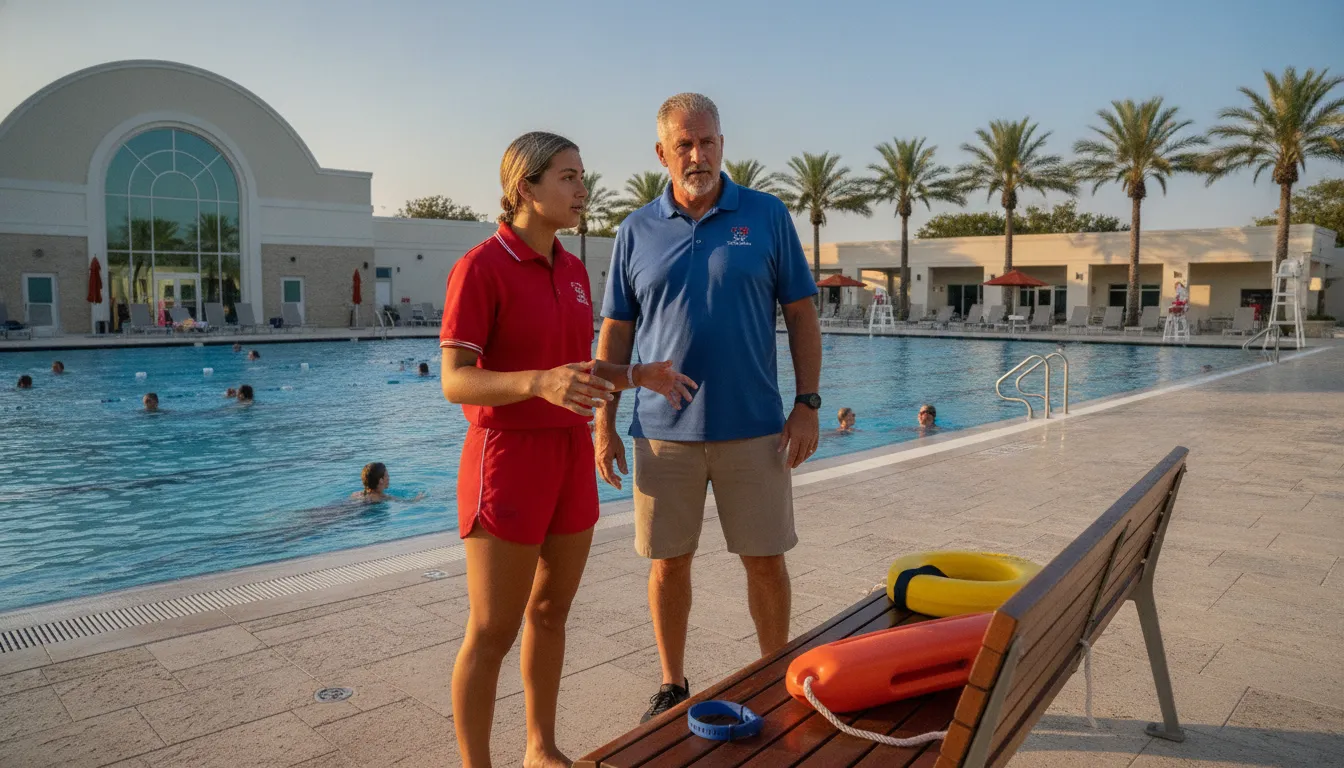
That distinction matters when a facility defines its safety plan. Staff still establish zones, supervise swimmers, assess the scene, communicate with one another, and decide how to respond. Training should cover alert meanings, acknowledgment, rescue procedures, and what to do when an alert reflects underwater play or another non-emergency event. Facilities can review the Hub Management Software and related workflow with WAVE, then determine whether the configuration fits their environment through a free consultation.
WAVE is a wearable, wireless supplement to supervised aquatic safety. Its GUARDian Hub routes submersion and rescue-related alerts to staff, while trained people remain responsible for verification, decisions, and response.
Frequently Asked Questions
Can AI detect drowning in pools?
Camera-based systems can use computer vision and deep-learning models to identify patterns associated with a possible drowning event. They provide an alert for staff to assess, not a guaranteed determination or rescue. A 2024 review identifies both image-processing and sensor-based methods in drowning detection research (PMC).
How is AI being used in swimming?
In aquatic safety, AI may analyze camera imagery, recognize movement or posture changes, and help identify situations that require attention. The technology supports monitoring and alert routing, while trained lifeguards continue to interpret the situation and decide how to respond.
How are wearable systems different from computer vision?
Computer vision observes swimmers through cameras and software. Wearable systems collect sensor information from devices worn by swimmers or staff, then transmit that information to a processing unit through wired or wireless communication. WAVE's AquaSense swimmer wearables and GUARDian Hub use the wearable approach rather than claiming to be a camera-based AI lifeguard system.
How does WAVE alert lifeguards?
When a swimmer wearable goes underwater, the GUARDian system starts a timer and can alert staff after the configured window is reached. WAVE describes vibrating bracelets and spoken-word facility alerts as part of the workflow. Staff and lifeguards still verify the situation and take the appropriate action (WAVE GUARDian system).
Can an artificial intelligence lifeguard replace human lifeguards?
No. Detection technology can add another layer of awareness, but it does not replace active supervision, facility procedures, training, or human judgment. WAVE describes its system as technology that may supplement lifeguard monitoring, so operators should evaluate it as a support layer within a supervised aquatic safety plan.
Ready to plan the right safety layer?
A clear review of your facility, supervision model, and alert workflow can help your team compare sensing options. It can also identify an approach that supports lifeguard response without replacing professional judgment.
