
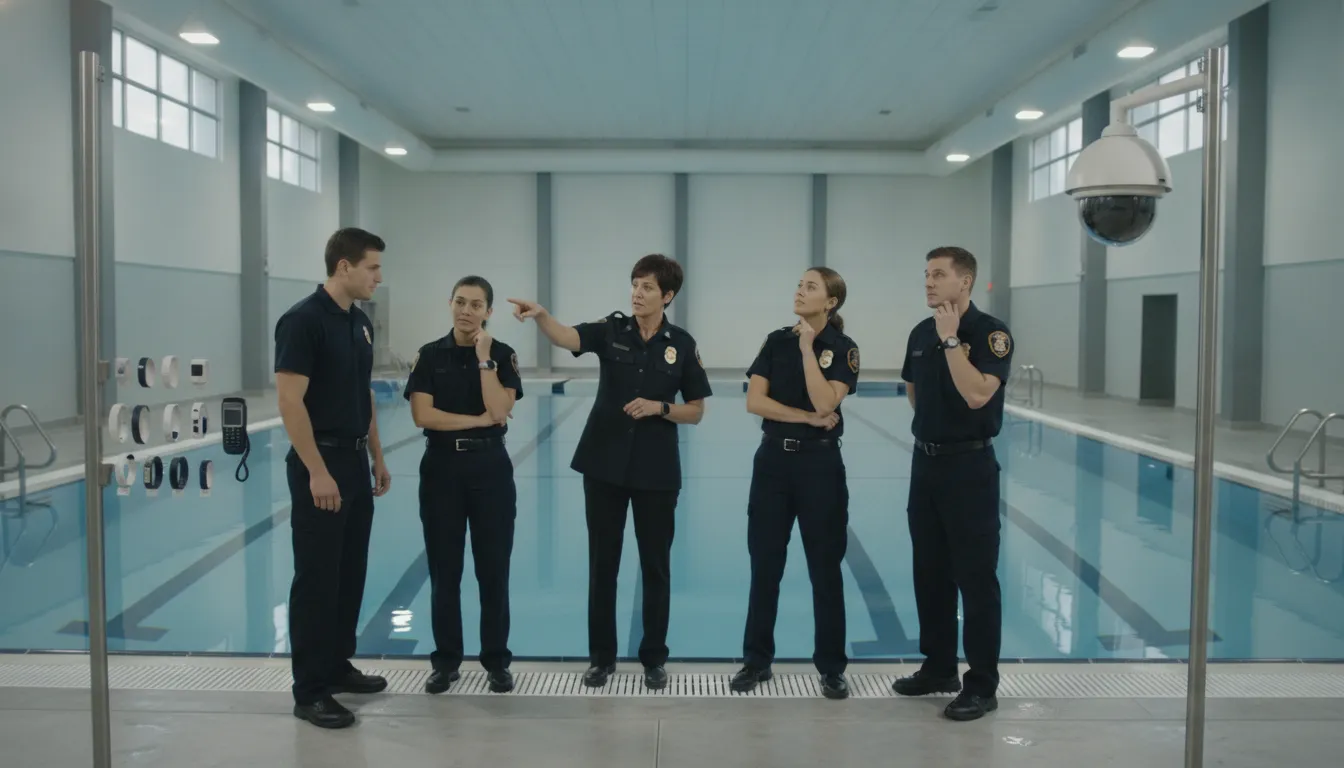
Choosing drowning-detection technology is not simply a decision between a camera and a wearable. Facility leaders need to match the sensing method to the water environment, installation realities, swimmer participation, and the way lifeguards receive and act on alerts. A 2024 review of drowning-detection research describes both image-processing and sensor-based approaches, while noting that implementation cost, complexity, and practicality vary by system.
A camera drowning detection system vs wearable comparison comes down to what each technology can observe, where it can operate, and how it fits your staff workflow. Wearable sensors can transmit swimmer data wirelessly to a processing unit, while cameras analyze visual information. Neither replaces active supervision.
The clearest comparison starts with the underlying detection model, then moves to water conditions, installation, coverage, and alert response. Understanding that difference gives your facility a more useful framework for evaluating which approach supports your lifeguards and operations.
What Is the Difference Between Camera and Wearable Detection?
A camera-based drowning detection system watches the water from a fixed viewpoint and uses image processing to identify movement or activity that may indicate trouble. A wearable system collects information from a device worn by the swimmer, then sends that data to a processing unit for evaluation. Both approaches can add useful information to a facility's safety operation, but neither removes the need for attentive lifeguard supervision.
Camera systems observe the scene. Depending on the design, cameras may analyze the swimmer's position, motion, or behavior within the visible water area. The 2024 review of drowning detection research describes image-processing methods as capable approaches that may require substantial resources and sophisticated machine-learning algorithms. This can make implementation costly and complex. Facility leaders therefore need to consider the camera system's viewing environment, installation requirements, and how its alerts fit existing response procedures.
Wearable systems observe the swimmer's condition through sensors attached to or worn by that person. The sensor data can travel to a processing unit through wired or wireless communication channels. In the research review, sensor-based approaches are described as practical, cost-effective, and widely applicable, though the right design still depends on the facility, swimmer population, and operating workflow. WAVE's approach uses wearable devices to add another source of information alongside lifeguard observation.
The distinction matters when comparing a camera drowning detection system vs wearable approach. Cameras monitor a shared physical space, while wearables connect detection to participating swimmers or staff equipment. A facility may evaluate one model, the other, or a layered strategy based on its environment and response plan. For a plain-language overview of the broader technology, see how drowning-detection technology works.
Most importantly, detection technology is not a substitute for supervision. Research identifies absent or inadequate supervision as a primary risk factor for child drowning. Lifeguards remain responsible for active observation, judgment, and response, while technology can serve as an additional layer that supports their work.
Camera detection analyzes what is visible in the water, while wearable detection receives sensor data from participating swimmers or staff equipment. The best fit depends on the facility's environment, operating model, and lifeguard response plan.
Camera Drowning Detection System vs Wearable Options for Aquatic Facilities
The right comparison depends on how a facility operates, not on whether one technology sounds more advanced. Camera-based systems observe activity through installed equipment and image processing, while wearable systems transmit information from devices associated with swimmers or staff. A 2024 review describes image-processing approaches as potentially resource-intensive and complex. Sensor-based approaches can be practical and widely applicable, but deployment experience depends on the product and site.
For facility leaders, the most useful questions are whether the system fits the water environment, how much infrastructure it requires, whether coverage is fixed or mobile, and how alerts fit existing lifeguard procedures. The table below keeps those distinctions broad because camera and wearable products vary.
| Decision factor | Camera-based approach | Wearable approach |
|---|---|---|
| Infrastructure | Usually depends on cameras, placement, network connectivity, and image-processing capability. Implementation complexity can vary by site. | Uses sensors associated with swimmers, lifeguards, or rescue equipment, with wired or wireless communication to a processing hub. |
| Water clarity | Performance may depend on camera position, visibility, glare, water quality, and the system's design. Review the manufacturer's environmental requirements. | WAVE describes its wearable approach as functioning independently of water clarity, including pools and natural-water settings. |
| Construction and setup | Some deployments may involve site assessment, equipment placement, commissioning, and facility-specific installation work. | WAVE describes the GUARDian system as wireless and requiring no permanent installation, which can reduce construction disruption. |
| Portability and coverage | Coverage is generally tied to the monitored camera zones and their placement. | Wearables move with participating swimmers and staff. Coverage therefore depends on device participation and the facility's operating workflow. |
WAVE's wireless GUARDian Hub system connects its wearable components, while its wearable swimmer-protection equipment is designed for swimmer-focused deployment. Neither approach removes the need for supervision. A sound decision weighs visibility, construction constraints, swimmer participation, staffing, maintenance, and response training together.
Camera systems can suit facilities built around fixed visual coverage, while wearable systems may suit operators seeking mobile, water-condition-independent sensing. The best fit depends on the facility's environment, workflow, and supervision model.
Which Technology Works Best in Your Water Environment?
Water conditions should shape the comparison between camera systems and wearable detection. A clear, controlled indoor pool may support a camera deployment, while an outdoor facility, seasonal program, or site with more than one body of water may need a different coverage model. The right choice also depends on installation disruption, swimmer participation, staff workflow, maintenance, and how easily the system can move with changing operations.
Water clarity is only one part of the decision. Camera performance can depend on placement, lighting, glare, water quality, field of view, and the specific software and hardware design. Those factors vary by product, so facility leaders should request an environment-specific assessment rather than assume that every camera system has the same limitation. Wearable systems shift the sensing point to the swimmer or staff member. This can be useful when facilities need coverage across pools or natural-water settings without relying on a fixed visual field.
For facilities managing clear indoor water, dark or murky conditions, or multiple water bodies, compare how each option performs in the actual environment, how it is installed, and how alerts fit existing supervision. WAVE describes its wearable approach as independent of water clarity and camera systems, but it remains an additional layer of protection, not a replacement for lifeguards.
Indoor, outdoor, and changing facilities
Permanent infrastructure may be practical for a dedicated pool with stable layouts and predictable operating hours. It may be less convenient for seasonal pools, shared facilities, or organizations that oversee several water environments. WAVE states that its GUARDian system requires no installation and uses wearable components connected through the GUARDian Hub. Review the GUARDian system details, then confirm placement, communications, swimmer participation, battery or maintenance responsibilities, and staff training for your site.
There is no universal winner. A careful evaluation should test visibility, coverage gaps, setup demands, and response procedures in the real environment. Whatever technology a facility selects, trained lifeguards and active supervision remain central to swimmer safety.
How Do Camera and Wearable Alerts Support Lifeguards?
An alert is useful only when it reaches the right people in a form they can act on quickly. Camera and wearable systems may identify different signals, but both need a defined response workflow, clear staff roles, and regular training. In a supervised aquatic facility, detection technology should add another layer of awareness around lifeguard observation, not reduce the need for active surveillance.
For wearable systems, the alert path can begin when a swimmer's device remains submerged beyond an adjustable delay. WAVE describes the GUARDian Hub as sending notifications to vibrating staff bracelets, while facility alerts can use spoken announcements to communicate that an event requires assistance. Lifeguard tags can also signal the hub when a guard enters the water, helping other staff recognize that a rescue response is underway. Facilities can review the available lifeguard alert equipment and align it with their existing emergency procedures.
A well-designed alert workflow turns a detection signal into coordinated staff awareness: the system notifies, trained personnel verify the situation, and lifeguards direct the response.
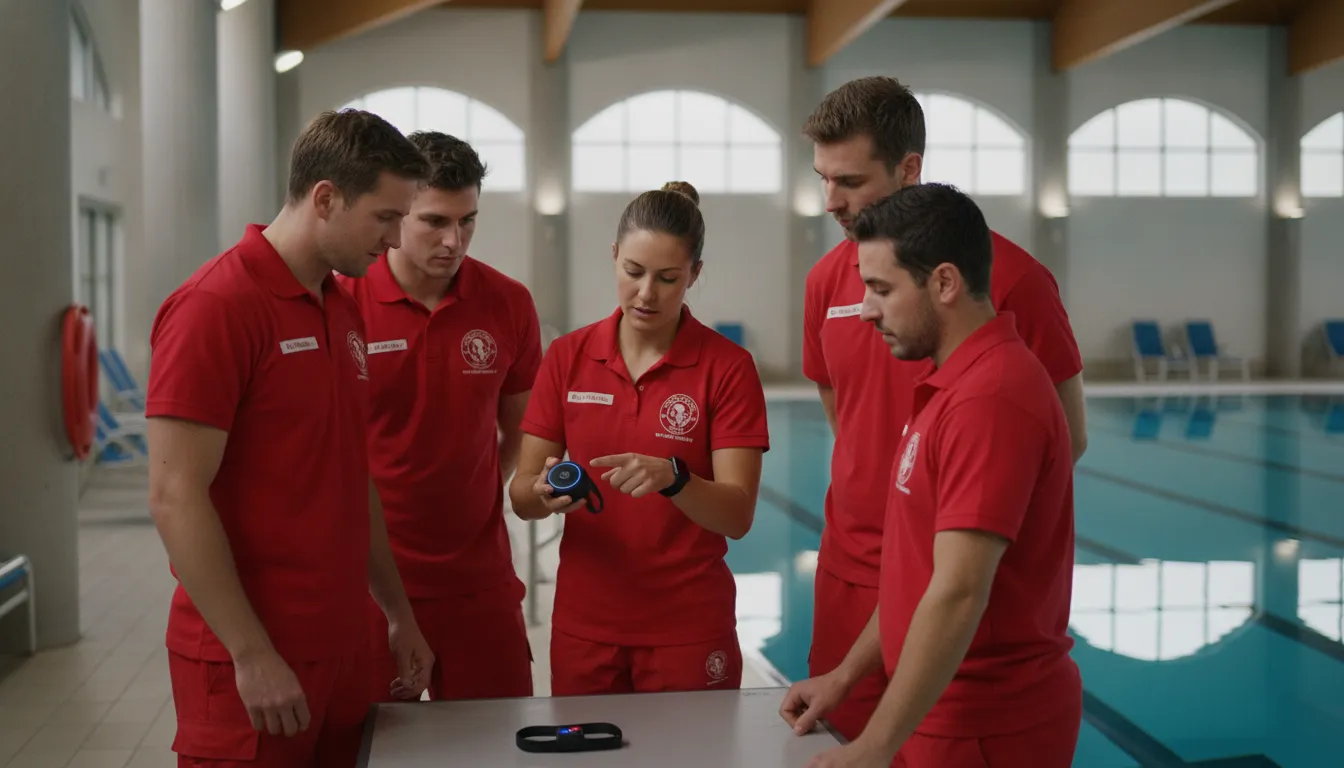
Training staff to interpret alerts
Training should cover who receives each alert, who checks the water, how nearby staff provide support, and how the event is documented. It should also address alerts caused by expected behavior, such as prolonged underwater play or a swimmer leaving the pool area. In an eight-week prospective camp-pool study, staff reported those activities as leading reasons for alerts. They also described the system as easy to learn and use, while suggesting improvements to headband fit and comfort. These observations apply to that study setting and should not be treated as a universal alert rate or result for every facility.
The same study recorded one or two alerts per hour and concluded that WAVE may supplement lifeguard monitoring of large groups of children. That is a study-specific observation, not a guarantee of response time or performance in another pool. Supervision remains central because drowning can happen in seconds and is often silent, according to the CDC. Technology can help draw attention to a potential problem, but trained lifeguards must assess conditions and take appropriate action.
What Should Facility Leaders Ask Before Choosing a System?
The right drowning-detection approach depends on how your facility operates, not on a technology label alone. Before comparing a camera drowning detection system vs wearable options, leaders should examine water conditions, swimmer participation, staff workflows, installation demands, and long-term ownership. A practical review also weighs cost, complexity, and day-to-day practicality, the same criteria emphasized in research on drowning-detection systems.
- Who will wear or use the system? Clarify which swimmers participate, how equipment will be distributed, and how staff will confirm that devices are properly used. Also ask whether lifeguards or rescue equipment need their own alert devices.
- What installation and facility disruption are acceptable? Determine whether the approach requires site surveys, fixed equipment, commissioning, or construction. Compare that with a wearable approach such as WAVE, which describes its GUARDian system as requiring no installation. Confirm the actual setup process and any facility-specific requirements before approving a rollout.
- How will alerts fit the existing staffing plan? Map who receives an alert, who checks the swimmer, who directs the response, and how supervisors are informed. WAVE describes lifeguard tags that trigger GUARDian Hub alerts when submerged, with audio and visual alerts after a guard enters the water.
- What happens during a real event? Ask for a clear response workflow, including escalation, handoff, documentation, and communication with facility leadership. Technology should add another layer of protection while trained staff remain responsible for supervision and response.
- How will maintenance, data, and training be managed? Ask who maintains devices, reviews event data, updates settings, trains new employees, and supports seasonal or rotating staff. Request a realistic plan for swimmer onboarding, alert interpretation, equipment checks, and periodic workflow review.
- What is the full budget and operational fit? Compare recurring ownership costs, staffing implications, installation complexity, portability, and support rather than focusing on purchase price alone. Select the system that can be used consistently across your water environments and operating model.
Choose a system by testing its fit with your swimmers, water environment, staff response plan, maintenance capacity, data needs, training process, and budget. The strongest option is the one your team can use consistently as an additional layer of protection.
Why WAVE Uses Wearables as a Wireless Layer of Protection
WAVE is designed for supervised aquatic facilities that want another way to identify potential danger and support an organized staff response. Instead of asking a camera to interpret activity across a fixed viewing area, WAVE uses wearable devices connected through a wireless system. That approach can fit facilities evaluating installation demands, water conditions, and how alerts should reach lifeguards during active operations.
The wireless GUARDian Hub system acts as the communications center for the equipment. GUARDian Hub (w3000) connects the system components, including AquaSense swimmer wearables and lifeguard tags. The hub can support a modular setup, from a single pool to a facility managing multiple bodies of water while the facility maintains its existing supervision and emergency procedures.
WAVE wearables add a wireless detection layer to supervised aquatic operations. They are intended to help lifeguards recognize potential problems and respond, not to replace lifeguards, active scanning, or other safety procedures.
How the wearable alert path works
AquaSense swimmer wearables monitor submersion. Depending on the configured system, an adjustable delay begins when a wearable enters the water, helping the facility distinguish routine activity from a longer submersion. When an alert condition is reached, the system can notify staff through vibrating bracelets and facility announcements. Lifeguard tags provide a separate signal when a lifeguard enters the water, helping other staff recognize that a rescue response may be underway.
This design makes the alert workflow part of the facility's operating model rather than a standalone promise of prevention. Staff still need training, clear responsibilities, and practiced response procedures. In an independent camp-pool study, researchers concluded that WAVE may supplement lifeguard monitoring of large groups of children. That supports the role of the system as an additional layer rather than a substitute for supervision. Read the study findings.
Where WAVE fits in a facility comparison
For leaders comparing a camera drowning detection system vs wearable approach, the practical question is how each model fits the facility's environment and workflow. WAVE's wearable equipment is intended for commercial aquatic settings and can be reviewed as part of a broader commercial-pool detection system plan. Facilities can also explore the AquaSense swimmer wearables and swimmer equipment used in that approach.
The right decision depends on the facility's swimmers, water environment, staffing model, installation constraints, and response plan. WAVE's role is to give supervised teams an additional signal and a force-multiplier for their work, while lifeguards remain central to observation, judgment, and rescue.
Frequently Asked Questions
Can AI detect drowning in pools?
Camera-based systems can analyze pool images for patterns associated with risk, but performance depends on system design, installation, water conditions, and operating environment. Image-processing approaches may also require substantial computing resources and sophisticated machine-learning methods, according to a 2024 review of drowning-detection technology. Read the review.
Do anti-drowning bracelets work?
Wearable systems can send information about a swimmer's condition to a processing unit through wired or wireless communication. Their value depends on correct wear, swimmer participation, alert routing, staff training, and a response procedure. They should add information to active supervision, not replace lifeguards.
Is there a wristband that can prevent drowning?
No technology should be presented as preventing every drowning or guaranteeing safety. WAVE's wearable approach is designed to detect prolonged submersion or lifeguard water entry and alert staff, providing an additional layer of protection in supervised aquatic environments.
How should a facility choose between cameras and wearables?
Start with the facility's water conditions, coverage needs, installation constraints, swimmer participation, staffing model, alert workflow, maintenance plan, and budget. A camera may suit a fixed, compatible viewing environment, while wearables may fit facilities seeking a wireless option across pools or other water settings. Compare the complete operating model, not hardware alone.
Do drowning-detection systems replace lifeguards?
No. Supervision remains central because drowning can happen in seconds and is often silent, according to the CDC. Detection technology can help staff receive another signal and coordinate a response, but facilities still need trained lifeguards, clear procedures, and active oversight. See CDC drowning guidance.
Schedule a Free Consultation to Compare Detection Options
Choosing between camera-based and wearable technology depends on your facility, water environment, installation needs, and staff workflow. A conversation with a WAVE aquatics-safety specialist can help your team compare approaches and identify an additional layer of protection that supports lifeguard supervision.
