
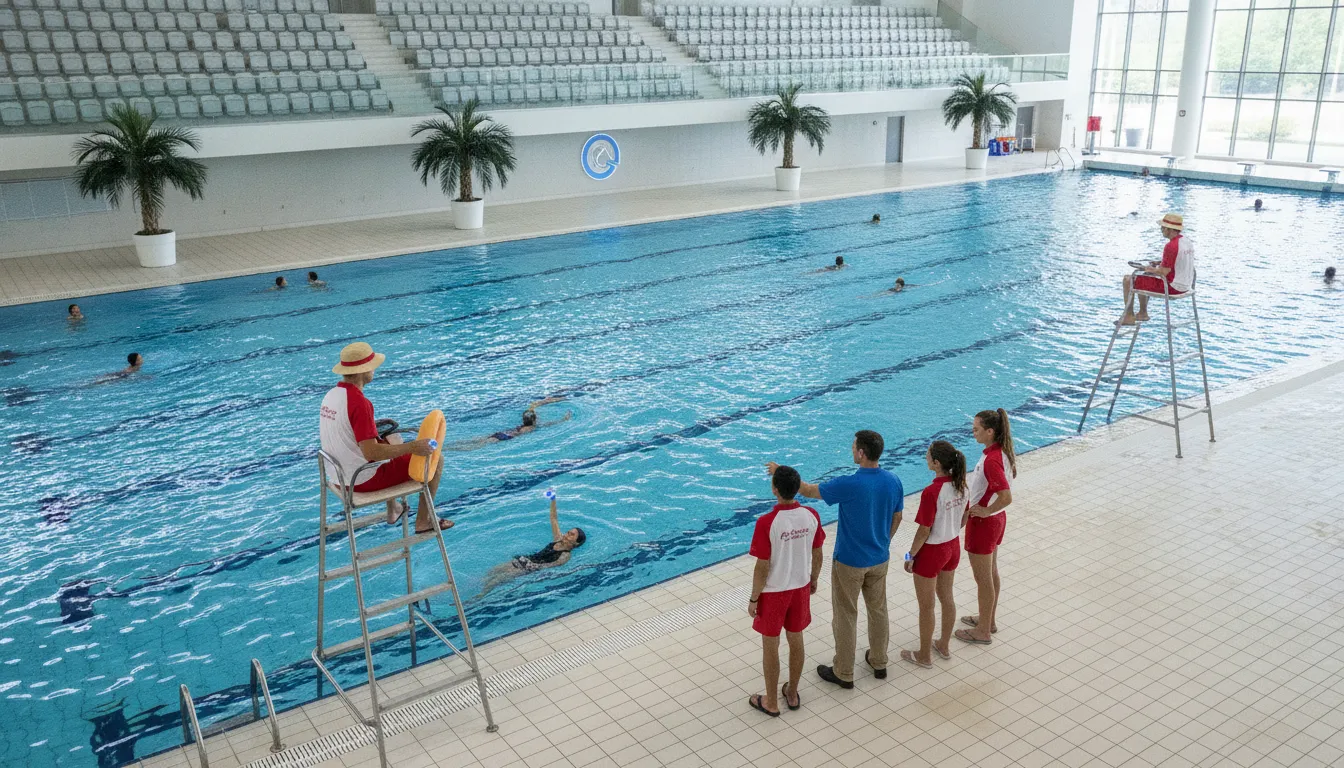
For an aquatics director, a safety technology quote should answer more than one question: What equipment is included. How will it support our staff, and can we expand coverage without a major capital purchase? A clear proposal connects the facility's swimmer population and operating model to the right combination of wearables, alerts, monitoring, software, and support.
A commercial pool safety wearables quote should outline the AquaSense swimmer wearables, lifeguard tags, GUARDian Hub (w3000), alert coverage, Hub Management Software (HMS), deployment, and subscription terms. WAVE's Hardware-as-a-Service model helps facilities add an additional layer of protection for supervised aquatic environments while keeping costs more predictable and scalable.
WAVE is designed as a force multiplier for lifeguards, not a replacement for them. Because the wearable system can deploy without permanent construction or a facility closure, decision-makers can evaluate practical coverage and budget fit together. The details below explain what belongs in that evaluation and how each line item supports a safer, more manageable operation.
Schedule a Free Consultation to review what a commercial pool safety wearables quote includes for your facility.
What a Commercial Pool Safety Wearables Quote Includes
A commercial pool safety wearables quote should make it easy to understand what your facility is purchasing, how the equipment works together, and what is needed for deployment. WAVE builds each recommendation around the pool environment, operating model, and protection goals of the facility. That means the quote is not a generic package with equipment your team may not need.
Use WAVE's GUARDian system information and the How It Works overview to understand the connected system. Then use the Build Your System tool to receive a quote tailored to your facility's requirements.
Depending on the selected configuration, the quote may include the following core components:
- GUARDian Hub (w3000): The central hub that connects the facility's safety equipment and supports the alerting workflow.
- AquaSense swimmer wearables: Non-tethered swimmer wristbands designed to detect prolonged submersion and signal for assistance. Their multi-year battery helps avoid the daily recharging required by some competing products.
- Lifeguard tags: Wearable tags for lifeguards and other designated staff, supporting staff monitoring and helping distinguish personnel within the system.
- Pool monitor: A facility alert component that helps staff recognize an event and respond according to the pool's established safety procedures.
- Remote speaker or siren: An additional facility alert option for communicating an urgent notification beyond the immediate pool deck.
- Hub Management Software (HMS): The software layer used to manage the GUARDian Hub and connected devices as part of the facility's operating setup.
WAVE technology does not require the permanent construction often associated with camera-based drowning-detection systems. That can make the system a more flexible fit for different pool types, leased facilities, seasonal operations, or locations that want to avoid invasive construction. The exact equipment mix still depends on the facility assessment and the coverage your team wants to establish.
The purpose is to add another layer of protection while supporting, not replacing, lifeguards and pool attendants. A final quote should therefore be reviewed alongside your staffing plan, emergency procedures, and pool layout so the selected equipment supports a coordinated response.
How WAVE's Wearable System Detects Prolonged Submersion
Effective aquatic safety depends on more than one observation point. Lifeguards scan the water, monitor swimmer behavior, and respond to changing conditions, while technology can add another signal when a swimmer needs attention. WAVE's system is designed as a force multiplier for lifeguards, not a replacement for trained supervision or established emergency procedures.
The AquaSense swimmer wearable uses a non-tethered wristband to monitor the swimmer's time beneath the water. When the system detects prolonged submersion, it sends an alert so staff can investigate and respond. The system can also detect lifeguard water entry, helping facility teams recognize when a rescue or other urgent intervention may be underway.
Alerts reach staff through vibrating bracelets and facility alerts. That layered notification approach gives the team a clear reason to look toward the water and coordinate a response. Rather than relying on a single person to notice every event immediately. WAVE describes this approach as an additional layer of protection in supervised aquatic environments. See how WAVE works alongside existing lifeguard practices.
Detection that does not depend on clear water
Camera-based systems depend on a visual field, which can be difficult to maintain in dark, cloudy, or murky water. WAVE's wearable sensors are designed to function in clear, dark, and murky water conditions, allowing the alerting layer to remain useful when visibility changes. This is especially relevant for facilities that operate across different pools, lighting conditions, or water environments.
Because the AquaSense wristband is non-tethered, swimmers can wear it without being connected to pool infrastructure. The wearable also uses a multi-year battery, so staff do not have to manage daily recharging as part of routine operations. Those characteristics can simplify deployment and help facilities maintain consistent use during regular programming, lessons, open swim, and other supervised activities. Learn more about the AquaSense wearable.
- Swimmer monitoring: AquaSense detects prolonged submersion and signals staff for assistance.
- Lifeguard awareness: The system can identify lifeguard water entry and generate facility alerts.
- Staff notification: Vibrating bracelets and facility alerts help direct attention to a potential emergency.
- Operational flexibility: Non-tethered wearables work across clear, dark, and murky water conditions without daily recharging.
These capabilities do not eliminate the need for lifeguards, pool attendants, scanning, or emergency training. They give the people responsible for swimmer safety another timely signal to support faster awareness and coordinated action.
How Does WAVE's Subscription Model Scale for Large Facilities?
Large aquatic facilities often need protection across multiple zones, pools, or operating schedules, but a major equipment purchase can delay deployment. WAVE's Hardware-as-a-Service (HaaS) model spreads the cost of the GUARDian system across a predictable subscription term instead of requiring the full capital outlay at the start. That structure helps aquatics directors expand coverage as facility needs change while keeping lifeguards at the center of the response plan.
The current WAVE pricing options offer 12-month and 36-month terms, with annual payment and AdvancePay available for the lowest 36-month price. The subscription includes 24/7 monitoring and a $0 deductible warranty, helping facilities plan for ongoing support without setting aside a separate deductible for covered service needs. The two bundle levels also make it easier to match the system to the facility's immediate safety priorities.
| Subscription term | GUARDian Lifeguard Alert Bundle | GUARDian Swimmer Protection Bundle | Payment detail |
|---|---|---|---|
| 12-month term | From $199 per month | From $399 per month | Annual payment |
| 36-month term | Contact WAVE for current rate | Contact WAVE for current rate | Annual payment |
| 36-month AdvancePay | From $149 per month | From $299 per month | Lowest listed price |
At the lowest listed rates, the GUARDian Lifeguard Alert Bundle is positioned as low as $5 per day. While the GUARDian Swimmer Protection Bundle is positioned as low as $10 per day. For a large facility, the practical question is not simply which bundle costs less. It is which areas need lifeguard alerts, which require swimmer protection, and how many users or zones should be covered in the first phase.
A tailored quote can separate those decisions into a scalable deployment plan. A facility might begin with the highest-risk pool, add coverage to additional bodies of water, or align subscriptions with seasonal operations and budget cycles. WAVE's model supports that planning without suggesting that technology replaces trained supervision. It adds another layer of detection and alerting so staff can respond faster when the system identifies a concern.
How Facility Types Benefit From Wearable Drowning Detection
Different aquatic facilities face different staffing patterns, swimmer volumes, and operating environments. A community pool may need a practical way to extend lifeguard awareness across busy swim periods. While a resort may need rapid alerts for staff who are not stationed at the water. Wearable drowning detection gives facilities an adaptable additional layer of protection without requiring permanent construction or a lengthy renovation.
Because AquaSense technology is scalable across settings, organizations can configure a system around their people, pool layout, and operating needs. WAVE supports lifeguards and pool attendants rather than replacing them, helping staff recognize a possible prolonged submersion and respond promptly.
- YMCAs and Boys & Girls Clubs: Nonprofit facilities often serve varied age groups and programs throughout the day. A flexible wearable system can support swim lessons, open swim, and other supervised activities as staffing and swimmer needs change.
- Municipalities and community pools: Public pools may manage seasonal schedules, multiple user groups, and changing attendance levels. Non-construction deployment allows an operator to add technology without committing to permanent camera infrastructure or closing the facility for major work.
- Schools and camps: These facilities may move between instruction, recreation, and scheduled group activities. Wearables can provide another alert channel during supervised water use while fitting into an existing safety plan.
- Water parks: Larger venues can benefit from a scalable approach that extends across different attractions and operating zones. The system can be evaluated and expanded as the facility's coverage requirements develop.
- Hotels and resorts: Pool areas may not have dedicated lifeguards on duty. In those settings, guest-facing wearables can alert the front desk, security team. Or pool attendants within seconds of a possible prolonged submersion, enabling rapid staff response where no lifeguard is stationed. This is an alerting capability for supervised facility operations, not a substitute for professional water-safety procedures.
For any facility, the right configuration depends on the number of swimmers, staff responsibilities, and areas that need coverage. Reviewing how WAVE works can help teams identify where wearable alerts fit within their existing supervision and emergency-response process.
Funding Options for Commercial Pool Safety Technology
Funding a commercial pool safety upgrade does not have to rely on a single budget line or a large one-time purchase. Aquatics directors can combine facility funds, nonprofit assistance, and grant research to make drowning-detection technology more attainable. The right funding plan should account for the equipment, subscription terms, staff training, and the needs of the swimmers and facility teams who will use the system.
Answer capsule: WAVE helps qualified nonprofit facilities explore scholarship and grant-seeking support through its partnership with ACCU. The federal CPSC Pool Safely grant program is a primary resource to investigate. While the National Drowning Prevention Program (NDPP) funding model may also be relevant depending on the facility and current eligibility requirements.
Start with WAVE's grants and funding resources
WAVE's Grants and Funding page outlines options for organizations that need help identifying a path to implementation. WAVE partners with Aquatic Consulting & Underwater Services (ACCU) to provide scholarship and grant-seeking assistance for qualified nonprofit aquatic facilities, including YMCAs, Boys & Girls Clubs, and municipalities. That support can help a facility frame its project around swimmer protection, operational readiness, and the practical needs of its lifeguards or pool attendants.
For eligible organizations, a scholarship can reduce the financial barrier to choosing WAVE's additional layer of protection. It is still important to confirm current qualification requirements, application timing, and the portion of project costs that a funding source may cover before building the final budget.
Research federal and public funding sources
The Consumer Product Safety Commission's Pool Safely grant program is identified as the primary federal grant source for technology that assists with drowning prevention. Facilities should review the current program guidance directly and confirm whether their organization, project scope, and proposed equipment meet the latest requirements. Public agencies and nonprofit operators may also want to investigate whether NDPP-related funding opportunities or local allocations can support aquatic safety improvements.
A complete application should connect the requested investment to the facility's safety plan without overstating what technology can do. WAVE is designed to support lifeguards and pool staff by detecting prolonged submersion and sending alerts through wearable and facility notifications. It is an additional layer of protection in a supervised aquatic environment, not a replacement for trained supervision.
Build a funding-ready project scope
Before applying for assistance, document the facility type, pool configuration, expected swimmer volume, staffing model, and the products under consideration. A tailored quote can then show how AquaSense swimmer wearables, lifeguard tags, the GUARDian Hub (w3000), and the appropriate alert bundle fit together. This makes it easier for grant reviewers and internal decision-makers to evaluate the requested investment against a defined operational need.
Use WAVE's Build Your System process to request a quote tailored to the facility, then pair it with the applicable grant or scholarship documentation. Funding availability changes, so verify every deadline and eligibility rule with the administering organization before submitting an application.
Why Wearables Are a Smart Investment for Commercial Pools
Commercial pool safety decisions affect more than day-to-day operations. They also influence how a facility manages risk, protects its reputation, and demonstrates a consistent commitment to swimmer safety. Wearable drowning-detection technology can strengthen that safety program without requiring a large construction project or a major upfront capital purchase.
For supervised aquatic facilities, WAVE wearables provide an additional layer of protection that supports lifeguards. Helps staff respond to prolonged submersion, and gives operators a more proactive approach to risk management.
Reducing operational and liability risk
Drowning remains a serious public health concern. The CDC reports that more than 4,000 unintentional drowning deaths occur in the United States each year. And drowning is the leading cause of death for children ages 1 to 4. These figures do not predict what will happen at any individual facility. But they show why aquatic operators need layered safety procedures rather than relying on a single point of observation. The CDC's drowning data and research provides important context for facility leaders evaluating their risk-management priorities.
A drowning incident can also create legal, operational, and reputational consequences. Aquatic facilities may face legal action or temporary closure after a serious incident, making prevention technology a strategic risk-management consideration, not simply an equipment purchase. WAVE is designed to help address that risk by detecting prolonged submersion through AquaSense swimmer wearables and alerting staff through the GUARDian system. It does not guarantee safety or replace trained supervision, but it can give lifeguards and pool attendants another signal to act on when a swimmer may need assistance.
Adding capability without a major capital project
Budget constraints often make advanced safety technology difficult to prioritize. WAVE's subscription-based model helps facilities pursue proactive protection without the large initial capital outlay associated with some traditional camera-based systems. Because deployment does not require permanent construction, operators can evaluate a system around their existing pool layout, staffing model, and coverage needs.
The investment can also be planned around the facility's actual scope. A quote may account for AquaSense swimmer wearables, lifeguard tags, a GUARDian Hub (w3000), alert bundles, and the software needed to manage the system. That structure allows a facility to build an appropriate solution instead of buying more equipment than its operations require. Multi-year battery life on AquaSense wearables can further reduce routine maintenance compared with products that require daily recharging.
Research on automated drowning-detection systems describes technology as a tool that can augment traditional lifeguard supervision. That multi-layered approach is the right standard for commercial pools: trained staff remain responsible for active supervision and response, while WAVE adds detection and alerting capability. For operators comparing a commercial pool safety wearables quote, the value is not a promise of perfect protection. It is a practical way to strengthen an existing safety program, manage exposure, and invest in a more responsive facility.
Read the research on technology that augments lifeguard supervision.
Get a Quote for Your Facility to see how WAVE's wearable system and subscription model scale for your pool.
Frequently Asked Questions
What is included in a commercial pool safety wearables quote?
A quote is tailored to the facility and can account for AquaSense swimmer wearables, lifeguard tags, a GUARDian Hub (w3000), alert bundles, and Hub Management Software (HMS). The right mix depends on swimmer volume, pool layout, staff coverage, and the level of alerting your team needs. WAVE's Build Your System tool is designed to produce a facility-specific quote.
How does WAVE's subscription model scale for large facilities?
Subscription pricing lets a facility plan around the equipment and coverage it needs without a large upfront capital purchase. A quote can scale by adding wearables, lifeguard alert capacity, hubs, or software access as operations expand. WAVE offers term options, including 12- and 36-month plans, so the final structure should be reviewed against your facility's budget and deployment plan.
Do commercial pool safety wearables replace lifeguards?
No. WAVE is designed for supervised aquatic environments and acts as an additional layer of protection. AquaSense wearables detect prolonged submersion, while vibrating wearable sensors and facility alerts help staff respond quickly. The system supports and strengthens lifeguard supervision rather than replacing trained personnel.
Can the wearables work in murky or dark water?
Yes. WAVE sensors are designed to function in clear, dark, and murky water, where camera-based systems can have visibility limitations. The AquaSense wearable is also non-tethered and uses a multi-year battery, so it does not require daily recharging. Facilities should still select and configure equipment based on their specific environment and operating procedures.
Ready to Schedule a Free Consultation?
A tailored quote helps you match WAVE's commercial pool safety wearables to your facility's needs, staffing model, and growth plans. You can review the right combination of equipment and subscription support with a WAVE specialist, then make an informed next step for your team. Schedule a Free Consultation to discuss your facility and request a tailored quote.
