
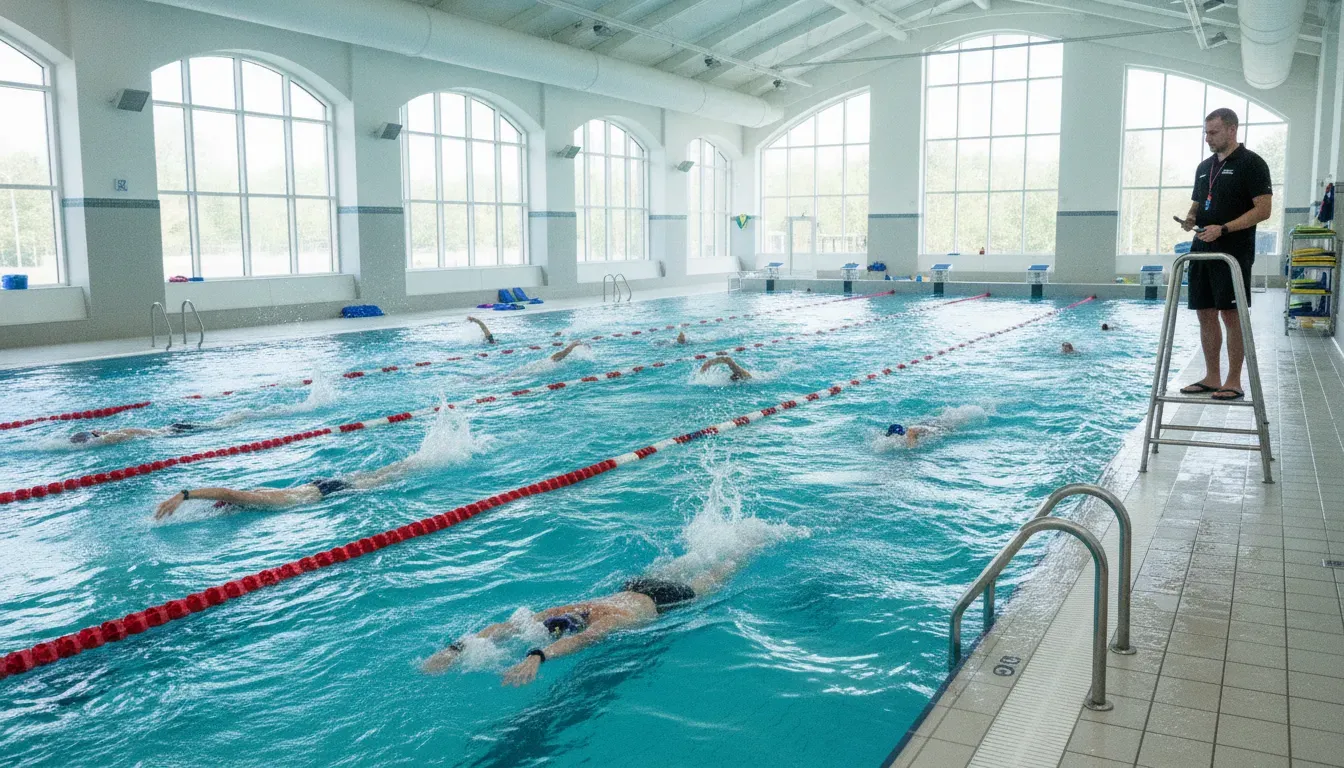
Competitive swim team safety deserves the same disciplined planning as a season calendar, training plan, or meet operations. Strong swimmers are skilled athletes, but a demanding set, a medical event, a crowded lane, or a momentary lapse in visibility can still create a time-sensitive emergency. For club directors, school aquatics coordinators, and facility leaders, the goal is clear: keep trained people actively watching the water and give them reliable support when practice gets busy.
Schedule a Demo to see how WAVE can add a swimmer-alert layer to your training facility.
Why does competitive swim team safety need its own plan?
Competitive swim practices have a different operating rhythm from recreational open swim. Coaches are tracking intervals, technique, rotations, and attendance. Athletes may be spread across several lanes and moving at different speeds. Early-morning workouts, long-distance sets, and high attendance can make continuous observation harder, even with experienced staff on deck.
Competitive swim team safety is a layered approach to supervision, emergency readiness, and swimmer accountability during structured training. It recognizes that strong athletic ability does not eliminate the need for watchful staff, clear response procedures, and tools that help the team notice a problem quickly.
That approach is consistent with the foundation of good aquatics operations: qualified lifeguards or designated water-watch staff, defined responsibilities, and practiced emergency action plans. Technology belongs in that structure as added support, not as a substitute for trained people.
Elite swimmers still face water-specific risks
Competitive athletes can experience fatigue, cramps, head injuries, asthma symptoms, cardiac events, or other medical concerns. They may also be underwater during turns, drills, or breath-control work. A strong swimmer can look similar to every other swimmer in a fast-moving lane, which is why programs benefit from systems that make exceptions easier to identify and escalate.
What are the core safety precautions for swim teams?
A useful safety plan turns broad expectations into repeatable actions before, during, and after every practice. It should clarify who is watching the water, how staff communicate, what happens when an athlete leaves a lane, and how the facility responds when someone needs help. The plan needs to work on the busiest day of the season, not only when attendance is light.
The core precautions are active water supervision, a current emergency action plan, clear swimmer check-in procedures, trained staff, and reliable communication. Together, these controls reduce the chance that a concern is missed while coaches and athletes focus on performance.
- Assign water-watch responsibility. Identify the person or team responsible for scanning the water at every practice. Coaching, timing, and administrative duties should not blur this responsibility.
- Set lane and attendance expectations. Use check-in, lane assignments, and a process for athletes who leave the water. During transitions, staff should know who is expected back in each group.
- Practice the emergency action plan. Define who activates emergency services, retrieves rescue equipment, clears the water, meets responders, and contacts families. Rehearse the sequence with the people who will carry it out.
- Maintain a communication path. Deck staff need a dependable way to get attention quickly without relying on shouting across a loud pool environment.
- Review facility conditions. Confirm sightlines, lighting, rescue equipment, lane configuration, and staffing coverage before high-attendance practices or meets.
- Build reporting into the routine. Document medical concerns, near misses, equipment issues, and lessons from drills. Small observations can inform better procedures later.
For additional context on layers of aquatic safety and facility planning, review WAVE's commercial pool safety equipment guide.
How can coaches preserve active supervision during intense sets?
Coaches have to lead the session, teach technique, and keep athletes on pace. The answer is not to ask one person to do every job at once. Instead, build a deck model that separates coaching tasks from water-watch responsibilities and defines what each role does when practice intensity rises.
Active supervision during competitive training works best when coaches, lifeguards, and facility staff have distinct roles and direct communication. A dedicated water-watch assignment protects observation time while coaches can continue to manage the workout safely.
For example, a large club practice may use a coach to run the set, a qualified lifeguard or assigned water watcher to scan swimmer behavior, and a deck lead to manage check-in and radio communication. Exact staffing and certification requirements vary by facility and jurisdiction, so each program should follow its local policies and governing requirements.
| Practice condition | Potential supervision challenge | Operational response |
|---|---|---|
| High-volume interval set | Rapid movement and splashing reduce visual clarity | Use a dedicated water-watch role and a clear escalation signal |
| Multiple age groups in the water | Different speeds and lane changes complicate accountability | Confirm lane assignments and supervise transitions deliberately |
| Early-morning or evening session | Fatigue and low staffing can affect attention | Review staffing coverage and response readiness before opening the pool |
| Meet warm-up | Crowded lanes and unfamiliar swimmers increase complexity | Use explicit pool rules, visible staff positions, and an emergency communication plan |
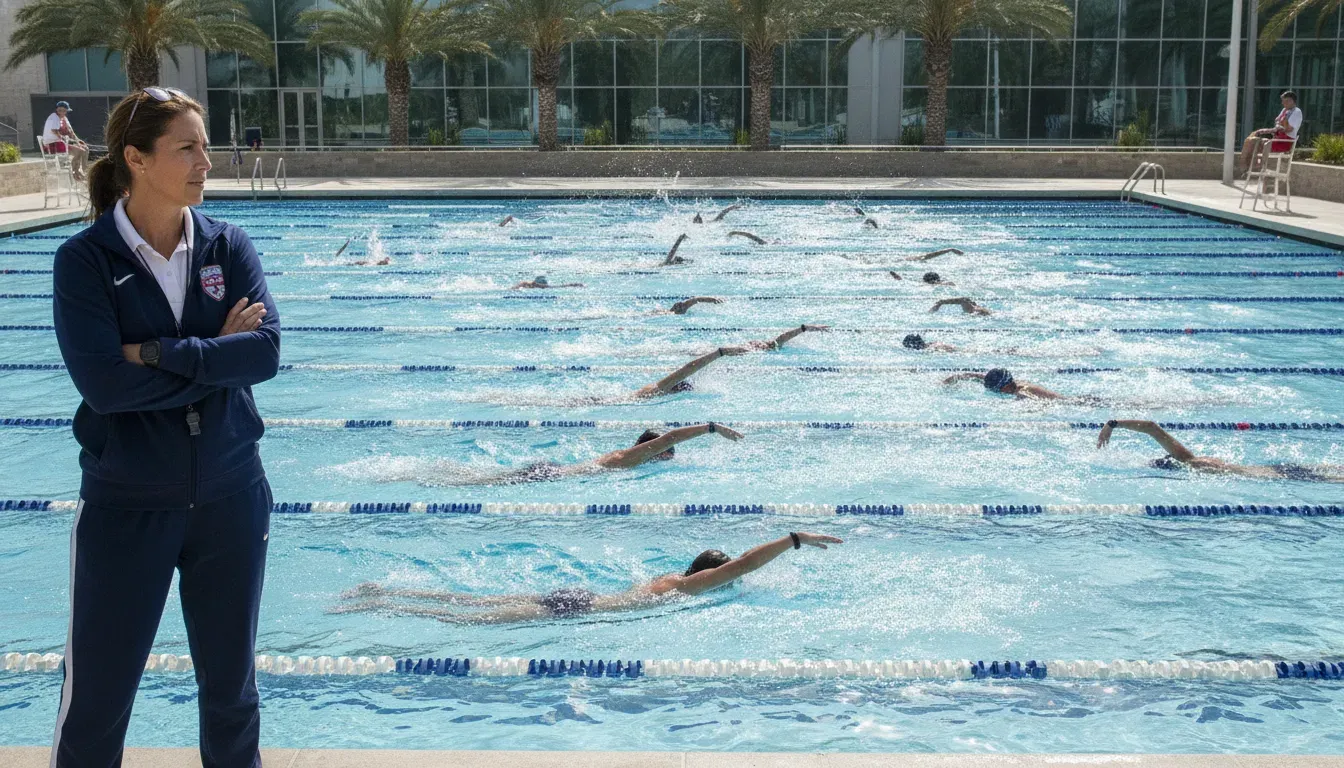
Where can wearable drowning detection fit into a training facility?
Wearable drowning-detection technology can add an alerting layer to a facility's existing safety program. WAVE is designed for supervised aquatic environments, where its purpose is to support a rapid staff response rather than replace lifeguards or trained water-watch personnel. That distinction matters for competitive programs, where staff judgment and a practiced emergency plan remain central.
For a competitive program, a wearable alert system can supplement active supervision by signaling prolonged submersion so staff can investigate quickly. It works alongside the people, procedures, rescue equipment, and communication methods already required for safe aquatics operations.
WAVE's GUARDian System uses AquaSense swimmer wearables as part of an integrated alerting approach. The GUARDian Hub (w3000), the GUARDian Lifeguard Alert Bundle, and the GUARDian Swimmer Protection Bundle can be configured around facility needs. When the system detects a relevant event, it can alert designated staff through facility alerts and wearable notification methods, helping the team focus attention where it may be needed.
Because the approach is wearable and wireless, it can be considered by facilities that want an added layer without permanent camera construction. WAVE technology is designed to function in clear, dark, and murky water conditions, a consideration for facilities where lighting, glare, or water clarity can challenge camera-only approaches.
Talk with WAVE about a competitive swim team safety setup for your pool.
What should directors ask before adding a swimmer-alert system?
Technology should be evaluated as part of an operating plan, not as a standalone purchase. A swim club director or facility operator should ask how an alert will reach staff, who has responsibility to investigate it, how athletes will use the equipment during practice, and how the system fits the facility's emergency procedures. A clear implementation plan makes the added layer useful on day one.
The best swimmer-alert deployment is matched to the facility's lanes, staffing pattern, practice schedule, and emergency action plan. Directors should confirm the response workflow first, then select technology that supports that workflow without disrupting training.
- Who receives an alert? Identify lifeguards, deck leads, or other designated responders and confirm how they will be notified.
- What happens next? Map the immediate response, including water entry, emergency services activation, crowd control, and documentation when applicable.
- How will athletes use wearables? Establish distribution, fit, care, and accountability procedures that work with daily practice routines.
- How will staff train? Include the technology in onboarding, refreshers, and emergency drills rather than treating it as an isolated device.
- What does the facility need to change? Confirm installation needs, coverage areas, and integrations before deployment.
WAVE provides a lifeguard support technology overview that can help operators consider how an added layer fits with staffing and response procedures.
How do you put a competitive swim team safety plan into practice?
A written plan becomes useful only when staff can execute it in real conditions. Start with a practice-by-practice routine that assigns coverage, confirms rescue readiness, and makes it easy to respond when something looks wrong. Then revisit the plan after meets, staffing changes, incidents, and facility updates.
To put a competitive swim team safety plan into practice, assign supervision roles, rehearse the emergency response, maintain swimmer accountability, review the pool environment, and test any alerting technology with the staff who will use it. Consistency is more valuable than a binder that stays on a shelf.
- Review the practice schedule. Note attendance, lane use, age groups, and high-intensity segments before swimmers enter the water.
- Assign deck positions. Make water-watch coverage visible and communicate who backs up that role during breaks or transitions.
- Inspect equipment and communication. Confirm rescue equipment, phones or radios, and facility alerting tools are ready for use.
- Run a short drill. Practice the first actions of the emergency plan so staff do not have to invent roles under pressure.
- Debrief and document. Capture what worked, what was unclear, and any facility issue that needs follow-up.
A stronger safety culture supports better training
A high-performing program is built on trust. Athletes need to know that coaches and facility staff are focused on both performance and well-being. Families and school leaders need to see that the program has thoughtful procedures, qualified people, and a plan for responding when something goes wrong.
Competitive swim team safety is not a single policy or product. It is a daily operating discipline that combines trained staff, clear procedures, and appropriate technology to help a facility respond quickly when an athlete needs attention.
Explore how wearable and camera-based drowning detection differ, or contact WAVE to discuss a swimmer protection approach for your training environment.
Frequently asked questions about competitive swim team safety
What are the safety precautions for swim teams?
Swim team precautions include active water supervision, qualified staff, swimmer accountability, rescue equipment, clear communication, and a rehearsed emergency action plan. Programs should adapt these practices to their facility, local requirements, attendance level, and the type of training underway.
Can strong swimmers have an emergency during practice?
Yes. Strong swimming ability does not remove the possibility of fatigue, injury, medical events, or another water-related emergency. A competitive program should maintain active observation and an emergency response plan for every athlete, regardless of skill level.
Does drowning-detection technology replace lifeguards?
No. Drowning-detection technology is an added layer of protection that supports a faster staff response in supervised aquatic environments. Lifeguards, coaches, and trained water-watch staff remain responsible for observation, judgment, rescue, and emergency response.
How can a swim club manage safety during a busy practice?
A busy practice is safer when the club separates coaching duties from water-watch responsibilities, assigns clear deck positions, confirms attendance and lane use, and maintains a direct way for staff to communicate. Rehearsing the emergency action plan helps the team act decisively when needed.
What should a facility evaluate before using swimmer wearables?
Facilities should evaluate who receives alerts, how staff will respond, athlete distribution and care procedures, coverage needs, and how the system fits the emergency action plan. A demonstration can help directors assess how WAVE's AquaSense swimmer wearables would fit their specific training environment.
