
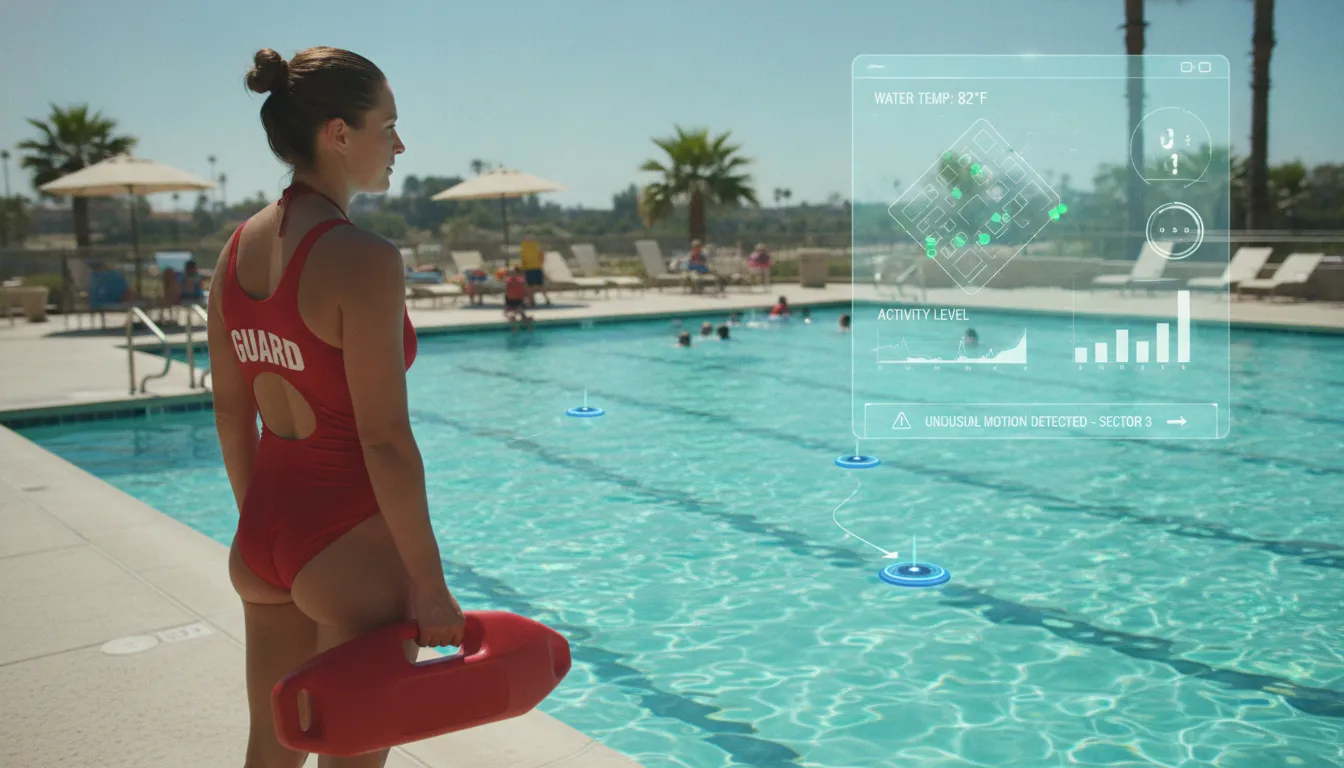
A nationwide shortage of trained staff is forcing local pools to cut their hours or close for good. This growing crisis leaves many facilities with fewer eyes on the water than they need to stay safe. Aquatics directors, facility operators, and risk managers are searching for solutions that help them maintain safety standards despite the hiring challenges.
The lifeguard shortage is a growing problem that leaves many pools with fewer eyes on the water than they need. While standard hiring plans struggle to keep up with high demand and low pay, new tools are helping bridge the gap for busy pool managers. According to the American Lifeguard Association, this lack of staff is often caused by low pay and a lack of training programs. Drowning detection systems like WAVE act as a force multiplier by adding an extra layer of safety without replacing human staff. These wearable sensors find prolonged submersion in real time and alert on-duty guards through vibrating bracelets. This technology allows pools to keep safety standards high even when they cannot fill every open position.
Ready to see how drowning detection technology can support your team? Schedule a free consultation with WAVE today.
What Is the Scope of the Lifeguard Shortage in 2025/2026?
The national lifeguard shortage has become a major challenge for aquatic facilities across the country. Recent data shows that the lack of staff has led to beach closures and reduced supervision at popular swimming sites. The National Park Service has faced empty chairs at some of the most famous federal beaches, leaving visitors without the protection they expect at public swimming areas.
Rising vacancy rates across facilities
In 2024, about 41.8% of aquatic facilities were affected by staffing gaps. While this figure is an improvement from the 67.3% rate seen in 2022, the impact remains severe for most facilities. YMCAs and colleges are hit the hardest, with 68.3% of YMCAs and 56.8% of college pools reporting they did not have enough staff to run full schedules. Municipal pools and community recreation centers face similar pressures, often forced to reduce operating hours or close certain days of the week.
The lack of guards means many sites must scale back their services. Some municipal pools have struggled to maintain consistent schedules. When pools close or operate with fewer eyes on the water, the safety of the entire community is at stake. Without enough guards on duty, there is no quick help when a swimmer gets into trouble. The risk of near-miss events increases, and families lose access to safe swimming environments.
Causes of the staffing crisis
Facilities face tough competition from other summer jobs that offer comparable pay without the training and certification requirements. Teens and young adults often choose roles in retail, food service, or hospitality that provide more flexibility. The American Lifeguard Association identifies low pay, limited training program availability, and pandemic-era certification gaps as the top factors slowing the pipeline of new guards. Many people view lifeguarding as a short-term seasonal job rather than a public safety profession, which makes retention even harder for year-round facilities.
Long term impact on public safety
Drowning is the top cause of death for children ages 1 to 4 in the United States. CDC data shows that more than 4,500 people drowned each year from 2020 to 2022, roughly 500 more per year than in 2019. When pools close or operate with fewer guards, families lose access to safe swimming and the risk of tragic events rises. Finding ways to add safety layers during this staffing crisis is urgent for every aquatic facility.
What Happens When Lifeguard Staffing Falls Short?
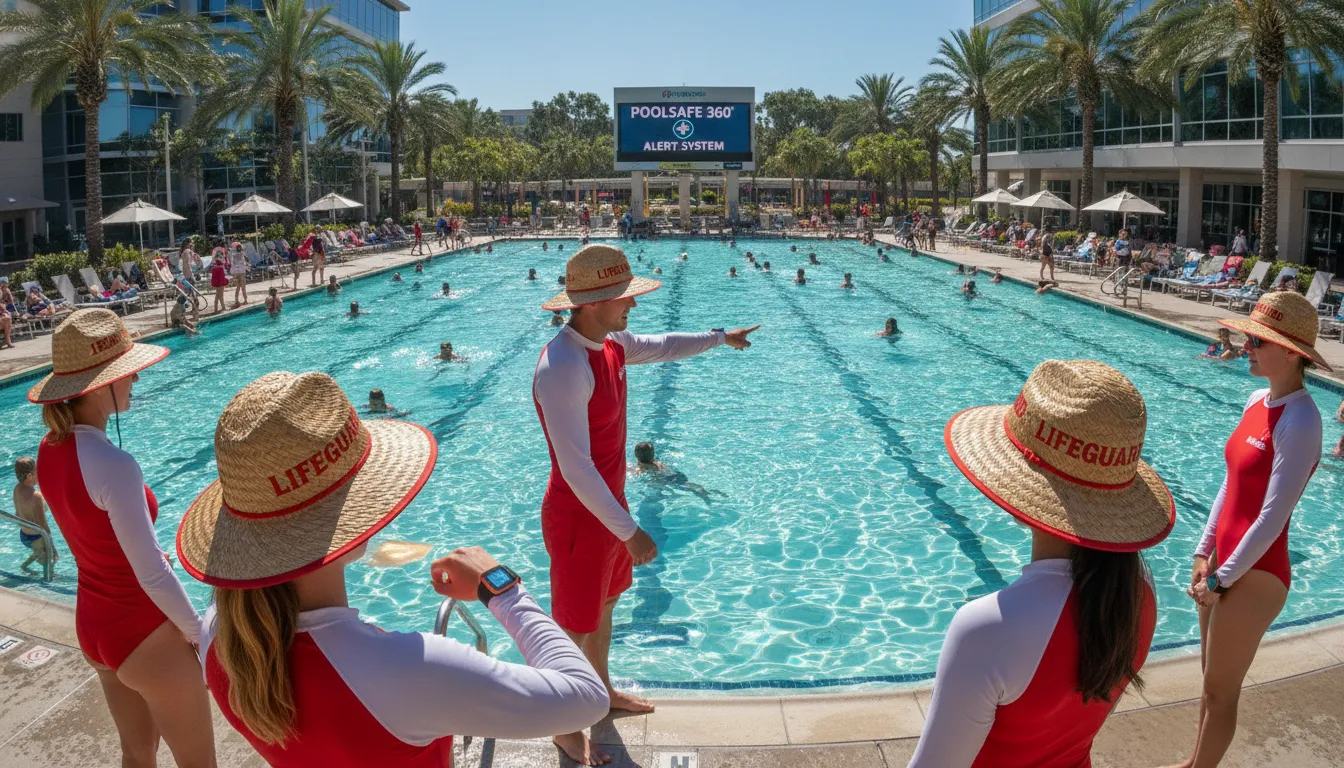
A lifeguard shortage does more than force pools to close. It creates deeper risks for the people who still use the water. When fewer staff are on the deck, the safety net that families trust begins to fray. Slow response times, increased guard fatigue, larger surveillance zones per guard, and a higher chance of missing a swimmer in distress become real concerns for every shift.
The growing risks for young children
Over half of child drownings take place at pools that have lifeguards on duty. This statistic surprises many parents, but it highlights a fundamental reality: human attention has limits, even with the best-trained staff. When a pool has fewer guards than needed, each guard must watch a larger area for longer periods. Even the most careful lifeguards can lose focus after 20 to 30 minutes of continuous scanning, especially when managing crowded pools with active children.
Maintaining the 10/20 standard under pressure
The industry standard requires guards to spot a swimmer in trouble within 10 seconds and reach them within 20 seconds. This benchmark becomes difficult to maintain when each guard covers a larger zone. With fewer staff, the distance between a guard and a distant swimmer increases, making it harder to meet the 20-second rescue window. Aquatics directors need practical tools that help their existing teams maintain these critical response standards even during the busiest hours.
How Can Drowning Detection Technology Support Short-Staffed Teams?
Drowning detection technology acts as a force multiplier for aquatic teams. It does not replace lifeguards but gives them a powerful tool to maintain high safety standards even with limited staff. The GUARDian Lifeguard Alert Bundle, starting at $149 per month, uses wearable sensors worn by swimmers and lifeguards to detect prolonged submersion or active rescues. This subscription-based model makes it accessible for facilities that cannot afford large capital purchases.
Constant watch in all water conditions
High chairs give a good vantage point, but water can turn cloudy from sunscreen, debris, or crowd activity. WAVE sensors work in both clear and murky water, finding submersions in seconds regardless of visibility. This is critical because many drownings occur when a swimmer slips under the surface in a blind spot caused by glare, crowd movement, or poor water clarity. The system never blinks, never gets distracted, and never loses focus.
Easy setup that fits any budget
Unlike camera-based systems that need permanent construction with wiring and drilling, wearable systems like WAVE require no structural changes. You can deploy the system in days, not weeks. This makes it ideal for seasonal pools that need quick deployment each summer, as well as year-round facilities with tight capital budgets. The subscription model at $149 per month for the Lifeguard Alert Bundle removes the barrier of a large upfront investment.
Active Water-Entry Alerts: How Wearable Technology Enhances Lifeguard Response
When a guard jumps in for a rescue, they need backup immediately. The system starts with small lifeguard tags that guards clip to their suits or rescue tubes. These tags detect when they are submerged and instantly send a signal to the GUARDian Hub (w3000). Other guards receive vibrating alerts on their PRO bracelets, and the hub can trigger sirens or speakers to broadcast the alert across the entire facility.
Hub Management Software (HMS) gives staff full control over alert settings. You can set a short delay to prevent false alarms when a guard simply gets their feet wet. And you can customize which alerts go to which team members. This flexibility ensures the system adapts to your facility's specific workflow rather than forcing your team to adapt to the technology.
A force multiplier for busy teams
This technology helps a small team function like a larger one. When one guard is busy with a rescue, the rest of the team knows immediately. They can clear the pool, bring additional equipment, or reposition to cover the surveillance gap. Fast communication during an emergency is critical because every second counts. With WAVE, the entire team is notified the moment a rescue begins, eliminating the delay of verbal communication across a noisy pool deck.
Wearable vs Camera-Based Drowning Detection: Which Is Best for Your Facility?
Two main types of drowning detection technology lead the market: wearable sensors and camera systems. Both help identify risks, but they have very different setup requirements, costs, and performance characteristics that matter when choosing the right solution for your facility.
| Feature | WAVE Wearables | Camera Systems |
|---|---|---|
| Setup Cost | Low subscription | High capital cost |
| Installation | Quick and simple, no construction | Permanent construction required |
| Water Clarity | Works in murky water | Needs clear water |
| Deployment Speed | Days | Weeks or months |
| Alert Method | Immediate wrist vibrations | Visual or sound alerts |
Performance in murky water
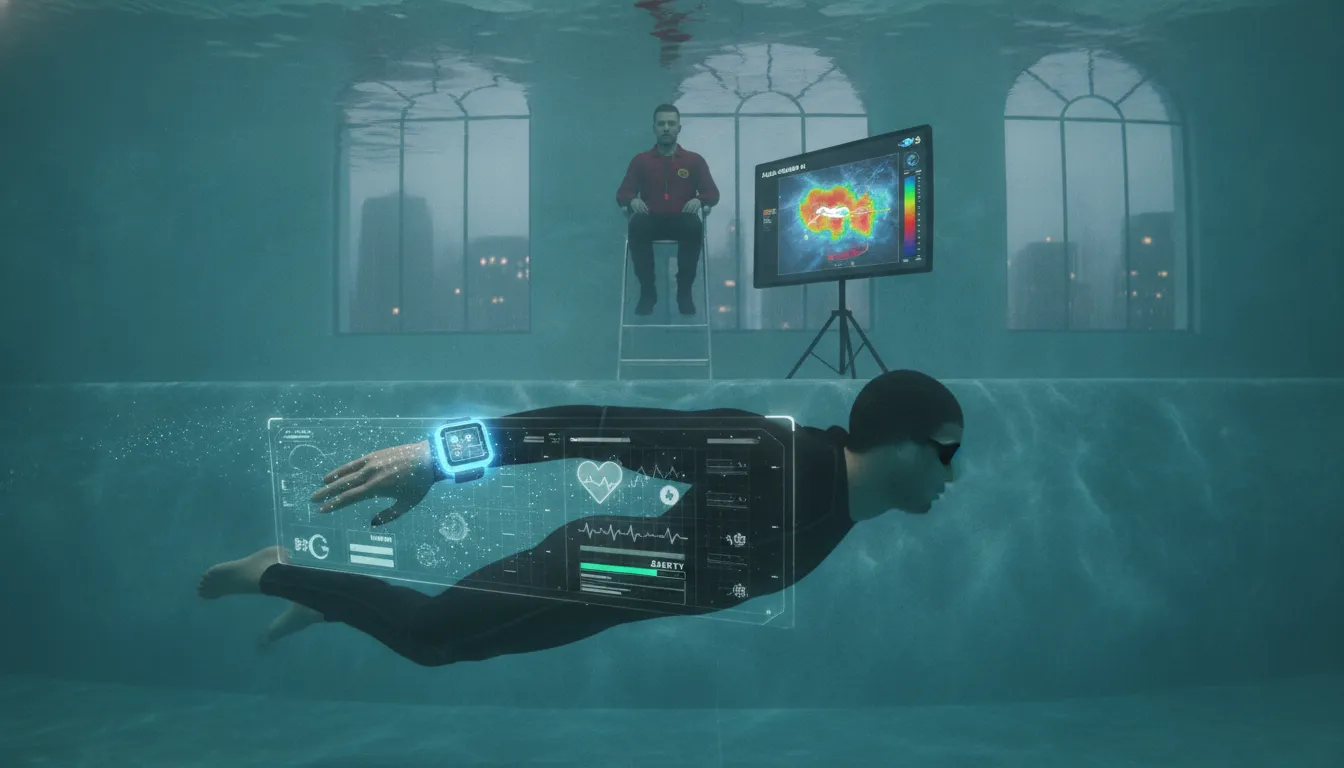
Camera systems struggle when water is dark or cloudy and may not detect a swimmer at the bottom, especially in outdoor pools exposed to weather and environmental debris. WAVE sensors use wireless technology that works regardless of water clarity. This makes wearable systems a more reliable choice for outdoor pools, natural water bodies, and facilities where water quality fluctuates throughout the day.
Cost comparison over time
While camera systems require a large upfront capital investment for hardware, installation, and ongoing maintenance, WAVE operates on a predictable monthly subscription. There are no surprise repair costs, no camera calibration fees, and no expensive hardware replacements. For municipal budgets and community organizations operating under tight financial constraints, this predictable cost model makes it easier to plan and budget for long-term safety improvements.
Frequently Asked Questions
Can drowning detection technology replace trained lifeguards?
No. Drowning detection technology does not replace trained lifeguards. It works as a force multiplier to support existing staff by adding an extra layer of surveillance. This system alerts staff to submersion events but does not take the place of trained human guards.
How does technology improve safety when a pool is understaffed?
Drowning detection technology provides constant monitoring that never gets tired. It acts as an extra set of eyes when staff numbers are low. When a swimmer stays underwater too long, the system detects it and sends a fast alert, helping staff respond quickly.
Does the lifeguard shortage mean public pools will close?
Some pools and beaches have already closed or reduced hours due to staffing gaps. However, drowning detection technology can help facility owners stay open safely by providing an added layer of protection that enables smaller teams to manage risk more effectively.
Is drowning detection technology effective in murky water?
Yes. Wearable sensors detect prolonged submersion without relying on visual clarity. Unlike camera systems that struggle in dark or cloudy water, these sensors work in any water condition, making them effective for pools, lakes, and other aquatic environments.
Why is water safety especially important during the lifeguard shortage?
Drowning is the leading cause of death for children ages 1 to 4. With fewer lifeguards available, facilities must adopt additional safety layers to protect swimmers. Drowning detection technology provides an affordable extra layer of protection when staffing is thin.
Set up your free safety consultation today
Staffing shortages are not going away overnight. The best thing you can do for your facility is add the tools that help your existing team work more effectively. WAVE's GUARDian Lifeguard Alert Bundle gives your lifeguards the backup they need to stay focused and respond faster during every shift.
Schedule a free consultation to learn how WAVE can support your team.
