
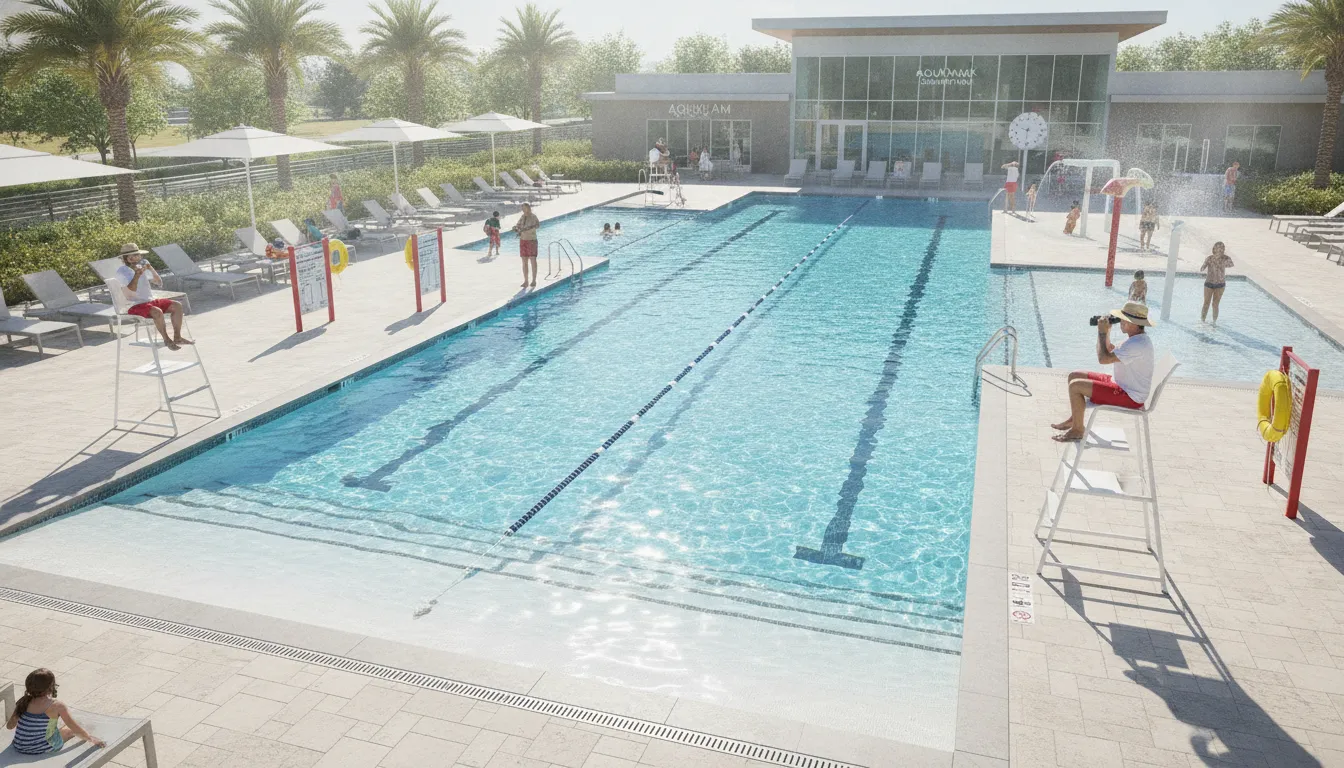
Aquatic risk management is a plan that helps pool managers find and stop water dangers by using both well trained lifeguards and new tools like the WAVE drowning detection system. These systems use AquaSense wearables and a GUARDian Hub to watch swimmers who stay underwater too long and alert staff through vibrating alerts before a tragedy occurs. By using digital tools, the system sends a shaking alert to a lifeguard bracelet right away if a sensor stays down to help find quiet drownings. This extra safety layer helps managers reduce liability and risks without building costly structures, which is vital since the WHO says drowning is a major cause of death worldwide.
What Is an Aquatic Risk Management Plan?
An effective aquatic risk management plan is a full strategy to keep swimmers safe. It goes far beyond having a lifeguard on a chair. This plan works as a map to find, stop, and handle dangers in and around the water. For community pools, it is a key tool to lower risks and improve safety for every guest.
A Layered Approach to Water Safety
Safe pools do not rely on just one thing. They use many layers of protection to stop accidents before they start. According to the World Health Organization, about 300,000 people die from drowning each year worldwide. To fight this, a good plan links physical tools, clear rules, and skilled staff together. It covers things like tall fences, pool signs, and the right number of guards for the crowd size.
This layered style ensures that if one safety step fails, others are still in place. For example, if a gate is left open, active supervision or safety tech can still prevent a tragedy. These layers work to protect the most at-risk groups. Drowning remains a top cause of death for kids aged 1 to 4, making these plans vital for every local pool and club.
Proactive Planning and Risk Assessment
Good risk management is proactive rather than reactive. The Centers for Disease Control and Prevention note that being aware of risks is a key part of water safety. A plan should list every possible hazard at a facility. This includes deep water zones, slippery decks, and blind spots where it is hard to see swimmers. Managers use this list to set rules that keep people out of harm's way.
A proactive plan also looks at how staff should act in a crisis. It sets clear steps for saves, first aid, and calling for help. By planning for the worst, teams can act fast when seconds count. This prep work reduces the chance of a mistake during a real emergency. It also shows that the facility takes its duty of care seriously.
Regular Reviews and Staff Training
A risk plan is not a file that sits on a shelf. It must stay live and active to work well. This means teams must check their safety steps and gear on a set schedule. They should look at how many guards are on duty and if their tools are in good shape. Regular drills help staff stay sharp and ready for any task.
Training should cover more than just swim skills. It must teach guards how to use new tech that helps them do their jobs better. When a pool adds tools like drowning detection systems, the plan must show how these tools support the team. Updating the plan helps it stay strong as the pool grows or changes over time. Keeping every part of the plan current is the best way to keep the community safe.
Assessing Risk Factors in Community Pools
Every good plan for aquatic risk management starts with a full look at the site. You must find where risks hide before they cause a crisis. Risks in local pools often come from the pool itself, the staff, and the swimmers. When these risks mix, they can create a risky spot for even the best teams.
What are site and water hazards?
The layout of a pool is a main risk factor. Pool shape, such as deep wells or curves, can create blind spots. A guard might lose sight of a swimmer in these zones. Murky water makes this worse because it hides the bottom of the pool. If a person slips under, they may vanish from view in a moment. High bather loads can stir up silt and body oils, which makes it hard to keep water clear during the day.
Outdoor sites face extra challenges. Many local pools or camps use natural water bodies like lakes. These areas have hidden hazards such as rocks, plants, or waves that change with the weather. Sight in natural water is often low, which makes it hard for guards to see a struggle. Glare from the sun can also create a mirror effect on the water. This effect makes it hard to see anyone who is below the surface.
How does staffing impact safety?
Staffing is a major part of your safety plan. Today, many pools struggle to find enough help. About 41.8% of aquatic sites now deal with staffing shortages. This shortage means some guards may work longer shifts or cover larger areas. Fatigue from long hours can slow down how fast a guard can act and hurt their focus.
Watch must be close and constant at all times. Those watching the water must avoid things like using a phone or reading. These gaps in focus are a big risk. Drowning can happen in seconds and is often silent. A swimmer in trouble rarely has the air to splash or yell for help. When staffing is low and crowds are high, the risk of a missed event goes up.
Why do swimmer actions matter?
Swimmer density is a key risk factor during peak hours. When a pool is crowded, it is harder for guards to see every person. High swimmer counts can hide a person who is struggling just below the surface. This is why you need expert aquatic risk management to set and enforce safe capacity rules. A packed pool also creates more noise, which can mask sounds of distress.
Personal factors like alcohol use also raise the risk. Drinking hurts balance and slows down how fast a person can think. This is dangerous because drowning can happen to anyone, any time they have access to water. Your risk plan must address how to spot and manage impaired guests. By checking these risks, you can build a safer pool for everyone.
Key Components of a Comprehensive Aquatic Risk Management Plan
A solid aquatic risk management plan uses many layers of protection to keep swimmers safe. While technology provides a great boost, lifeguards are the most vital part of any safety team. They act as the primary eyes and ears for your facility, and they must never be replaced by tools alone. A good plan builds around these experts to create a safer environment for everyone.
Staff Training and Readiness
Every plan starts with highly trained staff who know how to act in an emergency. Lifeguard certification is a must, but team skills should also go beyond basic watch duties. For instance, CPR training is a vital skill that can save lives before medical help arrives. Regular safety drills and clear emergency action plans (EAPs) ensure that every staff member knows their exact role during a crisis.
Your team also needs the right tools to do their jobs well. This includes clear signs that list pool rules and safety guides for all guests. Staff should check these signs and other gear daily to make sure they are in good shape. Constant checks of staff performance and safety gear help find and fix risks before they lead to an accident.
Physical Barriers and Facility Safety
Safe pool design helps prevent accidents before they happen. Pool fencing is a critical measure for any facility. Experts suggest using a four-sided fence at least four feet high that fully wraps around the pool area. This fence helps keep people away from the water when the pool is closed or when no guards are on duty.
Facility managers should also look at other physical tools like pool covers and locked gates. These barriers add extra steps that stop people from getting to the water when they should not. By making the water harder to reach without help, you lower the chance of a silent drowning event. These physical steps are a simple but effective way to manage site risk every day.
Education and Personal Safety Gear
Teaching swimmers how to stay safe is just as important as the physical barriers you set up. Formal swimming lessons are key to reducing drowning risk for people of all ages. While lessons do not remove the need for constant watch, they give swimmers the skills they need to stay afloat and reach safety if they get into trouble.
For weaker swimmers, the use of proper safety gear is a major part of a risk plan. Life jackets should be used by those who are not strong in the water. It is important to note that foam or air-filled toys are not safety devices. Relying on toys instead of life jackets can lead to a false sense of safety that puts lives at risk.
Global groups like the World Health Organization provide a clear roadmap for drowning prevention that facility owners can follow. These guides help you build a plan that meets world standards. By combining education, barriers, and staff training, you create a full shield of safety for your aquatic center.
Integrating Drowning Detection Technology into Your Safety Plan
Modern water safety relies on more than just high walls and watchful eyes. To build a strong aquatic risk management plan, you must layer your tools. Adding detection technology to your site creates a safety net that supports your staff. This approach helps find risks before they lead to a crisis. Because drowning happens in seconds and is often silent, every moment of warning counts for your team. You can find more data on this from the Centers for Disease Control and Prevention.
Technology as a support tool
You should view new tools as a way to help your lifeguards, not replace them. A good safety plan treats technology as a tool to support your human staff. These systems act as a force multiplier by watching for long submersions or water entry. This lets guards focus on the most active areas of the pool while the system monitors the bottom. For more tips, read about expert aquatic risk management from industry leaders.
Comparing safety systems
When you choose a system, think about how it fits your pool or lake. Some setups use cameras, while others use wearable tech. Wearable units are often better for dark or murky water where cameras might fail. These wireless tools also do not need big construction projects. This makes them a smart choice for many sites that need to start fast. Most facilities use these as part of a aquatic risk management plan that grows over time.
| Feature | Camera Systems | Wearable Systems (WAVE) |
|---|---|---|
| Water Clarity | Needs clear water to work | Works in clear or murky water |
| Construction | Often needs months of work | Installs in hours with no build |
| Budget Type | Large upfront capital cost | Low monthly subscription fee |
| Flexibility | Fixed to one pool site | Easy to move or expand |
Setting up for success
The best time to add tech is before your peak season starts. Because wireless systems avoid permanent build work, you can set them up in just a few hours. This speed allows you to get your team trained and ready without closing the pool. A layered plan that uses these tools helps your staff stay sharp and keep swimmers safe. By using a subscription model, you can add this protection without a large budget jump.
How WAVE Wearable Technology Supports Lifeguards
Modern tools help teams keep swimmers safe without replacing the need for human eyes. High-tech sensors act as a force multiplier for lifeguards by finding swimmers who stay under water too long. This tech adds a layer of safety that helps guards act fast when every second counts. Since drowning can happen in seconds and is often silent, getting help quickly is the best way to save a life.
Active monitoring with smart sensors
Smart wearables track each swimmer to give them their own safety net. These tools help groups like YMCAs improve their aquatic risk management technology by adding digital watchdogs. The system works well in clear or murky water where cameras might fail to see a person in trouble. By using these sensors, staff can monitor many people at once with high precision.
- Swimmers wear smart clips. People in the pool wear AquaSense headbands or small clips on their goggles. These light tools do not get in the way of swimming. They track how long a person stays under water in real time.
- Lifeguards wear alert tags. Staff members keep smart tags on them while they work. These tags link the guard to the main hub so they can get alerts anywhere on the deck.
- The hub tracks the water. The GUARDian Hub serves as the central brain of the system. It watches for a person staying under water too long or a guard jumping in for a save.
- Staff get a wrist alert. If the hub finds a risk, it sends a signal to staff PRO bracelets. These tools vibrate to tell the guard exactly who needs help and where they are.
- Facility alerts sound off. If no one stops the alarm, the system plays spoken alerts through speakers. This ensures the whole team knows about the risk so they can help right away.
- Software logs the data. CompleteView software keeps a record of every alert. This data helps managers find trends and make their aquatic risk management plans even better over time.
Better data for safer pools
Using tech to log incidents makes it easier to keep a pool safe for years. Managers can see when and where alerts happen most often. This helps them place guards in the best spots and update their safety rules. Digital logs also provide clear proof of safety work for risk managers and insurance teams.
Frequently Asked Questions
Does aquatic risk management technology replace human lifeguards?
No, drowning detection tech is a force multiplier for staff. It adds a layer of safety but does not take the place of guards. As the WAVE site states, these systems help teams by finding risks that eyes might miss. A good aquatic risk management plan uses tech to help guards do their jobs better. It never uses it to cut staff or lower the number of people on deck.
What role do audits play in aquatic risk management programs?
Audits help pool owners stay on track. They look at safety steps and tools to find gaps. This keeps the team alert and ready for any risk. Regular reviews are a big part of an aquatic risk management plan because they show what works. By checking staff and gear often, a pool can fix small issues before they lead to an accident or harm a swimmer.
How can staff training improve pool safety?
Constant training makes a pool safer for all guests. It helps guards and managers learn new skills like CPR or how to use new tech. When staff feel sure of their roles, they act faster during a crisis. Based on data from the CDC, skills like CPR can save lives before help arrives. Better training leads to fewer mistakes and a stronger safety culture at the pool.
Are air-filled pool toys considered reliable safety devices?
No, you should not rely on foam or air toys to keep swimmers safe. These items are for fun, not for life saving. They can pop or drift away, leaving a swimmer in a bad spot. As the CDC notes, these toys are not true safety gear. A good aquatic risk management plan uses life jackets for weaker swimmers instead of relying on pool toys for protection.
How does wearable tech work in murky pool water?
Some systems use cameras to spot risks, but murky water makes that hard. Wearable tech solves this by using sensors on the swimmer. These sensors find when a person is under the water for too long. As the WAVE site shows, this approach works even when visibility is low. It ensures that every swimmer has a layer of safety that does not rely on clear water or light.
Ready to build a safer aquatic risk management plan?
Waiting to add new safety tools adds to the risk of a bad event your staff could have caught with better help. Delaying this upgrade leaves your guards without the extra layer of support they need to stay sharp and watch over every swimmer. You can set up a full system in just a few hours to give your pool the safety it needs before the busy season starts.
Ready to build your system? Call (888) 384-9283 to schedule a free consultation with our safety team today. Our experts are ready to help you find the best setup for your pool and your budget now so you can start protecting lives. We can help you get your plan in place right away to keep your swimmers safe all year long.
