
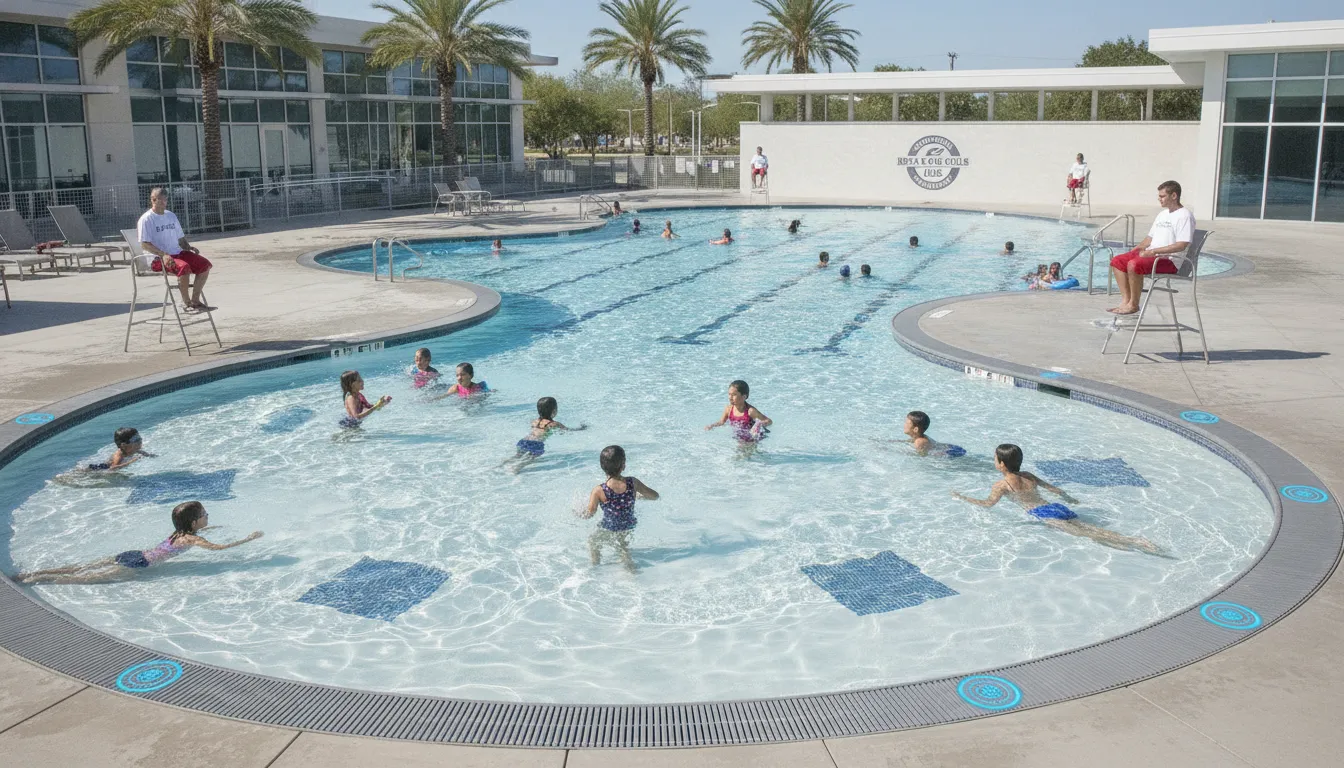
More children ages 1-4 die from drowning than from any other cause in the United States. This makes water safety the highest priority for youth clubs across the country.
Improving boys and girls club pool safety requires a multi-layered plan that combines expert lifeguard watch with advanced drowning-detection technology. While lifeguards are vital. The CDC reports that drowning is the top cause of death for children ages 1 to 4 and the second leading cause for children ages 5 to 14. By using wearable IoT sensors, clubs add a key layer of safety that works in all water conditions. This technology alerts guards immediately if a swimmer stays submerged too long, ensuring constant watch over every child.
Protecting young club members starts with understanding the specific risks that make youth pools different from other aquatic facilities.
Boys And Girls Club Pool Safety: Understanding the Unique Pool Safety Risks at Youth Clubs
Youth clubs face distinct pool safety challenges: large groups of children with mixed swimming abilities, limited staffing resources, and the silent nature of drowning incidents. With drowning being the leading cause of death for children ages 1-4, clubs need comprehensive safety strategies that go beyond basic supervision. WAVE Drowning Detection provides technology that helps lifeguards maintain constant vigilance during crowded swim sessions.
Boys and Girls Clubs provide vital swim programs for many children. However, these pools face unique risks. Large groups of kids with mixed swim skills can make it hard to spot a person in trouble. For children ages 1 to 4, drowning is the leading cause of death in the United States. It is also the second leading cause of unintentional injury death for children between the ages of 5 and 14, based on data from the CDC.
The danger of silent drowning
Most people think drowning involves splashing or shouting for help. In reality, drowning is often silent and can happen in less than a minute. Even a brief lapse in attention can lead to a tragic event. Many cases are fatal, and nonfatal drowning incidents can cause permanent disability or brain damage. Because drowning happens so quickly, having extra monitoring technology is essential for any busy pool.
Varied skill levels in large groups
Club pools often host children of many different ages at the same time. Some may be strong swimmers while others are still learning. This mix makes it harder for staff to watch everyone effectively. Research shows that formal swimming lessons can reduce the risk of drowning by 88% in children. These lessons help kids understand their limits and feel more comfortable in the water.
Support from water safety programs
Many clubs use external programs to teach safety to young members. The ZAC Foundation camps teach children ages 5 to 9 about the importance of pool safety and open water rules. Training is essential, but it must be paired with close supervision. Using multi-layered pool safety equipment helps clubs fill gaps in human vision, especially during the most crowded hours.
How WAVE's National Partnership with BGCA Enhances Pool Safety
Since 2021, WAVE has been a preferred vendor for the Boys and Girls Clubs of America, with the partnership expanded in 2025. This national agreement gives clubs access to advanced drowning-detection technology through a streamlined procurement process. Club executives gain a trusted solution that meets high safety standards while fulfilling their duty of care to members and families at an accessible price point.
WAVE Drowning Detection Systems has worked with the Boys and Girls Clubs of America since 2021 to protect young swimmers. This national partnership, expanded in 2025, makes WAVE a preferred vendor for clubs across the country. By choosing WAVE, club leaders gain access to a trusted drowning detection system that meets rigorous safety standards. This partnership helps club directors focus on their mission while adding a vital layer of water protection.
Preferred vendor status and duty of care
As a leading provider of digital aquatics safety equipment in the USA, WAVE helps clubs fulfill their duty of care to members and families. Parents expect the highest levels of safety and professional supervision when they drop their children off at a local club. For executives, the national partnership streamlines the process of purchasing and deploying multi-layered pool safety equipment, ensuring every club can use consistent, high-quality technology.
A force multiplier for lifeguards
WAVE technology acts as a force multiplier for lifeguards, not a replacement. Even with professional staff on duty, the CDC reports that drowning remains a leading cause of death for children. Technology fills human blind spots and alerts staff the moment a swimmer stays under too long. By using advanced wearable drowning detection, clubs give their lifeguards an extra set of eyes that never gets tired or distracted.
Simplified safety across the nation
The partnership makes it easy for any club to deploy the safety tools they need without complex procurement. Whether a club has one pool or many, they can deploy WAVE technology to support their staff and protect their swimmers. This uniform approach builds trust with community members and ensures that safety remains a top priority at every Boys and Girls Club pool.
Overcoming Budget Barriers with Subscription-Based Drowning Detection
Traditional pool safety systems like underwater cameras can cost tens of thousands of dollars plus construction work. WAVE solves this with a subscription-based model starting at $299 to $399 per month with a $0-deductible Warranty and Support Plan. This makes advanced drowning-detection technology accessible to non-profit youth organizations without requiring large capital expenditures or permanent facility modifications.
Aquatic facilities often face high costs when upgrading safety equipment. Traditional camera-based systems can cost tens of thousands of dollars to purchase and install. This creates a barrier for many local clubs. WAVE solves this by offering affordable subscription-based safety for a monthly fee of $299 to $399. This model lets clubs add vital protection without needing a large capital budget.
Low monthly costs
Budget planning for non-profits is often tight. A monthly subscription fits into operational costs far better than a one-time six-figure expense. With pricing starting at $299 per month, clubs can deploy the latest technology immediately. This makes boys and girls club pool safety more accessible for facilities of all sizes without waiting for grant cycles or major donations.
Fast setup with no construction
Most high-tech safety tools require permanent modifications to the pool deck or building. According to CDC data, drowning remains a leading cause of death for children, and clubs need tools that can be deployed quickly. WAVE's wireless system requires none of the construction or drilling that camera systems demand. This saves money on installation and keeps the pool open during setup.
Predictable support and warranty
Maintenance costs can surprise any budget manager. WAVE includes a $0-deductible Warranty and Support Plan with its service. This keeps costs predictable even when repairs or support are needed. The technology remains ready to assist staff at all times, serving as an additional layer of protection that supports, not replaces, lifeguards.
Multi-Layered Protection: Combining Lifeguard Vigilance with Smart Technology
The most effective youth club pool safety strategy uses multiple layers of protection. WAVE adds a smart technology layer that works alongside lifeguards to eliminate blind spots. If one safety layer has a gap, others close it. This approach combines human expertise with IoT sensor speed to keep every child in view at all times, reducing the risk of undetected incidents during crowded swim periods.
Top safety for any youth club starts with a comprehensive plan. Swimming safety requires more than just one person watching the water. It demands multiple layers that work together. WAVE adds a smart layer to your pool that works with your guards to protect children continuously. This approach helps clubs manage risk and build trust with families.
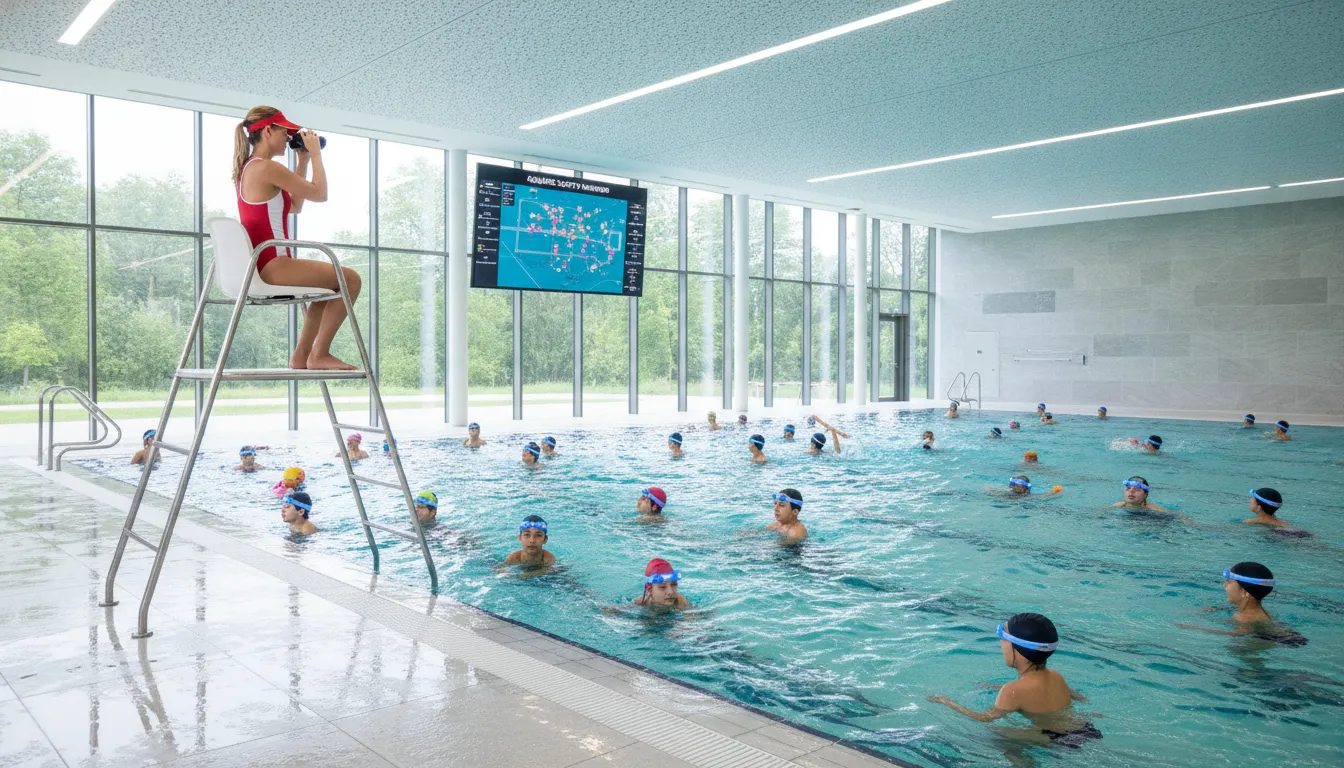
A force multiplier for your guard team
Lifeguards work diligently to watch every swimmer in a busy pool. But they face many challenges: sun glare, large crowds, and human fatigue can all create blind spots. WAVE acts as a force multiplier for your guard team. The GUARDian drowning detection system supports lifeguards as an additional protection layer. It gives staff a second set of eyes that never tires or looks away, which is essential for commercial pool safety equipment in busy youth centers.
Detecting a child underwater in real time
WAVE uses smart IoT sensors to identify risks quickly. Swimmers wear small AquaSense sensors on goggles or a headband. These sensors communicate with the GUARDian Hub (w3000) through a wireless connection. The Hub Management Software (HMS) tracks the status of each child in the pool. If a sensor remains underwater for too long, the system sends an alert immediately. This technology works where cameras cannot -- in murky or dark water conditions that often occur during busy swim periods.
Fast alerts for quick action
When a child is in trouble, every second counts. Drowning is often sudden and silent, and it can happen in just a few seconds (CDC). The WAVE system sends alerts to Staff PRO bracelets that vibrate and light up the moment a swimmer stays submerged too long. These fast alerts allow staff to act without delay. They do not have to wait for visible signs of distress -- the system detects the submersion and directs them to the precise location.
Why Wearable Drowning Detection Works Best for Youth Programs
Wearable sensors provide direct, individual tracking of each young swimmer. Unlike camera-based systems that require perfectly clear water and expensive installation, WAVE's AquaSense wearables work in all water conditions, install wirelessly in hours, and track each swimmer individually. The subscription model at $299-$399 per month makes it accessible for non-profit youth organizations.
Youth programs face unique challenges when managing pool safety for large groups of children. Wearable sensors provide a direct way to track each young swimmer individually. The AquaSense system uses small tags that attach to goggles or headbands. These devices monitor swimmers in real time to detect anyone who stays submerged too long. This individual tracking makes it a key component of any drowning detection program for youth facilities.
| Feature | WAVE Wearable System | Camera-Based Systems |
|---|---|---|
| Water clarity needed | Works in clear and murky water | Requires perfectly clear water |
| Installation | Wireless, no construction | Needs wiring and structural changes |
| Cost model | Subscription ($299-$399/mo) | Large upfront capital purchase |
| Setup time | Same day | Weeks to months |
| Swimmer tracking | Individual per-swimmer sensors | Group-level zone monitoring |
Reliable tracking in all water types
Many safety systems rely on cameras, but these often fail when water is not perfectly clear. Bubbles, waves, or murky conditions can block their view. WAVE technology works in clear and murky water alike, ensuring every child is monitored even during busy afternoons with many active swimmers and reduced water visibility.
Fast setup with no major construction
Clubs often need to upgrade safety without closing their pools. Camera systems typically require wiring and structural modifications. Wearable technology avoids these costs because it is wireless and quick to install. Clubs can add a layer of protection without permanent facility changes, making it ideal for youth centers that want to deploy new safety technology immediately.
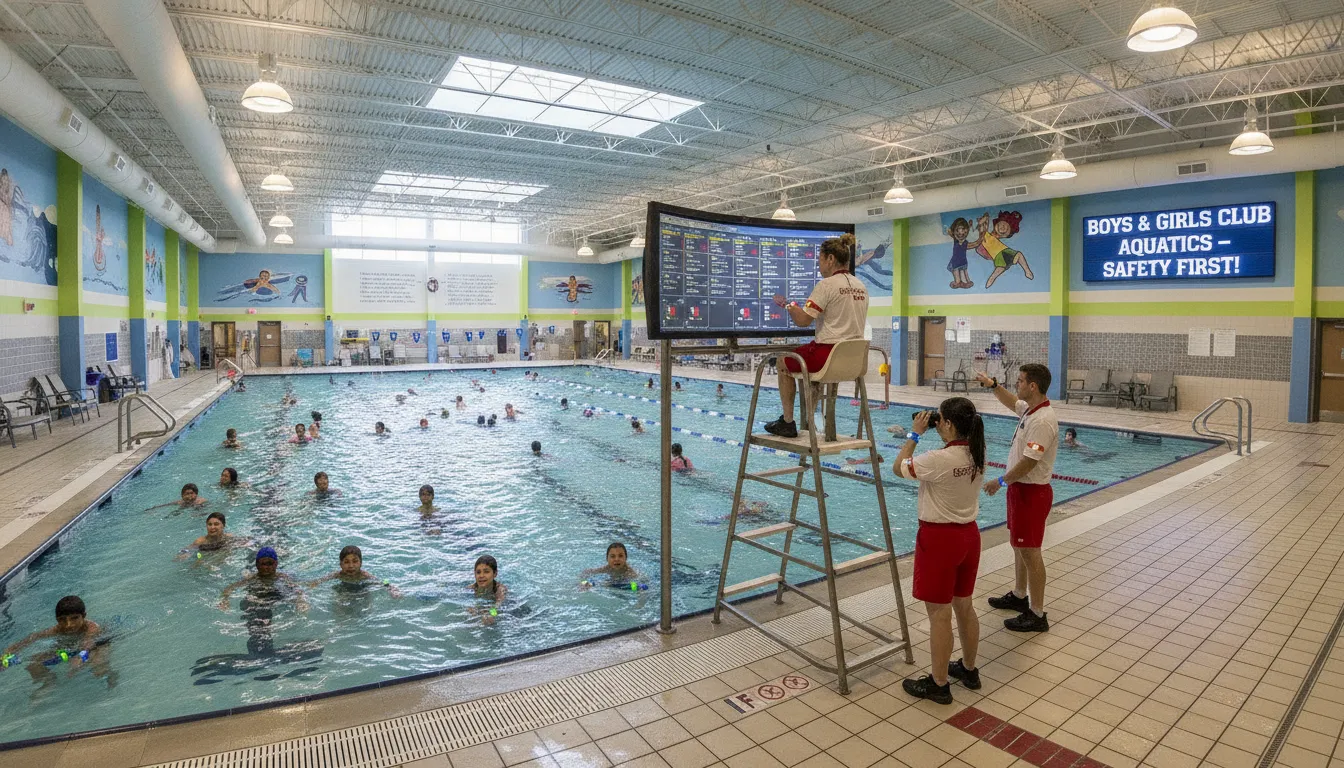
Support for busy lifeguard teams
Even the most attentive lifeguards face challenges watching every person in a large group. Technology serves as an extra set of eyes that never gets tired. If a child stays under too long, the system sends a vibrating alert directly to staff bracelets. This helps the team respond quickly to any swimmer in need and builds a safer environment for every child.
Implementing a Drowning Detection System at Your Club
Setting up WAVE at a Boys and Girls Club takes just one day with no construction. The GUARDian Swimmer Protection Bundle includes the Hub (w3000), AquaSense wearables, and Staff PRO alert bracelets. Staff receive comprehensive training on responding to alerts and using the Hub Management Software. The $0-deductible Warranty and Support Plan ensures long-term reliability.
Implementing a drowning detection system helps your Boys and Girls Club meet the pool safety inspection standards expected by your community. Modern technology acts as a force multiplier for lifeguards by filling human blind spots during busy swim sessions. The setup is fast and requires no permanent modifications to your facility.
Consultation and system choice
The first step is a site assessment to determine optimal placement for your equipment. Our team evaluates your pool size and deck layout to ensure full coverage. For most clubs, the GUARDian Swimmer Protection Bundle is the ideal choice. This package includes the GUARDian Hub (w3000) and enough wearables for your daily swimmer count.
Equipment setup and software configuration
Once you have your bundle, physical setup takes minimal time. Place the GUARDian Hub (w3000) in a location with clear sightlines across the entire pool area. Swimmers wear AquaSense sensors that are small, comfortable, and wireless. These devices monitor how long each person stays underwater. The Hub Management Software (HMS) runs on your club tablet or computer, allowing you to manage swimmer counts and check equipment status in real time.
Staff training and ongoing support
Training your team is the most important step. Lifeguards wear Staff PRO bracelets that vibrate the moment the system detects a potential incident. We teach your staff how to respond to these alerts and how to use the HMS dashboard effectively. After deployment, our $0-deductible Warranty and Support Plan covers your equipment and ensures your system remains ready to assist your lifeguards.
- Initial Site Assessment: A professional team evaluates your club to map hub placement and determine swimmer capacity needs.
- Bundle Selection: Choose the GUARDian Swimmer Protection Bundle matched to your club's daily attendance.
- Equipment Placement: Set up the GUARDian Hub (w3000) and distribute AquaSense wearables to swimmers.
- Software Configuration: Activate the Hub Management Software (HMS) to monitor system health and swimmer data.
- Lifeguard Training: Staff learn to use Staff PRO bracelets for instant vibrating alerts during potential incidents.
- System Activation: The system goes live as an active layer of safety for your swim program.
- Support Enrollment: Activate the $0-deductible Warranty and Support Plan for ongoing maintenance and updates.
Frequently Asked Questions
How do swimming lessons help with pool safety?
Swimming lessons are a key component of water safety. According to Boys and Girls Clubs, formal lessons can reduce the risk of drowning by 88% in children. Classes help kids feel more comfortable in the pool and teach them how to stay afloat if they fall in. When children learn to swim at a young age, they develop skills that serve them throughout life.
At what age should kids start learning water safety?
Children should begin learning water safety as soon as they are old enough to be near a pool. Many programs at Boys and Girls Clubs teach children as young as five about pool and open water safety. Starting early helps children build good habits that last a lifetime and makes them more aware of water risks before they swim independently.
How can Boys and Girls Clubs support drowning prevention?
Clubs can support drowning prevention by implementing multiple layers of protection. This includes water safety education, formal swimming lessons, and advanced technology such as wearable sensors that detect prolonged submersion. These tools do not replace lifeguards but work as an additional layer of protection to help staff respond quickly to potential incidents.
What is the best way to prevent pool accidents for children?
The most effective approach to preventing pool accidents combines multiple strategies: active supervision by trained lifeguards. Swimming lessons for children, and technology such as wearable sensors that track submersion time. The CDC identifies drowning as a leading cause of death for young children, making a comprehensive, multi-layered safety plan essential for any youth aquatic facility.
Ready to Strengthen Your Club's Pool Safety?
Drowning remains a silent threat even when lifeguards are on duty. Delaying safety upgrades puts every young swimmer at risk. WAVE's system can be installed in a single day with no construction, no wiring, and no disruption to your pool schedule. When you act now, you give your staff the most advanced detection technology available and give parents the peace of mind they deserve. Your club can set the standard for safety in your community by taking this step today. Schedule a free consultation to learn how WAVE can support your lifeguard team and protect the children in your care.
