
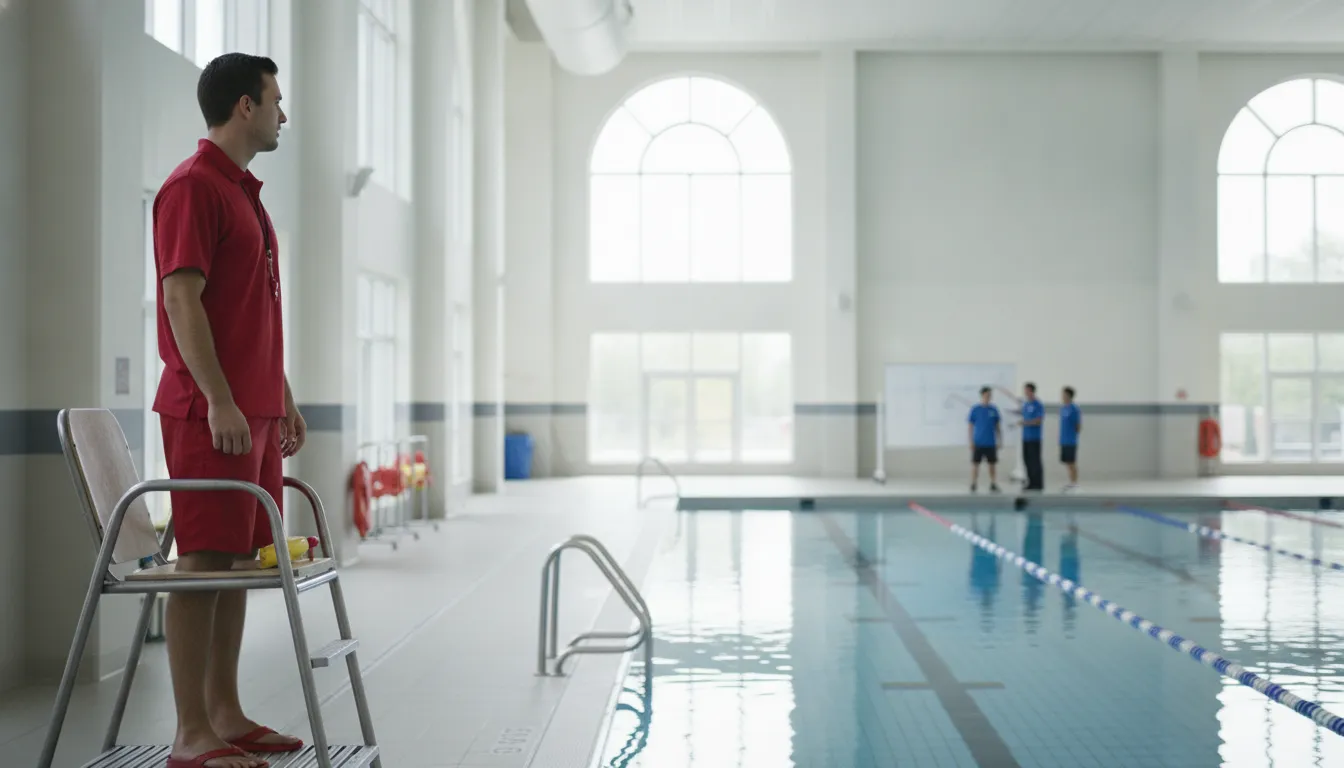
In a supervised aquatic facility, safety depends on more than a lifeguard chair or a posted rule. A strong program helps staff notice risk early, keeps patrons informed, and gives the team a practiced response when conditions change. Because drowning can happen in seconds and is often silent, each control should reinforce the others.
Learning how to prevent drowning starts with layers: active supervision, clear patron guidance, prepared staff, a site-specific emergency plan, and technology that supports lifeguards. No single measure guarantees safety, but a coordinated system can help facilities identify danger sooner and respond with greater confidence.
That coordinated system begins by connecting everyday prevention with readiness, response, and detection. The following framework shows how those layers work together across pools and other supervised aquatic settings.
How to Prevent Drowning With Layered Facility Controls
A reliable aquatic safety program is built from several controls that reinforce one another. Prevention reduces exposure to hazards, readiness prepares people and equipment before an incident. Response coordinates the actions that follow an alert, and detection can add awareness when a swimmer needs immediate attention. This prevention-first framework is designed for supervised aquatic environments, where technology works alongside trained staff and established procedures.
Start with prevention. Facilities can set expectations through clear rules, appropriate access controls, swimmer education, and an environment that supports attentive supervision. Prevention is not a single sign or policy. It is the daily practice of identifying risks, communicating them clearly, and adjusting operations to the people, activities, and conditions present at the facility.
Readiness turns those expectations into capability. Staff need defined responsibilities, familiar equipment, and practice with the facility's emergency procedures. A readiness review may consider who is watching each area, who calls for additional help, where rescue equipment is located, and how information reaches managers or emergency responders. Drills and debriefs help identify gaps before staff must manage a real event.
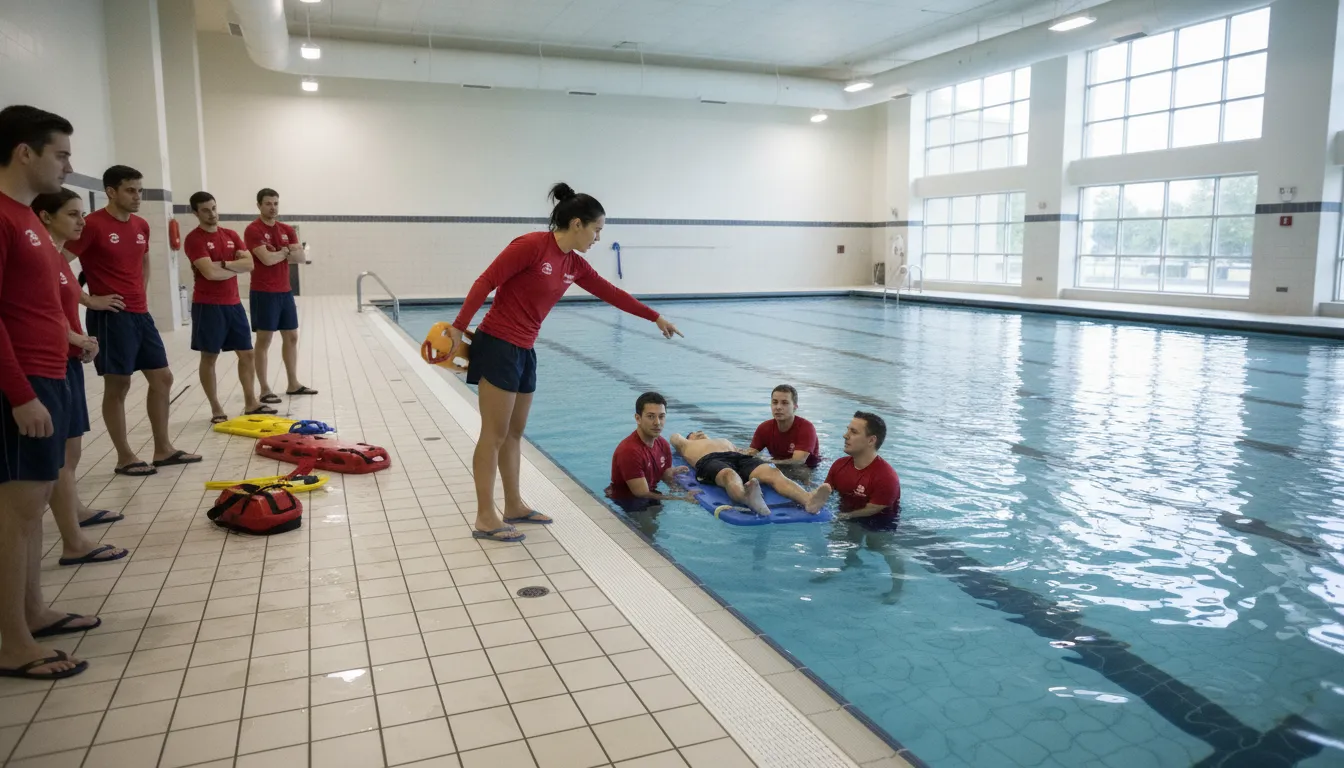
Response depends on coordination. An emergency action plan should connect the first observation of trouble to the right sequence of actions, including staff communication, rescue support, medical assistance, and documentation. The plan should reflect the facility's layout and hazards rather than relying on a generic checklist. Teams can use a layered water safety plan to organize these controls and keep them current.
Detection adds another source of awareness to the system. WAVE combines wearable sensors, wireless communications hardware, cloud software, monitoring, and education to support swimmers and lifeguards. Depending on the configured system, AquaSense swimmer wearables can monitor submersion, while lifeguard tags can detect water entry automatically without manual activation.
Alerts may include vibrating staff bracelets, spoken facility announcements, sirens, and LED indicators. Hub Management Software supports equipment status, battery monitoring, alert configuration, staff permissions, and activity logging. CompleteView supports incident analytics and historical reporting.
These tools support rapid awareness and coordinated response, but they do not replace lifeguards, active supervision, training, patron education, or an emergency plan. The strongest approach assigns each layer a clear purpose, tests how the layers work together, and updates the program as the facility's operations change.
A layered drowning-prevention approach combines prevention, staff readiness, coordinated response, and technology-supported detection. Each layer supports the others, while lifeguards and emergency procedures remain essential.
How to Prevent Drowning Through Active Supervision
Active supervision turns watching the water into a defined safety responsibility. In a supervised aquatic facility, staff should know which area they own, what normal activity looks like, and how they will communicate when attention needs to shift. That structure matters because drowning happens in seconds and is often silent, leaving little room for a delayed discovery. Lifeguard support systems can add useful visibility to that human process, but they do not replace attentive lifeguards or established procedures.
Start with scanning that is deliberate rather than casual. Lifeguards should continuously sweep their assigned zone, vary the direction and depth of their visual scan, and look for changes in behavior, body position, and movement. Zone ownership should be unambiguous, especially when multiple lifeguards cover one deck or water area. A clear handoff process helps prevent the gaps that can occur when one person assumes another person is watching.
Facilities should also design the environment and the work routine to reduce distraction. Phones, reading, side conversations, unnecessary tasks, and other interruptions can pull attention away from the water. Supervisors can reinforce this expectation through deck checks, clear break coverage, and a culture that treats scanning as the primary duty while on surveillance. The CDC specifically advises adults watching children near water to avoid distracting activities such as phone use, reading, alcohol, and drugs because drowning can happen quickly and quietly. CDC drowning-prevention guidance supports this prevention approach.
Children need close, constant oversight even when a lifeguard is present. Parents, guardians, instructors, and facility staff each have a role in noticing when a child is struggling, separated from a supervising adult, or moving beyond an appropriate area. Swimming lessons may reduce drowning risk, but they do not make a child self-sufficient in the water. Staff should communicate that expectation clearly and intervene early when supervision breaks down.
Access control extends active supervision beyond the pool itself. Check gates, doors, sightlines, and transition areas so children cannot unexpectedly reach the water without an adult noticing. CDC guidance notes that drowning can occur when children gain unsupervised access to pools, including when they are not expected to be near the water. At opening, closing, and low-traffic periods, a documented perimeter check can help identify an unsecured entry point before it becomes a hazard.
Active supervision reduces drowning risk by combining purposeful scanning, clear zone ownership, distraction control, close child oversight, and reliable control of access to the water.
Build Staff Readiness Before an Emergency
Prepared teams do more than react well in a stressful moment. They know who leads, who enters the water, who calls for outside help, who manages bystanders, and who documents what happened. Build those expectations into routine operations so staff can act together instead of trying to determine responsibilities during an unfolding incident.
- Assign roles and escalation paths. Define primary and backup responsibilities for recognizing a concern, initiating the rescue response, communicating with facility leadership, contacting emergency services, and guiding arriving responders. Document who receives each alert and how the incident moves from the pool deck to facility management. The plan should make handoffs clear without suggesting that technology replaces lifeguard judgment or the facility's emergency action plan. WAVE technology supports coordinated response, but it is not a substitute for lifeguards or an emergency plan. Learn how WAVE supports lifeguards.
- Practice realistic drills. Rehearse the responsibilities staff may need to perform, including recognizing an alert, communicating the location, clearing the area, coordinating the rescue, and handing off information. Vary the scenario and assign observers who can note confusion, missed communications, or gaps between roles. A drill is useful when it reveals a process that needs improvement, not when it simply confirms that everyone knows the script.
- Keep CPR readiness visible. CPR skills could help save a person's life in the time it takes for paramedics to arrive, according to the CDC. Keep the facility's training expectations, renewal responsibilities, and coverage assignments documented, then verify them as part of staff readiness reviews. Do not treat a completed course as the end of preparation. Staff also need to understand how their role connects to the broader emergency response.
- Check equipment and alert pathways. Make equipment status, battery monitoring, alert configuration, and staff permissions part of a repeatable check rather than an assumption. Hub Management Software supports these readiness functions and activity logging. Confirm that staff understand the alert signals and the next action associated with each one. WAVE alerts can include vibrating staff bracelets, spoken facility announcements, sirens, and LED indicators, so the procedure should account for the alert methods used at your facility.
- Debrief and document every exercise or incident. Record what happened, what worked, where communication slowed, and which responsibility or equipment issue needs attention. Review the record with the relevant staff, assign follow-up actions, and revisit the procedure after changes to the facility, staffing model, or operating conditions. CompleteView supports incident analytics, historical reporting, and exports for safety improvement and documentation, helping leaders turn observations into a stronger process.
Answer: Staff readiness comes from clear roles, practiced drills, CPR capability, verified equipment, and documented debriefs. These controls help lifeguards and facility teams coordinate before an emergency occurs, while technology adds awareness without replacing professional supervision or the emergency plan.
How Should Facilities Educate Swimmers and Families?
Patron education turns safety expectations into actions people can follow before they enter the water. Facilities should explain rules in plain language, repeat them at the point of use, and make the guidance relevant to children, teens, adults, and caregivers. Education does not replace supervision or an emergency plan, but it helps patrons recognize hazards and make safer choices.
Start with a short orientation that covers depth changes, approved entry points, no-running rules, breath-holding limits, and where families should remain while children swim. Use signs, announcements, staff conversations, and registration materials together rather than relying on one posted rule board. Explain the reason behind each rule, especially when a restriction may not be obvious to a first-time visitor.
Teach skills without creating false confidence
Encourage formal swimming lessons and make information about available classes easy to find. The CDC reports that formal swimming lessons can reduce drowning risk among children and young adults. But children who have taken lessons still need close and constant supervision around water. Families should understand that swimming ability is one safety layer, not permission for a child to swim alone or outside the designated area.
Where boating, open-water programming, or other relevant activities are offered, explain when properly fitted life jackets are required and how to use them. Life jackets reduce drowning risk during boating for people of all ages and swimming abilities. For natural-water settings, brief patrons on currents, waves, rocks, vegetation, and limited visibility. Weather guidance should be specific to the site, since conditions can change quickly and create strong winds, flash floods, or lightning hazards.
Make risk communication clear and inclusive
Address alcohol directly at facilities where it may be present. Alcohol impairs judgment, balance, and coordination, and it can increase risk-taking behavior. State what the facility permits, how intoxication is handled, and who patrons can contact when they need help. Keep the message factual and consistent, without shaming people or creating ambiguity about expectations.
Inclusive communication means offering instructions in the languages and formats patrons use, with visual cues and accessible alternatives where appropriate. Staff should check understanding rather than assume that a sign was read or a verbal announcement was heard. Invite families to ask about supervision zones, water depth, lessons, life-jacket use, and weather closures. Clear communication also supports faster action when a concern arises, so review lifeguard response time as part of the facility's broader education and readiness work.
Educate patrons on rules, supervision, lessons, life jackets, environmental hazards, weather, and alcohol-related risks. Use clear, inclusive communication to help families make informed choices while reinforcing that trained supervision remains essential.
What Should an Aquatic Emergency Action Plan Cover?
An emergency action plan gives staff a shared response framework before a swimmer needs help. It should make the first moments understandable under pressure, while leaving room for the conditions of a particular pool, waterfront, school, camp, or water park. Drowning can happen in seconds and is often silent, so the plan should reduce hesitation without assuming a single mandated format.
Build the plan around the facility's layout, staffing model, equipment, communication tools, and likely hazards. Then practice it, document what happened, and revise it when conditions change. A plan should strengthen, not replace, active supervision, trained staff, and other layers in a layered water safety plan.
- Define how an emergency is recognized and communicated. State who can call an emergency, which radio channel or phone is used, how staff summon additional responders, and how patrons are directed away from the affected area. Account for communication gaps, loud environments, multiple bodies of water, and situations where a visual signal may be missed. If the facility uses alert technology, identify what each alert means and who acknowledges it.
- Assign rescue, supervision, and support roles. Name the primary responder, backup responder, surveillance coverage, crowd-control lead, first-aid or CPR lead, and person responsible for meeting emergency services. Clarify who maintains coverage of other swimmers while a rescue is underway. Staff should know where rescue and first-aid equipment is stored, how it is checked, and what escalation steps follow a suspected submersion.
- Plan the EMS handoff. Identify the entrance, access route, gate, elevator, or shoreline point that responders should use. Include directions for sending someone to meet EMS, preserving a clear path, communicating known facts, and transferring care to paramedics. CPR skills may help save a person's life before paramedics arrive, so training and readiness should be visible parts of the plan. CDC guidance supports CPR readiness as one element of drowning response.
- Document site-specific hazards and protective actions. Include blind spots, deep-water transitions, drains, diving areas, weather exposure, restricted access points, and any natural-water hazards. Lakes, rivers, and oceans may contain currents, waves, rocks, vegetation, and limited visibility. Weather can also change quickly and create strong winds, flash floods, or lightning hazards. Write down closure, evacuation, and re-opening decisions for those conditions.
- Drill, record, and review. Practice realistic scenarios with every relevant role, including communication and EMS access. Record missed steps, equipment issues, unclear responsibilities, and delays in information transfer. Review the plan after drills, incidents, staffing changes, renovations, or new activities. Operational tools such as activity logging and incident reporting can support that review, but the plan remains a human-led process.
An effective aquatic emergency action plan assigns communication, rescue, supervision, EMS handoff, hazard management, and review responsibilities in language staff can use under pressure. Regular drills turn that written plan into coordinated action without treating it as a substitute for lifeguards or active supervision.
Where Does Drowning-Detection Technology Fit?
Technology belongs in the detection and alerting layer of a broader aquatic safety program. In a supervised facility, it can help staff recognize a possible submersion or water entry and coordinate the next action. It does not replace active supervision, trained lifeguards, patron education, or an emergency action plan.
That distinction matters because drowning can happen in seconds and is often silent. A facility deciding how to prevent drowning should first strengthen the controls that reduce exposure and improve readiness, then assess where technology can add useful awareness and accountability.
| Safety layer | Primary purpose | Facility examples | How WAVE can support it |
|---|---|---|---|
| Prevention controls | Reduce opportunities for unsafe water access and improve swimmer behavior. | Active supervision, zone ownership, access controls, rules, education, and appropriate equipment. | WAVE is designed for supervised aquatic environments and complements these controls rather than replacing them. |
| Staff alerts | Increase awareness when a possible incident requires immediate assessment and response. | Lifeguard observation, clear escalation roles, rescue equipment, and practiced emergency procedures. | The GUARDian drowning detection system connects swimmers, lifeguards, and facility staff through real-time wireless monitoring. |
| Detection inputs | Identify signals that may be difficult to notice during a busy operating period. | Observation, facility reports, and equipment or wearable alerts. | AquaSense swimmer wearables monitor submersion, while lifeguard tags detect water entry automatically without manual activation. |
| Post-incident review | Document what occurred and identify opportunities to improve the safety program. | Debriefs, activity records, corrective actions, and updates to training or procedures. | CompleteView supports incident analytics, historical reporting, and exports for safety improvement and documentation. |
Alert design should match the facility's response plan. WAVE alerts may include vibrating staff bracelets, spoken facility announcements, sirens, and LED indicators. The appropriate sequence depends on the site, staffing model, and communication needs. Facility leaders can also use Hub Management Software to review equipment status, monitor batteries, configure alerts, manage staff permissions, and maintain activity logs. Explore lifeguard alert equipment alongside the rest of the response system.
WAVE is best evaluated as a force multiplier: a way to support rapid awareness and coordinated response while lifeguards continue to supervise, assess conditions, and lead rescue actions. It should be integrated into drills and documented procedures, not treated as an independent guarantee of safety.
Detection technology adds another layer by helping supervised facilities notice potential incidents and coordinate alerts, while prevention controls, lifeguards, and emergency plans remain essential.
Frequently Asked Questions About Drowning Prevention
How can you prevent drowning in a supervised aquatic facility?
Use multiple controls together: active supervision, clear zone ownership, trained staff, swimmer education, an emergency action plan, and access to rescue equipment. Technology can add another detection and alert layer, but it should support lifeguards and established response procedures rather than replace them. The CDC recommends layered prevention practices.
Is drowning 100% preventable?
No prevention system can guarantee that every drowning will be prevented. Facilities can reduce risk by identifying hazards, limiting distractions, maintaining supervision, preparing staff to respond, educating patrons, and reviewing incidents for improvements. A prevention-first plan should focus on reducing exposure and improving the chance of rapid recognition and response.
Do children who take swimming lessons still need supervision?
Yes. Swimming lessons can reduce drowning risk, but children who have taken lessons still need close and constant supervision in or around water, including when a lifeguard is present. Adults and staff should assign responsibility for supervision instead of assuming another person is watching. CDC guidance supports both lessons and continued supervision.
What should staff do before an aquatic emergency occurs?
Staff should understand their roles, practice the emergency action plan, check rescue and communication equipment, maintain CPR readiness, and document issues discovered during drills. After exercises or incidents, a structured debrief can identify unclear responsibilities, equipment gaps, or communication problems before the next emergency.
Can drowning-detection technology replace lifeguards?
No. WAVE is designed for supervised aquatic environments. Its AquaSense swimmer wearables, lifeguard tags, and wireless alerting tools can support rapid awareness and coordinated response, while lifeguards remain responsible for supervision, rescue, and judgment. WAVE technology is an additional layer, not a substitute for lifeguards or an emergency plan.
Turn Your Safety Plan Into Action
A prevention-first approach works best when supervision, staff readiness, patron education, emergency response, and technology reinforce one another. Reviewing your current safeguards with a knowledgeable team can help clarify where an added layer of drowning detection may support your existing operations without replacing lifeguards or established procedures.
