
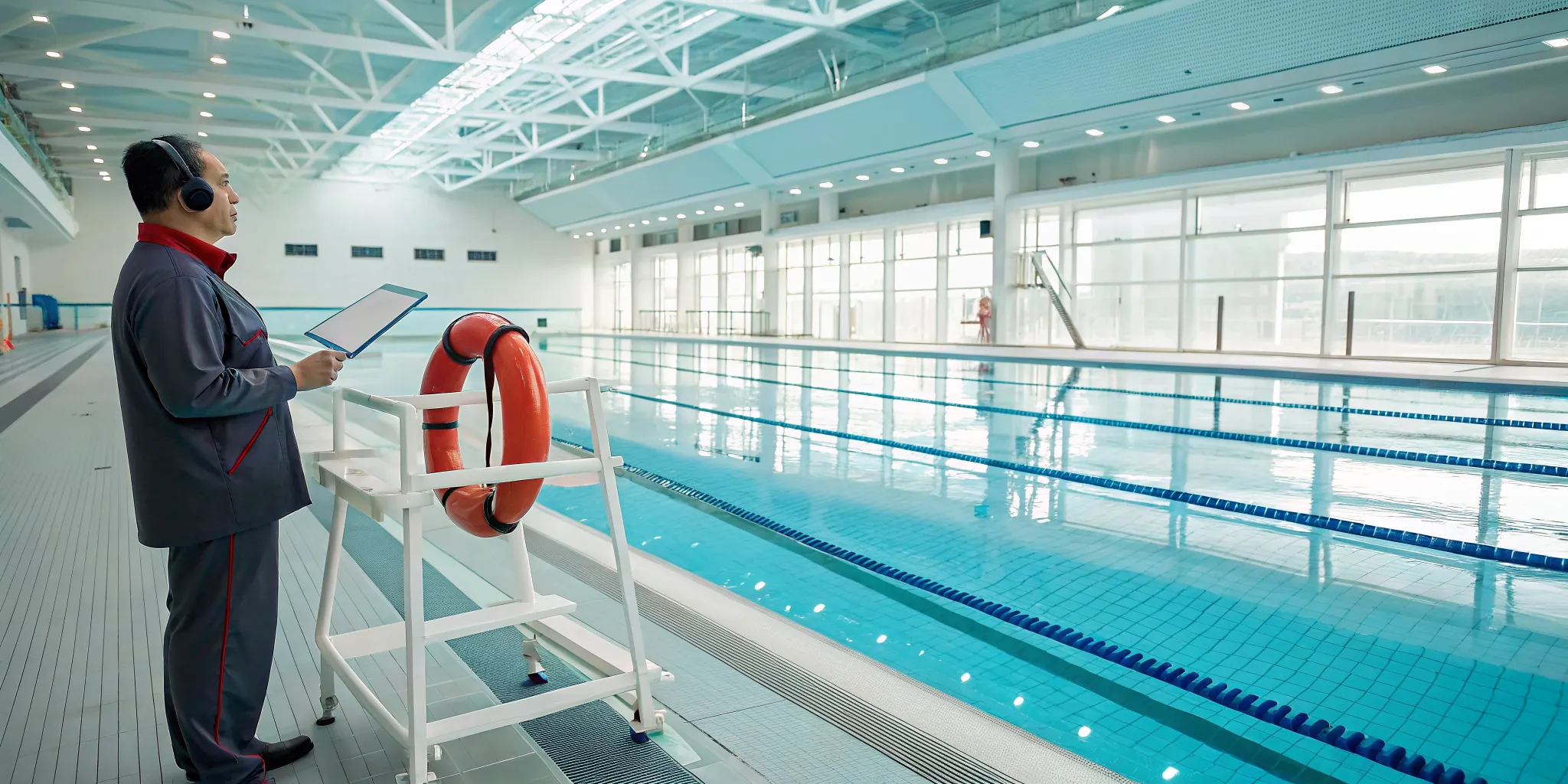
You hire the best lifeguards and train them rigorously, but you can’t give them superpowers. What you can give them is a reliable partner. Modern technology acts as the ultimate teammate for your aquatic safety staff, offering a constant, uninterrupted view of every swimmer. But with so many options, how do you choose the right one? This guide provides a practical guardian system features real-time swimmer monitoring comparison, breaking down what truly works. We'll help you find a system that gives your team the accurate, immediate alerts they need to act decisively and with confidence.
Key Takeaways
- Support systems are a lifeguard's partner: This technology acts as a second set of eyes for your team, continuously monitoring every swimmer to help catch the silent signs of distress that are often missed in a busy pool.
- Focus on features that speed up response time: Look for a system that provides immediate alerts with a swimmer's precise location, is simple for your staff to use, and can be installed without major facility disruptions.
- Prevention is a sound financial decision: Investing in a drowning detection system is a proactive measure that protects your facility from the immense liability and reputational damage that follows a single water emergency.
What Exactly Is a Lifeguard Support System?
A lifeguard support system is a set of tools designed to act as a second set of eyes for your aquatic safety team. Think of it as a high-tech partner that helps your guards monitor swimmers more effectively. It doesn’t replace the critical skills of a trained lifeguard; instead, it enhances their abilities by using technology to cover blind spots and track every person in the water. These systems provide an extra layer of protection, helping your team respond to potential incidents with greater speed and accuracy. By leveraging tools like real-time monitoring and automated alerts, you give your team the backup they need to keep your facility as safe as possible. It’s about creating a safety net that combines human expertise with technological precision.
Can Your Lifeguards Really See Everything?
Your lifeguards are highly trained professionals, but their work environment is incredibly demanding. Factors like sun glare, noise, and large crowds create constant distractions. Even on a calm day, natural blind spots in any pool can make it tough to maintain a clear line of sight on every swimmer. The job requires unwavering focus, but human attention has its limits. Drowning is also notoriously difficult to spot. It happens quickly and silently, often in just seconds. A person in distress may not splash or call for help, but simply look like they’re playing underwater. This silent danger highlights the challenging nature of the task, even for the most skilled team.
Giving Your Team a Second Set of Eyes
This is where modern drowning detection technology makes a significant impact. These systems provide continuous, real-time monitoring of every swimmer, acting as a vigilant partner for your staff. Using sensors and intelligent software, the system can identify when a swimmer is submerged for too long and immediately send an alert to your lifeguards. This gives them a clear, instant notification of a potential emergency. This technology is especially helpful for covering areas that are hard for the human eye to see, like the bottom of a crowded pool. It provides an uninterrupted view, ensuring no one goes unnoticed. By adding this technological layer, you’re giving your team a powerful tool to perform their duties with greater confidence and precision.
A Comparison of Lifeguard Support Systems
When you start looking into lifeguard support systems, you’ll find a few different approaches to enhancing water safety. Today’s technology offers sophisticated solutions designed to act as a true partner for your aquatic staff. These systems generally fall into a few key categories, each with its own way of monitoring swimmers and alerting your team to potential trouble. Understanding the differences will help you choose the right fit for your facility.
Automated Drowning Detection Systems
Drowning detection technology is a safety net designed to catch what the human eye might miss. These systems actively monitor every swimmer, using advanced tech to identify signs of distress in real time. If a person is submerged too long, the system automatically flags the event. This gives your lifeguards a critical heads-up, allowing them to intervene before a situation becomes a tragedy. It’s a proactive approach that adds a powerful layer of protection to your aquatic safety plan.
Real-Time Swimmer Monitoring Cameras
Many facilities already have security cameras, and some support systems make them smarter. These tools use artificial intelligence to analyze video feeds from your existing cameras, training the software to recognize signs of a swimmer in distress. When the system detects a potential incident, it alerts your staff. This turns a passive security feed into an active safety tool, helping your team keep a constant watch over the entire swimming area and get more value from existing infrastructure.
Limitations of Camera-Based Systems
While using cameras seems like a straightforward solution, they come with some real-world challenges. Think about the conditions at your own facility. Sun glare on the water's surface, the churn of a busy swim session, or even slightly murky water can significantly impact what a camera can actually "see." These visual obstructions can make it difficult for a camera-based system to reliably distinguish between a swimmer who is playing and one who is in genuine distress. This is a critical distinction, as the system's effectiveness depends on clear, uninterrupted visibility. When visibility is compromised, the reliability of the alerts can be too, which is why it's important to consider a system's underlying technology and how it handles these common environmental factors.
Wearable Tech for Swimmers and Staff
Wearable technology brings swimmer monitoring to a personal level. Swimmers wear a small, lightweight device, like a headband. These Swimmer Alert wearables continuously track an individual's status in the water. If the device is submerged beyond a preset time, it automatically sends a signal directly to your lifeguards. This direct communication ensures your team knows exactly who needs help, allowing for an immediate and targeted response.
Advantages of Wearable-Based Systems
The real power of a wearable-based system is its precision. By tracking each swimmer individually, it removes the guesswork. If a swimmer's device is submerged for a dangerous amount of time, the system doesn't just sound a general alarm—it sends an immediate, specific alert to your team's Lifeguard Alert equipment. This transforms a potential search-and-rescue mission into a direct rescue, pinpointing exactly who needs help and where. This objective monitoring works tirelessly in the background, unaffected by glare or a crowded pool, giving your staff the ability to respond with speed and certainty. It’s about providing your team with the exact information they need, the moment they need it.
Using AI to Predict and Prevent Incidents
AI-powered analytics are the brains behind modern lifeguard support systems. This technology provides intelligent insights, differentiating between normal swimming and distress to reduce false alarms. When an incident is detected, the system provides the swimmer's precise location, which is invaluable in large or crowded pools. Using a GUARDian system with these capabilities helps your team get straight to the person who needs help, saving precious seconds.
Common Myths About Water Safety Technology
Myth: Flotation Devices Are a Complete Solution
It’s easy to see flotation devices as a simple fix for water safety, but relying on them completely can create a false sense of security. While life jackets and other personal flotation devices are crucial tools, they are just one piece of a much larger safety puzzle. They can slip off, be used improperly, or fail to keep a swimmer’s head above water in every situation. These devices are aids, not substitutes for vigilance. True aquatic safety comes from a layered approach that includes constant, focused supervision from trained professionals. Flotation devices support your safety plan, but they don't replace the need for skilled lifeguards and a reliable system to monitor every swimmer, ensuring that someone is always watching.
Myth: Video Monitoring Catches Everything
Many facilities believe that installing cameras over the water is enough to catch any incident. While video systems can be useful for reviewing events after they happen, they have significant limitations as a real-time safety tool. Sun glare on the water's surface can create massive blind spots, and in a crowded pool, it’s nearly impossible for a camera—or a person watching a screen—to track every individual. Murky or dark water can also completely obscure a swimmer at the bottom of the pool. This is why a system that doesn't depend on clear sightlines is so important. Technologies that use individual Swimmer Alert wearables bypass these visual challenges entirely, tracking each person’s submersion time directly and providing a much more reliable alert when someone is in trouble.
How a Guardian System Creates a Safer Pool
A lifeguard support system does more than just add another layer of technology to your facility. It fundamentally enhances your team’s ability to protect swimmers by providing immediate, accurate, and actionable information. These systems act as a constant, vigilant partner for your lifeguards, covering blind spots and detecting signs of distress that the human eye might miss in a busy pool. By automating detection and alerting, they give your staff the critical seconds needed to respond effectively. This integration of smart technology with human expertise creates a safer environment, reduces the potential for human error, and allows your team to manage the pool with greater confidence and precision.
Get Instant Alerts for Drowning Events
The most significant advantage of a drowning detection system is its ability to provide instant notifications when a swimmer is in danger. Every second is critical during a water emergency. Systems like WAVE’s GUARDian system monitor every swimmer and trigger immediate audible and visual alerts if someone remains submerged for too long. This high-priority emergency alert cuts through the noise and distractions of a typical pool environment, drawing your staff’s attention directly to the potential incident. Instead of relying solely on periodic scans, your team gets real-time information, allowing them to intervene before a situation becomes a tragedy. This proactive alerting transforms your safety posture from reactive to responsive.
Improve Response Times with Pinpoint Accuracy
In a large or crowded aquatic facility, locating a swimmer in distress can be a major challenge. A support system eliminates the guesswork by identifying the exact location of the incident. When an alert is triggered, the system shows staff precisely where in the pool to direct their attention. This pinpoint accuracy is a game-changer for response times, especially in facilities with multiple pools or features that obstruct sightlines. Alerts can be sent directly to Lifeguard Alert equipment like smartwatches, ensuring the message is received instantly. This allows your team to get to the swimmer faster, which is often the most critical factor in a successful rescue.
How New Tech Fits Your Current Safety Plan
Advanced technology is designed to support your lifeguards, not replace them. A drowning detection system seamlessly integrates with your established safety protocols, acting as an invaluable tool for your team. It provides an extra set of eyes that can see the bottom of the pool with perfect clarity, an area often difficult for lifeguards to monitor consistently due to glare or surface agitation. This technology empowers your staff by confirming their observations and catching what they might miss. By handling the constant monitoring, the system allows your lifeguards to focus more on proactive supervision and guest interaction, strengthening the overall safety culture at your facility.
Turn Safety Data into Action
Beyond immediate incident response, lifeguard support systems gather valuable data that can help you proactively manage safety. Over time, this information can reveal patterns and highlight potential risk areas within your facility. For example, you might identify specific zones in the pool or certain times of day when alerts are more frequent. This insight allows you to make data-driven decisions about staffing levels, guard rotation, and rule enforcement. By understanding these trends, you can address potential issues before they lead to incidents. This approach helps you continuously refine your operations and maintain the highest standard of care for your guests with a full suite of safety products.
Must-Have Guardian System Features
When you're ready to add a support system to your facility, the options can feel overwhelming. To make a confident choice, it helps to focus on a few key areas. The right system should not only have powerful technology but also be practical for your team to use and simple to install. Let's walk through the essential features to look for so you can find a solution that truly enhances safety and supports your lifeguards.
Core Monitoring and Alerting Features
The core of any effective system is its ability to monitor every swimmer in real-time. Look for technology that uses advanced tools, like individual Swimmer Alert wearables, to track submersion times accurately. The goal is to get immediate, clear alerts when a swimmer might be in distress, giving your lifeguards the specific information they need to act fast. This isn't about adding more noise; it's about providing a focused signal that cuts through the usual poolside distractions. A great system acts as a reliable backup, ensuring that no swimmer goes unnoticed and allowing your team to perform their duties with greater confidence and precision.
Case Study: The WAVE Guardian System Features
To see these capabilities in action, consider how the WAVE system operates. The central component, the GUARDian Hub, is powerful enough to monitor over 300 swimmers at once across a range of more than 700 feet, making it suitable for large and small facilities. Each swimmer wears a lightweight tracker that communicates with the hub. If a swimmer is submerged beyond a preset time, the system instantly sends an alert to the lifeguard's receiver. This direct line of communication is what makes the technology so effective. It provides a clear, data-driven trigger that complements a lifeguard's visual surveillance, adding a critical layer of protection.
Is It Easy for Your Staff to Use?
Advanced technology is only useful if your team can operate it with ease. The best lifeguard support systems are designed to be intuitive, requiring minimal training to become part of your daily operations. The system should feel like a natural extension of your team's existing skills, not a complicated tool that adds to their workload. It's crucial to choose a system that is built to support lifeguards, not replace them. When a system is easy to get started with and integrates smoothly into your safety protocols, your staff is more likely to embrace it and use it effectively, leading to a safer environment for everyone.
Will It Work with Your Facility?
Finally, consider the practical side of implementation. A major renovation shouldn't be a prerequisite for improving safety. Look for a system that offers a straightforward installation process, ideally one that doesn't require construction, special permits, or shutting down your facility. Some systems need to connect with existing security cameras, while others, like WAVE, provide all the necessary products in one package. This kind of self-contained system can be set up quickly with minimal disruption to your operations. Choosing a compatible and easy-to-install solution means you can enhance your facility's safety standards without the headache of a complex and costly overhaul.
Key Purchase Considerations
Choosing the right lifeguard support system is a significant decision, and it’s about more than just the technology itself. You need a solution that fits your facility, your staff, and your budget. It’s important to think about the day-to-day realities of running a busy aquatic center. How will the equipment hold up? Can you adjust it to meet the specific needs of your swimmers? What happens if something goes wrong? Answering these questions will help you select a system that not only enhances safety but also integrates smoothly into your operations, providing peace of mind for you, your team, and your guests.
Durability and Comfort
Any wearable component of a safety system will be put through its paces in a pool environment. That's why it's essential that the devices are both tough and comfortable. As noted in our guide to swimmer safety, "Devices need to be fully waterproof and strong enough to handle daily use in a pool environment." Look for wearables made from high-quality, non-irritating materials that swimmers will forget they're even wearing. The equipment should be built to withstand constant exposure to water and pool chemicals without degrading. This ensures the system remains reliable throughout the season and provides a positive experience for your guests, encouraging compliance and maximizing safety.
Customizable Alerts
Not every swimmer is the same, and your safety system should reflect that. The ability to customize alerts is a critical feature that allows you to tailor your safety protocols. A powerful system lets you "set different safety rules based on a swimmer's age, skill, or health." For example, you might set a shorter submersion time for a child or a less experienced swimmer compared to a member of the swim team. These customized alerts should be sent directly to your on-duty lifeguards through dedicated Lifeguard Alert equipment, ensuring they get clear, actionable information without delay. This level of personalization makes your safety measures more effective and responsive to individual needs.
Privacy Compliance
Introducing any monitoring technology requires a thoughtful approach to privacy. Guests and staff need to feel comfortable and respected. The good news is that leading systems are designed with this in mind. It's a standard that "the system follows privacy laws." Unlike video-based surveillance, which captures images of swimmers, many modern systems like WAVE focus on objective data points, such as how long a swimmer's wearable has been submerged. This approach provides critical safety information without collecting personal visual data, ensuring you can enhance safety while fully respecting the privacy of everyone at your facility. You can learn more about this on our FAQ page.
Ongoing Support and Warranties
Your relationship with a technology provider shouldn't end after the sale. A new safety system is a long-term investment in your facility's well-being, so it's vital to "make sure the company offers good warranties and support in case of problems." Before you commit, ask about the warranty coverage, the process for getting technical support, and what training is provided for your staff. A reputable partner will stand behind their product with a clear and comprehensive support plan, ensuring you have the help you need to keep the system running smoothly for years to come. This ongoing partnership is key to maximizing the value and effectiveness of your investment.
The Science and Future of Drowning Detection
The technology behind lifeguard support systems is built on years of research and development, all aimed at one goal: creating a reliable tool to save lives. Understanding the science that powers these systems can give you confidence in their ability to perform when it matters most. It’s not just about having the latest gadget; it’s about trusting that the technology has been rigorously tested and validated. At the same time, this field is constantly evolving. Looking ahead, we can see exciting developments on the horizon that promise to make aquatic environments even safer, with smarter data analysis and more efficient hardware that will continue to support the vital work of lifeguards.
Validating System Reliability
When you're talking about safety, reliability is everything. You need to know that your system will work as promised, every single time. That’s why manufacturers put their technology through rigorous testing to validate its performance. For example, in scientific studies of other aquatic technology, researchers found that a device was "very reliable... showing it's consistent in its measurements." This is the kind of validation you should look for. It demonstrates that the system isn't just guessing; it's using proven technology to accurately detect potential distress and provide alerts that your team can trust, minimizing false alarms and ensuring every real alert gets the attention it deserves.
Understanding Reliability Metrics
When companies talk about reliability, they often use specific metrics to back up their claims. For instance, a study on a different piece of aquatic tech noted that its "reliability... was excellent, with ICC scores of 0.96 for peak force and 0.95 for mean force." While that might sound technical, an Intraclass Correlation Coefficient (ICC) is simply a statistical measure of reliability, with scores closer to 1.0 indicating higher consistency. When evaluating a system, ask for the data. A transparent company should be able to explain how they've tested their product and provide the metrics that prove its accuracy and dependability in a real-world aquatic environment.
Future Developments in Aquatic Safety
The technology powering drowning detection is always getting better, and the future holds even more promise for enhancing aquatic safety. Innovators are constantly working on making these systems smarter, more efficient, and more seamlessly integrated into a facility's daily operations. From advanced data analytics that help predict risk to hardware that powers itself, the next generation of lifeguard support systems will provide an even deeper level of insight and protection. These advancements will continue to empower lifeguards, giving them better tools to create the safest possible environment for swimmers.
Advanced Data Tracking
A key benefit of modern safety systems is the data they collect. Beyond triggering immediate alerts, this information provides a wealth of insight into your facility's operations. As we've noted, "Over time, this information can reveal patterns and highlight potential risk areas within your facility." By analyzing this data, you can identify which parts of your pool are busiest, what times of day have the most activity, and if there are any recurring safety-related trends. This allows you to make informed decisions about guard placement, staff scheduling, and safety protocols, helping you proactively manage risk. You can learn how it works and see how data can transform your approach to safety.
Self-Powered Wearables and System Integration
One of the most exciting areas of development is in the wearables themselves. The logistics of managing, charging, and distributing hundreds of devices can be a challenge. That's why the industry is moving toward greater efficiency. As our research suggests, "Future devices might create their own power from a swimmer's movement, meaning no batteries to charge." This innovation, known as energy harvesting, would eliminate the need for daily charging, making the system even easier to manage. This forward-thinking approach is just one example of how companies are working to make advanced safety technology more practical and accessible for all aquatic facilities.
Beyond Drowning Detection: Other Facility Safety Tech
While a drowning detection system is a cornerstone of modern aquatic safety, it's part of a larger ecosystem of technology designed to protect your guests and your facility. A comprehensive approach to safety considers all aspects of your operation, from the quality of the water to the integrity of your physical plant. Fortunately, there are innovative solutions available to help you manage these areas more effectively. These tools work alongside your staff, automating routine checks and providing real-time alerts for a range of potential issues. Integrating these technologies can help you run a safer, more efficient, and more professional operation.
Automated Water Quality Monitoring
Maintaining perfect water chemistry is a constant, time-consuming task. Automated systems can take on much of this burden. There are "devices that test pool water chemistry... measure things like pH and chlorine daily and send the info to an app." These smart monitors continuously analyze the water and provide real-time readings directly to your phone or computer. If chemical levels fall out of the ideal range, you receive an immediate alert, allowing you to address the issue before it affects swimmer comfort or safety. This not only saves your staff significant time but also ensures your water is always clean, balanced, and ready for guests.
Smart Leak Detection Systems
A water leak can be a silent but incredibly destructive problem for any aquatic facility, leading to huge water bills, structural damage, and costly downtime. Smart leak detection systems offer a simple and effective solution. These devices "constantly check for water and send alerts to your phone or email if they find a leak." By placing sensors in critical areas like pump rooms, filter areas, and plumbing access points, you can get an early warning of any potential issues. This allows you to make repairs quickly, preventing a small drip from turning into a major disaster and protecting your facility's infrastructure.
Smart Flotation and Rescue Gear
Even the classic tools of the trade are getting a modern upgrade. The latest safety and rescue equipment is designed to be more effective and user-friendly than ever before. These are "modern safety tools that are easy to use and move around... [and] help staff teach swimmers safer habits." This includes everything from improved rescue tubes and backboards to innovative flotation devices that can be deployed quickly in an emergency. By equipping your team with the best available gear, you not only improve their ability to respond to incidents but also empower them to be more effective educators on water safety for your guests.
Is a Lifeguard Support System Worth the Investment?
When you're managing an aquatic facility, the budget is always a top consideration. Adding a new system is a significant decision, and it’s natural to focus on the price tag. But a lifeguard support system is more than just an operational expense; it's a long-term investment in the safety of your swimmers and the reputation of your facility. The real conversation isn't just about what the system costs, but what it's worth.
Thinking about this investment requires looking at the complete picture. You have to consider the initial setup, any ongoing operational needs, and the immense value of preventing a single tragedy. When you weigh these factors, the return on investment becomes clear. It’s about creating a safer environment, supporting your staff, and protecting your organization from the devastating fallout of a drowning incident. A robust support system is a foundational layer of protection that offers peace of mind for you, your team, and your community. It's a proactive measure that demonstrates a commitment to the highest safety standards, which is invaluable for building trust with parents and patrons. This isn't just about compliance; it's about leadership in aquatic safety.
What’s the Upfront Cost?
Getting started with a lifeguard support system involves an initial investment in the hardware and software that make up the core of the technology. We believe in being transparent about these costs, which is why WAVE offers several plans designed to fit different operational budgets and timelines. You can choose between 12 or 36-month term commitments, with different payment options available. For facilities looking for the most cost-effective route on a 36-month plan, our AdvancePay option provides the lowest possible pricing. This flexibility allows you to select a plan that aligns with your financial planning while getting your facility protected as soon as possible.
What About Long-Term Operational Costs?
Beyond the initial setup, it’s important to understand what ongoing costs look like. With some technology, you can get hit with unexpected maintenance fees or expensive replacement parts. We’ve structured our plans to be predictable and all-inclusive. Both of our bundles come with WAVE's 24/7 system monitoring and a $0 deductible replacement warranty. This means our team is always making sure your system is running correctly, and if a piece of equipment fails, it’s replaced at no cost to you. This approach turns an unpredictable expense into a fixed, manageable operational cost, letting you focus on running your facility, not worrying about equipment repairs.
What Is the True Cost of a Drowning Incident?
While you can never put a price on a human life, a drowning incident carries staggering financial and reputational costs. The immediate response alone can cost tens of thousands of dollars per hour. Beyond that, a single incident can lead to legal battles, increased insurance premiums, and negative publicity that can damage your community’s trust for years to come. This can result in decreased attendance and revenue that far exceeds the cost of a detection system. Investing in prevention is not just the responsible choice; it's a sound financial decision that protects your facility from catastrophic liability.
Your Return on Investment: Safer Swimmers, Lower Risk
Ultimately, the return on your investment is measured in safety, confidence, and peace of mind. The WAVE GUARDian system is designed to provide an immediate and tangible return by enhancing your team's capabilities. When a swimmer is submerged for too long, WAVE instantly triggers a high-priority emergency alert with both audible and visual notifications. This gives your lifeguards and staff the critical seconds needed to respond before a situation becomes tragic. This proactive layer of safety not only helps prevent drownings but also reduces your facility's liability, builds trust with patrons, and empowers your staff to perform their duties with greater confidence.
Related Articles
- Drowning Prevention Technology: A Facility Guide
- How Automated Drowning Detection Improves Safety
- Drowning Prevention Technology for Commercial Pools 101
Frequently Asked Questions
Is this technology meant to replace my lifeguards? Absolutely not. A drowning detection system is designed to be a powerful tool for your lifeguards, not a replacement. Think of it as a partner that provides an extra set of eyes, especially on the bottom of the pool where visibility can be poor. It handles the constant, repetitive task of monitoring for submersion, which frees up your guards to focus on proactive scanning and managing swimmer behavior. It enhances their skills by giving them real-time alerts, allowing them to respond faster and with more certainty.
How does the system handle a very crowded pool? This is exactly where the technology shines. In a crowded pool, it's incredibly difficult for the human eye to track every single person. Our system assigns a unique tracker to each swimmer, so it monitors individuals rather than just scanning a crowd. It can track hundreds of swimmers simultaneously. If one person's tracker is submerged for too long, the system sends a specific alert, helping your team pinpoint the person in need without the visual chaos of a packed pool.
Will my team be overwhelmed by false alarms? We designed the system to minimize distractions. The technology uses intelligent analytics to distinguish between normal underwater swimming and a potential distress situation. The submersion time thresholds are adjustable, allowing you to set them according to your facility's rules and swimmer demographics. This ensures that alerts are meaningful and signal a genuine need for attention, rather than creating unnecessary noise that could lead to alarm fatigue for your staff.
What does installation involve? Will I have to close my facility? The system was created for a straightforward setup with minimal disruption. You won't need to drain your pool, undertake major construction, or deal with complex permits. The WAVE system is self-contained and doesn't rely on integrating with existing camera systems. Our team can help you get everything up and running quickly, so you can improve your safety standards without having to shut down your operations.
How do swimmers react to wearing the trackers? The Swimmer Alert wearables are designed to be lightweight, comfortable, and unobtrusive. Most swimmers, especially children, quickly forget they are even wearing them. For parents and patrons, the presence of the system often provides an added sense of security. It's a visible sign that your facility is committed to the highest level of safety, which helps build trust and confidence in your operations.
