
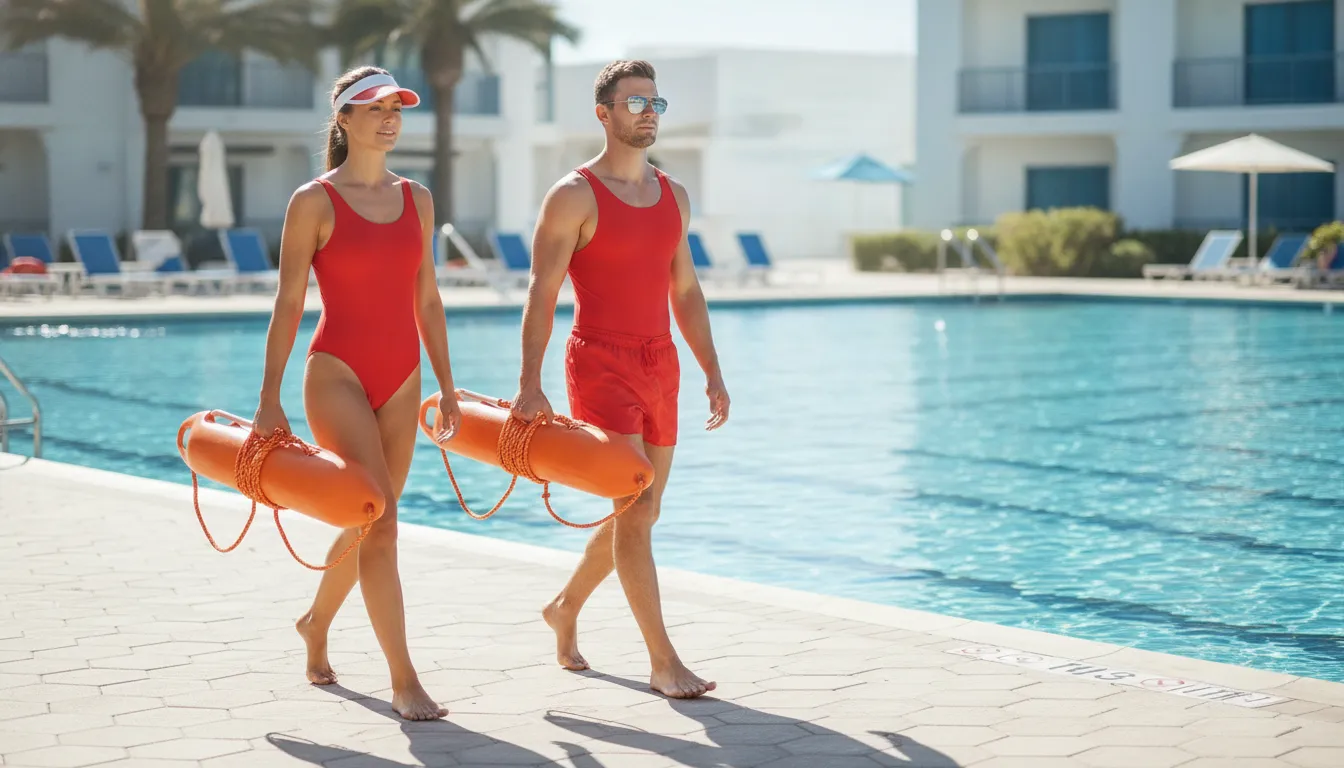
Every lifeguard is expected to maintain constant vigilance, make rapid decisions, and perform consistently through long shifts. Training must prepare staff for those demands, but facilities also need practical ways to reinforce skills after onboarding and identify where support is needed. The American Red Cross Lifeguarding program trains more than 300,000 lifeguards each year, making scalable, measurable preparation essential for aquatic organizations nationwide.
Lifeguard training technology strengthens aquatic safety by turning real-world alert and response data into actionable feedback. When detection tools are integrated with drills and established protocols, managers can reinforce vigilance. Standardize response expectations, and give lifeguards an added layer of support without replacing professional judgment or supervision.
That approach makes technology part of an ongoing safety culture rather than a device added after an incident. The most effective systems help facilities connect training objectives to observable performance, then use those insights to build confidence and consistency across the team.
How Technology Is Transforming Lifeguard Training
Modern training can do more than confirm that a lifeguard knows the right steps in a classroom or controlled drill. Drowning detection systems can turn routine practice into a measurable learning experience by recording when an alert occurs. How quickly staff recognize it, and how effectively they coordinate a response. That information gives aquatics directors a clearer basis for coaching while helping guards understand how their decisions affect swimmer protection.
Technology does not replace observation, judgment, or hands-on rescue skills. It gives the training program another source of evidence so instructors can reinforce those human capabilities with specific feedback.
Turning drills into measurable scenarios
Scenario-based drills become more useful when they reflect the alert conditions staff may encounter during live operations. An instructor can stage a prolonged-submersion scenario, observe the alert pathway, and then review what happened with the team. Did the notification reach the right staff member? Was the zone identified promptly? Did guards communicate clearly while maintaining coverage of the rest of the pool?
Repeating that process helps facilities move beyond a pass-or-fail exercise. Teams can compare responses across drills, identify recurring delays, and adjust procedures before an emergency tests them. For facility leaders developing strategies to improve lifeguard effectiveness, this creates a practical bridge between training objectives and day-to-day performance.
Using real-time feedback to strengthen vigilance
Digital tools can provide real-time feedback on vigilance and response times during drills, making an otherwise difficult skill easier to discuss objectively. A coach can use those observations to address scanning patterns, handoff problems, delayed acknowledgment, or uncertainty about escalation. The goal is not to turn lifeguarding into a competition or to penalize a guard for every second. It is to make coaching specific enough that each guard knows what to practice next.
The American Red Cross Lifeguarding program trains more than 300,000 lifeguards every year, according to the CDC. With that volume of training across aquatic environments, consistent feedback matters. Facilities can use alert data alongside instructor observation, rescue simulations, and certification requirements to build a stronger, repeatable safety culture.
Connecting equipment knowledge to response readiness
Training is also more effective when guards understand the equipment they are expected to use, not just where it is stored. Reviewing alert notifications, staff-worn devices, and response procedures during drills can reduce hesitation when an actual notification occurs. Explore the facility hardware and systems that support this work through lifeguard rescue alert equipment.
Used this way, detection technology becomes a training aid and a force multiplier. It helps leaders spot coaching opportunities, gives guards a clearer path to improvement, and keeps technology integrated with the judgment and teamwork that effective lifeguarding requires.
The Force Multiplier Effect on Guard Performance
WAVE acts as a force multiplier by adding detection and alerting support to a lifeguard's existing training, attention, and judgment. The goal is not to replace professional supervision. It is to help guards recognize a developing emergency sooner, coordinate a response, and maintain a more consistent level of coverage across a busy aquatic environment.
Less cognitive load during active surveillance
Lifeguards must continuously scan swimmers, assess behavior, remember facility protocols, and stay prepared to enter the water. That level of vigilance is essential, but it also creates a demanding cognitive workload, particularly when a guard is monitoring a crowded pool or multiple zones. WAVE wearable sensors provide an additional layer of awareness by identifying prolonged submersion and alerting staff immediately. The alert does not make the decision for the guard. Instead, it directs attention to a possible problem so the trained professional can assess the situation and act.
This support matters because supervision gaps can occur even at facilities with trained guards. WAVE's customer research notes that over half of child drownings involving children ages 5 to 14 occur at guarded facilities. Underscoring why technology should bolster, rather than assume, lifeguard attention. Facilities can use [lifeguard support systems](/blog/lifeguard-support-system-guide) to strengthen the human processes already in place.
More actionable time for response and coverage
When a sensor-generated alert reaches the appropriate staff, the team can begin evaluating the situation without waiting for every visual cue to become obvious. That can support faster recognition and more coordinated response, especially when several swimmers require attention at once. It also helps a team maintain coverage while one guard responds, because other staff members receive a shared signal and can follow established backup procedures.
For aquatics directors, the practical question is how the technology fits the facility's current emergency action plan. WAVE's wearable approach can be incorporated into drills, staff briefings, and post-incident reviews so guards understand what alerts mean and how to respond. Review how WAVE drowning detection works to see how wearable sensors and facility alerts support trained staff in supervised aquatic environments.
Can Technology Improve Lifeguard Retention?
Lifeguarding demands sustained attention, judgment, and emotional readiness throughout every shift. Constantly scanning the water can create fatigue, especially when a guard must remain prepared for a serious event while managing routine distractions. Facilities that want to improve retention should look beyond wages and scheduling. They should also consider whether their safety systems make the job more manageable and whether employees feel adequately supported.
Advanced safety tools can reduce the stress associated with drowning surveillance by adding another layer of awareness to the team. WAVE positions drowning detection technology as a force multiplier, not a replacement for trained lifeguards. Automated alerts can draw attention to potential prolonged submersion or other defined events. Allowing staff to respond according to established protocols instead of relying on uninterrupted visual vigilance alone. Reducing stress and providing better tools can help lifeguards feel more supported in their role, which may improve retention (source).
Technology can turn daily work into professional development
Technology also creates opportunities for more meaningful training. Supervisors can teach new and experienced guards how to interpret alerts, coordinate communication, and integrate system data into drills. When training includes real scenarios and clear response expectations, lifeguards can build confidence rather than simply repeating a checklist. That experience supports career development and helps employees see a path from seasonal guard to senior guard, trainer, or aquatics supervisor.
Regular practice with safety technology can also reinforce consistent procedures across shifts. Digital tools can provide real-time feedback on vigilance and response times during drills, giving supervisors a constructive way to coach performance. The goal is not to monitor employees punitively. It is to make expectations visible, identify coaching opportunities, and recognize improvement.
A supported workplace is easier to staff
Facilities are also under pressure to manage lifeguard staffing shortages. Technology can help operators make existing teams more efficient while maintaining trained human oversight. A workplace that invests in reliable equipment, practical training, and clear emergency protocols is more likely to appeal to candidates who want to do safety-critical work well. In that sense, lifeguard training technology supports both operational resilience and employee experience.
Retention is never solved by one tool. Fair scheduling, strong supervision, competitive compensation, and a respectful workplace remain essential. But when lifeguards have technology that supports their attention and gives them opportunities to develop, facilities can build a stronger foundation for keeping skilled staff longer.
How to Implement Lifeguard Training Technology at Your Facility
Effective implementation starts with the facility's existing safety practices, not with a technology purchase. The goal is to give lifeguards better information, clearer practice opportunities, and dependable support while preserving established supervision and emergency protocols. A Red Cross 2023 study focused on YMCA facilities found that 68% experienced a pool closure or legal action after a drowning incident. Underscoring why training and response readiness deserve ongoing investment.
- Assess current training gaps. Review incident reports, drill performance, response times, scanning practices, and recurring questions from staff. Ask where supervisors lack visibility and which emergency scenarios are difficult to recreate safely. This baseline helps leaders define measurable goals, such as improving alert recognition, reducing response delays, or standardizing handoffs between lifeguards and managers.
- Evaluate technology against real operating conditions. Compare how each system detects risk, alerts staff, records events, and supports practice. WAVE's GUARDian Hub works with AquaSense wearables to provide an additional layer of detection and staff alerting in supervised aquatic environments. Because WAVE works in clear, dark, and murky water, it can support training and response planning in conditions where camera-based systems may struggle. Review the WAVE case studies to see how facilities apply the technology in practice.
- Integrate alerts into existing protocols. Define who receives an alert, who confirms the situation, who enters the water, and how managers document the event. Include the technology in emergency action plans, pre-shift briefings, zone assignments, and routine equipment checks. It should reinforce lifeguard judgment and communication, not create a separate process that competes with established rescue procedures.
- Train staff on the technology during realistic drills. Demonstrate the GUARDian Hub and AquaSense wearables before asking staff to use them under pressure. Then run scenarios involving prolonged submersion alerts, device checks, staff notification, and escalation. Rotate roles so every team member practices receiving an alert, communicating clearly, and continuing visual surveillance. Supervisors should explain what the system can identify, what requires human judgment, and how to respond when conditions change.
- Measure improvement and refine the program. Track drill response times, missed or delayed alerts, protocol adherence, equipment readiness, and staff confidence over time. Review results with lifeguards rather than treating data as a disciplinary scorecard. Use the findings to adjust training frequency, alert assignments, and facility procedures. This feedback loop turns lifeguard training technology into an ongoing force multiplier for the team instead of a one-time equipment deployment.
What to Look for in Lifeguard Training Technology
The right platform should strengthen training without creating a separate system that staff must manage. Evaluate how the technology captures information during drills, how reliably it functions in the facility's conditions, and how easily supervisors can connect alerts to existing emergency procedures. A useful solution should support lifeguards with timely information, not distract them from active surveillance.
WAVE is designed as a force multiplier for lifeguards, adding another layer of swimmer protection while preserving human judgment and response. The following comparison points can help aquatics directors assess wearable and camera-based approaches before selecting a system.
| Evaluation area | What to assess | WAVE approach |
|---|---|---|
| Detection method | Wearables can provide swimmer-level signals, while camera systems depend on visual conditions, positioning, and coverage. | Wireless AquaSense wearables communicate with the GUARDian Hub, giving staff an alerting layer that complements active lifeguard observation. |
| Training feedback | Look for real-time event information that can support drills and response review, rather than only post-hoc video analysis. | Detection and alert workflows can be incorporated into practice scenarios, helping supervisors discuss response timing and protocol adherence. |
| Water conditions | Confirm that the system remains useful when visibility changes. Camera-based systems may struggle in dark or murky water. | WAVE works in clear, dark, and murky water, extending its usefulness beyond ideal visibility conditions. Learn more about WAVE technology. |
| Installation and ownership | Compare construction requirements, infrastructure changes, upfront capital costs, and recurring service expenses. | WAVE is wireless and does not require permanent construction. Its subscription model can make deployment more accessible, while AquaSense wearables use multi-year batteries instead of requiring daily recharging. |
| Training integration | Choose controls and alerts that staff can learn within existing onboarding, in-service training, and emergency action plan exercises. | Facilities can train teams on the wearable workflow and alert response without replacing established lifeguard procedures. |
Before making a purchase, review the full competitive comparison and map each feature to your facility's water conditions, staffing model, training schedule, and budget. The strongest choice is the one staff can use consistently in real conditions and practice confidently during training.
Frequently Asked Questions
How does technology enhance lifeguard training?
Detection technology gives instructors realistic alert scenarios and measurable feedback on vigilance, acknowledgment, and response timing. Teams can review what happened during a drill, repeat the scenario, and standardize expectations across shifts instead of relying only on subjective observation. The American Red Cross Lifeguarding program trains over 300,000 lifeguards every year, making consistent training support valuable for facilities with large or changing teams (CDC).
What is drowning detection technology?
Drowning detection technology uses sensors and connected alerts to identify events such as prolonged submersion and notify staff so they can respond quickly. WAVE uses AquaSense swimmer wearables with the GUARDian Hub to add another layer of awareness in supervised aquatic environments. It supports established lifeguard protocols rather than replacing professional observation, judgment, or rescue training.
Can technology improve lifeguard retention?
It can contribute to retention when it reduces the burden of constant surveillance and helps guards feel supported during demanding shifts. Technology also gives experienced staff opportunities to lead drills, interpret response data, and coach newer team members. It is not a standalone retention strategy, but it can strengthen a broader program that includes fair scheduling, development, feedback, and a well-equipped workplace.
Do drowning detection systems replace lifeguards?
No. A drowning detection system is a force multiplier that helps lifeguards recognize potential emergencies and coordinate a faster response. It cannot supervise every swimmer, interpret every situation, or perform a rescue. Facilities should continue staffing appropriately, following their emergency action plans, and maintaining current lifeguard certifications and training.
What training is required for a lifeguard alert system?
Staff should learn how to wear and test assigned equipment, recognize system alerts, acknowledge notifications, communicate with teammates, and follow the facility's emergency action plan. Include the system in onboarding, refresher drills, and supervisor evaluations. Training should be specific to the installed configuration, including the GUARDian Hub, AquaSense wearables, and the facility's alert escalation process.
Schedule a Free Consultation
Every aquatic facility has different training priorities, staffing needs, and safety protocols. A conversation with the WAVE team can help you evaluate how drowning detection technology may support lifeguard development and day-to-day readiness without replacing professional supervision. Schedule a Free Consultation to discuss your facility, ask questions, and identify a practical next step.
