
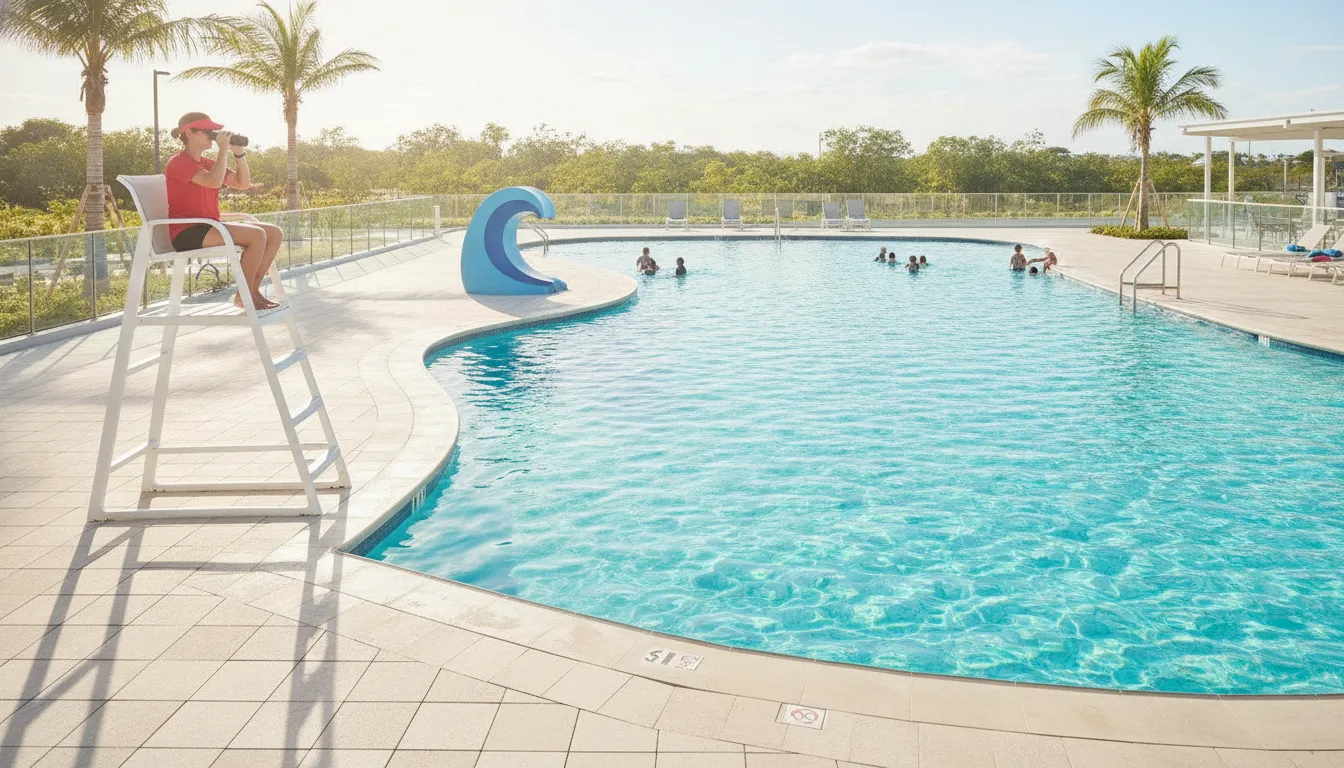
For aquatic facility operators, a drowning incident can create consequences that extend well beyond the emergency response. Questions about supervision, training, equipment, documentation, and access controls may shape how stakeholders, insurers, and legal professionals evaluate the facility's preparation and response. That makes prevention a core operational responsibility, not a one-time compliance exercise.
Drowning prevention liability is best addressed through a documented, layered safety program that combines trained and actively supervised lifeguards. Clear procedures, physical safeguards, practiced emergency response, and appropriate detection technology. These measures support faster intervention without promising that any system can eliminate every incident.
The goal is not to replace professional judgment or lifeguard coverage. It is to identify where reasonable safeguards can strengthen oversight, reduce preventable gaps, and demonstrate a sustained commitment to swimmer protection. Understanding the risks to children and other vulnerable swimmers provides the right starting point for evaluating those responsibilities.
Why Drowning Prevention Liability Is a Top Concern for Aquatic Facilities
For aquatic facility operators, swimmer safety is both a human responsibility and a risk-management priority. Drowning incidents can happen quickly and quietly, which means a facility's safety program must account for moments when visibility, supervision, or a caregiver's attention is limited. A layered approach helps operators identify hazards, reinforce procedures, and respond promptly when conditions change.
The public-health data explains why this responsibility deserves sustained attention. The Centers for Disease Control and Prevention identifies drowning as the leading cause of death for children ages 1 to 4 in the United States. It is also the second leading cause of unintentional injury death for children ages 5 to 14. These age groups may have limited swimming ability, may not recognize danger, and can require immediate intervention when they enter or struggle in the water. The CDC's drowning risk-factor guidance provides additional context for facility planning.
Drowning is not always accompanied by obvious distress. The CDC notes that it can happen quickly and quietly, particularly when children are unsupervised. That reality reinforces the importance of clear supervision policies, controlled access, visible safety equipment, emergency procedures, and regular staff training. Operators should also consider how their systems perform during busy periods, when multiple activities and swimmers compete for attention.
Risk patterns can inform prevention without becoming a substitute for individualized planning. Nearly 80% of drowning deaths are male, according to the CDC. A disparity that underscores the value of consistent rules and supervision for every swimmer rather than relying on assumptions about who may be at risk. Facilities serving families, schools, camps, municipalities, and community organizations should build safeguards around actual conditions at their site.
Technology can support that work as an additional layer of protection. But it cannot guarantee that every incident will be prevented and should never be presented as a replacement for trained lifeguards or responsible supervision. Reviewing the aquatic facility safety FAQ can help operators evaluate questions about alerts, procedures, and layered protection. This discussion is educational, not legal advice. Facilities should consult qualified counsel and their insurers about site-specific obligations and risk-management decisions.
Duty of Care: What the Law Expects of Aquatic Facility Operators
Aquatic operators generally need to take reasonable steps to maintain a safe environment, communicate hazards, provide appropriate safety equipment, and supervise swimmers. A documented program for lifeguard qualifications, training, monitoring, and drills helps demonstrate that safety responsibilities are being treated as an operational priority.
The reasonable care standard
Duty of care is the responsibility to act reasonably under the circumstances to protect people who use a facility. For a supervised pool, that responsibility can include maintaining the physical environment, identifying hazards, posting clear warnings, providing suitable safety equipment, and applying operating rules consistently. A facility may face liability exposure when it fails to maintain a safe environment, including through inadequate warnings, insufficient safety equipment, or improper supervision. The specific legal standard depends on the facts, jurisdiction, and facility type, so operators should evaluate their program with qualified counsel and applicable local requirements.
Reasonable care is not a single device or written policy. It is the connected system of safeguards that an operator plans, implements, checks, and improves. That means policies should reflect the pool's layout, activities, attendance patterns, staff roles, and foreseeable risks rather than simply existing in a binder.
Supervision and lifeguard readiness
Supervision is both a staffing decision and an active management responsibility. Operators should ensure lifeguards hold appropriate certifications, receive regular in-service training, and are actively monitored during shifts. Managers should also confirm that staff understand their zones, scanning expectations, emergency procedures, escalation paths, and responsibilities during breaks or crowded periods.
Training cannot substitute for attentive supervision, and supervision cannot be treated as automatic simply because a certified lifeguard is on deck. Briefings, observation, rotation practices, and scheduled drills help keep the response system usable under pressure. Any detection technology deployed at the facility should support this work as an additional layer of protection, never as a replacement for lifeguards or established emergency procedures.
Documentation that shows a safety commitment
Good records make a safety program visible. Maintain current copies of certifications, in-service training logs, staff briefings, inspection checklists, incident reports, corrective actions, and drill results. Thorough records of training and drills can provide evidence that the facility has made an ongoing commitment to safety. While also helping managers identify gaps before an incident occurs.
This is an educational overview, not legal advice. Requirements and liability standards vary, so aquatic facility operators should consult qualified legal counsel and their insurers when reviewing policies, staffing, documentation, or risk controls.
How Strong Safety Measures Demonstrate Reasonable Care
Reasonable care is easier to demonstrate when safety is treated as a documented, repeatable program rather than a collection of informal expectations. Physical barriers, communication, inspections, emergency preparation, and alerting technology each address a different point of risk. Together, these measures show that an aquatic facility actively identifies hazards, sets clear expectations, and prepares staff to respond.
The following framework is educational, not legal advice. Requirements and liability standards vary by jurisdiction and facility type, so operators should review their program with qualified counsel and the appropriate safety authorities. For a broader review, see these aquatic facility safety best practices and the guide to community pool risk management.
| Proactive safety measure | What it does | How it supports liability risk reduction |
|---|---|---|
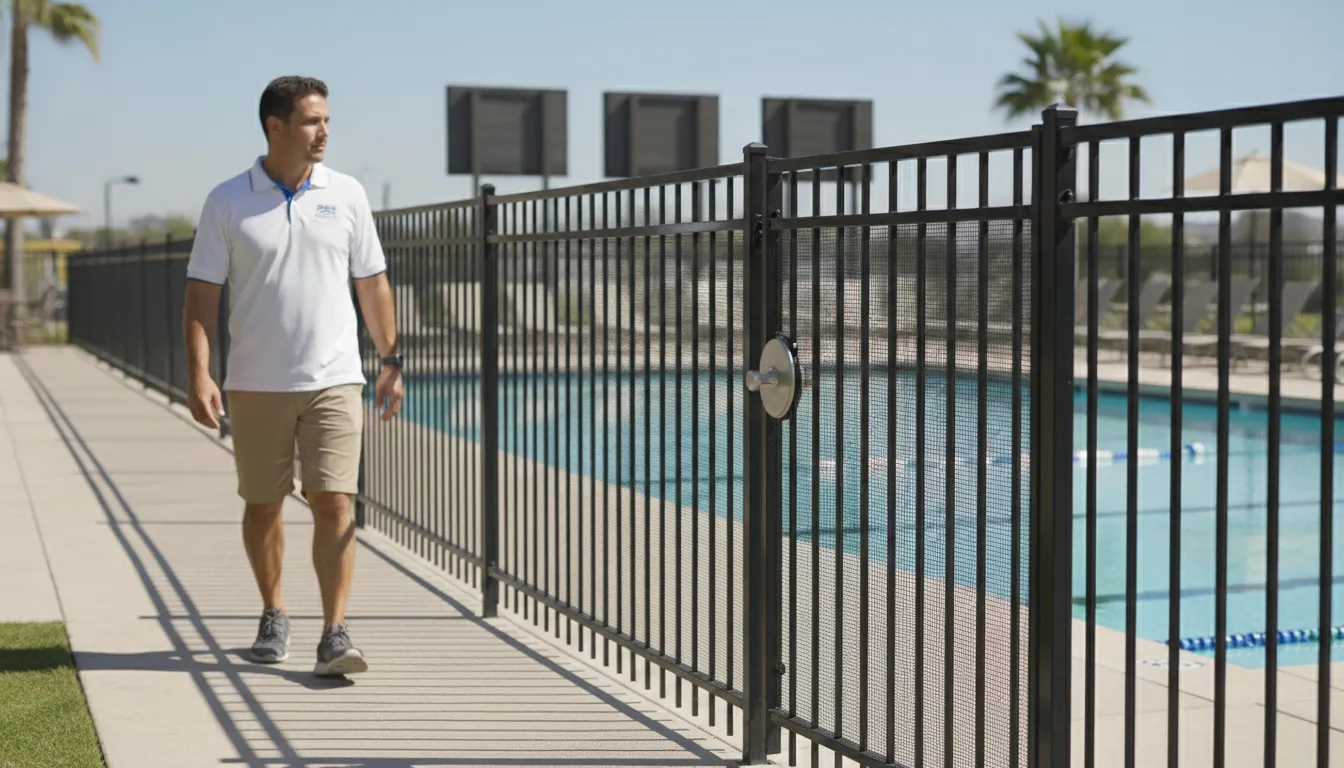
| Proper pool fencing | Creates a physical barrier that can prevent young children from entering the pool area without caregiver awareness. | Shows that the facility addressed a foreseeable access hazard with a practical prevention measure. The CDC identifies barriers such as proper fencing as an important way to reduce unsupervised access. |
| Clear rules and supervision signage | Communicates pool rules, prohibited conduct, and supervision expectations to patrons and caregivers before problems occur. | Provides visible notice of the facility's expectations and helps staff enforce consistent standards. Clear signage is a first line of defense against preventable misunderstandings. |
| Regular safety audits | Checks the environment, equipment, staffing practices, and procedures for hazards or gaps. | Creates a process for finding and correcting issues before an incident, while producing records that show ongoing oversight rather than one-time preparation. |
| Practiced emergency action plans | Gives staff defined responsibilities and response steps for emergencies, including communication and escalation. | Regular practice helps convert a written plan into coordinated action. An emergency action plan is only effective when staff rehearse it and address weaknesses revealed during drills. |
| Drowning-detection technology | Acts as a force multiplier by giving lifeguards more eyes and delivering faster alerts when attention is divided. | Adds another layer of protection to active supervision and supports faster intervention. It complements trained lifeguards and established procedures; it does not replace them or guarantee that an incident will not occur. |
The strongest programs connect these measures through ownership and documentation. Assign someone to verify barriers and signage, record audit findings, track corrective actions, and log emergency drills. Review alerting technology as part of the same system, with clear instructions for who receives an alert and what happens next. This approach helps facilities make safety visible in daily operations while giving leadership a practical basis for continuous improvement.
The Role of Drowning Detection Technology in Reducing Liability
Supervision remains the foundation of a responsible aquatic safety program, but even strong supervision has practical limits. During peak attendance, experienced lifeguards may struggle to maintain a clear view of every pool area, especially when swimmers, glare, activity, and facility layout create blind spots. Drowning incidents can occur in supervised facilities despite the presence of lifeguards. Which is why operators should evaluate technology as a supplement to established procedures rather than as a substitute for trained staff.
WAVE is designed to function as a force multiplier. Its AquaSense swimmer wearables provide another detection layer when a swimmer remains submerged or when a lifeguard enters the water. Helping alert staff to a potential emergency more quickly. That added signal can support a coordinated response while lifeguards continue to perform their essential duties, including active scanning, prevention, rescue, and emergency action procedures. Technology does not replace lifeguards, eliminate the need for training, or guarantee that every incident will be prevented.
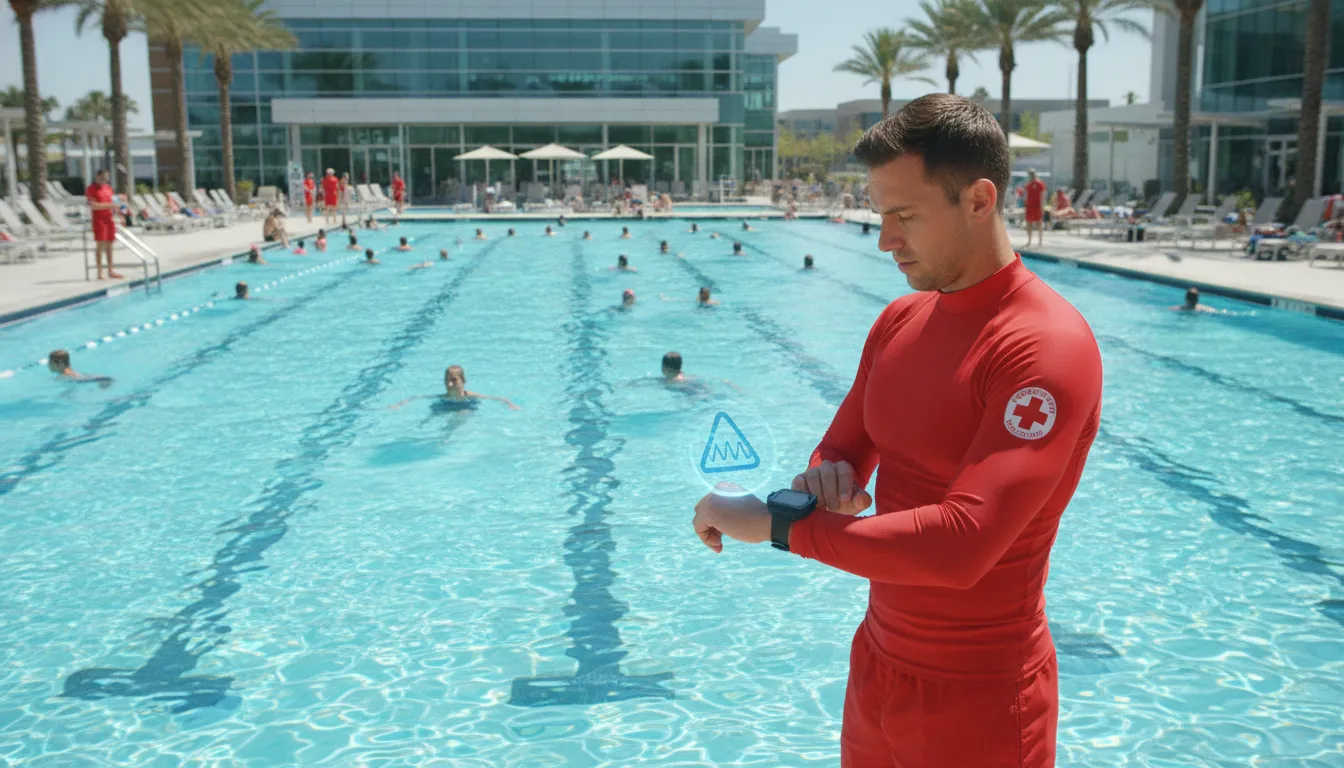
For operators reviewing the legal and financial liability of drowning incidents, the practical value is not a promise of perfect protection. It is the opportunity to identify a risk sooner, support documented safety practices, and demonstrate that the facility has taken reasonable steps to strengthen its response capabilities. Facilities can also review relevant guidance on managing drowning liability and safety compliance as part of a broader risk-management process.
WAVE detection can work in dark or murky water, conditions in which camera-based systems may struggle to maintain visibility. Because the system uses wireless wearables, facilities can deploy it without permanent construction, extensive pool renovation, or a long installation timeline. That flexibility can make supplementary detection practical for community pools, camps, water parks, and other facilities where changing layouts or budgets make infrastructure-heavy solutions difficult.
Operators should treat every alert as part of a documented response protocol. Staff need clear responsibilities, regular training, testing, maintenance records, and an emergency action plan that explains how alerts are evaluated and escalated. This approach connects technology to committed supervision instead of treating it as a standalone liability solution. This section is educational, not legal advice. Facility leaders should consult qualified counsel and their insurance professionals about applicable duties, documentation, and risk controls.
Insurance Implications of a Proactive Drowning Prevention Program
Insurance underwriters evaluate more than whether a facility has a written safety policy. They may also consider how consistently the operator identifies hazards, trains staff, documents procedures, and responds to changing conditions. A documented, proactive program can help demonstrate that safety controls are part of daily operations rather than measures introduced only after an incident.
Investment in advanced drowning prevention technologies is often viewed favorably by insurance underwriters and can sometimes support a lower liability risk profile. That does not guarantee reduced premiums, better rates, or a particular underwriting decision. Coverage terms and pricing depend on the insurer, facility, claims history, location, operations, and the evidence presented during review.
Build a record of continuous risk management
Proactive risk management involves continuous monitoring, identifying high-risk behaviors or conditions, and intervening before an incident escalates. For an aquatic facility, that process may include routine safety audits, documented lifeguard training, emergency-action-plan drills, equipment checks, and reviews of near misses or incidents. These records give operators a clearer basis for correcting weaknesses and give underwriters tangible evidence of how the program operates.
Technology can support this documentation when it is integrated into established procedures. A drowning detection system should be treated as an additional layer of protection that supports, rather than replaces, lifeguard supervision. The value is strongest when staff understand the alerts, know their response roles, test the system, and record corrective actions.
Present a complete safety program to underwriters
A robust drowning prevention strategy combines policy, technology, and training. Operators preparing for an insurance review should be ready to explain how those elements work together. Who is responsible for each control, how often procedures are tested, and what happens when a gap is discovered. A concise evidence package might include current policies, staff certifications, training and drill logs, inspection records, incident reviews, technology maintenance records, and updates made after audits.
Facilities can also use the aquatic facility safety FAQ as a starting point for reviewing common questions about supervision, training, emergency planning, and safety technology. This is an educational framework, not legal or insurance advice. Before changing coverage, relying on a risk-control representation, or interpreting policy language, consult qualified insurance and legal professionals who understand the facility's specific operations.
Understanding the Attractive Nuisance Doctrine for Pools
The attractive nuisance doctrine is a general legal concept involving conditions on property that may draw children in while also creating a serious danger. A pool, unsecured water feature, or accessible pool area may raise questions about whether the owner or operator took reasonable steps to prevent foreseeable access. The specific rules, definitions, and standards vary by state, so this overview is educational and not legal advice. Facilities should consult qualified counsel about their obligations.
Why child access is a distinct safety concern
Young children may not recognize the danger presented by deep or unsupervised water. And they may be drawn toward a pool even when adults have not authorized them to enter. The CDC identifies drowning as the leading cause of death for children ages 1 to 4, making controlled access an important part of a broader aquatic safety program. Proper pool fencing can help prevent young children from reaching the water without a caregiver's awareness.
Practical steps to reduce access risk
Operators can use a layered approach to reduce the likelihood that a child reaches the pool area unnoticed. The following actions are practical risk-management measures, not a substitute for a state-specific legal review:
- Secure the perimeter. Use appropriate pool fencing, restrict climbable access points, and inspect barriers on a scheduled basis. Self-closing and self-latching gates should remain in working order, with access limited to authorized entrances.
- Control entry. Keep gates, doors, and other access points locked or otherwise secured when the pool is closed or not actively supervised. Review keys, codes, and access permissions so responsibility is clear.
- Communicate the rules. Post clear, visible signage explaining pool rules, entry restrictions, and supervision expectations. Make sure staff and guests know that signs supplement, rather than replace, active controls.
- Audit conditions and supervision. Schedule documented inspections of fencing, gates, alarms, lighting, and surrounding areas. Review whether staffing and sightlines match the facility's operating conditions, especially during opening, closing, and high-traffic periods.
- Practice the emergency response. Maintain a defined emergency action plan and rehearse it regularly. Drills should clarify who calls emergency services, who retrieves rescue equipment, who controls the scene, and who communicates with management and families.
Document the program and review it regularly
Written inspection logs, maintenance records, staff briefings, and drill documentation can help demonstrate that safety controls are actively managed rather than simply posted. Review the program after incidents, near misses, facility changes, or changes in applicable law. A qualified attorney and local safety authorities can help determine which measures and records are appropriate for the facility's jurisdiction.
Frequently Asked Questions
Are you liable if someone drowns in your pool?
Potentially, depending on the facts and the law governing the facility's location. Liability may be considered when an operator failed to maintain a reasonably safe environment, provide appropriate warnings, supply safety equipment, or provide adequate supervision. Operators should document training, inspections, drills, incident response, and corrective actions. This article is educational, not legal advice, so consult qualified counsel about a specific incident or risk-management decision.
Are lifeguards legally liable for a drowning?
A lifeguard's potential responsibility depends on the circumstances, including assigned duties, training, supervision, facility procedures, and whether the response was reasonable under the applicable standard of care. Facility operators should not rely on individual vigilance alone. Clear scanning protocols, ongoing in-service training, active supervision, and written emergency procedures help establish a consistent safety program.
What preventive measures can aquatic facilities use to reduce drowning risk?
A layered program can include controlled access, appropriate fencing, visible rules, trained and monitored lifeguards, regular safety audits, practiced emergency action plans, and reliable rescue equipment. Operators should also review staffing and procedures as attendance, activities, and water conditions change. No single measure guarantees that an incident will not occur, so the program should be reviewed and improved continuously.
How can drowning detection technology support liability risk management?
Drowning detection technology can provide an additional alerting layer when a swimmer needs attention. Helping staff respond more quickly and supporting lifeguards when visibility or crowd conditions create challenges. WAVE is designed to support, not replace, lifeguards. Operators should evaluate coverage, alert procedures, staff training, maintenance, and records as part of the broader safety program.
Can a facility be liable if it operates without lifeguards?
The absence of lifeguards does not automatically determine liability, and the answer varies by jurisdiction, facility type, posted rules, supervision arrangements, and the operator's overall safety measures. A facility should assess foreseeable risks, access controls, warnings, emergency communication, and response capability with qualified legal and safety professionals before choosing a no-lifeguard operating model.
Schedule a Free Consultation for Your Facility
A thoughtful safety program can help your team evaluate additional layers of protection alongside established supervision, training, and emergency procedures. To discuss your facility's needs and possible next steps, Schedule a Free Consultation with WAVE Drowning Detection Systems.
