
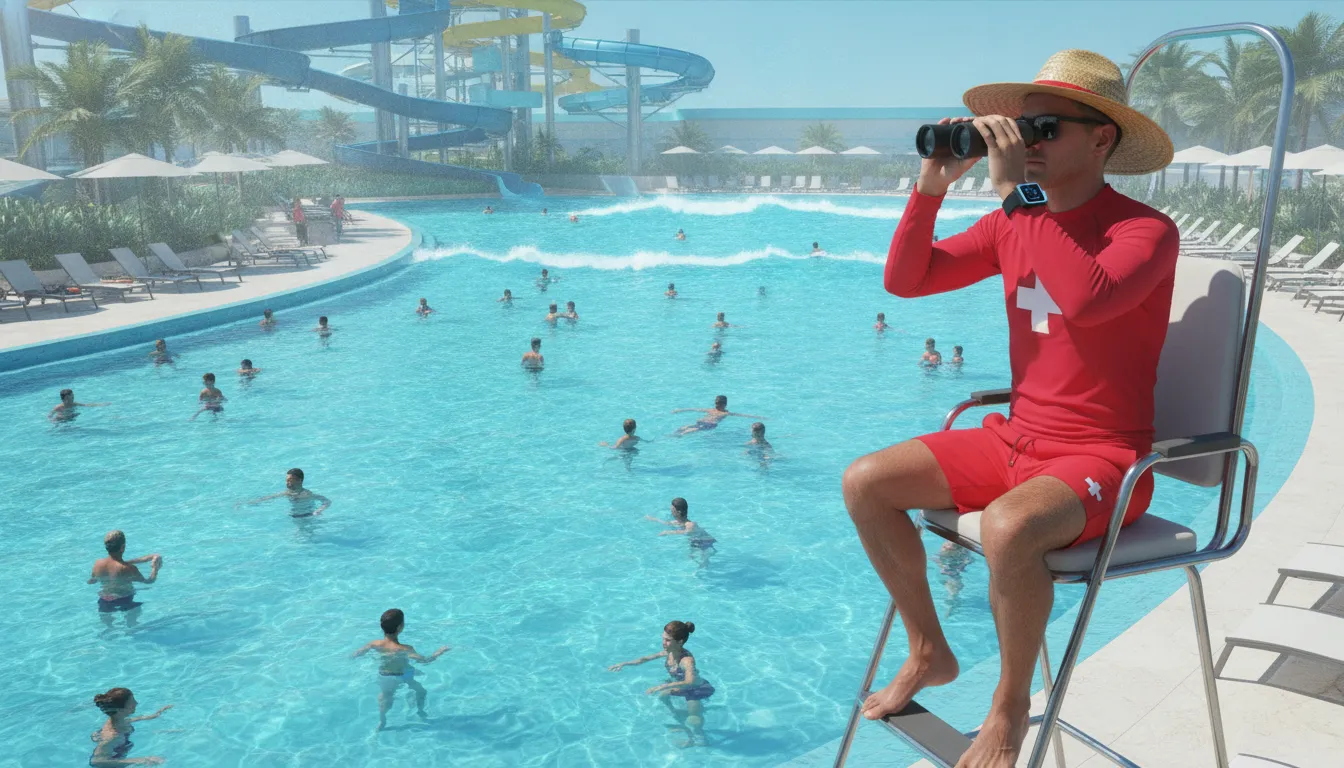
Waterparks manage a complex mix of pools, slides, splash zones, changing visibility, and constantly moving guests. That makes safety technology pricing less about buying a single alarm and more about matching detection coverage to the facility's layout, operating model, and response plan.
Schedule a free consultation for a custom waterpark safety alert system quote.
The waterpark safety alert system cost depends on the areas covered, the number of swimmers or lifeguards monitored, the technology selected, and the service term. A wearable, wireless system can offer a more flexible alternative to permanent camera infrastructure while adding another layer of protection for supervised aquatic environments.
WAVE is designed as a force multiplier for lifeguards, not a replacement for them. Its subscription approach can help waterpark operators evaluate coverage and budget predictably, while deployment without permanent construction can reduce disruption. The first step is understanding which facility characteristics have the greatest effect on the final investment.
Why Waterpark Safety Alert System Cost Varies by Facility
A waterpark is not a single pool with a single viewing area. It may include a wave pool, lazy river, slides, play structures, splash zones, and outdoor areas, each with different sightlines, traffic patterns, staffing plans, and water conditions. That is why there is no universal sticker price for a safety alert system. Providers typically quote the solution for the specific facility, rather than assigning one flat rate to every waterpark.
The need for careful planning is substantial. The CDC estimates approximately 4,000 fatal unintentional drownings in the United States each year, and drowning is the leading cause of death for children ages 1 to 4. Globally, the World Health Organization reports around 300,000 drowning deaths annually, with children under 5 accounting for nearly a quarter. These figures do not determine a facility's quote, but they underscore why coverage should be designed around the actual environment and operating risks.
A waterpark safety alert system cost depends on the facility it must protect. Size, layout, water features, monitored zones, and the number of detectors or wearables all affect the final design. A tailored quote helps operators pay for meaningful coverage instead of an oversized or incomplete package.
Size, layout, and the waterpark's risk profile
Physical scale is only one part of the assessment. A compact indoor park may have fewer zones but complex structures that obstruct a lifeguard's view. A large outdoor park may require coverage across separated attractions, long walking routes, and changing crowd concentrations throughout the day. The system should complement the park's existing supervision plan and help staff respond quickly when attention is divided across multiple activity areas.
Operators should also consider the risk profile of each attraction. A shallow children's play area, a wave pool, and a fast-moving slide exit create different monitoring requirements. The quote may reflect how the system integrates with staff alerts, where equipment can be placed, and how the facility wants alerts prioritized during busy operating periods. A tailored design is more useful than comparing a generic package price.
Number of monitored zones, detectors, or wearables
Coverage requirements directly influence the equipment included in a proposal. More monitored zones can require additional detection hardware, lifeguard tags, swimmer wearables, alert receivers, or software capacity. The right mix depends on whether the park is primarily adding another layer for lifeguards, extending protection to selected attractions, or seeking broader coverage across the property.
Competitor guidance similarly notes that pricing can depend on facility size. The combination of cameras and wearables and software modules and the number of devices required, making a tailored quote the practical starting point. Ask the provider to show what each component covers, which areas are included, and how the design can scale as the park changes. That level of detail makes it easier to compare total value, not just an initial number.
Camera-Based vs. Wearable Drowning Detection Pricing
Comparing a camera-based system with a wearable system requires more than looking at the initial quote. Waterpark operators should consider how each technology is installed, how it performs across changing water conditions, and whether the cost grows with permanent equipment and facility complexity. The right comparison is the total operating model, including deployment time, coverage, and the ability to support lifeguards without disrupting normal operations.
Computer-vision platforms such as Poseidon are designed to identify a swimmer in distress and alert lifeguards to the person's location in about 10 seconds. That speed matters because the source describes roughly 30 seconds as a critical response window before the risk of severe outcomes increases. Pricing for systems in this category can depend on facility size. The combination of cameras and software modules and the number of devices required, so operators generally need a tailored quote.
WAVE takes a different approach. Its wearable-based drowning detection technology is designed to work in clear, murky, and dark water without permanent construction. That can make the cost of a waterpark safety alert system easier to plan when a facility has multiple pools. Outdoor attractions, or layouts that would require extensive camera coverage.
| Attribute | Camera or vision system | WAVE wearable subscription system |
|---|---|---|
| Install and construction | May require camera placement, supporting infrastructure, and site-specific planning. | Works without permanent construction. |
| Water clarity | Performance depends on the vision system's ability to observe the water. | Designed for clear, murky, and dark water conditions. |
| Deployment | Scope and device count are shaped by facility size and layout. | Can be deployed in hours without requiring pool closures. |
| Cost model | Often requires a tailored quote based on cameras, modules, and devices. | Hardware-as-a-Service subscription avoids a large upfront capital expense. |
| Term | Varies by supplier and proposal. | 12-month, 36-month, and 36-month AdvancePay options are available. |
Neither approach eliminates the need for trained lifeguards. Detection technology is an additional layer of protection and a force multiplier that helps staff respond faster. Review why WAVE wins on cost, then see how the WAVE system works across a supervised aquatic environment.
Camera systems can offer rapid visual alerts, but their costs may expand with construction, coverage, and device requirements. A wearable subscription can provide water-condition flexibility, faster deployment, and a more predictable path to budgeting without replacing lifeguard supervision.
What Factors Drive the Price of a Waterpark Safety Alert System?
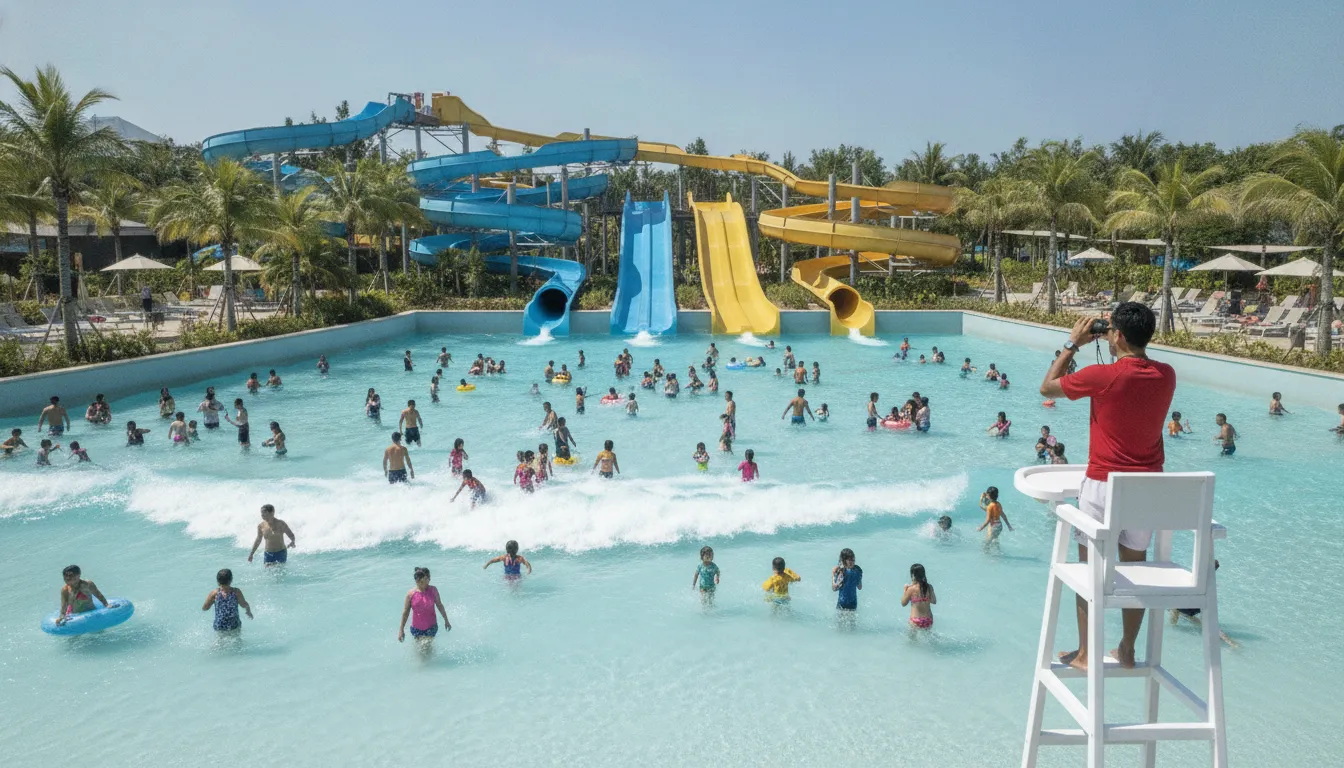
Waterparks rarely have identical safety-alert requirements. A single pool with a defined monitoring zone needs a different configuration from a large outdoor complex with multiple attractions, changing guest volumes, and several lifeguard stations. That is why a meaningful quote should reflect the facility's operating model rather than rely on a one-size-fits-all number.
For operators evaluating waterpark safety alert system cost, the main pricing variables are coverage, equipment quantity, facility scale, subscription term, and the practical work required to deploy the system.
- Coverage area: the number of pools, attractions, and monitored zones that need detection and alerting.
- Device quantity: how many AquaSense wearables, lifeguard tags, hubs, and alert devices the plan requires.
- Facility layout: distance between zones, sightlines, and whether the widest areas need extra hardware.
- Subscription term: 12-month, 36-month, and 36-month AdvancePay options shape monthly budgeting.
Waterpark safety alert system pricing is driven by the area being monitored, the number of wearables and alert devices required, the park's pool layout, and the subscription term. A Hardware-as-a-Service model can make implementation more predictable without a large upfront capital expense.
Monitoring scope and coverage area
Start by defining which bodies of water and operational zones need coverage. A park may prioritize a wave pool, lazy river, children's area, competition pool, or a combination of attractions. The number of monitoring zones, the distance between them, and how alerts should reach lifeguards or other designated staff all influence the equipment configuration.
WAVE uses a subscription-based Hardware-as-a-Service model, which avoids the large upfront capital costs associated with purchasing and installing an entire system at once. The final configuration can be aligned with the areas where the park needs an additional layer of protection while keeping lifeguards responsible for active supervision.
Wearables, alert devices, and waterpark size
The number of AquaSense swimmer wearables, lifeguard tags, hubs, and alert devices is another direct pricing lever. A larger waterpark with several pools or attractions may require more devices to support its coverage plan than a smaller facility. Device quantities should be based on the park's layout, staffing model, expected swimmer capacity, and the locations where alerts must be visible or felt.
As a starting reference, WAVE lists the GUARDian Lifeguard Alert bundle from $149 per month and the GUARDian Swimmer Protection bundle from $299 per month. These are starting points, not a universal quote. The right selection depends on whether the park primarily needs lifeguard alerts, swimmer monitoring, or a broader combination of both.
Term length and deployment logistics
Operators can choose among 12-month, 36-month, and 36-month AdvancePay terms. Comparing those options helps finance teams evaluate monthly cash flow, longer-term commitment, and any advantage associated with paying in advance.
Deployment can also affect the practical cost of implementation. WAVE systems can be deployed in hours, from single pools to large outdoor complexes, without requiring pool closures. That helps waterparks avoid taking attractions offline for permanent construction or a lengthy installation window.
For an accurate estimate, map the attractions and monitoring priorities first, then request a configuration based on the park's actual coverage and device needs.
How the GUARDian System Keeps Waterpark Drowning Detection Affordable
Answer: WAVE makes waterpark drowning detection more accessible through a Hardware-as-a-Service subscription, flexible terms, included warranty protection, and funding support for qualifying nonprofits. Operators can add an alerting layer for lifeguards without committing to a large upfront capital purchase or closing the facility for an extended installation.
Waterparks need safety technology that fits both operational demands and financial reality. A system that requires major construction, a long shutdown, or a large equipment purchase can be difficult to approve, even when the safety case is strong. WAVE's subscription approach changes the budgeting conversation by spreading the investment over time while helping facilities deploy quickly.
The GUARDian system can be deployed in hours, from individual pools to large outdoor waterpark complexes, without requiring facility closures. That limits disruption to guests, staff schedules, and revenue. It also gives operators a practical way to add technology that supports lifeguards as an additional layer of protection. Rather than treating the system as a replacement for active supervision.
Choose the bundle that matches your waterpark
WAVE offers two starting points for different coverage goals. The GUARDian Lifeguard Alert bundle starts at $149 per month and is designed to help alert staff when a lifeguard enters the water. The GUARDian Swimmer Protection bundle starts at $299 per month and adds swimmer-focused detection through AquaSense wearables. Both options use a subscription model, so the facility can select a level of coverage that aligns with its risk priorities, staffing model, and budget.
For a closer look at the factors behind a facility's investment, review this lifeguard alert system pricing guide. A waterpark with multiple attractions or distinct operating zones may need a customized configuration rather than a one-size-fits-all package.
Flexible terms, warranty coverage, and funding support
Operators can choose among 12-month, 36-month, and 36-month AdvancePay term options. This flexibility can help organizations align payment planning with procurement cycles, seasonal operations, or available capital. The GUARDian Complete Subscription also includes a $0 deductible warranty covering fixed equipment and wearables, which can make ongoing ownership costs easier to forecast.
Eligible nonprofits, including organizations such as YMCAs and Boys & Girls Clubs, may also have access to WAVE's scholarship and grant program. Through its partnership with ACCU, WAVE helps qualifying facilities explore financial assistance for implementation. Review the grants and funding options before finalizing a budget, then get a custom system quote based on your attractions, swimmer volume, and staffing plan.
The Real Total Cost: ROI and Risk for Waterparks
Answer: For a waterpark, the real cost of a safety alert system includes more than equipment or subscription fees. Operators also need to consider the financial and operational consequences of a serious aquatic incident, including interruption to business, legal exposure, insurance pressure, and lasting reputational harm. A system that gives lifeguards another timely layer of awareness should be evaluated as a risk-management investment, not simply as a line item.
That broader view matters because drowning remains a significant public-health risk. The CDC estimates approximately 4,000 fatal unintentional drownings in the United States every year, an average of 11 deaths per day. Nonfatal drowning can also lead to costly hospital stays, long-term health problems, and permanent neurological damage. Those outcomes affect families first, but they can also create substantial consequences for the facility involved. The CDC's drowning facts and data provide important context for waterpark leaders assessing their duty of care.
What Can a Single Incident Cost a Waterpark?
A serious incident may trigger a temporary closure while staff, investigators, insurers, and regulators review what happened. Even a short interruption can mean lost admissions, cancelled events, refunds, food and retail revenue losses, and additional staffing or remediation costs. Depending on the circumstances, the operator may also face legal claims, higher insurance scrutiny, and difficult questions from employees, guests, families, and local officials. The exact financial impact varies by jurisdiction, facility, and incident, so it should not be reduced to an invented average.
Reputation is harder to put on a spreadsheet. Waterparks compete on trust, guest experience, and the confidence that families place in the facility's safety practices. A widely reported incident can affect attendance and partnerships long after the gates reopen. Prevention technology cannot guarantee that an incident will never occur, and it does not replace trained lifeguards. It can, however, serve as a force multiplier by adding alerts and another layer of protection to an existing supervision program.
This is why WAVE frames the business case around risk reduction: in many cases, one prevented incident justifies the annual cost of the technology. The strongest evaluation compares the recurring system investment with the potential cost of disruption and harm, while also considering practical implementation. WAVE's subscription model avoids a large upfront capital expense, and the system can be deployed in hours without requiring a waterpark closure. For a deeper framework, review the ROI of drowning detection systems.
Get a custom waterpark safety alert system quote today.
Frequently Asked Questions
How much does a waterpark safety alert system cost?
Pricing depends on the size and layout of the waterpark, the areas requiring coverage, and whether the facility needs lifeguard alerts, swimmer protection, or both. WAVE uses a subscription-based Hardware-as-a-Service model, with GUARDian Lifeguard Alert bundles starting at $149 per month and Swimmer Protection bundles starting at $299 per month. A custom quote confirms the right configuration.
What factors influence the cost of an aquatic drowning detection system?
The main factors are the number of pools or water features, the facility layout, the number of lifeguards and swimmers being monitored, and the equipment and software included. Operators should also consider deployment requirements, subscription term, warranty coverage, and whether the system can be installed without permanent construction or a pool closure.
Are waterpark drowning detection systems affordable for smaller facilities?
They can be. A subscription model lets smaller facilities avoid a large upfront capital purchase and select coverage that matches their current operations. WAVE also offers three subscription term options, including 12-month, 36-month, and 36-month AdvancePay plans. Qualified nonprofit facilities may also explore WAVE's scholarship and grant program with ACCU.
Do waterpark safety alert systems require ongoing subscription fees?
Many systems use recurring fees because the subscription can include equipment, software, support, and warranty coverage rather than requiring the facility to purchase everything upfront. WAVE's Hardware-as-a-Service model is designed around this approach, and its GUARDian Complete Subscription includes a $0 deductible warranty on fixed equipment and wearables.
How can I get a quote for a waterpark safety alert system?
Request a consultation with the facility's pool count, water features, operating model, and desired coverage ready to discuss. WAVE can use those details to recommend a configuration and provide a waterpark-specific quote through its consultation request form.
Ready to Get a Custom Waterpark Safety Quote?
A waterpark safety alert system should fit your facility's layout, operations, and swimmer protection goals. A consultation gives your team a clear starting point for evaluating the right WAVE approach without guessing at coverage or equipment needs.
Schedule a free consultation to get a custom waterpark safety alert system quote.
