
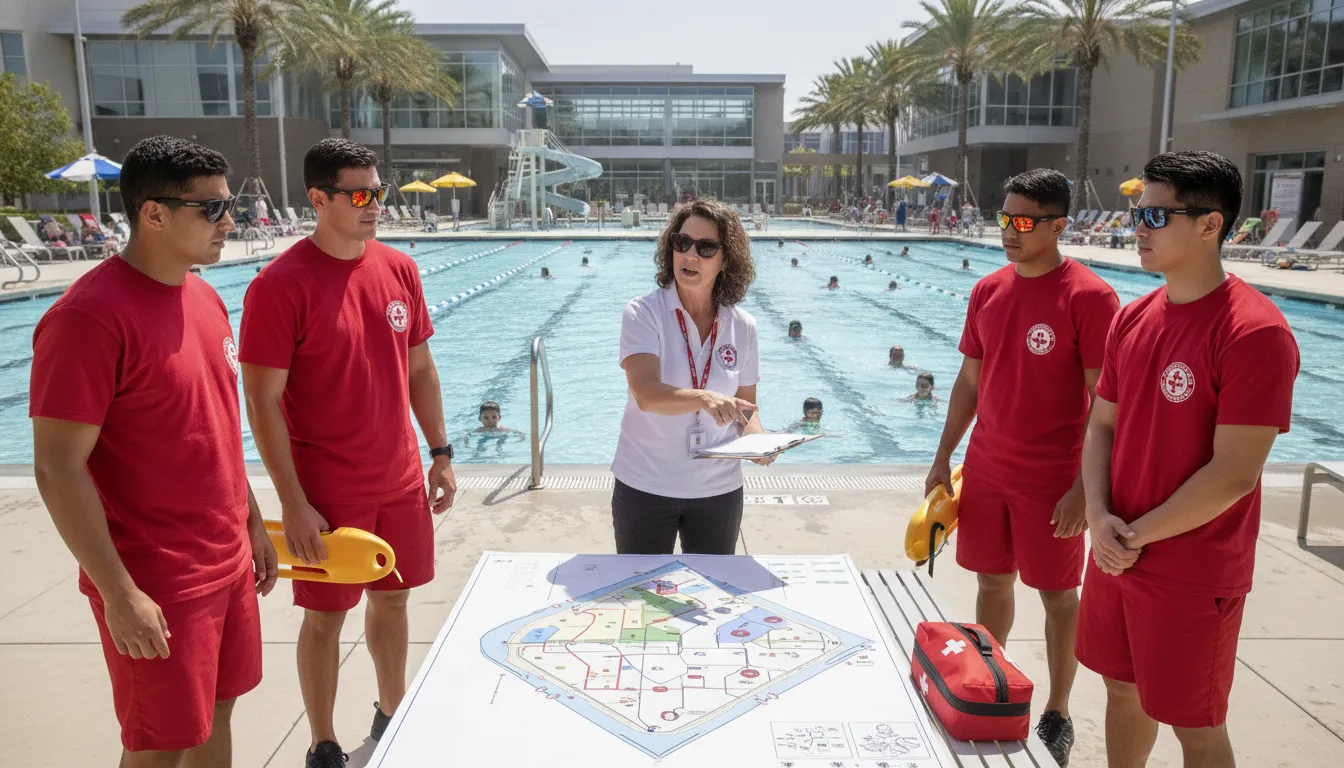
For a municipal pool, the price of a safety system is more than a monthly line item or equipment invoice. City leaders also need to account for the number of pools covered, deployment requirements, staff workflows, training, maintenance, procurement terms, and the useful life of each component.
Municipal pool safety system cost is best estimated as a total-cost framework: compare subscription and capital models, then add deployment, staffing, maintenance, replacement, and procurement assumptions. WAVE's current public pricing starts at $149 per month, but a municipal quote depends on the facility's needs.
A practical budget should make each assumption visible before a purchasing decision is made. That makes it easier to compare options fairly while keeping the system in its proper role: supporting lifeguards and adding another layer of protection in supervised aquatic environments. The first step is to define exactly which costs belong in the comparison.
What does municipal pool safety system cost include?
A municipal budget should treat a pool safety system as an operating and procurement decision, not simply a line item for equipment. The final scope depends on the number of facilities, bodies of water, swimmers served, staff workflow, alert coverage, contract term, and the city's purchasing requirements.
Public-sector capital planning commonly accounts for the full life cycle of an asset, including planning, procurement, operations, maintenance, and eventual replacement or disposal. That same discipline helps a city compare a technology subscription with a traditional equipment purchase. For a broader framework, review this guide to total cost of ownership for aquatic safety technology.
Hardware and system scope
Start by defining what the facility actually needs. The scope may include the GUARDian Hub (w3000), AquaSense swimmer wearables, lifeguard tags, vibrating alert devices, Hub Management Software (HMS), and CompleteView software. A municipal quote should identify quantities, supported pools, coverage areas, connectivity requirements, and what is included in the selected bundle.
WAVE's current public pricing lists the GUARDian Lifeguard Alert Bundle at $199 per month for a 12-month term, $169 per month for a 36-month term, or $149 per month with 36-month AdvancePay. The GUARDian Swimmer Protection Bundle is listed at $399, $339, or $299 per month under those same term structures. These are published examples, not a municipal quote, and a city's final scope may differ.
Implementation, training, and staff workflow
Implementation costs can include site review, system configuration, deployment across multiple facilities, and coordination with the city's IT, risk, purchasing, and aquatics teams. Even when a wireless system avoids permanent construction, staff time is still part of the implementation plan.
Budget for onboarding and training lifeguards, supervisors, seasonal employees, and designated responders. The operating workflow should clarify who receives an alert, how the team verifies the situation, how incidents are documented, and how equipment is checked before each shift. WAVE is designed to support lifeguards as an additional layer of protection in supervised aquatic environments, not to replace them.
Monitoring, maintenance, and renewal
Recurring costs may cover monitoring, software access, support, battery or wearable replacement, warranty terms, updates, and renewal. WAVE's pricing page states that its model includes 24/7 monitoring and a $0 deductible replacement warranty. Confirm how those terms apply to the proposed municipal configuration, and ask whether renewal pricing, expansion, replacement timelines, and service response expectations are documented in the agreement.
Finally, include procurement effort: requirements development, quote evaluation, legal review, purchase orders, grant coordination, council or department approvals, and future budget requests. Listing each category makes the municipal pool safety system cost easier to defend and compare.
Municipal pool safety system cost includes more than hardware. A complete budget accounts for system scope, deployment, staff training, monitoring, maintenance, replacement, procurement labor, and renewal. Cities should compare these life-cycle categories against their facility count, operating workflow, and purchasing requirements rather than relying on an equipment-only price.
Subscription or capital purchase: which budget model fits a municipality?
For a municipality, the right budget model depends on more than the advertised equipment price. Procurement teams should compare when funds are committed, which department owns the expense, what support is included, and how easily the system can expand across facilities. A capital purchase may fit an established replacement cycle, while a subscription can make an ongoing safety service easier to plan within operating budgets.
Answer: Capital purchasing may suit municipalities with approved one-time funds and internal maintenance capacity. A subscription or HaaS model may fit teams that prefer predictable recurring costs, bundled support, and simpler lifecycle planning. The best choice depends on procurement rules, facility count, and the level of service included.
| Budget consideration | Capital purchase | Subscription or HaaS |
| Upfront cost | Larger payment is typically committed near implementation, subject to the final scope and quote. | Recurring payment spreads the expense across the contract term. Review total contract cost, not only the monthly figure. |
| Budget and approvals | May require capital-plan placement, council approval, or a scheduled equipment replacement allocation. | May align with operating funds, but procurement, term limits, and multi-year contract rules still apply. |
| Deployment and scaling | The city owns the defined scope and may need a new purchase for additional pools or coverage. | A provider can often structure deployment in phases, subject to contract terms and site requirements. |
| Maintenance and replacement | The municipality must confirm who handles updates, repairs, replacement units, batteries, and support after acceptance. | Support and replacement provisions may be bundled. Confirm service levels, warranty terms, exclusions, and response procedures. |
Using public pricing as a planning reference
WAVE's current public pricing illustrates the subscription model, but it is not a municipal quote. The GUARDian Lifeguard Alert Bundle is listed at $199 per month for a 12-month term, $169 per month for a 36-month term, or $149 per month with 36-month AdvancePay. The GUARDian Swimmer Protection Bundle is listed at $399, $339, and $299 per month on those respective terms. These public figures should be verified on the current WAVE pricing page before any future purchase. Replace them with a facility-specific quote that accounts for pool count, coverage, deployment, and procurement requirements.
For a deeper explanation of the decision, review subscription versus capital costs. In either model, keep the comparison municipal-specific: include staff workflow, training, service expectations, and lifecycle responsibilities alongside the initial number.
How should a city estimate deployment and staffing costs?
Answer capsule: A municipal estimate should count every venue, define the area each system must cover, and price the people and procedures needed to respond to alerts. WAVE adds another layer of protection for supervised aquatic environments and supports lifeguards; it is not a replacement for lifeguard staffing.
A useful estimate is built from operating assumptions, not from a single device price. Before requesting quotes, document the following planning steps.
- Inventory every pool and body of water. List indoor and outdoor pools, wading areas, splash features, therapy pools, deep-water zones, and any supervised lakefront or other natural-water venue. Record which locations operate at the same time, their seasons, hours, expected attendance, and whether one city team manages several sites. This determines whether the city needs one site-specific deployment or a coordinated program across facilities.
- Define the coverage scope and facility layout. Map pool dimensions, sightlines, entry points, lifeguard stations, staff offices, mechanical areas, and locations where alerts must be heard or felt. Note dark or murky-water conditions and any areas where permanent construction would be difficult. WAVE describes its GUARDian system as wearable and wireless, with deployment without permanent construction. The current WAVE system overview can help the project team identify the components to include in a scope of work.
- Design the notification workflow. Identify who receives an alert first, who backs up that person, and how the incident reaches the head lifeguard, supervisor, facility manager, security team, or emergency services. Budget time to write and test that procedure. The technology should reinforce trained staff response, not change the city's required lifeguard coverage or emergency action plan.
- Price training and implementation time. Include orientation for lifeguards, supervisors, front-desk or security personnel, administrators, and seasonal hires. Allow time for fitting AquaSense swimmer wearables or lifeguard tags where applicable, testing alerts, documenting responsibilities, and running drills before opening day. The CDC's Model Aquatic Health Code places facility staffing, safety plans, and lifeguard training within aquatic-facility management, so technology training should complement those established requirements.
- Account for procurement and seasonal operations. Estimate staff hours for requirements writing, legal and purchasing review, vendor demonstrations, approvals, installation coordination, acceptance testing, and records management. Then separate recurring costs for year-round monitoring, seasonal activation, battery or wearable management, replacement procedures, and refresher training. Ask vendors to show which costs are included and which vary by venue, coverage, term, or operating season. For current WAVE product and term information, review the WAVE pricing page rather than relying on an older budget worksheet.
How can procurement teams compare pool safety quotes?
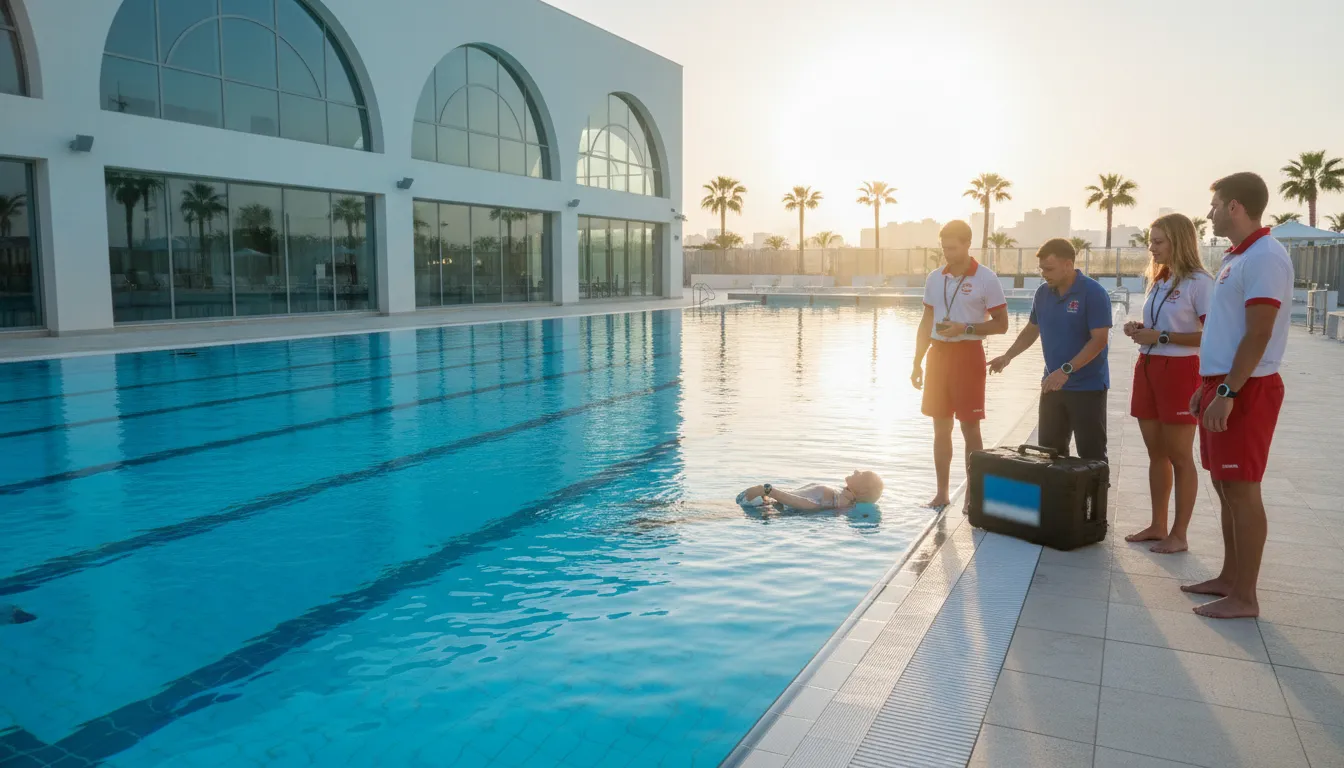
Municipal procurement teams should compare pool safety quotes as competing scopes of work, not as isolated monthly or purchase prices. A useful solicitation asks each vendor to describe what the city receives, how the system will be deployed, what staff must do, and which services continue after installation. This keeps a low initial quote from appearing comparable to a more complete proposal.
The strongest municipal comparison evaluates complete lifecycle scope: equipment, deployment, training, monitoring, replacement, accessibility, contract terms, and support. Score each quote against the same requirements before comparing price.
Start with a complete and equivalent scope
Require every respondent to identify the facilities, bodies of water, coverage assumptions, and number of users or wearables included. The quote should name included equipment, such as a GUARDian Hub (w3000), AquaSense swimmer wearables, lifeguard tags, vibrating alerts, Hub Management Software (HMS), or CompleteView, when applicable. Ask vendors to separate optional equipment from required equipment so the evaluation team can see the actual cost of a usable deployment.
Request a line-item description of site assessment, configuration, installation or deployment, testing, staff orientation, and go-live support. For a wireless system, clarify whether deployment requires permanent construction, electrical work, networking, or other facility modifications. Also document staffing assumptions. Technology should support lifeguards and facility personnel in supervised aquatic environments, not be presented as a replacement for lifeguard coverage.
Score service, lifecycle, and public-sector fit
Include monitoring and software in the evaluation. Ask who receives alerts, what operating hours apply, how access and permissions are managed, and what support response is included. Request training materials, refresher options, accessibility accommodations, and a clear process for serving staff with different roles or technology familiarity.
Warranty and replacement terms deserve their own scoring category. Compare battery expectations, replacement eligibility, exclusions, software updates, maintenance responsibilities, shipping, and service response. Contract terms should show renewal dates, escalation provisions, cancellation rights, data handling, insurance requirements, and ownership of equipment. Ask for references from comparable municipal or community aquatic facilities, then verify whether those references used a similar deployment model.
A simple evaluation matrix can assign weighted points to scope completeness, implementation plan, staff workflow, accessibility, lifecycle support, references, contract clarity, and total contract cost. Keep price important, but do not let it outweigh a missing requirement. Teams building the underlying requirements can also review municipal pool safety planning, while budget officers may benefit from comparing subscription versus capital costs. This procurement framework is intentionally different from a generic product pricing guide. It tests whether a proposal can operate within the city's facilities, staffing model, accessibility obligations, and public purchasing rules.
Transparent assumptions for a municipal pool safety system budget
Answer: A municipal pool safety system cost estimate is only meaningful when the scope behind it is visible. Pool count, bundle selection, contract term, deployment needs, and local procurement rules can all change the final budget.
Use the following assumptions when building an initial planning estimate, then ask for a facility-specific quote before submitting a purchase request. WAVE's public pricing is a current reference point, not a customized municipal quote. The live pricing page lists 12- and 36-month options for its GUARDian bundles, but a city's final scope may differ.
- One versus multiple pools: Assume one facility and one deployment first. Add each additional pool, body of water, entry point, or operating location as a separate scope question.
- Term length: Compare the available contract term with the municipality's budget cycle, renewal rules, and funding source. Do not assume the shortest or longest term is automatically the best fit.
- Bundle scope: Identify whether the estimate covers the GUARDian Lifeguard Alert Bundle, GUARDian Swimmer Protection Bundle, AquaSense swimmer wearables, lifeguard tags, Hub Management Software (HMS), CompleteView, or a combination.
- Deployment: Confirm equipment quantities, wireless coverage, installation support, configuration, testing, and any requirements created by the facility layout or surrounding structures.
- Staff training: State who will attend orientation, how many shifts need instruction, and whether refresher training or seasonal onboarding is required. The system adds another layer of protection in supervised aquatic environments and does not replace lifeguards.
- Site conditions: Note indoor or outdoor use, clear or dark/murky water, pool layout, connectivity, storage, and seasonal operating schedules.
- Taxes and procurement rules: Check sales tax, cooperative purchasing eligibility, bidding thresholds, required insurance language, purchase-order procedures, and grant restrictions with the municipality's procurement team.
- Quote variability: Treat a published price as a starting reference. Quantities, services, terms, site requirements, and requested accessories can change a formal quote.
For broader planning, review current WAVE pricing and investigate pool safety grant funding separately. Keep the assumptions attached to the budget worksheet so reviewers can see exactly what is included and excluded.
Frequently Asked Questions
What should a municipality include in a pool safety system budget?
Include equipment or subscription fees, the number of pools and swimmers covered, deployment, staff training, monitoring, maintenance, replacement coverage, software, procurement time, and contract administration. Comparing the full life-cycle cost prevents a low purchase price from masking recurring operating expenses.
Is a subscription or capital purchase better for a city pool?
It depends on the municipality's funding rules, cash-flow preferences, contract terms, and replacement policy. A subscription can make recurring costs easier to forecast, while a capital purchase may fit an approved equipment budget. Compare both models over the same planning period, including implementation, support, maintenance, and eventual replacement.
How much does a WAVE system cost for a municipal pool?
WAVE's public pricing is a reference point, not a municipal quote. The GUARDian Lifeguard Alert Bundle is listed from $149 per month with a 36-month AdvancePay option, while the GUARDian Swimmer Protection Bundle is listed from $299 per month under the same option. Current terms and inclusions should be confirmed at WAVE's pricing page.
Does a pool safety system replace lifeguards?
No. WAVE is designed to support lifeguards and add another layer of protection in supervised aquatic environments. Budget for normal staffing, supervision, emergency procedures, and training. The technology should strengthen the staff workflow, not serve as a substitute for qualified personnel.
What information should a city provide when requesting a quote?
Provide the number and type of pools, operating schedule, expected swimmer volume, coverage goals, existing staff workflow, facility layout, connectivity conditions, procurement requirements, and preferred term or funding model. Ask vendors to separate one-time, recurring, optional, and implementation costs so proposals can be evaluated consistently.
Schedule a Free Consultation for Your Municipal Pool
A customized conversation can help your team organize system scope, deployment needs, staffing considerations, and procurement questions before requesting a quote. WAVE supports lifeguards with an additional layer of protection in supervised aquatic environments. Schedule a Free Consultation to discuss a municipal pool safety system tailored to your facility.
