
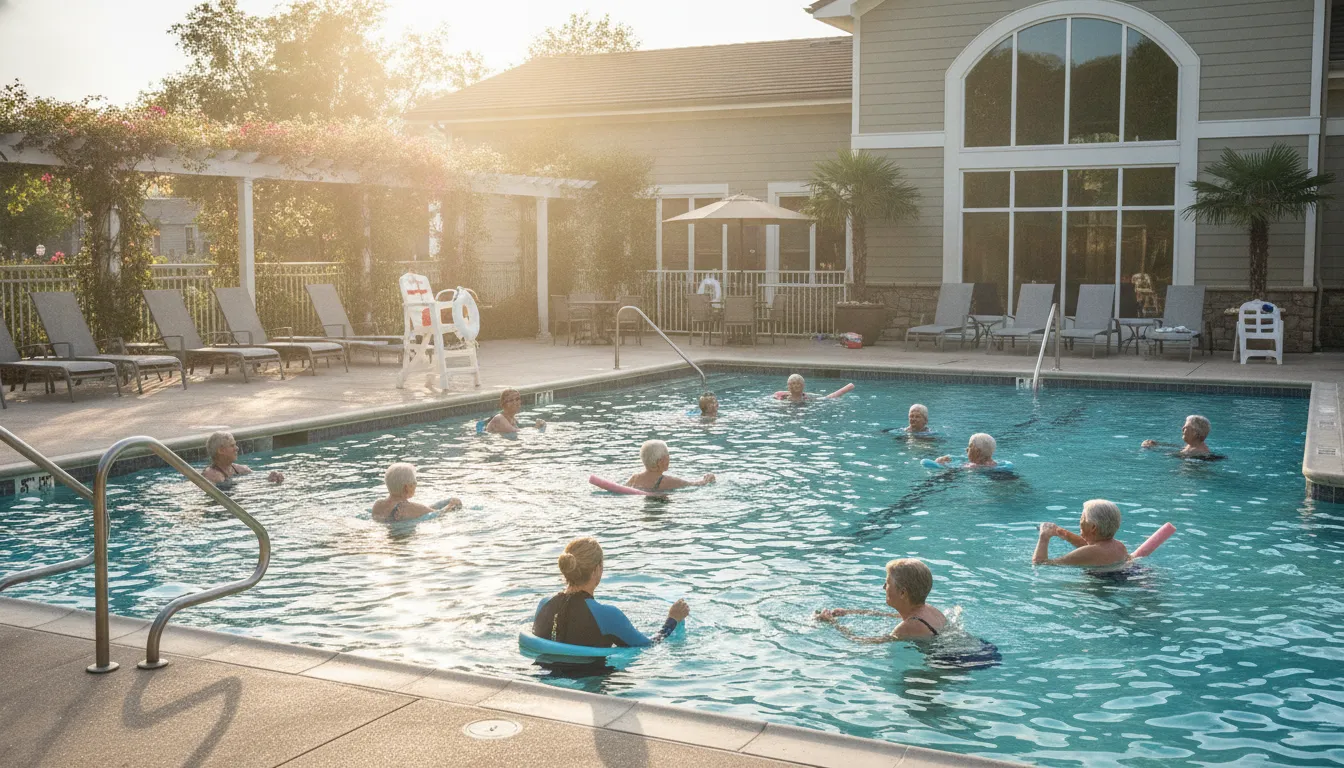
A sudden medical issue in the water can lead to silent drowning within seconds. For senior communities, managing this hidden danger is a vital part of keeping residents safe.
Schedule a Free Consultation to learn how WAVE drowning detection technology protects senior residents in assisted living pools.
Senior living pool safety needs a unique approach because older adults face a higher risk of drowning due to health problems and medications. Since drowning is silent and can happen in seconds, simple visual checks are often not enough to keep residents safe. Implementing wearable drowning detection systems helps staff watch the water, especially in therapy pools that lack on-duty lifeguards. These wireless systems use lightweight wristbands with multi-year batteries to track swimmers and instantly alert staff when a swimmer stays under too long. The technology works in both clear and murky water without needing any permanent pool construction or major renovations. By combining visual safety checks with active electronic monitoring, communities can protect vulnerable residents, reassure worried families, and reduce legal risks.
How can facility directors build a pool safety program that protects vulnerable residents from silent emergencies? To answer this key question, we must explore why senior living pool safety requires a different approach, and the path begins with these vital details.
Why Senior Living Pool Safety Requires a Different Approach
Senior living pool safety is fundamentally different from standard commercial pool safety because older adults bring unique medical, medication, and physical challenges to the water. Therapy pools often operate without dedicated lifeguards, and drowning can be silent and fast. Facilities need a layered approach that includes staff training, secure pool access, and technology that detects submersions regardless of water clarity.
Many senior living centers offer pools for exercise, therapy, and social events. While these activities are great for health, they also come with major risks. Standard safety plans that work for public pools are not enough here.
Managing these risks demands a custom plan for senior living pool safety equipment and rules. Operators must adapt their safety rules to protect their unique resident group.
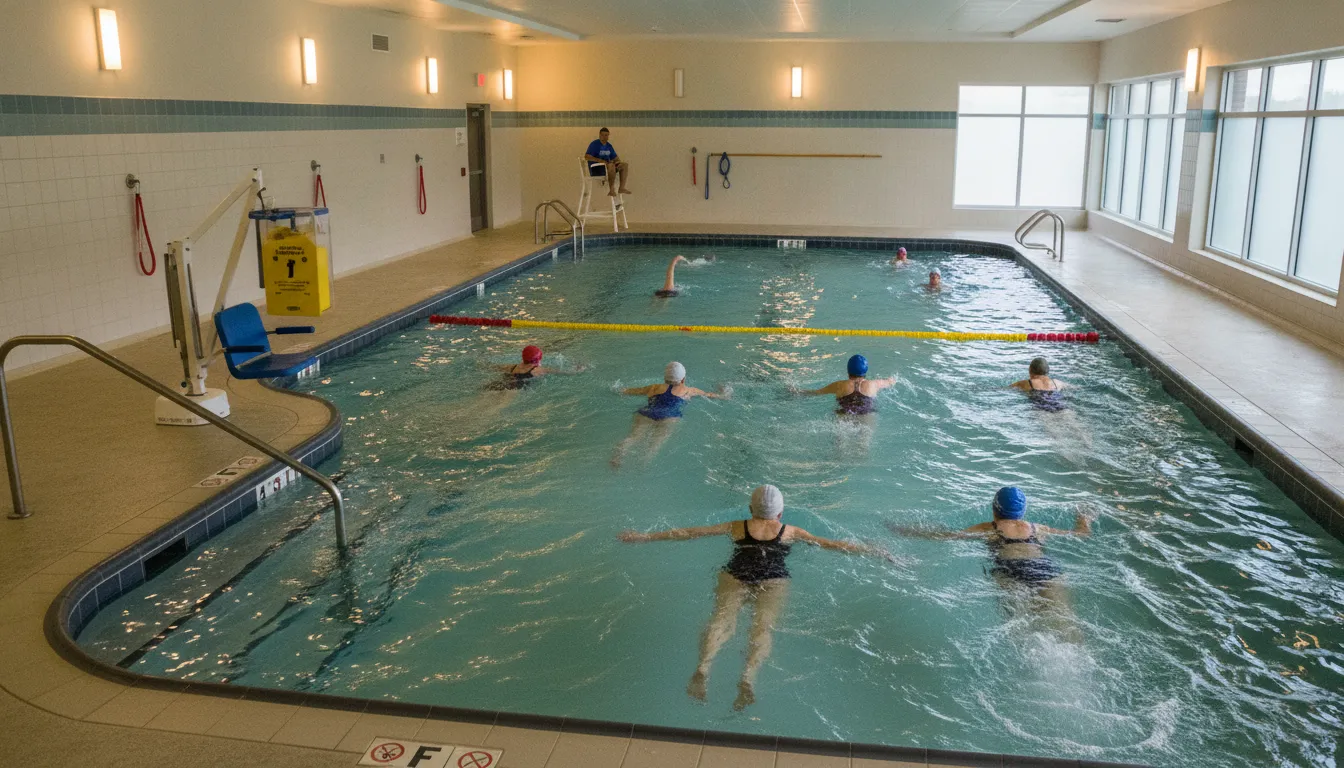
Unique Health and Medication Risks
Older adults have specific medical conditions that increase their risk of water accidents. According to the Centers for Disease Control and Prevention (CDC), issues like seizure disorders and heart conditions make swimming much more dangerous.
A brief lapse in control can lead to a sudden submersion. Also, many seniors take daily medications that impair balance and control. The CDC notes that these side effects greatly increase the risk of drowning.
When a resident loses balance near or in the water, a simple slip can turn into a life-threatening crisis in an instant. This makes standard pool monitoring much harder.
The Silent Nature of Drowning
Many people think that a drowning person will splash, wave, or yell for help. In real life, drowning is often silent and occurs in seconds. A senior swimmer who slips under the water cannot call out or make a sound.
There is no loud struggle to grab the eye of a busy staff member, making quick detection hard. A resident can drown even when several people are in the same pool area.
Because the crisis happens so fast, staff must react within seconds to prevent brain damage or death. Relying on visual checks alone leaves an unsafe gap in pool safety.
Lower Staffing Ratios and Therapy Pools
Therapy pools in senior living homes are different from large public pools. These warm-water pools are built for gentle exercise and therapy, not active swimming. As a result, centers often do not have dedicated lifeguards on duty at all times.
Instead, a single therapist or class leader may guide several residents. If a staff member must focus on teaching, they cannot watch every swimmer at every second.
This lower staffing ratio means a resident in trouble might go unseen. To reduce this risk, communities must set up multiple layers of safety.
Using the buddy system is a highly helpful step for senior swimmers. The CDC recommends that people with seizure disorders or other chronic health issues always swim with a partner.
If one person gets into trouble, their buddy can raise the alarm right away. But even with a partner, human eyes can miss a submersion.
This is why senior living homes are adding modern tracking technology. Combining alert tech with human eyes creates a reliable net. This approach ensures that help is always on the way when a resident needs it.
What Are the Biggest Drowning Risks for Older Adults?
Older adults face elevated drowning risks from medical conditions like heart disease and seizures, medications that impair balance, and the silent nature of drowning itself. Shallow water blackout is a particular danger, and many senior living pools lack full-time lifeguard coverage. Understanding these unique risks is the first step toward building an effective senior living pool safety program.
Older adults face unique risks in the water that need close care. Keeping seniors safe is the top goal of senior living pool safety programs. Swimming is a great way for seniors to stay active. But body changes can quickly turn a calm swim into a crisis.
The Impact of Medical Conditions and Medications
Many seniors live with long-term health issues that affect their safety in the water. Reports on water safety from the CDC show that health issues like seizures raise pool risks. A sudden health event in the pool can cause a swimmer to lose control and sink. This is why seniors with these issues need close supervision around the water. Even minor health changes can make it hard for a senior to stay afloat.
Prescription drugs also play a big role in senior pool safety. Many common drugs can make a swimmer lose their balance. Taking these pills before a swim increases the risk of drowning. Some drugs also make swimmers tired, which slows their response in a crisis. Staff must know which residents take these pills to help keep them safe.
Silent Submersion and Shallow Water Blackout
A common myth is that drowning involves splashing and shouting. In truth, drowning is silent and fast, often taking just a few seconds. A drowning senior may not be able to raise their arms or call for help. They can slip beneath the surface without making a sound or causing a splash. This silent process makes it easy for staff to miss a person in trouble.
Another big danger is shallow water blackout. This happens when a swimmer holds their breath for too long underwater. This can cause a person to pass out and drown in seconds. Swimmers must never try to hold their breath for a long time underwater. This threat can affect even strong swimmers who feel healthy.
Supervision Gaps in Senior Living Communities
Many senior living sites have pools but lack full-time lifeguards. This lack of safety staff leaves residents at risk when a crisis happens. Without constant eyes on the water, a silent drowning is hard to spot. Pool managers must find ways to fill these safety gaps. When no lifeguard is on duty, other staff members must be ready to respond.
Adding layers of safety is the best way to keep older swimmers safe. Managers can boost aquatic safety for assisted living communities by pairing staff training with new tech. These steps help staff find pool risks and act fast to save lives. A complete safety plan gives peace of mind to residents and their families.
How Drowning Detection Technology Protects Senior Residents
WAVE drowning detection technology uses wearable AquaSense wristbands and a central GUARDian Hub to monitor pool activity. When a swimmer stays submerged too long, the system alerts staff through vibrating wristbands and facility speakers. Unlike camera-based systems, WAVE works in murky or dark water and requires no permanent construction or daily battery charging.
Senior living pools are key to health and wellness, but they also bring real risk to older adults. Since drowning is silent, the Centers for Disease Control and Prevention (CDC) notes that it is hard to spot a struggle. To keep senior swimmers safe, pools need an extra layer of defense. Modern pool safety technology for seniors offers a smart way to watch over the water.
Wearable Sensors and Central Hubs
The WAVE GUARDian system uses two main parts, starting with a light, non-tethered AquaSense wristband that swimmers wear. This band has a multi-year battery that does not need daily charging, which keeps the system ready for constant use. It is simple to wear and does not get in the way of swim therapy. Seniors can enjoy their swim time without feeling watched or held back.
Second, a central GUARDian Hub (w3000) watches the pool area and sends out the safety alerts. This hub is wireless and does not need any permanent construction on your pool deck. That means you can deploy the system fast without closing the pool or drilling into concrete. If a swimmer stays underwater for too long, the hub alerts the staff right away.
Support for Limited Pool Staff
Many senior living pools do not have a lifeguard on duty, which makes constant watching a challenge. Often, pool staff or fitness trainers must manage the area while doing other tasks. In these cases, the system acts as a key force multiplier by detecting submersions that busy staff members might miss.
When the system senses a prolonged submersion, it sends out instant facility alerts. Staff members get vibrating alerts on their wristbands within seconds so they can respond without delay. Here is how the alert process works:
- A swimmer wearing an AquaSense wristband stays under the water for longer than a safe period.
- The GUARDian Hub detects the prolonged submersion and sends a wireless alert to all staff devices.
- Staff members receive vibrating alerts on their wristbands and spoken word alerts from facility speakers.
- Staff respond to the pool area within seconds to check on the swimmer and provide help if needed.
Reliable Performance in All Water Conditions
Some safety systems use underwater cameras to watch the pool, but these systems have a major weakness. Cameras need clear water to see well, which means they fail if the pool is cloudy, dark, or murky. Senior therapy pools often get cloudy from body oils, lotion, and chlorine, which can block a camera's line of sight.
WAVE technology works in clear, dark, or murky water. Because it does not rely on light or sight, the system never has blind spots. This means it watches the pool, no matter how the water looks. Senior living teams can trust the system to work when it is needed most.
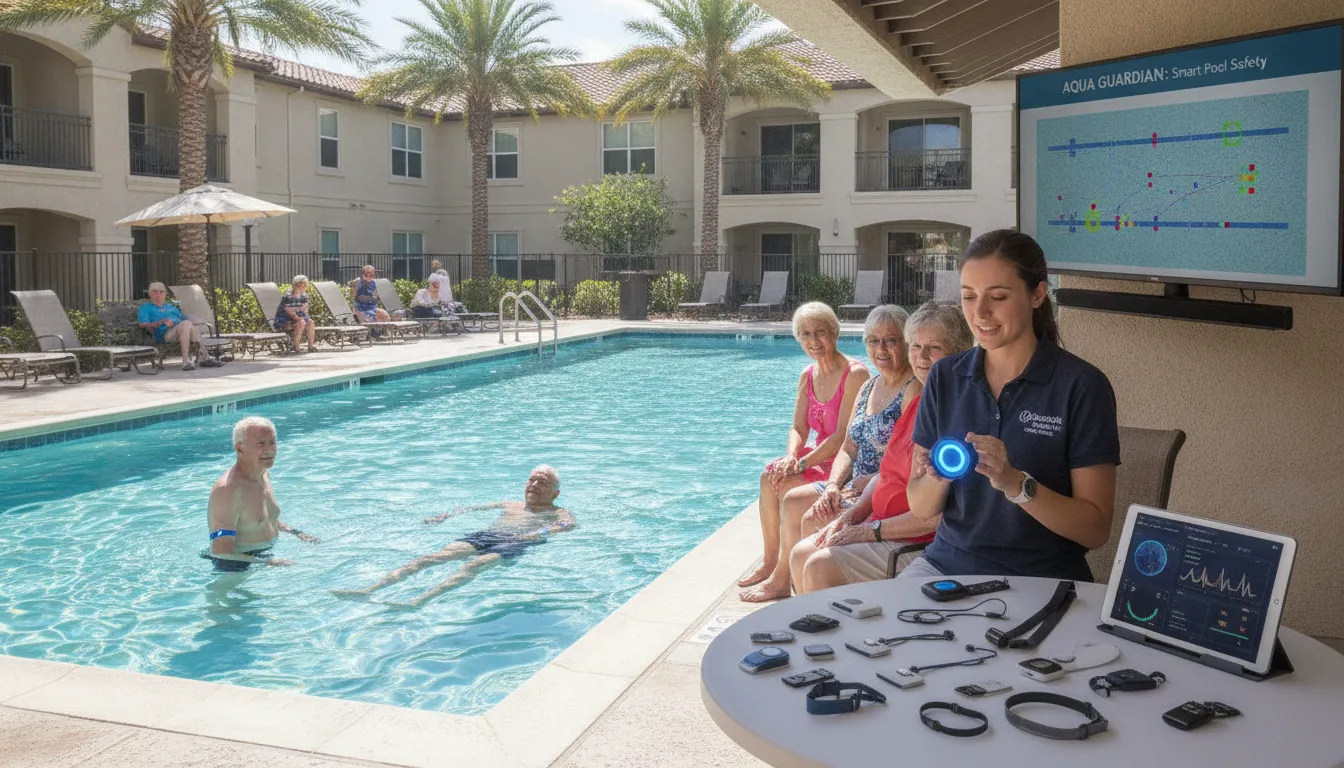
Building a Comprehensive Pool Safety Program for Assisted Living
A complete senior living pool safety program uses five layers of protection: staff supervision, wearable detection technology, secure pool design, resident education on safe swimming practices, and emergency preparedness with CPR training. No single layer is enough on its own. Stacking these layers creates a reliable safety net that protects residents and reduces liability.
Making sure of improving safety for senior living pools is a key goal. A complete water safety plan helps boost senior living pool safety through supervision, tech, training, and secure gates. No single step is enough on its own. By stacking these parts, centers can build a safer pool space that helps lower risks.
Five layers of pool safety
Each safety layer plays a unique role in guarding residents. Staff supervision gives direct watch of the water. Locked gates and secure walls keep the pool closed when staff are not on duty. Also, resident education helps seniors know their own limits and swim with others.
Resident education is a key part of pool safety. Staff must teach swimmers to know their limits and always use the buddy system in the water. This pairing is helpful for those with health issues or seizure risks. If one swimmer gets into trouble, the other can call for help right away.
Pool setup also acts to stop harm before it can start. Wet areas need non-slip floors to prevent falls. After the daily swim hours end, staff must shut and lock doors that give access to water. This simple lock prevents residents from walking into the pool area alone at night.
Comparison of protection layers
Mixing these layers creates a strong safety net. While some layers focus on strong walls, others rely on human watch or modern tools. Stacking human care, secure locks, and tools forms a strong defense. The table below shows how these systems work as one to guard older adults.
| Safety Layer | Core Focus | Senior Living Benefit |
|---|---|---|
| Supervision | Active staff watch and trained spotters. | Helps watch swimmers with walking issues. |
| Technology | Wearable drowning detection devices. | Acts as a force multiplier for busy staff. |
| Pool Design | Non-slip floors and secure gates. | Prevents slips and stops nightly walks. |
| Resident Training | Teaching own limits and drug safety. | Promotes the buddy system for high-risk swimmers. |
| Emergency Ready | Daily CPR drills and life jacket access. | Prepares staff for rapid first aid response. |
Emergency action and staff training
A quick response saves lives in an emergency. Every staff member who works near the pool must have proper training. Getting CPR training gives staff the skills to save a life before help arrives. The home should keep safety tools like life rings and first aid kits within easy reach at all times.
Swimmers who are not strong in the deep end should wear life jackets. Using life jackets in the pool helps keep weaker swimmers safe. This simple gear cuts down the risk of drowning for people of all swimming skills. Staff must inspect this gear often to make sure it fits well and has no tears.
Reducing Liability With Modern Safety Technology
Drowning incidents carry severe legal and financial consequences for senior living facilities. The WAVE system offers an affordable subscription model starting at $149 to $399 per month, eliminating the need for large capital budgets. Nonprofit facilities can also access grants through the CPSC Pool Safely program and the WAVE scholarship program to help fund safety upgrades.
Pools are great for resident wellness. Swimming keeps seniors active and happy. But water also brings high risk to any community. For senior living operators, senior living pool safety must be a main goal. New tools can help lower facility liability and keep residents safe.
Legal risks and operational impacts
Drowning incidents bring severe legal risks. A Red Cross 2023 YMCA study shows that 68% of facilities faced legal action or pool closure after a drowning. A single incident can cause long court battles and high fines. This can stop operations and hurt your community. Risk managers must plan ahead to avoid these legal threats.
A single pool incident also hurts your brand's reputation with families. News of a drowning spreads fast and can turn people away from your facility. When people choose a senior home, they look for safety first. The Centers for Disease Control and Prevention states that chronic medical conditions can raise drowning risks. Adding active technology shows a clear commitment to resident safety and builds trust.
Subscription options and capital budgets
Many senior living operators think safety tech needs a large capital budget. They worry about high upfront equipment costs. They might delay safety upgrades for months or years. But modern safety systems are within reach. WAVE offers a simple subscription model to help facilities get started.
This subscription costs just $149 to $399 per month. The low fee lets communities buy safety tools without waiting for next year's budget cycle. It is an affordable way to add safety to your pool. Facilities get advanced protection without a large upfront cost or high tech fees.
Funding sources and community grants
Nonprofit senior living facilities can also look for external funds. The federal CPSC Pool Safely grant program is a primary source of federal funding. This program helps public and private groups buy drowning prevention tech to meet local safety rules. Other groups also offer grants for safety upgrades.
WAVE also helps facilities find financial aid. You can check the WAVE grants and funding page to learn about their scholarship program. They partner with ACCU to support nonprofit facilities. These funding options make it easy to start. This aid helps you build a solid water safety plan for assisted living communities.
Frequently Asked Questions
How do medical conditions and medications affect senior pool safety?
According to the CDC, medical issues like heart conditions or seizures raise drowning risk. Also, some medicines can hurt balance or coordination, which makes swimming dangerous. Facilities must track these personal health risks to keep older swimmers safe in and around the pool.
Do assisted living facilities need a lifeguard on duty?
Many senior living facilities do not have on-duty lifeguards for their therapy or recreational pools. In these settings, a WAVE GUARDian system acts as a vital safety layer by alerting nearby staff within seconds of a submersion. This technology does not replace staff but gives them the tools to respond immediately if an emergency occurs.
How does wearable drowning detection work for seniors?
Swimmers wear a lightweight, wireless wristband that tracks their time underwater. If a swimmer stays submerged for too long, the system alerts staff through vibrating bands and main hub alarms. Unlike other devices, this pool safety technology for seniors has a multi-year battery that needs no daily charging, making it easy for staff and residents to use.
How do pool accidents affect senior living facility liability?
A drowning incident can lead to severe legal and cost problems. According to a YMCA lifeguard study, 68 percent of aquatic facilities faced pool closures or legal action after a drowning. Using modern safety tech helps protect residents and cuts these massive liability risks.
Can senior living pools get grants for safety technology?
Yes, nonprofit senior living facilities can apply for CPSC Pool Safely grants, which fund drowning prevention technology for public facilities. WAVE also offers a scholarship program for qualified nonprofits through its ACCU partnership. Check the WAVE grants and funding page for details on available financial assistance.
How does WAVE compare to camera-based pool safety systems for senior living?
Camera-based systems require clear water and permanent construction, making them less practical for therapy pools where water is often cloudy from lotions and body oils. WAVE uses wearable sensors that work in any water clarity, has no blind spots, and requires no structural changes to the facility. The wireless AquaSense wristbands also have multi-year batteries without daily recharging, unlike many competing wearables.
Ready to Improve Senior Living Pool Safety at Your Community?
Leaving your pool without modern safety tech invites serious risks that can lead to silent drowning and severe legal or brand issues. By acting today to set up simple backup safety systems, you ensure your active residents remain fully protected every single time they swim. You can read more about choosing our senior living pool safety equipment to help your staff respond to sudden water alerts in just seconds.
Ready to protect your residents? Schedule a Free Consultation to learn how our simple and smart pool safety tech can support your team. Taking this vital step today ensures your staff is prepared for any crisis. You will get the tools needed to keep every swimmer safe in the water.
