
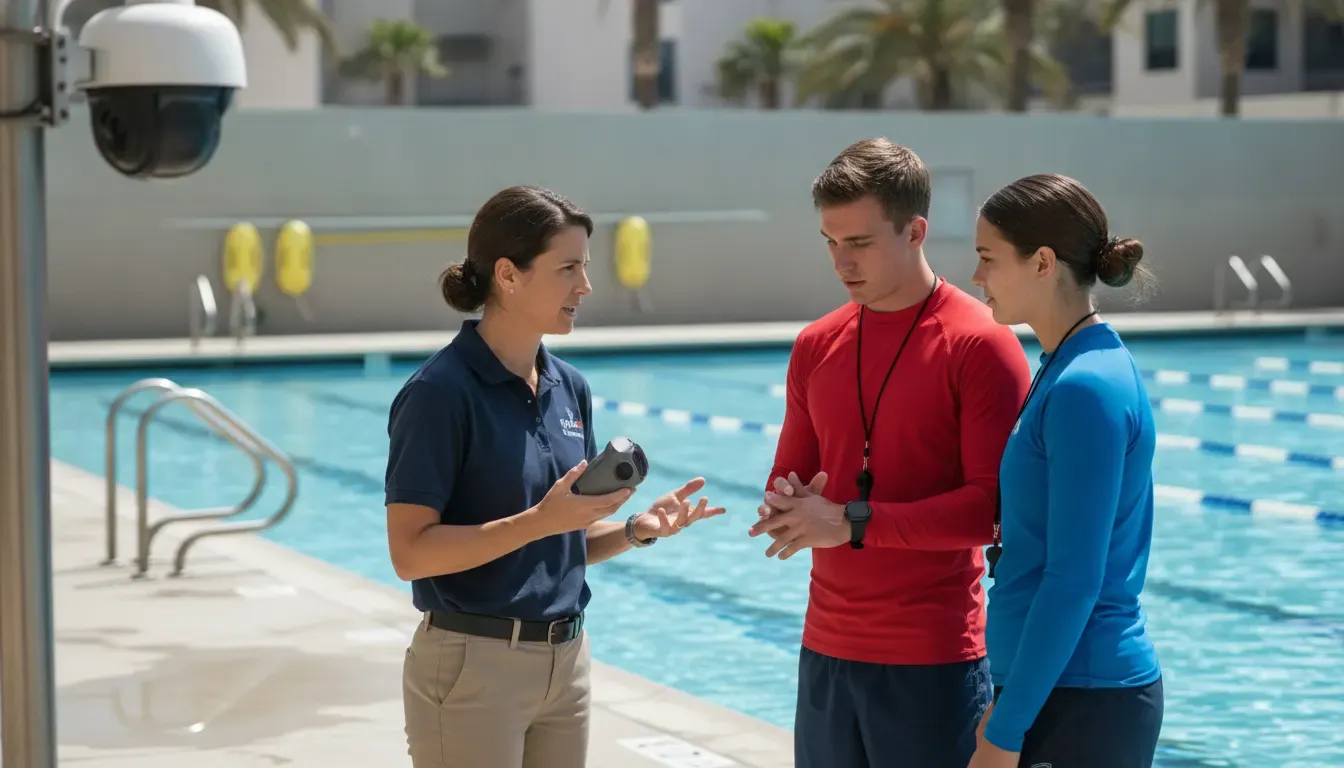
If you are researching an AngelEye drowning detection alternative, the most useful comparison is not a simple feature checklist. Aquatics leaders need to understand how a camera-based system fits the pool, how a wearable system fits the swimmer and lifeguard workflow, and what happens when conditions change. This guide compares those approaches without assuming that one technology is right for every supervised facility.
Schedule a Free Consultation to compare your facility's options
What is an AngelEye drowning detection alternative?
AngelEye is commonly evaluated as an underwater camera and software approach to drowning detection. A facility considering an alternative may be looking for a different way to identify prolonged submersion, reduce response time, or add another layer of support to lifeguard operations. The word "alternative" can mean a different technology, a different deployment model, or a better fit for a specific water environment.
The two main approaches are scene-based detection and wearable-based detection. Camera systems observe defined areas of a pool and use software to interpret what is happening in the water. Wearable systems associate a device with a swimmer, lifeguard, or rescue item and send an alert when the device meets a configured submersion or water-entry condition.
Neither approach should be presented as a substitute for trained lifeguards, active supervision, emergency procedures, or a well-maintained facility. Drowning is a serious and time-sensitive risk, and the right technology should strengthen the people and processes already responsible for swimmer safety. The World Health Organization describes drowning as preventable and emphasizes supervision and targeted prevention measures as part of the solution.
For aquatics directors, the decision becomes clearer when it is organized around infrastructure, visibility, alert recipients, maintenance, and facility fit rather than brand claims alone.
A practical AngelEye drowning detection alternative may be another camera platform, a wearable system, or a combination of tools. The right choice depends on what the facility needs to monitor, where the alerts must go, and how much infrastructure the site can support.
How do camera and wearable systems detect risk?
Camera-based systems begin with a view of the water. Fixed cameras, software, and a defined coverage area work together to identify patterns that may require attention. This model can be useful when a facility wants a visual indication of where an event is occurring and has a pool environment suitable for consistent camera coverage.
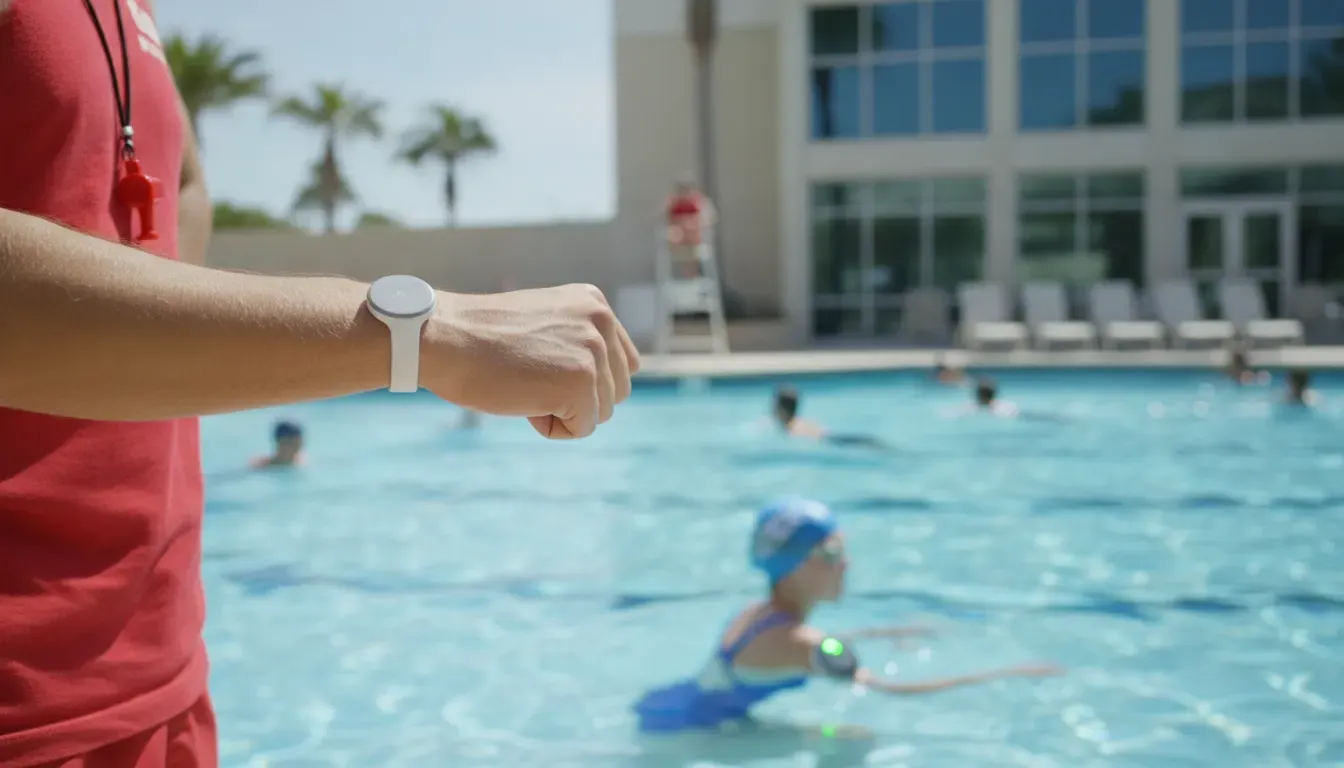
Wearable systems begin with the person or equipment being monitored. WAVE's AquaSense swimmer wearables signal the GUARDian Hub when submerged, and a configurable delay can give lifeguards time to distinguish ordinary swimming from a concerning event. WAVE also offers lifeguard tags that identify water entry during a rescue, helping communicate that a guard is in the water and may need support.
Those are different detection models, so the evaluation question is not simply which one is more advanced. Ask what the system is designed to detect, what starts the alert sequence, what delay settings are available, and how staff confirm the event. A visual system and a wearable system can produce different types of information even when they address the same safety objective.
| Evaluation question | Camera-based approach | Wearable-based approach |
|---|---|---|
| Primary input | Images of defined water zones | A device associated with a swimmer, lifeguard, or rescue item |
| Core question | What is happening in the camera's view? | Has the monitored device been submerged or entered the water? |
| Most important design dependency | Coverage, visibility, mounting, power, and network design | Wearable assignment, battery status, hub coverage, storage, and staff response |
Camera systems interpret the water scene, while wearable systems use a device's state to initiate alerts. Comparing them fairly means evaluating the input each system can reliably access, not treating different detection models as identical products.
Which option works when water visibility changes?
Visibility is one of the most important questions in a camera versus wearable decision. A camera needs a useful view of the monitored area, so glare, shadows, bubbles, crowded lanes, water movement, obstructions, and changing light should be discussed during a site assessment. A vendor should explain how coverage is tested and what conditions can reduce the quality of the visual signal.
Wearables take a different path because the signal comes from the device attached to the swimmer or lifeguard. WAVE positions its wearable approach for clear and dark or murky water, as well as pools and certain natural-water environments. That makes water clarity less central to the detection mechanism, although staff training, device use, hub placement, and local operating procedures still matter.
Facilities should also examine whether conditions are stable throughout the year. An indoor competition pool may offer predictable lighting and water clarity. A summer camp, municipal waterfront, or multi-body recreation site may face changing weather, glare, currents, vegetation, or seasonal layouts. If a facility operates in more than one type of water, test the system in the hardest environment it expects to manage.
Ask each vendor to document environmental limits instead of accepting a general statement that a system works "everywhere." Request a site-specific coverage plan, the operating conditions used for testing, and the procedures staff follow when an alert occurs during poor visibility.
If a facility has consistent water clarity and wants visual location information, a camera system may fit the environment. If it needs alerts that do not depend on a camera seeing through the water, a wearable approach may provide a more flexible layer for changing conditions.
What infrastructure does each system require?
Infrastructure affects both project risk and long-term ownership. Camera deployments may require mounting locations, pool lighting or wall coordination, power, network connectivity, server or software configuration, and a plan for keeping the camera view unobstructed. Depending on the facility, installation may also involve contractors, pool downtime, permits, or coordination with a renovation schedule.
Those requirements are not automatically a reason to reject cameras. A new aquatic facility or major renovation may already have the design access and construction window needed for a fixed system. The key is to identify those requirements before the purchase decision, not after the pool schedule and capital plan are committed.
Wearable systems generally shift the deployment question from construction to operations. The facility needs a central hub, wearable inventory, staff alerts, storage, charging or battery procedures where applicable, and clear assignment rules. WAVE's GUARDian Hub is designed to connect wearables, lifeguards, staff, and facility announcements without drilling, cutting, or retrofitting the pool structure.
For a facility that needs portability or seasonal deployment, the operational model can be significant. A system that can move with a program or serve multiple water areas may reduce the need to duplicate fixed infrastructure. It may also require stronger inventory control and staff onboarding. Include both the installation plan and the operating plan in the evaluation.
Review the WAVE product lineup alongside the facility's infrastructure plan so the selected bundle matches the people, water areas, and alerts it needs to support.
See how the GUARDian Hub connects wearable alerts and facility response
Infrastructure is not only a construction question. Camera systems typically concentrate complexity in site design and fixed coverage, while wearable systems concentrate complexity in device management, hub placement, and staff workflow.
Who receives the alert, and what happens next?
An alert has value only when it reaches the people who can respond and supports a clear procedure. Ask whether the first notification goes to a lifeguard, supervisor, control desk, security team, front desk, or another staff role. Then ask what the second step is if the first recipient does not acknowledge the event.
Camera platforms may provide a visual location and configurable notifications, but the facility should confirm which devices and roles are supported in its actual deployment. A notification that reaches a phone in an office may not be as useful as an immediate signal at the pool deck. Staff must know how to distinguish a system alert from a test, how to confirm the location, and how to document the response.
WAVE's GUARDian approach is built around rapid staff communication. AquaSense swimmer wearables can trigger vibrating bracelets after a configured submersion interval, while spoken facility alerts can communicate that a response is underway. Lifeguard tags can notify the system when a guard enters the water, helping other staff understand that the situation is an active rescue rather than an unexplained absence.
Technology should support, not replace, the facility's emergency action plan. During a demonstration, run a complete scenario from detection to notification, staff acknowledgment, rescue coordination, and reset. Include the person who will manage the system after installation, not only the executive who approves the purchase.
Review WAVE lifeguard alert equipment for water-entry and staff alerts
The best alert is the one that reaches the right responder in a form they can recognize immediately. Compare complete response workflows, including alert recipients, escalation, spoken or visual cues, acknowledgment, and reset procedures.
What should facilities budget for maintenance?
Total cost of ownership includes more than the initial equipment. A camera installation may require periodic cleaning, alignment checks, lighting or network troubleshooting, software support, and planned access to equipment installed around the pool. Ask what happens when a camera is blocked, damaged, offline, or affected by a change in the pool environment.
Wearable systems have a different maintenance profile. Facilities should plan for device assignment, cleaning and inspection, battery or charging procedures, storage, replacement, and staff training. Ask how the system reports low battery or missing equipment, how quickly replacement devices are available, and how the team prevents a wearable from being issued without a successful test.
WAVE's Hub Management Software is intended to help facilities track equipment status and manage alert configuration. Even with monitoring tools, the facility remains responsible for a repeatable daily or shift-based readiness check. A technology layer works best when staff can explain what is ready, what is offline, and what action is required before swimmers enter the water.
Request a written service model from every vendor. Compare support hours, software updates, warranty terms, replacement procedures, training, site visits, and the customer's responsibilities. Avoid comparing one vendor's equipment price with another vendor's fully supported operating model.
Camera maintenance centers on fixed infrastructure and visibility. Wearable maintenance centers on readiness, inventory, batteries, and staff adoption. A fair comparison includes the labor and downtime needed to keep either system dependable.
Which approach fits a supervised aquatic facility?
Facility fit should be decided by the environment and response model, not by the technology label. A fixed camera approach may be attractive for a clear-water indoor pool with stable zones, a strong network, and a renovation or construction plan. Visual location information can also be valuable when the facility has a defined camera view and a team prepared to manage the system.
A wearable approach may be a better fit when a facility needs no permanent construction, operates across multiple water areas, or wants a detection layer that is less dependent on water visibility. It may also suit organizations that want to start with lifeguard entry alerts and expand to swimmer wearables as staff adoption grows.
For YMCAs, Boys & Girls Clubs, schools, camps, municipalities, water parks, and community facilities, the decision may vary by site. A multi-site operator could use a fixed system in one indoor pool and a wireless wearable system in a seasonal or natural-water program. The important question is whether the technology matches each site's risk, staffing, budget, and operating conditions.
WAVE's AquaSense swimmer wearables and lifeguard alert equipment are designed for supervised aquatic environments. They add another layer of protection and help connect swimmers, lifeguards, and staff, but they do not replace lifeguards or active supervision.
A camera-based system may fit a stable, infrastructure-ready pool. A wireless wearable system may fit a facility that values portability, water-condition flexibility, and direct alerts to staff. Multi-site organizations should evaluate each location instead of forcing one answer everywhere.
How can an aquatics leader compare an alternative fairly?
Start with a written requirements sheet before scheduling vendor demonstrations. Record each water body, operating season, lighting and visibility conditions, swimmer volume, guard stations, staff roles, network availability, construction constraints, and emergency action plan. This prevents a polished demonstration from becoming the only basis for a high-consequence technology decision.
Next, require each vendor to answer the same questions. Ask what the system detects, what it cannot detect, how it handles false alerts, who receives alerts, how staff acknowledge them, what maintenance is required, and how a failed component is identified. Ask for references from facilities with a similar water environment and staffing model.
Finally, run a live scenario. Test a normal swim, a prolonged submersion, a lifeguard water entry, a blocked or offline component, and an alert outside the primary responder's immediate reach. Score the result by time to notification, clarity of instructions, staff confidence, reset time, and the work required to keep the system ready.
Get a facility-specific comparison from WAVE
A fair alternative review compares detection, infrastructure, visibility, alert workflow, maintenance, service, and facility fit under the same scenario. The goal is not to promise zero risk. It is to choose an additional safety layer that staff can use consistently.
Frequently asked questions
These questions help aquatics directors move from a brand search to a practical site decision. They are also useful prompts for a vendor discovery call and an on-deck demonstration.
Use these questions to compare the technology, service model, and staff workflow before selecting an additional drowning-detection layer for a supervised facility.
What is the main difference between AngelEye and a wearable alternative?
AngelEye is commonly evaluated as a camera and software approach that observes a pool area. A wearable alternative associates detection with a swimmer, lifeguard, or rescue item and sends alerts when the device meets a configured condition. The better fit depends on the facility's water visibility, infrastructure, response workflow, and operating model.
Can a wearable drowning detection system replace lifeguards?
No. A wearable drowning detection system should be described as an additional layer of protection that supports trained lifeguards and active supervision. Facilities still need qualified staff, emergency procedures, swimmer rules, inspections, and ongoing training.
Are camera systems better for locating an event?
A camera system may provide visual location information within its defined coverage area. That benefit depends on camera placement, visibility, software behavior, and the facility's ability to interpret and act on the alert. Ask the vendor to demonstrate the location and response workflow under realistic conditions.
Do wearables work in murky or dark water?
Wearable detection does not depend on a camera seeing through the water in the same way a scene-based system does. WAVE positions its wearable technology for clear, dark, and murky conditions. Facilities should still confirm environmental limits, hub coverage, device use, and response procedures for the specific water body.
What should be included in a drowning detection system quote?
Request a complete view of hardware, software, installation or setup, alert devices, training, monitoring, support, warranty, replacement, maintenance, and any network or construction work. Compare the ongoing operating responsibilities as well as the initial equipment.
How should a facility choose between a camera and wearable system?
Document the site's water conditions, infrastructure constraints, staffing workflow, alert recipients, maintenance capacity, and seasonal needs. Then test both the detection event and the complete response process. Choose the system that staff can operate reliably as an additional layer of protection in the facility's real environment.
