
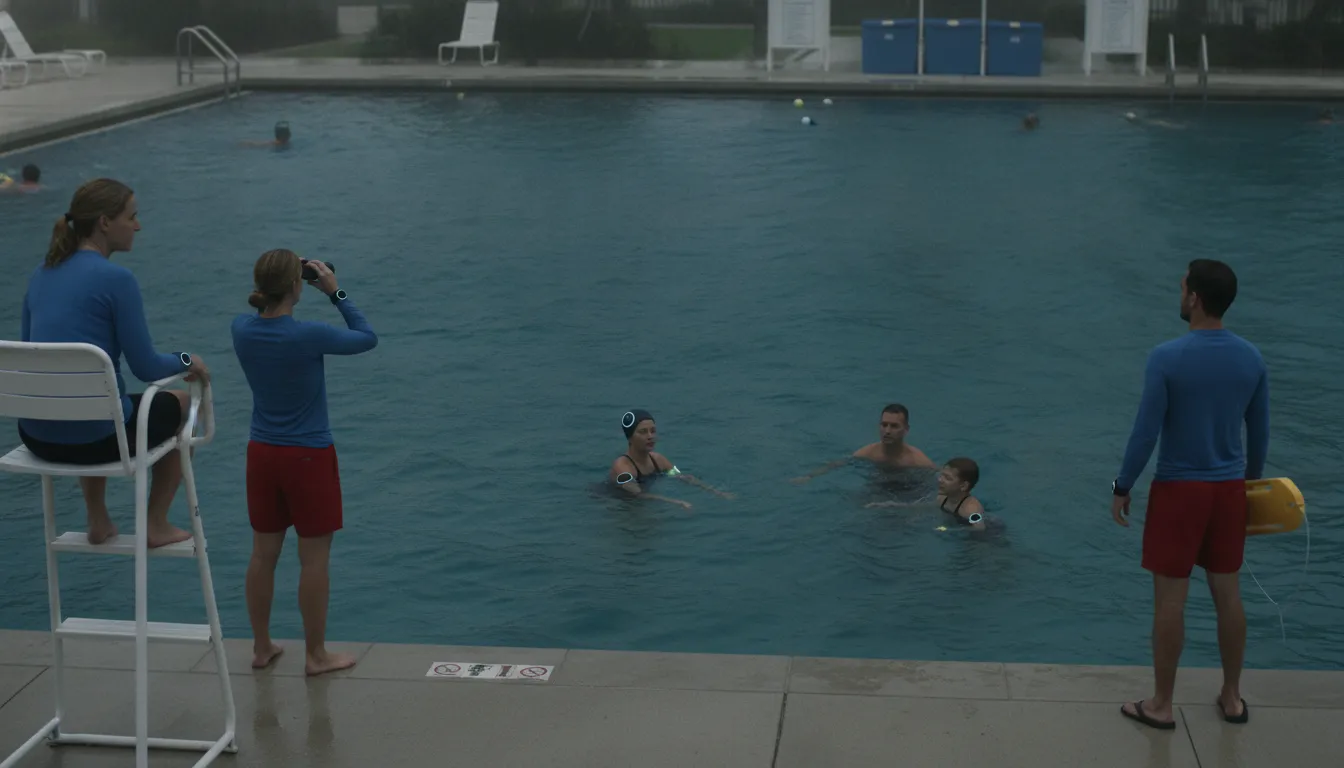
When water turns dark, cloudy, or murky, a lifeguard's trained eyes have less visual information to work with. That changes more than what staff can see. It affects scanning confidence, the speed of recognition. And how clearly a facility must define its response when a swimmer may be submerged outside an obvious line of sight.
Effective murky water drowning detection combines trained supervision, practiced emergency procedures, and technology-assisted alerts. A system such as WAVE can add another layer of protection by notifying staff about submersion or water entry. But it does not replace lifeguards, scanning, rescue skills, or an emergency action plan.
The right approach starts by understanding how limited visibility changes surveillance itself. From there, facilities can align staffing, communication, and response procedures with the conditions in each pool, lake, or waterfront zone.
Why Does Murky Water Change Drowning Surveillance?
Clear water gives a lifeguard more visual information. Dark or murky water reduces that certainty, making it harder to confirm a swimmer's location, posture, movement, or time below the surface from observation alone. That does not make visual supervision irrelevant. It means the facility must be more deliberate about scanning patterns, zone coverage, communication, and how quickly staff can investigate a concern.
The stakes are significant. The CDC reports that more than 4,000 people die from unintentional drowning each year in the United States. And drowning remains a leading cause of death for young children. CDC drowning facts help explain why every facility should treat visibility limitations as an operational safety issue, not simply a water-quality inconvenience.
Why visual certainty matters
When the bottom or a swimmer's body is difficult to see. A guard may need to spend more time verifying whether an unusual movement is ordinary play, a deliberate dive, or a developing emergency. Reflections, surface movement, crowding, and changing light can add to the challenge. In natural-water settings, visibility may also vary across a single swimming area. These conditions can increase the demands placed on each surveillance zone and make consistent handoffs between staff especially important.
Research published in the National Library of Medicine notes that lifeguards are highly trained to identify swimmers who are drowning or at risk. While crowded environments may still place one or two lifeguards in charge of large groups. The same research reports that nonlifeguards are not as fast or accurate as lifeguards at identifying distressed swimmers. Facilities should therefore preserve trained lifeguard coverage and avoid treating an alert system as a substitute for professional observation.
Why response speed becomes more important
Limited visibility can delay recognition. Once a concern is identified, staff must still locate the swimmer, communicate the situation, reach the area, and begin the emergency action plan. The research links increased submersion time with greater risk of long-term neurological deficits or death. It also emphasizes that caregivers, lifeguards, and aquatic staff need to respond as quickly as possible when seconds matter.
That is where a layered approach can help. Technology-assisted alerts can add another signal when visual confirmation is difficult, while trained staff remain responsible for surveillance, rescue, and emergency response. WAVE describes its system as a force multiplier for conditions that complicate surveillance, including multiple zones, noise, glare, and staffing pressures. Facilities evaluating murky water drowning detection should ask how any technology will fit their existing scanning practices, emergency action plans, and staff training. The GUARDian system is intended to supplement those practices, not replace them.
Murky water does not remove the need for trained lifeguards. It increases the importance of disciplined scanning, clear communication, and fast response, while an additional alert layer can help staff investigate a possible submersion sooner.
What Should Facilities Do When Visibility Is Limited?
Limited visibility should prompt a more deliberate operating plan, not a relaxed standard of care. Dark, cloudy, or murky water can reduce visual certainty, so facilities should define who is watching. What each person is watching, and how a concern becomes an organized response. The goal is to make trained supervision more consistent while adding communication tools that help staff act quickly.
- Assign trained supervision before opening the area. Establish qualified lifeguard coverage appropriate to the setting, swimmer population, activity, and number of surveillance zones. Research emphasizes that lifeguards are trained to identify distressed swimmers, while nonlifeguards are not as fast or accurate at doing so. When seconds matter, every staff member should know the limits of their role and how to summon the person responsible for rescue. Read the research on rapid aquatic response.
- Divide the water into defined scanning zones. Assign each guard a specific area and use established scanning patterns, zone boundaries, and rotation procedures. Account for glare, reflections, crowding, depth changes, blind spots, and any area where water clarity makes visual confirmation difficult. Supervisors should verify that guards can maintain effective coverage rather than assuming that a single elevated viewpoint covers the entire environment.
- Assess visibility and adjust operations. Document when conditions change, including storms, sediment, low light, turbidity, or unusual swimmer activity. Decide whether to reduce capacity, restrict activities, add supervision, reposition staff, or temporarily close a zone. This assessment should be part of the facility's normal safety check, with clear authority for making and recording the decision.
- Write and rehearse an emergency action plan. The plan should identify who initiates the rescue, who clears or controls the area, who calls emergency services, who retrieves equipment, and who meets responders. It should address a submerged or missing swimmer when visibility prevents immediate confirmation. The GUARDian system is intended to supplement, not replace, scanning practices, emergency action plans, and staff training.
- Make communication immediate and specific. Use agreed terminology for a suspected submersion, location, and response assignment. A technology-assisted alert layer can serve as a force multiplier when multiple zones, noise, glare, or staffing pressures complicate surveillance. It should direct attention to a potential event, while trained personnel verify the situation and begin the appropriate response.
- Drill, document, and improve. Practice low-visibility scenarios, including missed visual contact, a distressed swimmer in a crowded zone, and a communication failure. Record staffing, conditions, response times, observations, and corrective actions. Review those records with the team, update the emergency action plan when needed. And confirm that every employee understands that detection supports prevention and response rather than replacing either one.
Facilities facing limited visibility need a layered plan: trained lifeguards maintain surveillance, clear zones and procedures reduce hesitation, and communication tools can help surface a concern quickly. Murky water drowning detection technology may strengthen that plan, but it remains an additional layer of protection, not a guarantee and never a substitute for qualified supervision.
When visibility is limited, safety depends on disciplined coverage, rehearsed response, and clear escalation. Trained lifeguards remain responsible for surveillance and rescue, while technology-assisted alerts can help bring attention to a possible submersion or water-entry event. Together, these layers support faster, more coordinated action without treating detection as prevention.
How Does Murky Water Drowning Detection Work Without Clear Visibility?
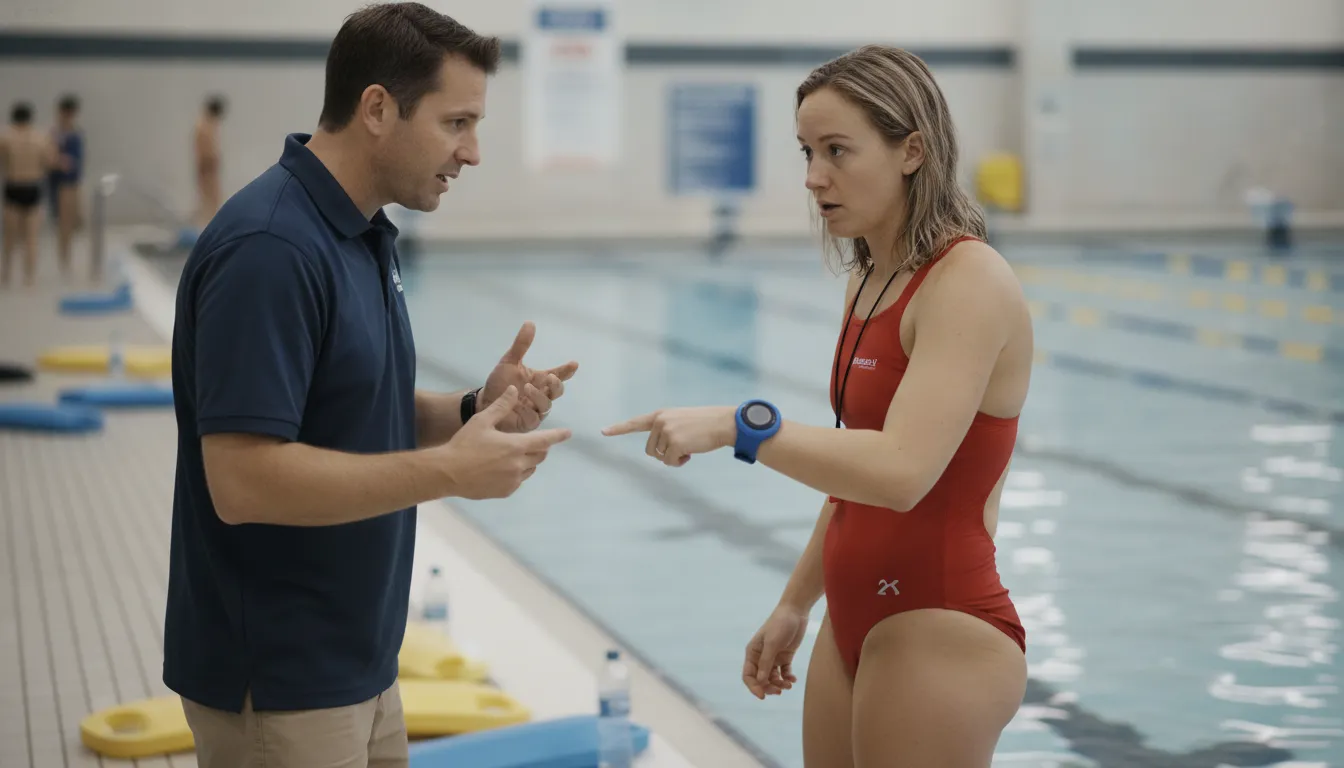
Murky water drowning detection does not depend on a camera seeing a swimmer. AquaSense swimmer wearables monitor submersion duration, while the GUARDian Hub (w3000) communicates alerts to staff through configured response channels. This adds an alert layer for trained lifeguards without turning detection technology into a substitute for supervision or rescue procedures.
When visibility is limited, the system can use information from the swimmer or staff member rather than relying only on an image of the water. WAVE describes its technology as designed for clear, murky, and dark water, including settings where water clarity can limit camera-based systems. The wireless approach is intended for pools, lakes, beaches, waterfronts, and other supervised aquatic environments. AquaSense swimmer wearables provide the device-level connection that makes this approach possible.
Monitoring submersion and water entry
AquaSense headbands and goggle clips monitor how long a swimmer remains submerged. That distinction matters because a wearable can track elapsed submersion time without needing a lifeguard or camera to maintain a clear visual view of the swimmer. The system can then use configured thresholds to determine when an alert should be escalated. These signals are not a diagnosis of drowning, and they do not explain why a swimmer is underwater. They give staff a specific event to investigate quickly.
Lifeguard tags address a different operational signal. The tags can automatically detect water entry and help initiate a response without manual activation. A tag may be attached to clothing, rescue equipment, or a buoy, depending on the facility's operating plan. Together, swimmer wearables and lifeguard tags can help staff distinguish routine activity from an event that requires attention. Particularly in environments with glare, noise, multiple zones, or changing water conditions.
Connecting signals to the right staff
The GUARDian Hub (w3000) serves as the central communications hub connecting lifeguards, staff, and swimmers. When a configured event occurs, alert escalation can include vibrating staff bracelets, spoken announcements through remote speakers, sirens, or LED indicators. The exact response should match the facility's emergency action plan, staffing model, and physical layout. Staff still need to locate the swimmer, assess the situation, and carry out the appropriate rescue and medical response.
This is the essential distinction between detection and prevention. Detection technology can identify prolonged submersion or water entry and notify people who can respond. Prevention remains a broader process involving trained lifeguards, scanning practices, supervision, emergency action plans, staff training, and other layers of aquatic risk management. WAVE positions the GUARDian system as support for those practices, not as a guarantee of safety or a replacement for qualified personnel.
Wearables and Camera-Based Systems: Which Fits Dark Water?
Choosing a detection approach starts with the environment, not the technology label. Camera-based systems interpret what their cameras can observe, while wearable systems use device-level information such as submersion duration. In dark, cloudy, or murky water, that distinction affects how a facility plans coverage, deployment, and staff response.
For facilities managing limited visibility, wearable-based murky water drowning detection can add an alert layer without depending on a clear underwater camera view. It should still operate alongside trained lifeguards, established scanning practices, emergency action plans, and staff training.
| Consideration | Wearable-based approach | Camera-based approach |
|---|---|---|
| Visibility | Tracks information from the wearable, such as submersion time, rather than requiring the system to visually see the swimmer. WAVE says its technology is designed for clear, murky, and dark water. Learn more about wearable tracking. | Uses video monitoring or behavior algorithms. Research notes that video-based monitoring may be unsuitable for open water, and effectiveness can be difficult to evaluate in a real drowning scenario. Read the published evaluation. |
| Deployment | Can use swimmer wearables, staff devices, and a communications hub. The research description identifies swimmer headbands, staff bracelets, and a hub with an audible alarm as core components. WAVE also describes wearable deployment without draining water or beginning a major construction project. | Typically depends on cameras and related infrastructure installed at the facility. That can make the approach more closely tied to the pool layout and installation conditions. |
| Water settings | Can be considered for pools and supervised open-water settings where portability matters. WAVE describes wireless wearables for lakes, beaches, waterfronts, and other aquatic environments. | May be practical where cameras can be positioned and maintained for the intended surveillance area. Fixed installations may be less portable for changing or natural-water environments. |
| Layered supervision | Adds technology-assisted alerts to lifeguard observation and response procedures. It does not replace qualified staff or determine the full emergency response. | Can support lifeguards by adding another monitoring input where the installation and water conditions support it. Staff must still interpret alerts and follow the facility's emergency action plan. |
The practical decision is therefore broader than which system detects more. Facility leaders should ask whether the approach fits the water's visibility, the site's physical layout, the portability required, and the team's established response process. Review the full range of WAVE aquatics safety products with those operating conditions in mind, then define how alerts will reinforce, rather than replace, active supervision.
How Can Teams Turn Alerts Into Faster Response?
Alerts become useful when they trigger a practiced action, not when they simply add another sound or vibration to a busy pool deck. In dark or murky water, teams should decide in advance who checks the swimmer. Who clears the area, who communicates with supervisors, and who begins the emergency action plan. The technology adds an alert layer, while trained staff remain responsible for assessment, rescue, and emergency response.
A disciplined alert process connects detection to assigned roles, clear escalation, equipment readiness, and review. It can help teams act with less uncertainty, but it does not guarantee a response time or replace lifeguard supervision.
- Assign the first response and escalation roles. Define which lifeguard or staff member responds to a bracelet vibration, who watches the remaining swimmers, and who contacts additional help. Establish a backup when the primary responder is already handling another incident. The GUARDian Hub (w3000) serves as the communications point connecting lifeguards, staff, and swimmers. Escalation can include vibrating staff bracelets, spoken announcements through remote speakers, sirens, or LED indicators, depending on the facility's configuration. Review those paths with every shift, including seasonal and substitute staff. Lifeguard alert equipment should support the facility's existing emergency action plan rather than create a separate process.
- Set and review alert thresholds deliberately. Thresholds should reflect the activity, swimmer population, water setting, and staff response plan. In one published camp evaluation, staff bracelets were configured to vibrate after 20 seconds of submersion, while an audible alarm sounded after 30 seconds. Those figures describe that study's setup, not a universal standard or promised outcome. The evaluation recorded 210 alerts over eight weeks, and staff commonly attributed alerts to bathroom or exit walk-aways and underwater play. Teams should document why alerts occur, distinguish expected activity from possible distress, and adjust configuration only through an approved review process.
- Drill the complete handoff. Practice hearing or feeling the alert, locating the relevant swimmer or zone, maintaining coverage elsewhere, and escalating when the initial check is inconclusive. Include low-visibility scenarios, equipment failure, a missing staff member, and simultaneous alerts. Drills should test whether staff can recognize the signal and follow the same steps under noise, glare, or crowd pressure. Detection is not prevention, so training must continue to cover scanning, rescue skills, communication, and emergency procedures.
- Check equipment and use the records. Before each operating period, verify wearable assignment, battery status, staff permissions, hub connectivity, and alert outputs. Hub Management Software supports equipment status, battery notifications, alert thresholds, staff permissions, and activity logging. CompleteView can support incident analytics, response metrics, historical reporting, and safety-improvement analysis. After an alert or drill, review the activity record with the team: Was the right person notified? Was the alert understood? Did the escalation path fit the situation? Use the answers to update procedures, coaching, and equipment checks rather than assuming the system performed perfectly.
Frequently Asked Questions
Can drowning detection technology work in murky or dark water?
Yes. WAVE is designed for clear, murky, and dark water. AquaSense swimmer wearables track submersion duration through the device rather than requiring staff or a camera to visually locate a swimmer. Helping provide an alert when visibility is limited.
Will this kind of system work in a lake or other open-water setting?
It can support supervised aquatic operations in lakes and other open-water environments when the system is configured for the facility's procedures. Wireless wearables do not depend on clear sightlines, while trained staff remain responsible for surveillance, rescue, and emergency response.
What happens when a swimmer remains underwater too long?
The wearable communicates with the GUARDian Hub, which can send alerts through connected staff devices such as lifeguard tags or bracelets. Staff then investigate the specific alert and follow the facility's emergency action plan. Alert timing and escalation should be set and tested for the site's conditions.
What is the difference between drowning detection and drowning prevention?
Drowning detection identifies possible distress or prolonged submersion and alerts staff. Prevention is broader, combining trained supervision, scanning, barriers where appropriate, signage, staff training, and emergency procedures. Detection technology adds a layer of protection; it does not guarantee safety.
Is WAVE a replacement for lifeguards?
No. WAVE is designed to support lifeguards and aquatic staff, not replace them. In dark or murky water, technology can act as a force multiplier by adding an alert pathway. But qualified personnel must still supervise swimmers, assess the situation, and respond.
Ready to Strengthen Visibility-Limited Response?
Dark or murky water calls for a layered approach that keeps trained supervision and response procedures at the center. A technology-assisted alert system can help your team add another signal when visual conditions make surveillance more demanding. Schedule a Free Consultation to discuss how WAVE can support your facility's aquatic safety plan.
