
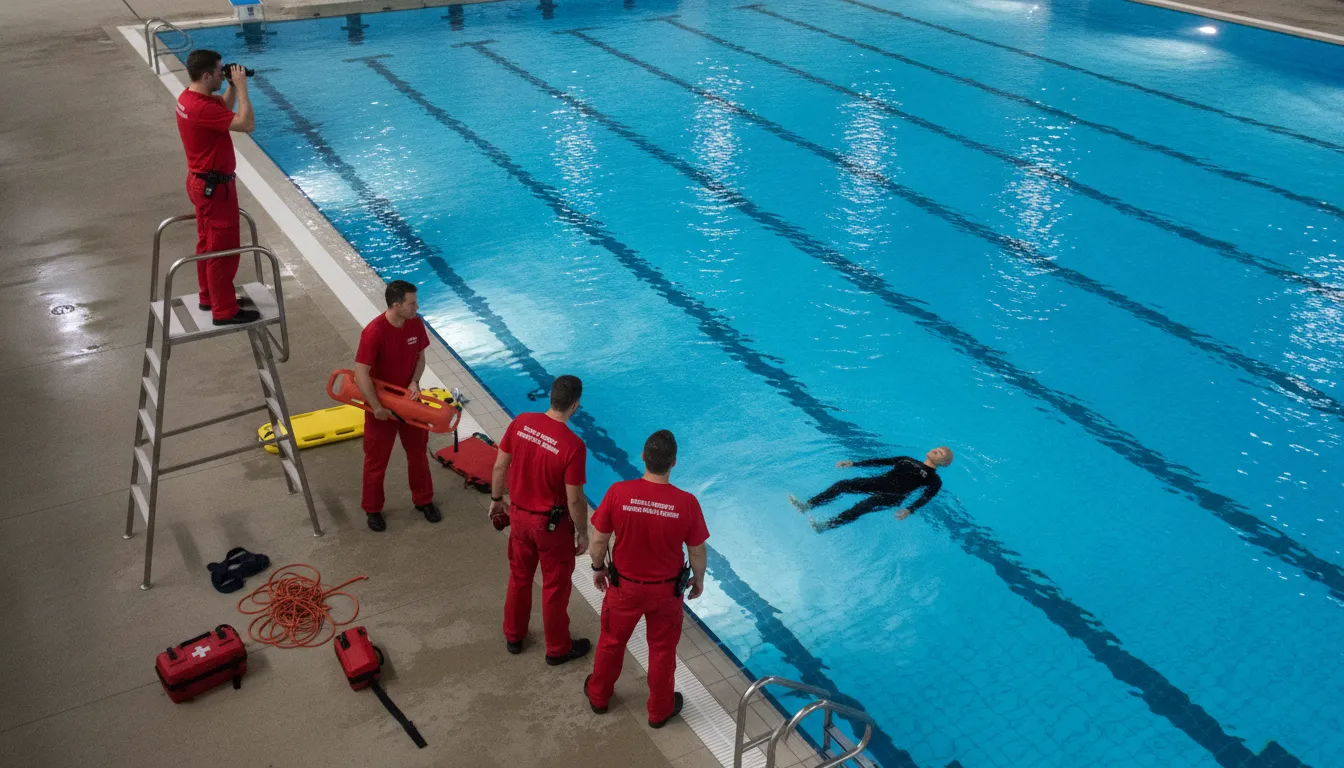
An emergency action plan is only useful when staff can act on it under pressure. For an aquatic facility, that means more than keeping a policy in a binder. Directors and risk managers need to connect assigned roles, clear signals, rescue priorities, emergency contacts, documentation, drills, and the tools that support staff awareness.
An aquatic emergency action plan defines who does what, how the response is communicated, and how the facility supports rescue, medical care, reporting, and follow-up. The details must reflect the facility, equipment, staffing, training, and local emergency procedures.
A strong review asks whether each step is specific enough to guide trained responders without slowing them down. It also identifies where an additional alert layer can help staff recognize a possible incident and coordinate their response. Start by examining the plan's essential responsibilities and facility-specific details.
What belongs in an aquatic emergency action plan?
An aquatic emergency action plan should translate safety expectations into specific actions for a particular facility. It should identify who responds, how staff communicate, what happens at the pool or waterfront, how emergency services are summoned, and who documents and reviews the incident. The plan is an operational tool for trained staff, not a substitute for legal advice, local requirements, professional rescue training, or the judgment of qualified responders.
Start with the facility's actual conditions. A plan for a municipal pool may need different roles, access points, equipment locations, and escalation procedures than one for a school, YMCA, camp, or supervised natural-water site. New York State Department of Health guidance provides a useful example of this facility-specific approach. Its pool safety plan guidance says written procedures should address daily supervision, injury prevention, emergencies, first aid, and summoning help, while also fitting the facility's conditions and operations. See the New York pool safety plan guidance.
At a minimum, the document should define the chain of command and assign responsibilities before an emergency occurs. That includes the lifeguard or responder who initiates the rescue and the person who backs up coverage or clears the water. It also includes the staff member who calls 911, the person who meets responders, and the manager who coordinates communication and follow-up. A recognized aquatic emergency plan example describes an emergency action plan as a detailed account of everyone's responsibility. It also notes that response steps can vary according to the facility and staff present. Review the UC Agriculture and Natural Resources EAP reference.
Include practical details staff can use under pressure. List emergency phone locations, the exact facility address, and access instructions. Add rescue and first-aid equipment locations, exits, staff signals, pool-clearance procedures, and criteria for contacting EMS. Include expectations for incident reports, required notifications, family or media communication, and reopening the facility. Local rescue, police, and fire personnel should be consulted during development. They can confirm access routes and responder coordination for that site.
Directors can use this commercial pool safety plan resource to connect the emergency action plan with broader supervision, equipment, training, and documentation practices. Review the document whenever the layout, staffing model, equipment, operating hours, or local response arrangements change, then practice the revised procedures with the people expected to use them.
An aquatic emergency action plan is a facility-specific playbook for assigning roles, communicating quickly, coordinating trained rescue and EMS response, and documenting what follows. It should support applicable law and professional training, not present itself as universal legal guidance or a replacement for lifeguard supervision.
Which roles must the plan clarify before an emergency?
An aquatic emergency action plan is only useful when staff can identify who acts first, who supports the response, and who owns the follow-through. A written plan should assign responsibilities by role and facility, rather than relying on whoever happens to be closest to the incident. The exact sequence will depend on the layout, staffing model, operating hours, and local emergency procedures.
Start with the primary lifeguard or other trained aquatic responder. The plan should define how that person recognizes the emergency, signals for help, enters the water when appropriate, and begins the trained rescue response. It should also name the backup guard or coverage person. That role may clear the pool, cover the primary guard's zone, bring rescue equipment, control bystanders, or direct another staff member to a specific task. A plan that says only "get help" leaves too much room for hesitation.
The manager on duty needs a separate assignment. This person activates the facility's chain of command, confirms that emergency services have been contacted when needed, coordinates staff, and protects the response area from unnecessary traffic. The plan should also identify a designated 911 caller. That person needs the facility address, the best entrance for responders, a callback number, and clear instructions for staying on the line and reporting changing conditions. Do not assume the person closest to the phone knows which gate or access point EMS should use.
Assign an access and meet-EMS role before an incident occurs. This person can unlock gates, send someone to the driveway or entrance, guide responders to the pool deck, and keep access routes clear. Separately, name a spokesperson for family communications, media inquiries, and organizational leadership. Staff should know who is authorized to share information and who should not speculate. One documented example plan designates both an operational leader or designee and an organizational representative as spokespersons, which helps prevent conflicting messages. See this example emergency action plan.
Finally, assign a documentation owner. That person records the timeline, actions taken, notifications, equipment used, witnesses, and required internal or regulatory reports after the immediate response. The owner should not be expected to document while also performing rescue duties. Review these assignments with local rescue, police, and fire personnel where appropriate, as New York guidance recommends during plan development. For a broader look at coordinated staff alerts, see WAVE's guide to lifeguard emergency communication tools. WAVE technology can support communication, but it does not replace trained responders or these defined responsibilities.
Before an emergency, every aquatic emergency action plan should name the responder, backup, manager, caller, access lead, spokesperson, and documentation owner, with facility-specific instructions for each role.
How should communication and rescue steps work together?
A reliable response connects recognition, communication, rescue, and handoff in a sequence staff can practice. The exact signals, assignments, and escalation thresholds should reflect the facility, staffing model, local responders, and applicable requirements.
An aquatic emergency action plan should make the first moments understandable even when several people are moving at once. One staff member may enter the water, another may clear the area, and another may call for help. The plan should explain how those actions overlap, who has authority to direct the response, and what information responders need when they arrive. New York guidance recommends consulting local rescue, police, and fire personnel while developing a facility's plan. Local coordination should inform the plan rather than be treated as a universal script. See the local responder coordination guidance.
- Recognize and signal the emergency. The assigned observer or lifeguard identifies the problem, maintains surveillance, and uses the facility's approved signal or plain-language announcement. Some published plans use one, two, or three whistle blasts for different purposes, but those are examples, not a mandatory code for every facility. The signal should communicate enough to trigger the next action without creating confusion.
- Activate backup and assign coverage. The responding lifeguard or staff member signals for backup while maintaining the rescue priority. A backup guard or designated employee should cover the water, coordinate pool or area clearance, retrieve equipment, and manage access. The chain of command should be notified, and non-trained personnel should not improvise rescue duties. The response should be adapted to the facility and staff present, as emphasized in the cited aquatic emergency response sequence guidance.
- Call EMS with precise location details. The designated caller should contact 911 or the locally specified emergency number as soon as the plan requires it. The call script should identify the facility name, street address, access point, pool or body of water, callback number, and the nature of the emergency. A written location script reduces hesitation, but the caller should answer the dispatcher's questions and remain available for instructions.
- Clear and control the area. Staff should move swimmers and bystanders away from the rescue area while preserving a safe path for equipment and responders. The goal is not simply to empty the pool. It is to control hazards, protect privacy, keep exits accessible, and prevent additional people from entering an active rescue scene. The appropriate clearance depends on the incident and the facility's procedures.
- Perform trained rescue and first aid. Qualified responders should follow their current training, facility procedures, and dispatcher or EMS instructions. In a life-threatening emergency, care for the victim takes priority over unrelated duties. Technology can support awareness and staff communication, but it does not perform the rescue, replace supervision, or substitute for CPR, first aid, and other required training.
- Hand off to arriving responders. A designated staff member should meet EMS, police, or fire personnel and guide them to the scene. Provide a concise briefing: what was observed, when the response began, what care was provided, and what hazards or access issues remain. After the immediate response, preserve the chain of communication and complete the facility's required reporting and review process.
Facilities evaluating lifeguard emergency communication tools should ask whether alerts reinforce this sequence without distracting from trained judgment. The useful test is operational: can staff recognize the alert, know their assignment, communicate the location, and support a coordinated handoff under realistic conditions?
How can directors review an aquatic emergency action plan?
Use the review as a working test, not a paperwork exercise. An aquatic emergency action plan should reflect the facility's layout, staffing, equipment, operating hours, and local response network. State guidance can identify useful categories, but directors should confirm the requirements that apply in their own jurisdiction.
| Review area | Questions to test | Evidence of readiness |
|---|---|---|
| Roles and coverage | Who leads the response, performs the rescue, calls for help, meets responders, manages other swimmers, and notifies the chain of command? Is backup coverage assigned for each shift? | Named roles, alternates, shift assignments, and a clear escalation path. Responsibilities are consistent with the facility's staffing and operations. |
| Emergency numbers and address | Can any staff member quickly provide the exact street address, entrance instructions, facility phone number, and applicable emergency numbers? | A current call script is posted at phones or radios, with the access point identified. Local rescue, police, and fire personnel have been consulted where appropriate. |
| Equipment and exits | Are rescue equipment, AEDs, first-aid supplies, backboards, emergency exits, and responder access routes easy to locate and unobstructed? | Staff can point them out during a walkthrough. Equipment checks are documented, and deficiencies have an owner and due date. |
| Signals and communication | What do whistle, radio, phone, public-address, or other signals mean? Who clears the pool, contacts EMS, controls access, and communicates with families or media? | Signal meanings are posted, practiced, and understood by every shift. The plan includes a designated spokesperson and a reliable method to reach managers and emergency services. |
| Pool clearance and rescue sequence | After an alert, who clears the water and deck? How are other swimmers supervised while trained responders assist the victim? What changes for a medical, chemical, weather, or security event? | Written sequences are facility-specific, rehearsed, and coordinated with trained responders. They prioritize victim care without implying that technology replaces lifeguard judgment or rescue training. |
| Training and certifications | Are lifeguard, CPR, AED, first-aid, and role-specific certifications current? Are new, substitute, and seasonal staff included? | A credential roster shows expiration dates, renewal ownership, onboarding requirements, and drill participation. The review process also checks for changes in accepted emergency-care practices. |
| Weather and facility hazards | What conditions trigger closure, evacuation, sheltering, chemical response, or restricted access? Who monitors conditions and authorizes reopening? | Triggers, shelter locations, notification steps, and reopening authority are written for the site. Do not copy another facility's timing or thresholds without confirming local requirements. |
| Reporting and review ownership | Who documents the incident, preserves relevant records, makes required notifications, leads the debrief, and updates the plan? | A reporting form, notification list, debrief schedule, version date, and named plan owner are current. Review findings become assigned corrective actions. |
These categories align with recognized planning guidance. For example, one aquatic emergency plan describes each person's responsibility. New York guidance says a written safety plan should fit the facility and serve as a staff training and reference document. A strong review shows whether people, procedures, equipment, communications, and local coordination work together under the facility's actual conditions. For a broader planning framework, see this commercial pool safety plan guide.
Where does technology fit in an aquatic emergency action plan?
Technology can provide another communication and detection layer within a facility's existing response process. It should help staff recognize an event, share information, and document follow-up, while trained people remain responsible for supervision, rescue decisions, emergency calls, medical response, and incident reporting.
WAVE technology can strengthen an aquatic emergency action plan by extending awareness across the facility. It does not replace lifeguards, supervision, drills, rescue training, EMS, or required documentation.
At the center of the workflow is the GUARDian system, including the GUARDian Hub (w3000). The hub connects staff and swimmers and can support emergency and non-emergency alerts. A lifeguard tag can signal that a guard has entered the water, helping communicate that a rescue is underway to other guards and facility staff. That signal can support role coordination, but it does not determine who performs the rescue or remove the need for a practiced emergency action plan.
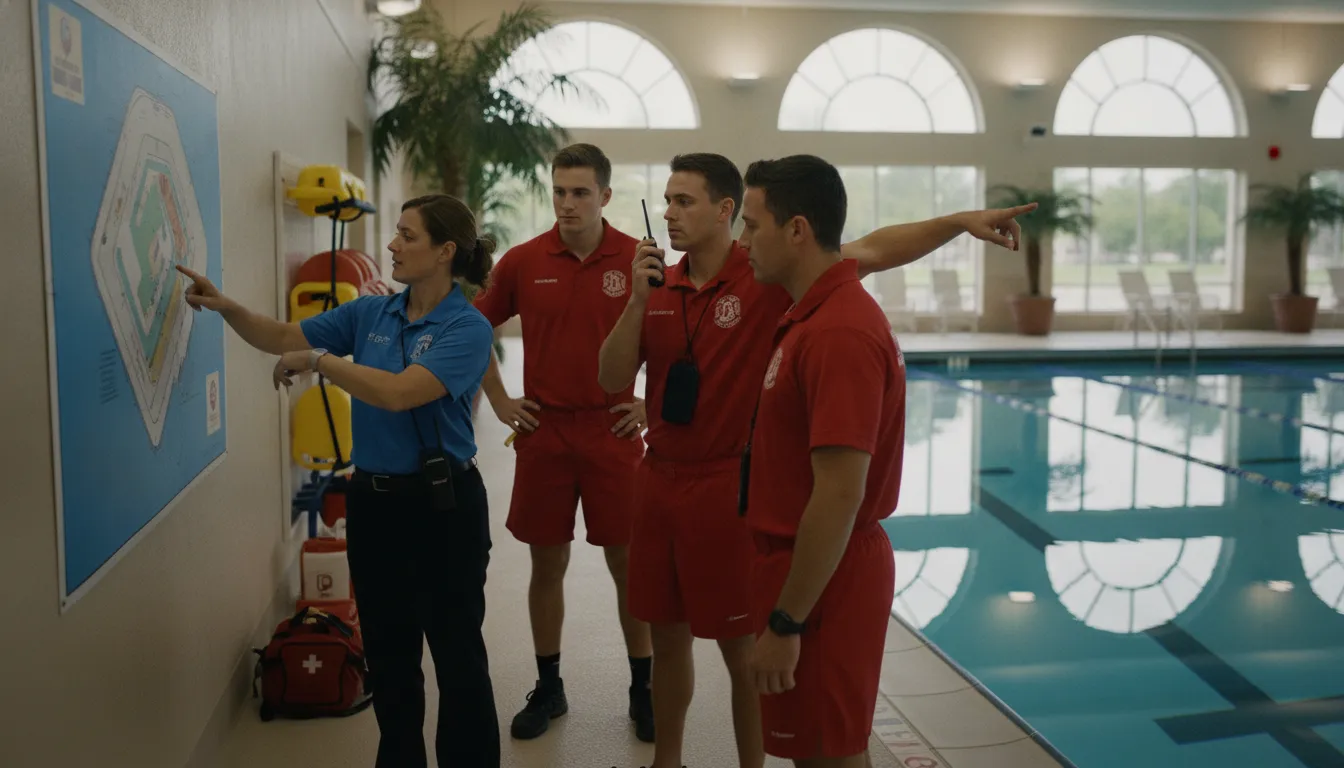
AquaSense swimmer wearables can detect prolonged submersion and initiate an alert after a configurable delay. Depending on the facility's setup, alerts may reach staff through vibrating bracelets, spoken announcements, sirens, or LED indicators. These channels can help draw attention when a response is beginning, especially across a busy pool environment. Staff still need to interpret the alert and follow the facility's defined rescue and escalation sequence.
Technology also has a readiness and review role. Hub Management Software (HMS) can help authorized personnel monitor equipment status, battery levels, alert settings, permissions, and system activity logs. CompleteView can support incident analytics, response metrics, historical reports, and data exports. Used alongside training records and incident documentation, these tools can help directors identify gaps and improve drills. The Hub Management Software resources can help facilities examine that operational layer.
Before deployment, map each alert to a human action: who acknowledges it, who clears the pool, who contacts 911, who meets responders, and who records the event. Test the workflow during drills, confirm that staff understand the signals, and coordinate it with local emergency procedures. The system is most valuable when it reinforces a clear plan rather than becoming a substitute for one.
How should facilities document, practice, and improve the plan?
An aquatic emergency action plan becomes useful when staff can locate it, rehearse it, and improve it after real events or drills. Documentation should show what happened and what changed, while training and equipment checks keep the written plan connected to daily operations.
Start with onboarding. Every new lifeguard, manager, attendant, and backup responder should be shown the facility's emergency action plan. Cover role assignments, exits, rescue equipment, first-aid supplies, emergency contacts, and access points for responding agencies. A swim-team emergency plan directs staff to identify emergency equipment, exits, and first-aid locations when they enter the facility. Your own process should make that orientation specific to each pool, deck, building, and operating schedule.
Refresh training whenever staffing, layout, equipment, programming, or local response procedures change. Schedule drills that test more than an in-water rescue. Practice who recognizes the emergency, who activates backup coverage, who calls 911, who meets responders, who controls access, and who communicates with families or leadership. Coordinate the plan with local rescue, police, and fire personnel during development and when material changes are made. New York guidance recommends that consultation. It also emphasizes that a safety plan should fit the facility's conditions and serve as a staff training and reference document. See the pool safety plan guidance.
Use a simple readiness record for each drill and routine check. Record the date, scenario, participating roles, equipment condition, communication result, response timing if measured, and unresolved gaps. Confirm that radios, whistles, rescue tubes, first-aid supplies, AEDs, access routes, and posted emergency information are present and usable. If your facility uses WAVE, Hub Management Software can provide an operational view of equipment status, battery levels, alert settings, permissions, and system activity logs. That information supports review, but it does not replace an incident report, required notification, or professional judgment.
After every drill or incident, hold a focused debrief while details are fresh. Ask what staff saw, what they expected to happen, where communication slowed, and whether the written sequence matched the facility's actual conditions. Serious incidents may require reports to health authorities or governing organizations, depending on applicable local rules. Keep those records with the facility's established reporting process. WAVE's CompleteView can support historical reports, analytics, and data exports, but software does not automatically create compliance or determine which reports a jurisdiction requires. For broader context, review aquatic incident logging technology and commercial pool alarm systems.
Finally, assign an owner and version date to the plan. Archive prior versions, note the reason for each revision, and brief affected staff before the updated procedure takes effect. A periodic review should also account for changes in accepted emergency-care practices, since the American Red Cross manual advises readers to stay informed as procedures evolve. That discipline turns the plan from a static document into a maintained operational system.
Frequently Asked Questions
What should an aquatic emergency action plan include?
It should assign responsibilities, define communication signals, outline rescue and EMS steps, identify equipment and access points, and explain documentation and follow-up. The specific sequence must match the facility, staffing model, hazards, and local response resources. An emergency action plan is most useful when staff can locate it, understand it, and practice it.
Who owns the plan and keeps it current?
The facility director or designated aquatic manager should own the document, while supervisors, lifeguards, maintenance staff, and other response partners verify the parts they use. Assign one person to control revisions, record training and drill outcomes, and confirm that contact information, access instructions, equipment locations, and staffing roles remain accurate.
How often should a facility review its plan?
Review it on a scheduled cycle and whenever staffing, layout, equipment, operating hours, hazards, or responder procedures change. Revisit it after every drill and incident, even when the response appeared successful. A short review with accountable staff is more valuable than treating the plan as a document that is updated only after a serious event.
What can drowning-detection technology do during an emergency?
Technology can add an alert layer that helps notify staff and coordinate awareness. WAVE systems may use lifeguard tags, AquaSense wearables, vibrating staff bracelets, spoken announcements, and visual or audible facility alerts. These tools support trained lifeguards and established procedures, but they do not perform a rescue, replace supervision, or guarantee safety.
Can one emergency action plan work for every aquatic facility?
No. A plan should be adapted to each pool or aquatic venue, including its water features, visibility, staffing, entrances, emergency access, communications, and relationship with local responders. The underlying framework can be shared, but the assigned roles and response steps must reflect the facility and staff present, as described in this facility-specific planning guidance.
Ready to Strengthen Your Facility's Emergency Action Plan?
A practical review can help your team connect trained staff, communication steps, documentation, and alert workflows into one facility-specific response process. WAVE technology can add another layer of support for lifeguards and aquatic staff, without replacing supervision, rescue training, drills, or established emergency procedures.
