
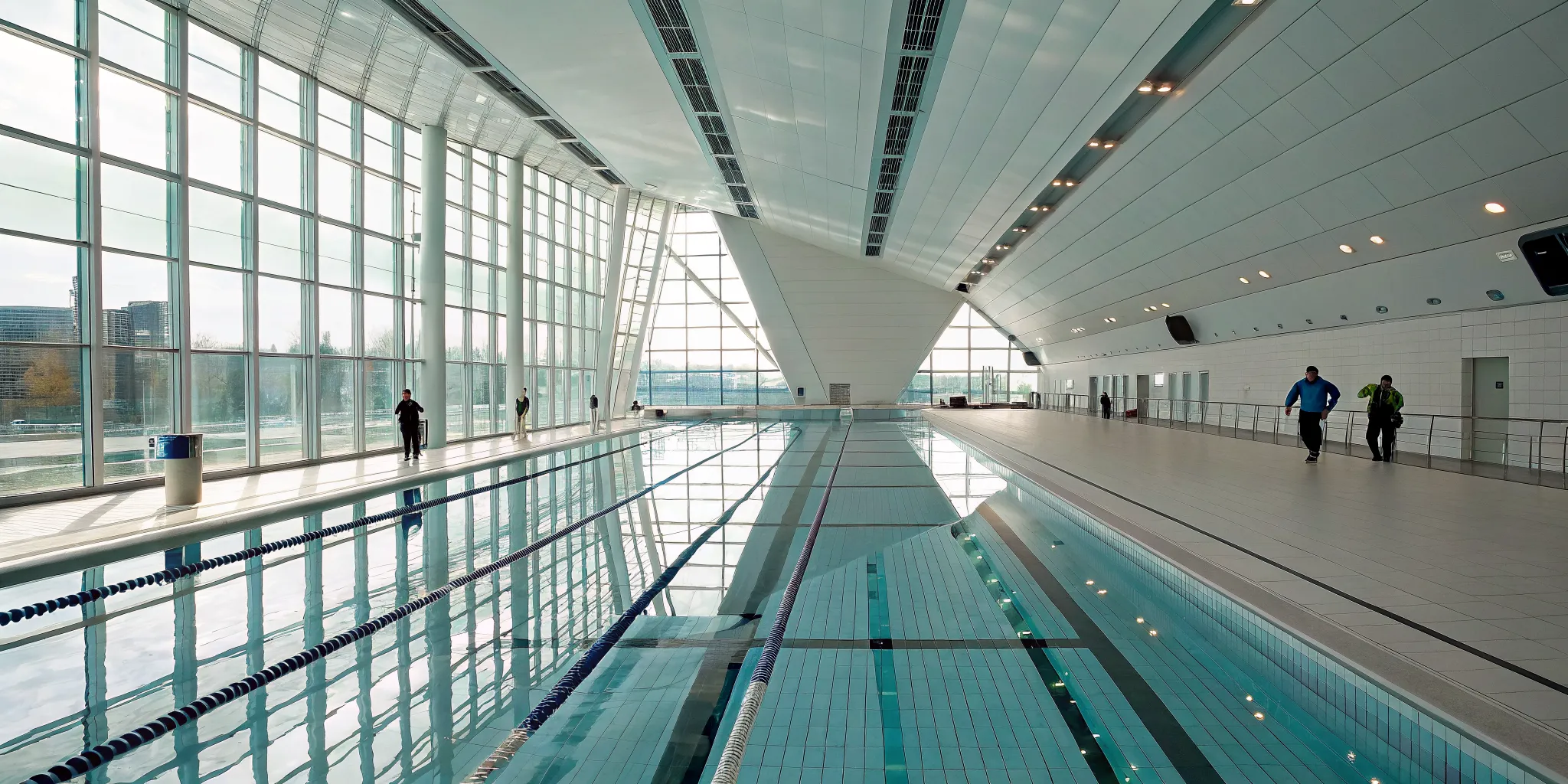
A well-trained lifeguard is the cornerstone of your aquatic safety plan, but even the most vigilant professional is human. They battle sun glare, water distortion, and the sheer chaos of a crowded pool. Since drowning happens quickly and quietly, it can be missed in an instant. This is where an automated drowning detection system provides a critical layer of support. This technology, a form of automated swimmer monitoring, acts as a high-tech partner for your team. It’s not about replacing lifeguards, but empowering them with an extra set of tireless eyes to help spot trouble in seconds.
Key Takeaways
- Prioritize Safety-Specific Technology: While performance trackers are useful for training, they are not safety devices. A true safety system is designed for one purpose: to detect signs of drowning in real time and send immediate alerts to your staff, enabling a faster response.
- Empower Your Lifeguards, Don't Replace Them: Automated monitoring is not about replacing your staff; it's about supporting them. These systems act as a reliable partner, providing constant surveillance and immediate alerts so your lifeguards can focus their skills on prevention and rapid intervention.
- Choose a System Built for Your Venue: Not all monitoring systems work in every environment. Evaluate options based on your facility’s specific challenges, like water clarity or crowd size, and prioritize key features like real-time alerts, durability, and the ability to scale with your needs.
What is Automated Swimmer Monitoring?
Automated swimmer monitoring is a category of technology that acts as an extra set of eyes for lifeguards, using advanced tools to help keep people safe in the water. Think of it as a high-tech partner for your aquatics team. These systems use things like artificial intelligence, cameras, and wearable devices to track swimmers and identify potential signs of distress. The primary goal is to spot a swimmer in trouble faster than the human eye might be able to, especially in a crowded or large body of water. By providing real-time data and alerts, this technology gives lifeguards critical information, allowing them to respond to incidents with greater speed and accuracy.
It’s important to know that not all monitoring systems are created equal. They generally fall into two main camps: systems designed purely for safety and drowning detection, and devices created to track athletic performance. While both use sophisticated technology, their functions are very different. A safety system is focused on one thing: preventing drownings. A performance tracker, on the other hand, is all about helping a swimmer improve their lap times or stroke technique. Understanding this distinction is the first step in figuring out what kind of technology is right for your facility and your safety goals.
The Evolution of Drowning Detection Technology
Drowning detection has come a long way from the basic motion-sensing alarms of the past. The real game-changer has been the introduction of artificial intelligence, which allows modern systems to act as a true partner for lifeguards by providing constant, detailed surveillance. For example, some solutions use overhead cameras and intelligent software to analyze activity in the water. Systems like SwimEye and Lynxight are designed to track swimmer movements and identify behaviors that could indicate distress, sending an immediate alert to staff. These AI detection devices are not just about sensing motion; they're about understanding context, which gives your safety team a powerful advantage in preventing incidents before they become tragedies.
How AI Helps Prevent Drowning
AI-powered drowning detection uses specialized camera systems and smart computer software to constantly watch over a pool. These systems are trained to understand what normal swimming looks like and, more importantly, what it doesn't. The AI analyzes swimmers' movements and behaviors in the water, looking for patterns that might indicate someone is in distress or at risk of drowning. If the system detects a potential incident, it instantly sends an alert to lifeguards, often pointing them to the exact location in the pool. This gives your team a head start in situations where every second counts, adding a powerful layer of protection to your existing safety protocols.
Tracking Swimmer Performance with Wearables
On the other side of the spectrum are wearable performance trackers. You’ve probably seen these in the form of smartwatches or fitness bands that swimmers use to log their workouts. Some advanced versions even come as smart goggles. The main purpose of these devices is to give the swimmer personal data about their swim. They can track metrics like lap count, speed, stroke rate, and distance. This information is fantastic for athletes in training who want to analyze their performance and find ways to improve. However, these trackers are built for personal data collection, not for emergency response.
Safety vs. Performance: What's the Difference?
Here’s the key takeaway: a performance tracker is not a safety device. While a fitness tracker collects data for you to review after your swim, a true safety system is designed for real-time drowning detection. Safety-focused wearables, like WAVE’s Swimmer Alert trackers, are built to actively monitor a swimmer for signs of distress and send an immediate alert to lifeguards if a problem is detected. Performance trackers provide data to the user; safety systems provide life-saving alerts to your staff. Understanding this difference is critical when evaluating technology for your facility, as only a dedicated safety system can provide the reliable monitoring needed to support your lifeguards.
How Does Automated Swimmer Monitoring Work?
Automated monitoring systems bring an extra layer of vigilance to your facility by using technology to track swimmers and identify signs of distress. These systems don’t just record video; they actively analyze what’s happening in the water in real time. By combining different technologies, they provide a comprehensive safety net that supports your lifeguards and protects your patrons. The process involves a few key components working together seamlessly, from initial detection to the final alert. Here’s a breakdown of how it all comes together.
How Computer Vision Spots Trouble
Think of these systems as a highly intelligent set of eyes on the water. They use advanced cameras and artificial intelligence (AI) to monitor every swimmer in the pool simultaneously. Unlike a simple security camera that just records, this technology actively analyzes movement. The AI is trained to recognize the specific patterns and motions associated with a swimmer in distress, distinguishing them from regular swimming or playing. This allows the system to provide a constant, analytical overview of the entire aquatic environment. The GUARDian system uses this exact approach to provide real-time insights and support your staff.
Analyzing Multiple Risk Factors
A truly effective system doesn't just look for a single red flag. Instead, it analyzes a combination of risk factors in real time to build a complete picture of what’s happening. The AI continuously processes data on a swimmer's movements, their behavior, and even their position in the water. For example, it can distinguish between energetic play and the erratic, non-productive movements that often signal a person is in distress. This multi-layered analysis is crucial because it helps reduce false alarms while ensuring genuine emergencies are caught instantly. By understanding the context of a swimmer's actions, the technology can provide lifeguards with alerts that are both accurate and timely, allowing them to intervene with confidence.
Alerting Lifeguards in Real Time
When the system identifies a potential drowning situation, it doesn't just log the event. It immediately sends an alert to your staff. This is the critical step that turns observation into action. Lifeguards receive these notifications on dedicated devices, which can pinpoint the exact location of the swimmer in need. This eliminates ambiguity and reduces response time, allowing your team to intervene quickly and effectively. Instead of scanning a whole pool, they are directed to a specific spot. This technology ensures that your team gets the right information at the moment it matters most, using tools like a dedicated Lifeguard Alert device.
How Wearables Send Safety Data
Some systems add another layer of safety through wearables. Swimmers wear a small, lightweight tracker, often on a headband or goggles. These devices monitor individual swimmers, tracking their depth and time underwater. If a swimmer stays submerged for too long, the sensor sends a wireless signal to a central hub. This data is analyzed instantly, and if the parameters indicate a potential emergency, an alert is triggered. These Swimmer Alert wearables provide precise, individual-focused tracking that is especially valuable in crowded or less clear water, ensuring no one goes unnoticed.
How Systems Adapt to Your Pool's Conditions
A major advantage of modern automated systems is their ability to function reliably in challenging pool environments. They are designed to filter out visual "noise" like water splashes, glare from the sun or overhead lights, and reflections on the surface. The AI can tell the difference between a swimmer's arm and a sunbeam dancing on the water. This adaptability means the system maintains its accuracy throughout the day, under changing lighting conditions, and during peak hours when the pool is busiest. This ensures you have consistent, dependable monitoring whether your facility is indoors or outdoors, from the calm of early morning to a busy afternoon.
The Initial Learning Period
When you install an automated monitoring system, it doesn't just switch on and know everything. There's an initial learning period where the AI gets to know your specific facility. During this time, the system observes and analyzes countless hours of activity to build a baseline of what "normal" looks like in your pool. It learns to distinguish between kids splashing, lap swimmers training, and the subtle signs of a swimmer in distress. This process of pattern recognition is what makes the technology so effective. By understanding the unique environment of your pool—from its specific lighting to the typical behavior of your patrons—the system fine-tunes its algorithms to provide highly accurate alerts and minimize false alarms, ensuring your lifeguards are notified only when it truly matters.
How Does Automated Monitoring Compare to Traditional Methods?
A well-trained, attentive lifeguard is the most critical part of any aquatic safety plan. But even the most skilled professionals face challenges in a busy water environment. This is where automated monitoring systems come in. They aren't meant to take the place of your team, but to act as a powerful support tool. By combining the irreplaceable judgment of human lifeguards with the unwavering attention of technology, facilities can create a much more robust safety net for every swimmer.
Why Lifeguards Can't See Everything
Even the most dedicated lifeguard is human. Factors like sun glare, water distortion, and the sheer number of people in the pool can make it incredibly difficult to track every swimmer effectively. A crowded pool creates blind spots and distractions, and human fatigue is a real factor over a long shift. The hard truth is that drowning can happen very quickly and quietly, often in less than a minute, and it doesn't always look like the dramatic splashing we see in movies. These inherent limitations mean that relying on the human eye alone can leave small but critical gaps in your safety coverage.
The Limits of Human Supervision
The challenges mentioned above—glare, fatigue, and distractions—all contribute to a massive cognitive load on your staff. It’s not just about keeping their eyes open; it’s about processing an enormous amount of visual information every second. This can lead to something called 'inattentional blindness,' a phenomenon where a person can fail to notice something in plain sight because their attention is engaged on another task. For a lifeguard scanning a crowded pool, their focus might be drawn to a group of rowdy teens, causing them to miss the quiet, subtle signs of a swimmer in distress just a few feet away. This isn't a failure of the lifeguard; it's a fundamental limit of human attention.
How Automated Systems Support Lifeguards
Automated monitoring systems are designed to work hand-in-hand with your staff, giving them an extra layer of protection to rely on. Think of it as a high-tech partner for your lifeguards. Systems like our GUARDian provide continuous surveillance, alerting staff to potential incidents the moment they happen. This allows your lifeguards to act faster and with more confidence, knowing they have a system backing them up. It adds a significant layer of safety that helps everyone, from facility managers to parents, feel more at ease. This technology empowers lifeguards, letting them focus their skills where they are needed most.
A System That Never Gets Tired
One of the biggest advantages of an automated system is its ability to watch the water with constant, unblinking focus. Unlike people, technology doesn't get tired, distracted, or experience a lapse in concentration. The system continuously analyzes swimmer movements and behaviors in the water. If it detects patterns that suggest a swimmer is in distress, it instantly sends an alert to the Lifeguard Alert equipment. This ensures that potential emergencies are flagged immediately, shaving precious seconds off response times and giving your team the best possible chance to intervene successfully.
Reviewing Top Automated Drowning Detection Systems
When you’re looking for an automated system, you’ll find options that focus purely on safety and others that use different technologies to achieve similar goals. Understanding the key players and their approaches can help you decide what’s best for your facility. Let's look at two leading types of systems that prioritize swimmer safety through advanced technology.
Spotlight: The WAVE Drowning Detection System
The WAVE system is built from the ground up with one goal: preventing drowning. The WAVE Swimmer Alert is a key part of this. It’s a lightweight safety device worn by swimmers, but it’s not a performance tracker. Instead, it’s one piece of a comprehensive safety system designed to monitor swimmers and alert lifeguards if someone remains underwater for too long. This focus on a single, critical safety metric allows the system to provide clear, immediate alerts that help your team respond faster. It’s about adding a layer of protection that works seamlessly with your existing safety protocols.
What Are the Other AI Safety Options?
Beyond wearables, you'll find camera-based systems that use artificial intelligence to monitor the pool. A system like SwimEye, for example, uses overhead cameras to watch for swimmers who might be in distress. The AI analyzes video footage in real time to identify behaviors that could indicate a problem. If it detects a potential issue, it sends an alert directly to your lifeguard staff for immediate intervention. It’s important to remember that these systems are designed to support your lifeguards, acting as an extra set of tireless eyes on the water. They don’t replace the need for trained personnel but serve as a valuable tool to enhance their efforts.
Top Wearables for Tracking Swim Performance
While automated systems provide a critical safety layer, another category of swimmer wearables focuses on a different goal: performance. These devices are designed to help swimmers get faster, stronger, and more efficient in the water. They are incredible tools for competitive athletes, swim teams, and anyone serious about tracking their fitness progress. Performance trackers are all about the data.
These wearables collect and analyze a wealth of information about a swim session, from lap times and distance to stroke efficiency and pace. This information helps swimmers and their coaches identify areas for improvement and measure progress over a season. It’s important to understand that these devices are built for training and data analysis. They are fundamentally different from safety systems, which are designed to actively monitor for signs of distress and alert staff to a potential emergency. Knowing the difference helps you appreciate what each type of technology brings to the table for your facility and the swimmers you serve.
Using Everyday Fitness Trackers for Swimming
Many of the fitness trackers people wear every day are equipped for the pool. These all-around devices can track a variety of activities, and swimming is often one of them. When a swimmer starts a workout, the tracker can log their laps, total distance, and even identify the type of stroke they are using. For those who swim in open water, many of these watches also have GPS to track their course and distance.
The data is collected during the swim, but you usually check it afterward by syncing the watch to a smartphone app. This allows swimmers to review their workout, see their pace, and track their improvement over weeks and months. While they are excellent for personal fitness, they are designed for post-swim analysis, not for real-time safety monitoring. You can find a great review of swimmer wearable tracking devices that covers many of these options.
Why Choose a Dedicated Swim Tracker?
For swimmers who want more detailed insights, there are dedicated swim trackers. Devices like the Garmin Swim 2 are made specifically for swimmers, offering advanced metrics and higher accuracy for both pool and open-water environments. They can track things like SWOLF scores (a measure of swimming efficiency), stroke rate, and detailed interval times, giving a much deeper look into performance.
Another exciting innovation is smart goggles. These devices display swim data, like your pace and split times, directly on the inside of the goggle lens while you swim. This provides immediate, real-time feedback that allows a swimmer to adjust their technique on the fly. While these tools are fantastic for training, their purpose is performance enhancement, not safety. They stand in contrast to safety-focused Swimmer Alert wearables, which are designed to detect and signal distress to a central monitoring system.
What to Look for in an Automated Monitoring System
When you start looking at automated monitoring systems, you’ll quickly realize there’s a wide range of options. Some are built for athlete training, while others are designed purely for safety. Finding the right fit means knowing what features matter most for your facility’s goals. A system that works for a competitive swim team might not be the best choice for a busy community pool.
Think of it like this: you wouldn't use a stopwatch to monitor heart health. Both measure time, but their purpose and the information they provide are completely different. To make a confident choice, you need to look beyond the marketing and focus on the core functions that will truly support your lifeguards and protect your swimmers. Let’s walk through the key features to consider so you can find a system that meets your specific needs.
Does It Offer Real-Time Alerts?
The single most important feature of any aquatic safety system is its ability to detect a swimmer in distress and send an immediate alert. We’re talking about a system whose main job is to spot trouble and notify your team in seconds. A lag of even a few moments can make a critical difference. Look for systems that use advanced technology, like computer vision or specialized wearables, to continuously monitor swimmers for signs of drowning.
When a potential incident is detected, the system must instantly send a clear, unmistakable signal to your staff. This is where tools like WAVE’s Lifeguard Alert equipment become essential. They ensure that the person who can take action gets the information without delay. Don’t settle for systems that simply log data for later review; for true safety, the detection and the alert must happen in real time.
What Kind of Data Should You Expect?
While safety is the top priority for most aquatic facilities, some systems are designed to track athletic performance. These systems provide detailed "movement metadata," which can include everything from lap times and stroke efficiency to kick frequency and turn speed. This information is incredibly valuable for coaches and competitive swimmers who are looking to refine their technique and shave seconds off their times.
However, it’s important to understand that a performance tracker is not a safety device. Its algorithms are built to analyze athletic output, not to identify the subtle signs of a swimmer in distress. While some devices may offer both features, be sure to verify that the safety component is robust and not just an add-on. If your goal is safety, prioritize a system built for that purpose.
How Durable and Waterproof Is It?
Any equipment you bring into a pool environment has to be tough. Constant exposure to water, chlorine, and other pool chemicals can quickly degrade electronics that aren't properly sealed. When evaluating any system, especially one with wearable components, you need to look for a true "waterproof" rating, not just "water-resistant." Water-resistant means it can handle a splash, while waterproof means it can be fully submerged.
Look for official ratings like IPX8, which indicates the device can be submerged in water deeper than one meter. For example, WAVE’s Swimmer Alert wearables are designed with this level of durability in mind. Investing in properly waterproofed and durable equipment from the start will save you from the frustration and cost of replacing failed devices down the road.
Is the Software Easy to Use?
The most advanced technology in the world is useless if your team can't use it effectively. A good automated monitoring system should have an intuitive interface that requires minimal training. For lifeguards on the deck, alerts should be simple, clear, and impossible to ignore. For managers, the system’s dashboard should present information in a way that’s easy to understand at a glance.
You should be able to check system status, review event logs, and manage settings without needing an engineering degree. The system should also integrate smoothly into your facility’s existing workflow. A complicated setup or a confusing interface can create more problems than it solves. The GUARDian Hub, for instance, is designed to be the clear and simple brain of the operation, making it easy for your team to stay informed.
Can the System Scale with Your Needs?
Your facility is unique, and your safety system should be able to adapt to your specific layout and needs. Whether you manage a single indoor pool or a sprawling outdoor water park, the system you choose should be scalable. This means you can add or remove coverage zones as your facility evolves without having to replace the entire system.
Unlike personal fitness trackers, a dedicated safety system is designed as a professional safety net for commercial venues. It should be a modular solution that can grow with you. As you explore your options, ask how the system can be configured for different bodies of water and how easy it is to expand coverage. A scalable system ensures that your investment will continue to serve your needs as you grow. You can see how a system is tailored by reviewing the getting started process.
Debunking Myths About Automated Drowning Detection
New technology often comes with a lot of questions and a few misconceptions. When it comes to automated swimmer monitoring, it’s important to separate fact from fiction to understand how these systems truly contribute to a safer aquatic environment. As a facility manager or owner, you’re tasked with making critical decisions about safety, and that means being a discerning consumer. The aquatics industry is seeing a rise in tech solutions, but not all are created equal, and the claims can sometimes be confusing.
To make an informed decision for your facility, you need to look past the surface-level promises. Many of the common beliefs about these systems are rooted in a misunderstanding of their purpose and capabilities. The most prevalent myths suggest that these systems are here to replace staff, that they are a one-size-fits-all solution, that their performance is universally consistent, and that they operate on a "set it and forget it" basis. Let's clear up these points so you can see how this technology actually fits into a modern safety plan.
Myth: You Won't Need Lifeguards Anymore
One of the biggest misunderstandings is that automated systems are designed to replace human lifeguards. This couldn't be further from the truth. The best systems are built to be a lifeguard’s most reliable partner. Think of them as a second set of eyes that never blinks, gets tired, or is distracted. These systems enhance a lifeguard's abilities by monitoring every swimmer simultaneously and providing immediate alerts, like WAVE’s Lifeguard Alert equipment. This allows your team to focus their attention where it's needed most, acting as a crucial layer of support, not a replacement. By handling the monotonous task of scanning, the system frees up lifeguards to be more proactive in managing their zones and engaging with guests.
Myth: Any System Works in Any Pool
It’s easy to assume that one size fits all, but that’s not the case with swimmer monitoring technology. A system designed for a small, clear indoor pool may not be effective in a large, crowded water park or a dark-bottom lake. Factors like water clarity, depth, surface glare, and the number of swimmers all impact performance. It's essential to choose a system that is specifically designed for your facility’s unique conditions. Some advanced systems use a combination of technologies to provide reliable coverage in even the most challenging environments, ensuring safety isn't compromised by your facility's specific features. Before you invest, confirm the system is proven to work in a setting just like yours.
The Dangers of Consumer-Grade Alarms in Commercial Settings
It can be tempting to look at consumer-grade alarms, but these devices are not built for the complex environment of a commercial aquatic facility. Alarms designed for home use are often unreliable in a busy setting, leading to frequent false alarms that can cause your staff to become complacent. This creates a dangerous false sense of security, where everyone believes technology is providing a safety net that isn't actually there. Professional systems, in contrast, are engineered for the scale and chaos of public venues. They use advanced, adaptive AI to distinguish real threats from normal activity and are designed to support lifeguards by providing clear, actionable alerts. Your facility's safety plan requires a solution built for professional standards, not one meant for a quiet backyard.
Myth: Accuracy Is the Same Across All Systems
Just as all environments are different, so is the accuracy of monitoring systems. The underlying technology, from the quality of the AI to the type of sensors used, determines how reliably a system can detect a swimmer in distress. Some systems may struggle to differentiate between playful splashing and a genuine emergency, leading to false alarms or, worse, missed events. When evaluating a system, it’s important to look beyond the marketing and ask about its detection accuracy and false alert rate. Hearing from other facilities through testimonials can also provide real-world insight into a system's performance and reliability. A truly effective system provides peace of mind, not a constant stream of disruptive and unnecessary alerts.
Myth: These Systems Are Maintenance-Free
Installing an automated monitoring system is the first step, not the last. Like any piece of advanced equipment, these systems require ongoing attention to ensure they function at their best. This includes routine hardware checks, software updates, and regular cleaning of sensors or cameras. A reputable provider will offer continuous improvements and dedicated customer service to keep your system running smoothly. This ongoing partnership is a sign of a quality product and ensures your investment continues to provide the highest level of safety for years to come. You can often find helpful resources and get assistance through a company's support portal, making maintenance a manageable part of your operational plan.
Myth: These Systems Are a Perfect, Foolproof Solution
It’s natural to want a silver bullet for safety, but it’s important to have realistic expectations. While automated monitoring systems significantly reduce risk, no technology can promise 100% perfect detection in every scenario. Think of it as a critical layer in your safety plan, not a replacement for the entire plan. These systems are designed to work alongside your trained lifeguards and established protocols, like enforcing pool rules and providing swimmer education. They provide an incredible advantage by offering constant, unbiased surveillance, but they are one part of a comprehensive approach to aquatic safety. True security comes from combining the strengths of vigilant staff with the support of powerful technology.
Myth: My Facility's Privacy Will Be Compromised
Privacy is a valid concern for any facility manager, and it’s a question that should be asked. The good news is that safety-focused monitoring systems are not surveillance cameras in the traditional sense. They are engineered to protect people, not to identify them. These systems do not use facial recognition or collect personal details about your patrons. Instead, the technology is trained to analyze movement patterns and behaviors in the water to detect signs of distress. It tracks the *what* (a potential drowning event), not the *who*. This focus on anonymous data ensures that you can enhance safety without compromising the privacy of your guests, providing peace of mind for everyone at your facility.
Is Automated Monitoring a Worthwhile Investment?
Deciding to invest in an automated monitoring system is a major step for any aquatic facility. You're not just buying equipment; you're adopting a new layer of safety and operational support. The costs can vary significantly based on the type of technology you choose, so it’s helpful to understand what you’re paying for and the value it brings to your swimmers and staff. Let's break down the financial side of these systems to help you make an informed decision.
How Much Does AI Drowning Detection Cost?
The cost of AI-powered drowning detection systems, especially those using overhead cameras, often reflects a significant infrastructure investment. Systems like these use advanced computer vision to watch over the entire pool, identifying swimmers who may be in distress. The pricing typically includes the hardware (cameras, servers) and sophisticated software. Because every facility is unique, most providers offer custom quotes based on your pool’s size, shape, and specific needs. To get a clear idea of what a dedicated system might cost for your facility, it's best to explore a provider's pricing options directly.
What's the Price of Wearable Trackers?
When you look at wearable devices, it's crucial to distinguish between performance trackers and safety systems. Fitness trackers and smart goggles are excellent tools for training, but they are not designed to be safety devices. Their price point is generally lower because their function is to track personal metrics like lap times and stroke count, not to prevent drowning. For true protection, you need a special drowning detection system built specifically for that purpose. While performance trackers have their place, they don't offer the professional safety net required in a public aquatic environment.
Weighing Costs Against Long-Term Safety Benefits
The most important question isn't just about the initial price tag; it's about the long-term value. A dedicated safety system is an investment in the well-being of every person in your water. Systems like the WAVE GUARDian System are designed with one primary goal: safety. They provide real-time monitoring and instantly alert lifeguards to a swimmer's exact location in an emergency. This creates a professional safety net that supports your staff and protects your patrons. When you weigh the upfront cost against the immense value of preventing even one serious incident, the investment in a dedicated safety system becomes a clear choice for responsible facility management.
Choosing the Right System for Your Facility
Finding the right automated monitoring system isn't a one-size-fits-all process. The best choice for your facility depends on your specific environment, the number of swimmers you oversee, and your primary safety goals. A bustling community pool has different needs than a sprawling water park or a natural lakefront. Before you decide, it's helpful to think about the unique challenges your lifeguards face every day. Are they dealing with high swimmer density, poor water clarity, or large, complex layouts?
Understanding these factors will help you identify a system that truly supports your team and enhances swimmer protection. Some systems are built to track athletic performance, while others are designed exclusively for drowning detection. The key is to match the technology to your environment. Let's look at the best options for different types of aquatic venues, so you can make an informed decision that provides peace of mind for your staff and your guests. The right system should feel like a natural extension of your safety protocols, giving your lifeguards the support they need to respond effectively.
Best Choices for Aquatic Centers and Community Pools
When managing a community pool or aquatic center, it's important to distinguish between performance trackers and dedicated safety systems. While many wearables offer great insights into a swimmer's lap times and stroke efficiency, they aren't built to prevent drowning. For true safety, you need a system designed specifically to monitor for signs of distress and alert your team instantly.
Dedicated safety systems, like those using Swimmer Alert wearables, are focused on one thing: swimmer safety. These systems track each person in the water in real-time and send an immediate alert to lifeguards if a swimmer becomes submerged for too long, pinpointing their exact location. This allows your team to bypass the search and go straight to the rescue, which is critical in any pool environment.
Top Picks for Water Parks and High-Traffic Venues
Water parks and other high-traffic venues present a unique challenge: a large, constantly moving crowd. It’s nearly impossible for the human eye to track every single person in a wave pool or lazy river. This is where advanced monitoring systems become an essential layer of protection. These systems use powerful technology to monitor hundreds of swimmers at once, identifying potential distress without fatigue or distraction.
Systems like the WAVE GUARDian Hub are designed for these complex environments. By analyzing data from each swimmer, the technology can detect drowning behavior that might otherwise be missed in a chaotic setting. When a swimmer is in trouble, the system instantly alerts lifeguards with precise location information, helping them cut through the noise and respond with speed and accuracy.
Monitoring Complex Environments like Inflatable Play Areas
Inflatable obstacle courses and play structures are a huge draw for any facility, but they can create major headaches for your safety team. These large structures create countless blind spots, making it incredibly difficult for lifeguards to maintain a clear line of sight on every swimmer. The high-energy, chaotic nature of these areas means there’s constant splashing and movement, making it tough to distinguish between kids having fun and someone who might be in real trouble. It’s a challenging environment where traditional scanning methods are pushed to their limits, and the risk of a silent drowning incident increases significantly.
This is where automated monitoring provides a critical advantage. Advanced systems are designed to handle these visually complex environments. While camera-based AI can help filter out the “noise” of splashing and reflections to focus on swimmer behavior, the most reliable solution for areas with significant visual obstructions is a system that doesn't rely solely on sight. Wearable-based systems offer a more direct approach to safety in these zones. By tracking each swimmer individually, you can ensure everyone is accounted for, even when they disappear behind an inflatable wall or slide, providing a safety net that sight alone cannot offer.
A dedicated safety system using wearables, like our Swimmer Alert trackers, is ideal for these situations. Each swimmer wears a lightweight device that monitors their time underwater. If a swimmer is submerged for too long, the system bypasses the need for a visual confirmation and sends an immediate alert to your staff. This technology effectively eliminates blind spots, turning a high-risk area into a fully monitored zone. It ensures that even if a lifeguard can't see a swimmer, they are still being watched over, providing a crucial layer of protection in your facility's most challenging environments.
What About Open and Dark Water Conditions?
Monitoring swimmers in open water like lakes or bays, or even in dark-bottom pools, comes with its own set of difficulties. Glare, splashes, and murky water can severely limit a lifeguard's visibility, making it tough to spot a swimmer in distress. In these conditions, you need technology that can see what the human eye can't.
Automated monitoring systems that work in variable conditions are the solution. These systems don't rely on clear water to be effective. Instead, they use sophisticated sensors to track a swimmer's movement and depth. You can learn more about how it works to see how the technology adapts to different environments. This ensures constant vigilance, providing reliable alerts whether you're supervising a clear community pool or a natural swimming area.
Related Articles
- Drowning Prevention Technology: A Facility Guide
- How to Buy Swimmer Safety Wearables: A 2026 Guide
- Drowning Detection Systems: The Ultimate 2026 Guide
- How Automated Drowning Detection Improves Safety
- Drowning Prevention Technology for Commercial Pools 101
Frequently Asked Questions
How does this technology actually help my lifeguards? Think of an automated system as a reliable partner for your aquatics team. It handles the relentless task of scanning the entire body of water, which allows your lifeguards to focus more on proactive supervision and guest interaction. The system provides an extra layer of vigilance that never gets tired or distracted, ensuring that even subtle signs of distress are flagged. This empowers your staff by giving them data-driven alerts, which helps them respond with greater speed and confidence.
What happens when the system detects a potential drowning? When the technology identifies behavior that suggests a swimmer is in distress, it triggers an immediate, multi-step response. The system instantly sends a wireless signal to a central hub, which then transmits a clear alert directly to your lifeguards' dedicated devices. This alert typically includes the precise location of the swimmer in need. This process eliminates the ambiguity of a visual search, shaving off critical seconds and guiding your team straight to the incident.
My swimmers already use fitness watches. Isn't that enough for safety? While fitness watches are fantastic tools for tracking athletic progress, they are not safety devices. Performance trackers are designed to collect personal data, like lap times and stroke counts, for the swimmer to review after their workout. A dedicated safety system, in contrast, is built for real-time emergency response. It actively monitors for signs of distress and sends immediate alerts to your staff, not just to the user. The two technologies serve completely different, though equally important, purposes.
Can an automated system really work in a busy, chaotic pool environment? Yes, professional-grade systems are specifically engineered to function in challenging conditions. The technology is designed to filter out visual noise such as sun glare, surface reflections, and water splashes. In crowded pools, systems that use individual wearables provide precise tracking for each person, so no one gets lost in the crowd. This adaptability ensures the system provides consistent and reliable monitoring, even during your facility's busiest hours.
Is a dedicated safety system a worthwhile investment? When you consider the long-term value, a dedicated safety system is one of the most important investments you can make. The upfront cost is balanced by the creation of a robust, professional safety net that protects every swimmer and supports your staff. It demonstrates a deep commitment to safety, which builds trust with your community and can help reduce liability. Ultimately, the value of preventing even one serious incident is immeasurable.
