
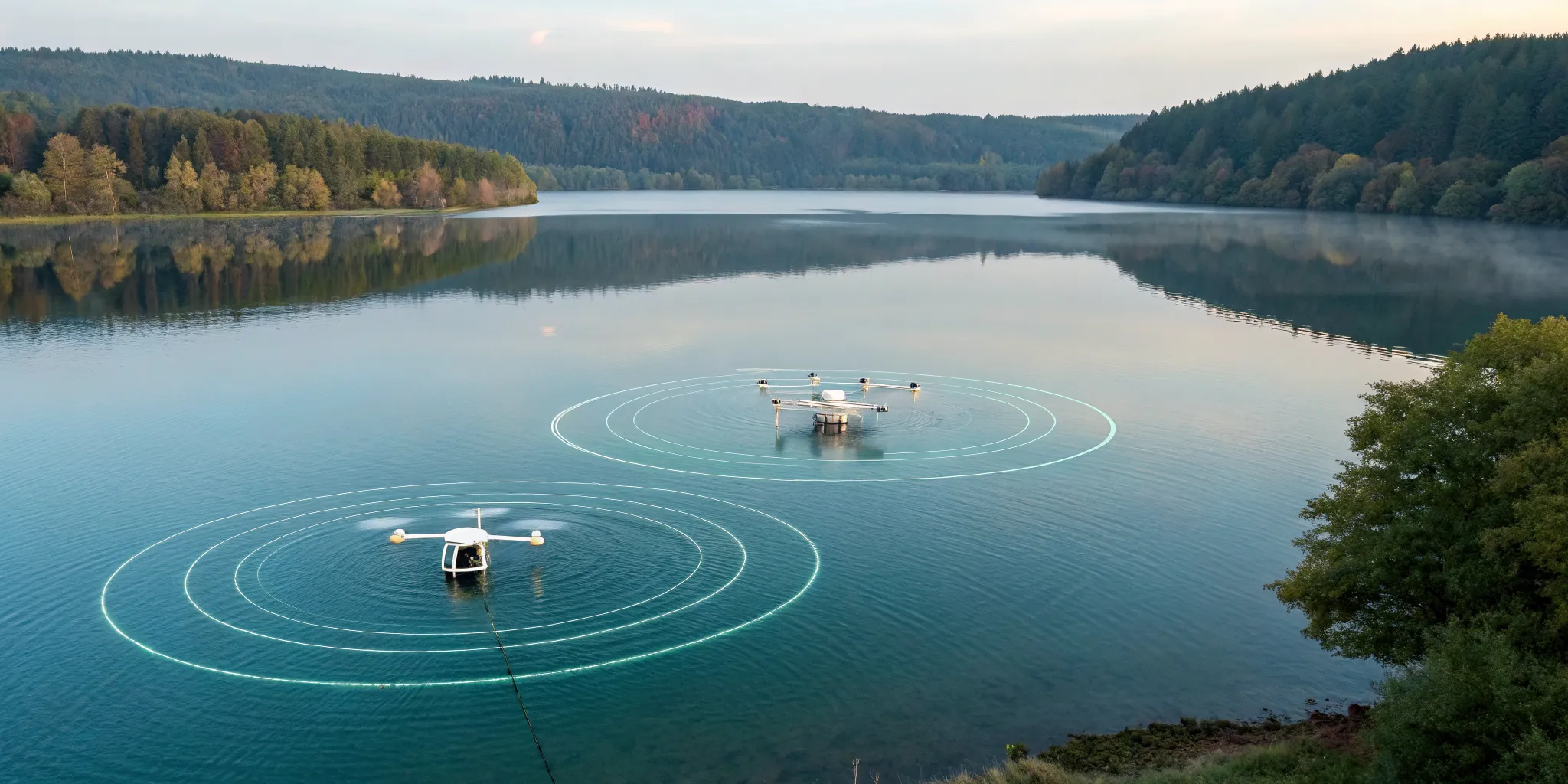
A lake is not a pool. While pools offer a controlled setting, a lake is a wild, unpredictable environment where safety is far more complex. The dark, murky water can hide a swimmer in seconds, and the sheer size of the swimming area makes complete visual coverage a constant struggle. These factors mean that traditional lifeguarding methods alone are often not enough to prevent a tragedy. Modern technology offers a solution, but it must be robust enough to handle these unique challenges. Understanding how does lake drowning detection work is the first step toward building a truly comprehensive safety plan. We’ll explore the different technologies available and explain how they operate in real-time to provide reliable protection in open water.
Key Takeaways
- Address the unique challenges of lakes: Standard safety measures often fall short in open water due to poor visibility, unpredictable conditions, and large areas, making specialized technology essential for effective monitoring.
- Use wearables for reliable lake monitoring: Because they track a swimmer's submersion time directly, wearable devices bypass the challenges of murky water and glare, providing consistent and accurate alerts that fixed cameras or sonar cannot guarantee.
- Integrate technology to support your lifeguards: Automated detection systems are a tool to enhance your team's capabilities, not replace them. This technology handles constant monitoring, which frees up your staff to focus on proactive supervision and allows them to respond faster when an alert occurs.
Why Are Lakes So Challenging for Drowning Detection?
When you manage a waterfront, you know that a lake is a completely different world than a swimming pool. While pools offer a controlled environment with clear water and predictable dimensions, lakes are wild and unpredictable. This natural complexity creates significant hurdles for drowning detection, making it much harder to ensure every swimmer is safe. The very things that make lakes beautiful, like their natural setting and expansive size, also introduce variables that can obscure a swimmer in distress. Understanding these specific challenges is the first step toward building a more effective safety plan.
What Makes Open Water Uniquely Dangerous?
Unlike the clear, filtered water of a pool, lakes have unique dangers that make it incredibly difficult for lifeguards to see everyone. The water itself is often murky or dark, limiting visibility to just a few feet below the surface. Hidden deep spots, sudden drop-offs, and underwater vegetation can easily conceal a swimmer who has slipped into trouble. Add in natural currents or boat wakes, and you have an environment that is constantly changing. These factors combine to create a setting where a person can disappear from view in an instant, making a quick visual assessment nearly impossible for even the most attentive safety staff.
The Limits of Traditional Lifeguarding in Lakes
Drowning often happens quietly and very quickly, sometimes in less than a minute. This silent emergency leaves a distressingly small window for a rescue. Even with a highly trained lifeguard present, the natural conditions of a lake can make detection extremely difficult. Sun glare, shadows, and choppy water from wind can create reflections and distortions that hide a swimmer in need. In a large, crowded swimming area, a lifeguard’s attention is already divided. When you factor in the poor visibility common in open water, you realize that relying on human sight alone isn't enough. This is where technology like the WAVE GUARDian System provides a critical layer of support.
Key Technologies for Lake Drowning Detection
When it comes to keeping swimmers safe in a lake, there isn't a single magic solution. Instead, modern drowning detection relies on a few key types of technology. Each has its own strengths, especially when dealing with the unique challenges of open water. Understanding how these systems operate is the first step in building a comprehensive safety plan for your facility. Let's look at the main players and how they work to protect swimmers.
Camera-Based Detection
Camera-based systems act as a constant set of eyes on the water. They use continuous video feeds, sometimes with infrared for low-light conditions, to monitor the swimming area. The system’s software analyzes this footage in real time, breaking the image down into tiny squares called pixels. By detecting changes in light and movement patterns that differ from normal swimming, the program can identify a potential swimmer in distress. While effective in clear pools, cameras can struggle with the murky water, glare, and surface chop common in lakes. This poor visibility can make it difficult for the software to accurately track a swimmer who goes underwater, which is a critical limitation in an open water environment.
Sonar and Underwater Detection
Where cameras rely on light, sonar systems use sound waves to see what’s happening beneath the surface. This technology sends out sound pulses and measures the echoes that bounce back, creating a detailed picture of underwater objects and their movements. Because it doesn’t depend on water clarity, sonar is a powerful tool for monitoring activity in dark or murky lakes. Some advanced systems can track a swimmer's depth and path, and they are programmed to recognize the fast, erratic movements associated with a person in trouble. This makes sonar a valuable layer of protection, offering a view that is impossible to achieve with eyes or cameras alone, though it can be susceptible to interference from natural underwater features.
Wearable Sensors and Tracking
Wearable technology brings drowning detection directly to the individual swimmer. These systems use small, lightweight devices that swimmers wear, often on a headband or goggle strap. Each Swimmer Alert wearable tracks its user and sends a constant signal to a central hub. If a swimmer is submerged for a dangerous amount of time, the device automatically triggers an immediate alert. This signal is sent directly to lifeguards through a dedicated Lifeguard Alert device, pinpointing exactly who is in danger. Because they monitor the swimmer directly, wearables are not affected by murky water, glare, or other environmental factors, providing reliable protection in conditions where other systems might fail.
GPS Tracking for Open Water
Some wearable devices use GPS to monitor a swimmer's location within a large body of water. This technology can be useful for tracking general position over a wide area, showing where swimmers are in a lake. However, it’s important to understand the limitations of systems that rely only on GPS. These trackers monitor the location of the device itself, not the status of the person wearing it. If the wearable falls off, the system has no way of knowing the swimmer is no longer being monitored and is potentially in danger. For this reason, a more comprehensive GUARDian System often integrates multiple technologies to ensure a swimmer's actual condition, like submersion time, is being tracked.
How Does Drowning Detection Work in Real Time?
It all happens in a matter of seconds. A swimmer is in distress, and a system needs to identify the danger and alert lifeguards instantly. But how does the technology actually do this? It’s a sophisticated, multi-step process that combines hardware, smart software, and real-time analysis to provide an extra layer of protection for your facility. The system works continuously to monitor, analyze, and alert, turning raw data into actionable information that can save a life.
Collecting Data and Processing Signals
Drowning detection systems act as a constant set of eyes on and in the water. They use a combination of hardware to collect a steady stream of data. For example, specialized cameras can provide continuous video, while sonar technology uses sound waves to monitor activity beneath the surface, which is crucial in murky lake water. Wearable devices, like our Swimmer Alert trackers, add another layer by monitoring an individual's submersion time and movement. All this information is sent to a central hub that processes the signals, creating a complete, real-time picture of the swimming area.
Using AI to Improve Accuracy
So, how does the system make sense of all that data? This is where artificial intelligence (AI) comes in. Modern systems use a type of AI called deep learning to recognize complex patterns. Think of it like this: the system is trained on thousands of hours of video and sensor data, learning to distinguish normal swimming from the subtle signs of distress. Over time, this training allows the technology to become incredibly accurate. The AI doesn't just follow a simple set of rules; it learns and adapts, which is how our GUARDian system can identify potential incidents with such precision.
How the System Knows When to Trigger an Alert
The system’s algorithms are programmed to look for specific red flags. For instance, they can tell the difference between someone swimming horizontally and someone who is vertical in the water, a common posture for a person in distress. An alert is triggered if a swimmer remains motionless for too long or stays in that vertical position without making progress. These triggers are based on established patterns of drowning behavior, allowing the system to send a Lifeguard Alert when specific, dangerous criteria are met. This ensures that your team is notified of the most critical events without unnecessary interruptions.
How the System Distinguishes Distress from Normal Swimming
It’s one thing to spot a swimmer who is completely still, but it’s another to identify one who is actively struggling. The system analyzes the nature of a swimmer's movements to tell the difference. The large, fluid motions of a confident swimmer look very different from the chaotic, inefficient movements of someone in trouble. The detection algorithms are trained to recognize these frantic or repetitive arm and leg movements. By analyzing changes in body position and movement patterns, the system can accurately distinguish between playful splashing and a genuine call for help, giving lifeguards the information they need to act fast.
How Do Wearable Detectors Work in a Lake?
Wearable drowning detection systems are a game-changer for lakefront safety, acting as a vital support for your lifeguard team. Think of them as a dedicated spotter for every single swimmer, providing constant monitoring even in the challenging, murky, and unpredictable conditions of open water. These systems use small, lightweight devices worn by swimmers to track their submersion time in real time. If a swimmer is underwater for too long, the device sends an immediate alert to a central hub, which then notifies lifeguards through a personal alert device. This allows for an incredibly fast and targeted response. However, this technology is most effective when integrated into a comprehensive safety plan that includes well-trained staff and clear emergency protocols. Let’s break down exactly how these smart devices function to create a safer swimming environment.
What Do Wearables Monitor?
At its core, wearable technology monitors a swimmer’s submersion time. Each person in the water wears a small, comfortable device that they’ll barely notice. These Swimmer Alert wearables are designed to determine if a swimmer has been underwater for too long. The system uses a preset time threshold, for example, 20 seconds. If a swimmer remains submerged beyond that critical window, the device automatically identifies the situation as a potential drowning event. This constant, individualized monitoring provides a layer of protection that helps lifeguards keep a close watch on everyone, especially in crowded or low-visibility areas where a swimmer can disappear from sight in an instant.
Transmitting Real-Time Signals
Once a swimmer puts on a wearable device, it immediately starts communicating with a central hub. These devices continuously send signals, often multiple times per second, to the main system. This creates a constant stream of data on every swimmer’s status. If a device detects that its wearer has been submerged past the safety threshold, it transmits an emergency signal to the GUARDian Hub (w3000). This hub acts as the brain of the operation, processing the alert and instantly relaying the critical information to the lifeguard team. The transmission is fast and reliable, ensuring there’s no delay between the detection of a problem and the start of a response.
Sending Real-Time Alerts for Faster Response
When the system triggers an alert, it doesn’t just sound a general alarm. It sends a specific, unmissable notification directly to the lifeguards on duty. This is where the Lifeguard Alert equipment comes in. Lifeguards wear a device that vibrates and flashes, immediately drawing their attention to the emergency. This tactile alert cuts through the noise and distractions of a busy waterfront, ensuring your team knows the second a swimmer is in danger. The system pinpoints the event, allowing for a faster and more targeted response. By eliminating ambiguity and saving precious seconds, these real-time alerts empower lifeguards to react with speed and precision when it matters most.
Integrating Wearables with Your Safety System
It’s important to remember that wearable detectors are a powerful tool, but they are one part of a comprehensive safety strategy. This technology is designed to support your trained lifeguards, not replace them. The most effective approach is to integrate wearables into your existing safety protocols. This means combining the system with vigilant lifeguarding, clear emergency action plans, and ongoing staff training. When you layer technology with human expertise and solid procedures, you create a robust safety net. You can learn more about how it works to see how the WAVE system is designed to fit seamlessly into your facility’s overall safety plan, giving your team the support it needs to protect every swimmer.
What Environmental Challenges Do Lake Systems Face?
Lakes offer a beautiful, natural setting for swimming, but their wildness also creates specific hurdles for safety technology. Unlike the controlled environment of a pool, lakes are constantly changing. Any effective drowning detection system must be built to handle these unpredictable conditions, from murky water to sudden weather shifts. Understanding these challenges is the first step in choosing a system that truly keeps swimmers safe in open water. These systems must be designed to perform reliably despite the elements, ensuring that every swimmer is accounted for, no matter what the environment throws at them. The unique characteristics of open water demand more than just a standard approach; they require technology that is both robust and intelligent. Factors like water clarity, surface chop, and the sheer size of the swimming area can all impact a system's effectiveness. That's why it's so important for facility managers and safety directors to look beyond basic features and consider how a system will perform in the real-world, unpredictable conditions of a lake. A system that works perfectly in a crystal-clear pool might fail completely when faced with the dynamic nature of a natural body of water.
Dealing with Murky Water and Poor Visibility
One of the biggest challenges in lake safety is simply not being able to see what’s happening beneath the surface. Drowning detection systems must contend with murky water conditions that can obscure visibility, making it difficult for lifeguards and technology to monitor swimmers effectively. Sediment, algae blooms, and the natural depth of a lake can reduce clarity to near zero just a few feet down. This makes camera-based systems, which rely on a clear line of sight, almost useless for detecting a submerged swimmer in distress. For this reason, wearable drowning prevention for lakes becomes essential, as it tracks the swimmer directly rather than trying to see them through the water.
Overcoming Weather, Waves, and Natural Interference
Lakes are dynamic environments where conditions can change in an instant. Environmental factors such as inconsistent lighting, wave interference, and complex reflections can significantly hinder the performance of drowning detection systems in open water. Glare from the sun, shadows from passing clouds or trees, and choppy water from wind or boat traffic can all create visual "noise" that confuses camera-based sensors. This interference can lead to false alarms or, even worse, missed detections. A reliable system must be smart enough to distinguish between a swimmer in trouble and the natural movement of the water, which is why our GUARDian System is designed to filter out these environmental distractions and focus on what matters most.
Ensuring Full Coverage in Large Lakes
The sheer size of many lakes presents another significant hurdle. To effectively monitor large lake environments, drowning detection systems must be capable of providing real-time alerts across extensive areas, which presents a challenge in ensuring full coverage and quick response times. Unlike a pool with defined edges, a lake has sprawling, often irregular shorelines and deep, open water. Placing enough fixed cameras or sonar devices to cover every corner of a designated swimming area can be impractical and expensive. This is where wearable swimmer alert equipment provides a clear advantage, offering consistent monitoring that travels with the swimmer, no matter where they are in the water.
Camera and Sonar vs. Wearables: Which Works Best in a Lake?
When you're looking at drowning detection for a lake, you'll find a few different types of technology. The main players are fixed systems, like cameras and sonar, and wearable devices that swimmers have with them in the water. Each has its own strengths and weaknesses, especially when dealing with the unpredictable nature of open water. Understanding how they differ is the first step to choosing the right setup for your facility.
Pros and Cons of Fixed Systems (Cameras & Sonar)
Fixed systems use hardware installed around the water to keep an eye on things. Cameras, for example, take continuous video and use software to spot a swimmer in distress. Some even use infrared to distinguish a person's body heat from the cooler water. Sonar systems work similarly but use sound waves to find objects underwater. While these technologies can be effective, they face significant challenges in a lake environment. Inconsistent lighting, surface glare, waves, and murky water can all interfere with their ability to see clearly, making it difficult for them to maintain accuracy.
When Do Wearables Have the Advantage?
This is where wearables really shine. Instead of trying to see through murky water from a distance, Swimmer Alert wearables act as an extra spotter for every single person in the water. These devices are worn by the swimmer and monitor their time spent submerged. If a swimmer is underwater for too long, the device automatically sends a signal to the system. This triggers an immediate alert, often with a vibration or light, on the equipment carried by your lifeguards. Because the device is on the swimmer, it works effectively regardless of water clarity, glare, or distance from shore, giving your team a direct line to anyone who might need help.
Why a Hybrid Approach Is Often Best
While wearables offer a huge advantage in lakes, the most effective safety plan doesn't rely on a single tool. Technology is there to support your trained lifeguards, not replace them. A hybrid approach that combines the strengths of different technologies with human expertise creates the strongest safety net. For instance, our GUARDian System integrates wearable alerts with a central hub and direct notifications for your staff. This technology is one crucial part of a complete safety strategy that should also include skilled lifeguards, clear emergency action plans, and ongoing water safety education for your community.
Understanding the Limits of Drowning Detection Tech
Drowning detection technology is a game-changer for water safety, but it’s not magic. It’s most effective when you understand its capabilities and limitations. Knowing these boundaries helps you integrate the system into your safety protocols, ensuring your lifeguards and the tech work together seamlessly. By setting realistic expectations, you can create a stronger, more reliable safety net for every swimmer in your care. This understanding allows you to use the technology as a powerful support tool, enhancing the skills and attention of your aquatic safety team.
Managing False Alarms and Missed Detections
One of the biggest considerations with any detection system is accuracy. No system is 100% perfect, and it’s important to understand why. For example, a camera-based system might trigger a false alarm if a swimmer is simply standing still or treading water for an extended period. On the other hand, there's a risk that very subtle, early signs of distress could be missed. The key is to choose a system with advanced algorithms designed to minimize these events. A well-designed GUARDian Hub processes information from multiple sources to make smarter decisions, reducing false alarms and giving your team alerts they can trust.
Accounting for Different Swimmer Behaviors
Swimmers move in countless ways, from energetic splashing to quietly floating. Drowning detection systems are trained to tell the difference between play and potential danger. The technology uses algorithms to identify patterns associated with distress, like a swimmer remaining vertical and motionless or staying submerged for too long. However, fixed systems like cameras have a single point of view. This is where Swimmer Alert wearables provide a huge advantage. By tracking each individual directly, the system gets precise data on their status, regardless of how they swim, what the crowd looks like, or where they are in the water.
What About Data Privacy with Wearables?
Whenever you introduce wearable technology, questions about data privacy are sure to follow, and rightfully so. It’s important to know that drowning detection wearables are built for one purpose: safety. They track essential information needed to detect a drowning event, such as submersion time and location within the water. This data is transmitted to the system to trigger an alert for your lifeguards. The technology is not designed to collect personal health information or monitor activity outside of its safety function. You can find answers to common questions about how the system works on our FAQ page.
Considering Cost and Accessibility
Implementing a new safety system is a significant decision, and budget is always a factor. While there is an upfront investment, it’s helpful to view it as a long-term commitment to safety and operational peace of mind. The best systems are built to last, with weather-resistant components that provide reliable service for years. Look for flexible solutions that can be installed permanently, used as a portable system, or set up seasonally to match your facility’s needs. To get a better idea of how the system can fit your budget, you can explore our pricing and see how an investment today can protect your community for years to come.
Key Benefits of Automated Drowning Detection
Adding an automated drowning detection system to your facility is about creating a stronger, more reliable safety net for every person in the water. While lifeguards are the foundation of any water safety plan, technology provides an extra layer of protection that works tirelessly alongside them. In complex environments like lakes, where visibility is low and swimmers can be spread out, this technology isn't just helpful, it's essential. It acts as a constant, vigilant partner, monitoring every swimmer and giving your team the tools they need to respond with speed and precision when it matters most. This integration allows your facility to operate with a higher standard of care, offering peace of mind to both your staff and the families who trust you with their safety. By adopting this technology, you are not just adding equipment; you are fundamentally improving your safety protocols and making a clear statement that safety is your top priority. It bridges the gap between human capability and the unpredictable nature of open water, ensuring that your team is always equipped for the unexpected.
Speed Up Response Times
In a potential drowning, every single second is critical. An automated system drastically reduces the time between the start of an incident and the moment a lifeguard is alerted. Instead of relying solely on visual scans, which can be difficult in crowded or murky water, the system monitors swimmers for you. For example, if a swimmer remains submerged for a preset time, the system instantly sends a precise alert to your lifeguard team. This immediate notification pinpoints the exact location of the person in distress, allowing your staff to bypass the search and go straight to rescue. This rapid response capability is a core feature of the GUARDian System, designed to turn detection into immediate action.
Supporting Lifeguards, Not Replacing Them
It’s important to remember that drowning detection technology is designed to assist lifeguards, not replace them. Think of it as giving your highly trained staff a set of superpowers. The system handles the constant, repetitive task of monitoring every swimmer’s submersion time, freeing up lifeguards to focus on proactive scanning, rule enforcement, and other critical duties. This technology is a powerful tool that helps lifeguards respond faster and more effectively, but it's just one part of a complete safety system. By equipping your team with Lifeguard Alert devices, you empower them with real-time data, helping them perform their jobs with greater confidence and support.
Gaining a Clearer View of the Entire Area
Lakes and other large bodies of water present unique challenges, from sun glare and choppy waves to murky conditions that hide what’s happening below the surface. An automated system gives your team a clear view of the entire swimming area, regardless of these environmental factors. Wearable devices act like dedicated spotters for every single swimmer, tracking their status in real time. These Swimmer Alert wearables help lifeguards see what they might otherwise miss, providing an uninterrupted line of sight to each person. This comprehensive coverage ensures that no one gets lost in the crowd or disappears from view, giving both your staff and your guests greater peace of mind.
How the WAVE GUARDian System Excels in Lakes
While many detection systems struggle with the unique variables of open water, the WAVE GUARDian System is specifically engineered to perform in these complex environments. It’s the only drowning prevention system that works in all types of water, from pools to lakes and rivers. It creates a complete safety net by integrating smart wearables with a powerful central hub and direct alerts for your staff, giving your team the support they need to protect every swimmer.
The GUARDian Hub (w3000) for Open Water
The heart of the system is the GUARDian Hub (w3000), which acts as the central command center. This powerful unit receives and processes real-time data from every swimmer’s wearable device. It’s designed to function flawlessly in open water settings, ensuring that no signal is lost, regardless of the size of your lakefront or the number of swimmers. The hub’s advanced technology is what makes reliable, large-scale monitoring possible, giving your team a constant, comprehensive overview of water activity and swimmer status.
Swimmer Alert Wearables for Any Condition
For a system to be effective, swimmers have to use it. Our lightweight Swimmer Alert wearables are designed to be comfortable and durable enough for any lake activity. Each tracker monitors a swimmer’s submersion time. If a swimmer is underwater for too long, the wearable sends an immediate signal to the GUARDian Hub. This ensures that every individual is monitored, providing personalized protection that works in tandem with your lifeguards’ visual supervision and helps them focus on swimmers who need immediate attention.
Lifeguard Alert for Instantaneous Response
When a potential drowning is detected, every second counts. The WAVE system sends an alert directly to your safety team through our dedicated Lifeguard Alert equipment. This includes pagers and a clear display on the hub that identifies the specific swimmer in distress. This instantaneous notification allows lifeguards to bypass the difficult step of scanning murky water and respond with speed and precision, turning a critical situation into a successful rescue. It gives your team the exact information they need, right when they need it.
Flexible Installation for Any Lake Setup
We know that operational downtime is a major concern for any aquatic facility. That’s why our system is designed for a straightforward and non-disruptive installation. You can get started without needing special permits, divers, or outside contractors, allowing your facility to remain open while the system is set up. This flexibility ensures you can enhance your safety protocols quickly and efficiently, without interrupting your operations or guest experience. It’s a practical solution for adding a critical layer of safety to your lakefront.
Related Articles
- Drowning Prevention Technology: A Facility Guide
- How Automated Drowning Detection Improves Safety
- Guide to Automated Drowning Detection & Pool Security
- Drowning Prevention Technology for Commercial Pools 101
Frequently Asked Questions
Why can't I just use cameras for my lake? They seem to work fine for pools. That's a great question, and it gets to the heart of why lakes are so different. While cameras are a good tool for the clear, controlled setting of a pool, they rely on being able to see through the water. In a lake, factors like murky water, sun glare, shadows, and surface chop from wind can make it nearly impossible for a camera system to accurately track a swimmer, especially once they go underwater. Wearable technology works around this challenge by monitoring the swimmer directly, so its effectiveness isn't impacted by poor water visibility.
Is this technology meant to replace my lifeguards? Absolutely not. This technology is designed to be a powerful support tool for your trained and certified lifeguards. Think of it as an extra set of eyes that never gets tired or distracted. The system handles the constant task of monitoring every swimmer's submersion time, which frees up your lifeguards to focus on proactive scanning and managing the swimming area. It gives your team better information so they can respond faster, but it doesn't replace their skill, training, or judgment.
How does the system know the difference between a kid playing underwater and a real emergency? The system focuses on a very specific and reliable metric: submersion time. While playful splashing and underwater games involve a lot of movement, a drowning event often involves a person being unable to surface. The system is programmed with a set safety threshold, for example, 20 seconds. If a swimmer's wearable device is submerged for longer than that preset time, it automatically triggers an alert. This focus on time underwater helps the system distinguish between normal play and a situation that requires immediate attention.
What happens if a swimmer's wearable device falls off in the water? This is an important point to consider. The wearable devices are designed to be secure, but if one does come off, the system would no longer be tracking that specific swimmer. This is why the technology is one part of a complete safety plan. Your lifeguards' vigilance and training remain the primary layer of protection. The system provides critical support, but it works best when integrated with your existing protocols, including regular visual scans and headcount procedures, to ensure everyone remains accounted for.
How difficult is it to set up a system like this at a natural lakefront? We designed the system with practicality in mind, knowing that facilities can't afford long shutdowns. The installation process is straightforward and doesn't require you to drain the water or bring in special contractors like divers. The system can be set up while your facility remains open, which means you can add this critical safety layer without disrupting your operations or losing revenue. It's a flexible solution built to fit the realities of managing an aquatic facility.
