
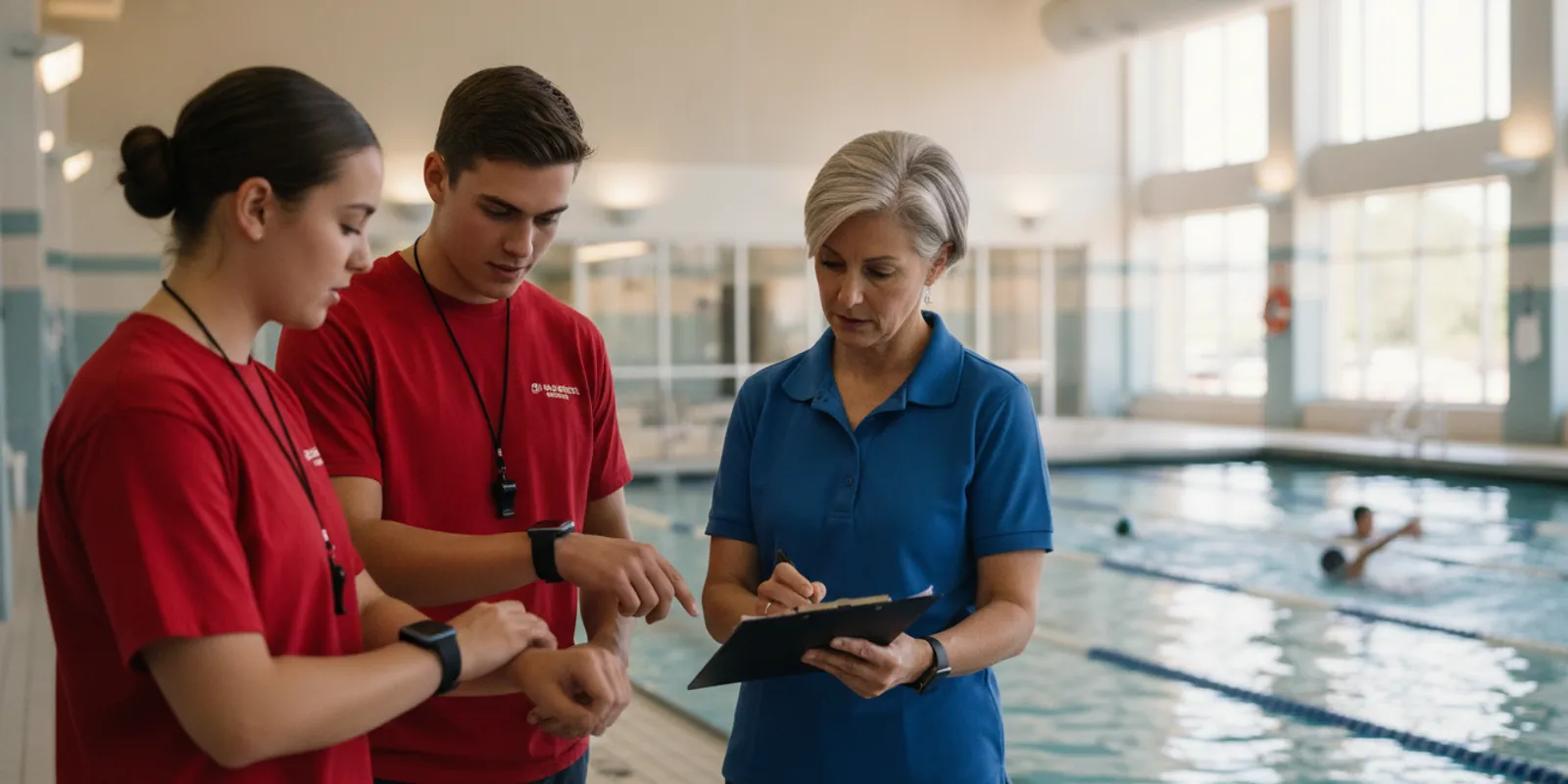
A pool safety technology pilot program gives an aquatic facility a bounded way to test how an additional detection and alert tool fits into real operations. The goal is not to prove that technology can replace supervision or guarantee outcomes. It is to learn whether the tool, staff procedures, and facility conditions work together as intended before leaders decide what comes next.
A useful pilot has a defined area, a trained response team, written safeguards, and measures chosen before the first test day. Keep lifeguards responsible for active supervision, and evaluate the technology as one supporting layer in the facility’s broader safety plan.
What should a pool safety technology pilot program answer?
A pilot should answer a small set of operational questions, not attempt to settle every question about aquatic safety at once. Directors need to know whether the technology can be deployed in the selected environment, whether staff understand alerts, and whether the process is workable across shifts. Agreeing on those questions early keeps the trial focused and helps prevent technology demonstrations from being mistaken for evidence of overall safety.
Start by writing a short pilot charter. Name the decision the organization expects to make at the end: stop, revise, extend, or consider a broader rollout. Identify who owns the decision and which people must contribute to it, such as the aquatics director, lead lifeguard, facility operations, risk or compliance staff, and the technology provider. Clarify that participation in a pilot does not change staffing plans, supervision zones, emergency procedures, or any applicable rules.
Then translate the decision into questions that can be observed. For example: Can staff identify and acknowledge an alert? Is the alert pathway understood during a normal shift and a drill? Do device distribution and collection fit opening and closing routines? Are there pool conditions or activities that require a different procedure? Avoid vague objectives such as “make the facility safer.” A focused question should point to a process, a responsible person, and a way to record what happened.
Put the boundaries in writing. State the dates, operating hours, pool or zone included, intended users, approved test activities, and the conditions under which testing pauses. Decide what data will be collected, who can access it, how long records will be kept, and how staff or families will be informed when appropriate. A written charter makes the trial easier to explain and prevents informal changes from expanding its scope without review.
Define the pilot scope and boundaries
Scope determines what the trial can teach you and what it cannot. A small test in one operating zone may help staff assess device handling and alert communication, but it cannot establish performance in every pool, schedule, or swimmer population. Choose a scope that is large enough to exercise the workflow and limited enough for trained people to supervise closely.
Map the facility before selecting the test area. Record the pool layout, entry and exit points, areas of reduced visibility, typical activity patterns, and where responders are normally positioned. Include relevant shifts and operating conditions in the plan. If the facility has more than one body of water or very different program types, do not assume that one zone represents all the others.
For a wearable-based pilot, define which participants may be issued devices, how eligibility will be determined, and how devices will be fitted, identified, checked, and returned. Explain what happens if a device is missing, damaged, uncomfortable, or not worn as planned. Do not treat a device as permission to alter supervision or activity rules. For a system that detects lifeguard water entry, spell out how that signal will be used in the staff response process and how staff will practice it without creating confusion during live operations.
Establish practical boundaries for the first phase. A facility might begin with one pool and a limited set of operating hours, then add a second phase only after a scheduled review. Another site may test the alert-routing process with staff first, using drills before involving swimmers. Select the sequence that fits the facility’s risk assessment, staffing, and approved procedures. Document exclusions too, including activities or environmental conditions that are outside the trial plan.
For example, a facility whose main question is whether a new alert can be routed clearly might begin with staff instruction and announced drills in one zone. After leaders review the drill records and correct any unclear handoffs, they can decide whether a separate, limited operational phase is appropriate. This sequence avoids asking a live operating period to reveal basic role confusion that staff could have identified in a controlled practice. If the pilot instead focuses on equipment routines, write down the exact checks and handoff points that staff will perform at opening, during use, and at closing. Choose one or two questions that the first phase can answer well; reserve broader coverage and different program conditions for later review rather than expanding informally.
WAVE describes its approach as wearable and wireless, with systems intended for supervised aquatic environments and deployment without permanent construction. Facilities considering a system can review WAVE’s product overview and its GUARDian Hub information as part of an initial fit discussion. Confirm the current capabilities, site requirements, and appropriate configuration directly with the provider; do not infer that a published overview confirms suitability for every particular facility.
Which staff workflows need to be tested?
A detection tool only has operational value when its signal connects to a clear human response. A pilot should therefore evaluate the entire sequence, from issuing equipment or preparing sensors to recognizing an alert, communicating, responding, and documenting what happened. If any link in that sequence is unclear, record the gap and correct the procedure before expanding the trial.
Write the alert pathway in plain language. Identify who receives the initial signal, how it is delivered, who acknowledges it, and how the response is escalated if the first person is occupied or does not respond. State what the lifeguard on surveillance duty should continue doing while another staff member responds. Keep the chain consistent with the facility’s existing emergency action plan, and have qualified facility leadership review any proposed procedural changes before use.
Assign responsibilities by role rather than relying on informal assumptions. One person may prepare equipment before a shift; a designated lead may check the system’s operational status; and a supervisor may review records after a drill or alert. Specify who covers each role when staff rotate, take a break, or work at another zone. A workflow that only works when one experienced employee is present is not ready for routine operations.
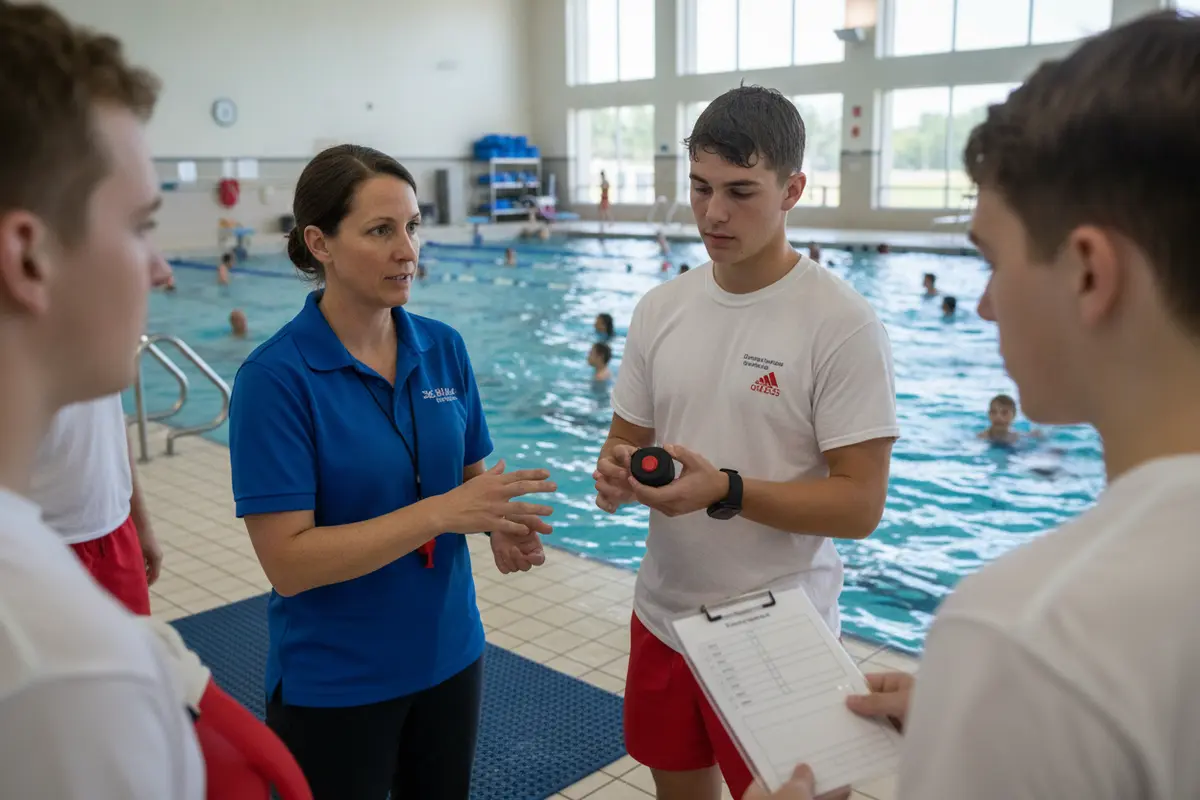
Use both tabletop discussion and realistic drills. A tabletop lets staff talk through the alert path without disrupting pool activity. A drill can test whether a signal is noticed, whether communication is understood, and whether assigned responders can follow their roles under the facility’s approved conditions. Make the distinction between a drill and a live alert unmistakable. Tell staff how drills will be announced, who can initiate them, and how they will be stopped if real activity requires attention.
Training should include device handling, common status indicators, alert acknowledgement, escalation, and what to do if the system or communication pathway is unavailable. Staff should know that the tool supports—not replaces—active lifeguard observation and established emergency procedures. New hires, substitute staff, and relief personnel need the same essential briefing before they take part in a pilot shift.
Keep the workflow grounded in the facility’s written safety plan. New York’s Swimming Pool Safety Plan form, for example, identifies areas such as daily bather supervision, injury prevention, emergency response, and first aid as plan considerations. It is a state resource, not a substitute for the rules that apply to your site. Use the relevant jurisdiction’s requirements and your own approved procedures when deciding whether a pilot needs formal plan updates.
How can a pilot protect swimmers and preserve lifeguard roles?
Safeguards should be designed before the system is switched on or devices are distributed. A pilot adds a new process to an environment where staff already have defined responsibilities, so leaders should make clear that existing supervision remains in force throughout the evaluation. The trial must not create a false sense of security for staff, swimmers, families, or organizational leadership.
Keep staffing and surveillance arrangements unchanged unless a separate, properly authorized review determines otherwise. A wearable alert or monitoring tool is not a replacement for qualified lifeguards, appropriate coverage, supervision policies, rescue readiness, or an emergency action plan. Tell participants and staff what the system is intended to do, what it is not intended to do, and what action remains necessary when a person appears to need help.
Prepare a pause-and-stop procedure. Pause the pilot if the alert path fails, staff cannot determine whether a signal is real or a drill, equipment is unavailable, a device is not being used as specified, or an unplanned condition makes the procedure confusing. Assign authority to stop testing, and state how leaders will decide whether the activity can resume. A clear stop rule is a sign of good planning, not a failed evaluation.
Consider privacy and communication before collecting information. Decide what operational records are necessary, avoid gathering personal data that is not needed for the stated evaluation, and follow the organization’s privacy and retention policies. Explain the trial accurately to employees and, where relevant, swimmers or caregivers. Do not promise that a device can prevent every incident or imply that an alert means a person is safe until staff have checked the situation.
Federal guidance reinforces the importance of attentive adult supervision around water. The U.S. Consumer Product Safety Commission advises that children should never be left unattended in or near water and recommends designating an adult Water Watcher; see its pool-season safety guidance. The guidance is directed to consumers, but its central point is relevant to pilot design: technology does not remove the need for responsible, attentive human supervision.
Select practical measures for the pilot
Choose measures before the start date so the team does not select only favorable observations afterward. A pilot measure should relate to the questions in the charter and should be collectable without distracting staff from their primary duties. Use a mix of process checks, staff feedback, and documented issues rather than relying on a single headline number.
Process measures can include whether equipment checks were completed, whether each planned staff role was assigned, whether staff completed the briefing, and whether a drill followed the written alert path. Record whether alerts were acknowledged and routed as designed, while defining exactly what counts as an acknowledgement and how a deviation is logged. If an alert is not received or routed as expected, capture the circumstances and follow the facility’s reporting process.
Usability measures can come from short, structured staff feedback. Ask whether alert signals were recognizable, instructions were clear, handoffs were practical, and equipment procedures fit the work routine. Invite staff to describe confusing or burdensome steps, not only to rate satisfaction. A short debrief soon after each drill or operating period usually preserves more detail than a single end-of-pilot conversation.
Track reliability and exception handling as operational observations, not as broad safety claims. Note periods when equipment was unavailable, a check was missed, a device was not issued or returned as planned, or a communication route changed. Record the cause when known, the corrective action, and whether the procedure needs revision. Interpret counts in context: a small pilot may produce too few events to support conclusions about rare emergencies or overall drowning risk.
Define each measure in advance so two supervisors would record the same event in the same way. For instance, specify whether “alert acknowledged” means a staff member received the signal, verbally confirmed it, or completed the next assigned step. Separate planned drills from operational alerts in the log, and label any test records so they are not confused with actual incidents. Decide who reviews the records and how quickly a problem should be escalated. Keep data collection brief enough that it does not pull lifeguards away from surveillance; a designated supervisor can handle pilot notes when practical. These small definitions make the final discussion more useful because leaders can distinguish an equipment issue, a training gap, and a communication breakdown rather than combining them into one general impression.
Use the table below to align each measure with a decision. Adapt the examples to the facility’s own plan, and do not set a threshold that conflicts with applicable requirements or the provider’s documented operating instructions.
| Evaluation area | Example measure | Useful evidence | Decision it can inform |
|---|---|---|---|
| Readiness | Were assigned staff briefed and roles covered on planned shifts? | Shift checklist and training record | Whether the pilot can run as scheduled |
| Alert workflow | Did staff recognize, acknowledge, and route a test alert as written? | Drill log with time, role, and any deviation | Whether the response procedure needs revision |
| Equipment routine | Could staff complete issue, status check, and return steps? | Equipment checklist and exception notes | Whether the routine fits daily operations |
| Staff usability | Which steps were clear, confusing, or difficult during a shift? | Brief staff debrief using consistent prompts | What additional training or workflow changes are needed |
| Safeguards | Were supervision, privacy, and stop rules maintained? | Supervisor review and incident or pause records | Whether the scope remains appropriate |
| System availability | Were status checks and communication routes completed as specified? | Checks, provider support records, and downtime log | Whether readiness issues must be resolved first |
Compare practical pilot approaches
There is no single pilot format that fits every aquatic facility. A facility may first test staff training and alert routing, then conduct a limited in-operation phase under its approved procedures. Another may need a narrowly scoped operational trial from the outset because its main question concerns fit with an existing supervised environment. Choose the least complex approach that can answer the real decision question.
The comparison below is a planning aid, not a ranking of products or a safety certification. Each option needs named oversight, a written protocol, and a clear link to the site’s emergency and supervision plans. The right choice depends on the facility’s operating conditions and the approval process it must follow.
| Pilot approach | What it can help assess | Main limitation | Good next step |
|---|---|---|---|
| Staff workflow tabletop | Role clarity, alert language, escalation, and gaps in written procedures | Does not test equipment under operating conditions | Revise the protocol, then plan a supervised drill |
| Controlled staff drill | Whether the alert and communication path can be practiced and understood | Drill conditions may not represent normal activity | Debrief, document exceptions, and repeat after changes |
| Limited operational phase | Equipment handling and workflow fit during a defined schedule and zone | Requires careful oversight and cannot represent every site condition | Review records and safeguards before extending scope |
| Multi-zone phased trial | How procedures differ across distinct areas or operating periods | More complex staffing, training, and data interpretation | Add zones only after each earlier phase is reviewed |
For a wearable approach, ask specifically how the devices communicate, what staff are expected to do when an alert occurs, how the system is checked, and what site conditions affect use. WAVE’s swimmer equipment overview and lifeguard equipment information can help teams prepare questions about equipment and staff workflows. Use provider materials as an input to planning, then confirm site-specific procedures with your own operations and safety leads.
Review the pilot and decide what comes next
Set review points before launch rather than waiting until the final day. A brief check after the first staff practice can reveal a misunderstanding before the operational phase. A midpoint review lets leaders adjust a procedure through the approved change process, and a closing review can compare the evidence with the original questions.
Before the first shift, schedule the reviews and identify who will attend. Include people who see different parts of the operation, such as the supervisor responsible for readiness, a lifeguard who practiced the alert path, and the leader responsible for approving changes. Bring the charter, checklists, drill notes, staff feedback, and any provider support records to the review. This prevents a decision from resting only on recollection or a single demonstration. If the trial is interrupted or a key operating condition changes, record the change and determine whether the planned evaluation still answers the original question.
At each review, ask whether the pilot stayed within its boundaries, whether staffing and supervision remained consistent, whether the alert pathway worked as designed during test conditions, and what exceptions occurred. Invite feedback from different roles and shifts. If a change was made, record who authorized it, when it took effect, and whether staff received updated instructions.
Use an explicit decision framework. “Continue” means the planned phase can proceed under current safeguards. “Revise” means the team has identified a correctable procedure, training, or configuration issue and needs to test the change. “Pause” means a safety, readiness, or operational concern needs resolution before testing resumes. “Close” means the pilot has answered its stated questions or the organization has decided not to proceed. A “broader deployment” is a separate decision requiring a new review of site coverage, staff preparation, resources, and applicable approvals.
Keep the evidence proportional to the claims. A pilot can show that a particular training sequence was completed or that a test alert followed a defined route on specified occasions. It cannot by itself establish that a facility is free of risk, that every emergency will be detected, or that results will transfer unchanged to another site. Report both successful steps and limitations to the decision-makers.
For an operational overview of a potential configuration, consult WAVE’s frequently asked questions and current pricing information, then verify details with the provider. If leadership wants to explore whether a system fits a defined pilot, the next step is a site-specific discussion—not a commitment to change existing supervision procedures.
Frequently Asked Questions
These answers address common planning questions, but local rules and facility procedures remain controlling. Bring unresolved issues to the responsible aquatics, risk, and compliance leaders before testing begins.
How long should a pool safety technology pilot program run?
Set the duration based on the operational questions, the facility schedule, staff coverage, and the time needed to complete planned checks and reviews. The plan should include enough opportunities to practice the workflow across relevant shifts, but avoid extending a trial without a defined reason. A review checkpoint can determine whether the remaining questions require more time or a different test.
Should a pilot change lifeguard staffing or surveillance assignments?
No. A pilot should not be used to reduce staffing or change active supervision arrangements. Keep existing coverage and emergency procedures in place unless a separate authorized process determines otherwise; the technology is an additional support layer, not a replacement for lifeguards.
What should happen if an alert or equipment check fails?
Follow the written pause procedure, notify the designated lead, and maintain the facility’s normal supervision and emergency practices. Record what occurred and use the facility’s established reporting process. Resume pilot activity only after the responsible leader confirms that the issue has been reviewed and any required corrective steps are complete.
Can one pilot establish that a system will work at every pool?
No. A pilot provides evidence about the defined configuration, people, operating conditions, and time period that were actually tested. Different layouts, schedules, water conditions, procedures, or users may require additional planning and evaluation.
What belongs in the final pilot report?
Include the original scope and questions, dates and locations, staff preparation, measures and records reviewed, deviations, downtime or exceptions, feedback, safeguards, unresolved limitations, and the decision made. Separate observed facts from interpretation, and identify an owner and date for any follow-up actions.
A careful pilot makes the decision clearer while keeping swimmer supervision, staff readiness, and established safety procedures at the center of the work.
