
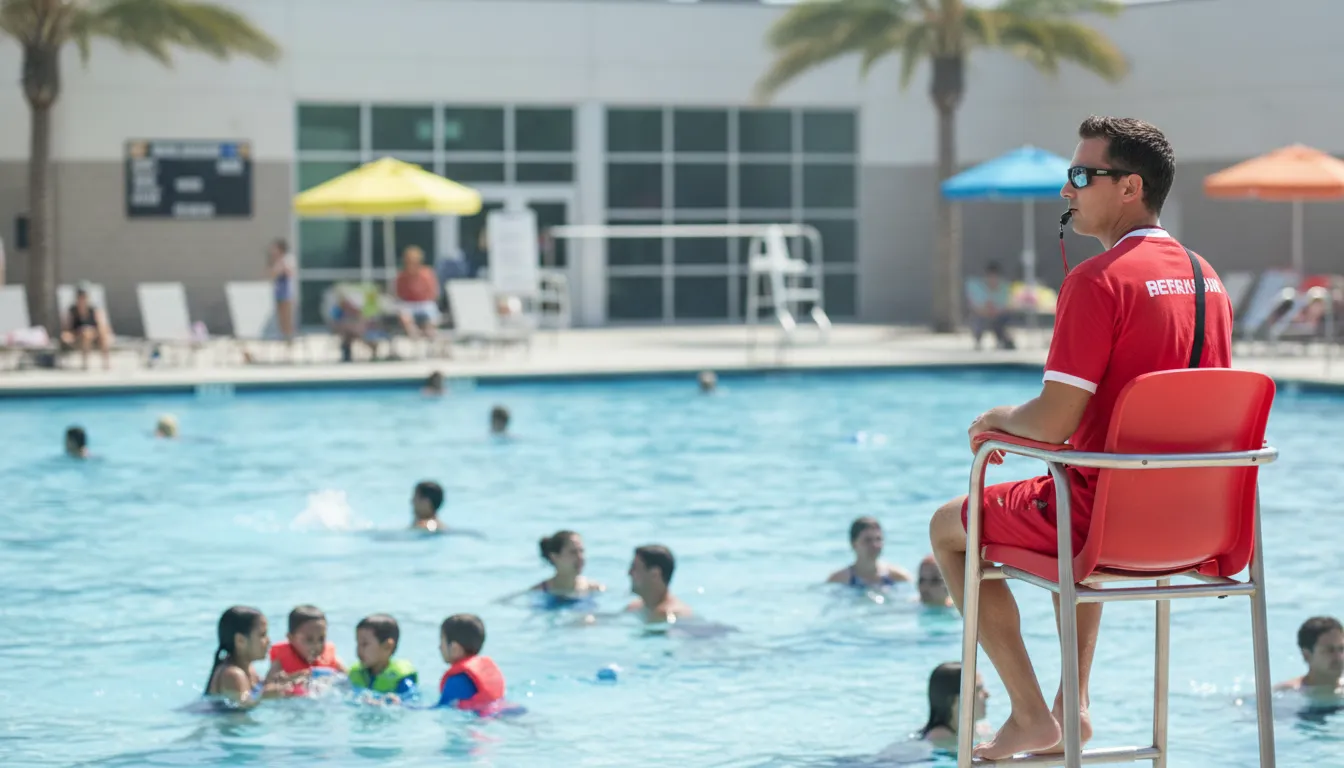
At a public or community pool, a safe day depends on more than attentive staff or posted rules. Drowning can happen in seconds, is often silent, and can affect anyone with access to water. Prevention must be built into everyday operations, not treated as a single safeguard.
Schedule a free consultation to review your pool's drowning prevention toolkit.
The most effective approach to preventing drowning in public pools combines active supervision, appropriate barriers and equipment, clear procedures, and technology that adds another layer of swimmer protection. These measures support lifeguards and staff without replacing professional monitoring.
That layered approach also helps facility leaders think beyond emergency response. It connects the human decisions, physical environment, and detection tools that work together to reduce risk, beginning with why no single measure is sufficient on its own.
Why Preventing Drowning in Public Pools Requires a Multi-Layered Approach
Preventing drowning in public pools is not the responsibility of one person, one policy, or one piece of equipment. Effective prevention combines active supervision, practical barriers, staff training, and technology that can add another signal when a swimmer needs help. This layered approach gives facility leaders more than a single point of defense and helps teams respond to the realities of busy aquatic environments.
Public pool safety works best when supervision, barriers, and technology reinforce one another. Lifeguards remain essential, while procedures, facility design, and detection tools help them maintain awareness and act quickly when conditions change.
The urgency is clear. According to the Centers for Disease Control and Prevention, drowning happens in seconds and is often silent. It can happen to anyone with access to water, including swimmers who appear capable or facilities that have well-established operating procedures. The CDC also reports that more children ages 1 to 4 die from drowning than from any other cause of death. Those facts make prevention an operational discipline, not a one-time safety initiative.
For public pools, the consequences extend beyond the immediate emergency. A YMCA study found that 68% of aquatic facilities experienced a pool closure or legal action following a drowning incident. That YMCA-specific finding underscores why aquatic directors and risk managers need to evaluate the full safety system before an incident occurs. A plan should address what staff see, how the facility limits unintended water access. And how the team receives information when a critical event may be difficult to observe.
Three layers that work together
The first layer is supervision. Lifeguards monitor the water, enforce rules, recognize changing conditions, and coordinate an emergency response. Training and clear assignments help make that work consistent, especially during crowded periods, transitions, or overlapping activities.
The second layer is barriers and facility controls. Appropriate access points, pool layout, signage, equipment, and operating procedures can reduce hazards and help keep swimmers within supervised areas. These controls do not replace vigilant staff, but they create structure around the experience and reduce reliance on perfect behavior from every visitor.
The third layer is technology. WAVE is designed as a force multiplier for lifeguards, using drowning-detection technology to provide an additional alert when prolonged submersion or another monitored event requires attention. It supports lifeguard judgment and response; it does not replace lifeguards or guarantee that every incident will be prevented. That distinction matters when evaluating technology for a supervised aquatic environment.
Facility leaders can use this framework to identify gaps without treating technology as a shortcut. For a closer look at planning considerations, review this municipal pool drowning prevention resource. The following sections examine each layer in practical terms, beginning with the people responsible for active supervision.
Supervision Is the First Line of Defense at Any Public Pool
Close, attentive supervision is the foundation of preventing drowning in public pools. Drowning can happen in seconds and is often silent, which means a swimmer in trouble may not call for help or attract immediate attention. Swimming ability, pool rules, and safety equipment all matter, but they do not remove the need for an alert adult or lifeguard watching the water.
For children, swimming lessons are valuable preparation, not a substitute for supervision. The Centers for Disease Control and Prevention states that children who have had swimming lessons still need close and constant supervision in or around water. At a public pool, that principle should guide staffing plans, deck coverage, family communication, and every decision about who is responsible for watching swimmers.
Make supervision specific and uninterrupted
Vague responsibility creates gaps. When several adults assume someone else is watching, no one may be actively focused on the child or group that needs attention. The CDC recommends assigning a specific adult to supervise each child when the child has access to water. Facilities can reinforce this expectation by defining zones, confirming coverage during breaks, and making handoffs explicit rather than informal.
Supervision also requires removing distractions. Adults watching children near water should avoid using phones, reading, or consuming alcohol or drugs because drowning can occur quickly and quietly. For facility operators, the same standard applies to lifeguard operations: clear scanning practices, appropriate rotation. And a deck environment that supports concentration are more valuable than simply having someone physically present.
Lifeguards remain essential
Public pools need trained lifeguards as a central part of their safety ecosystem. Lifeguards bring specialized observation, rescue training, emergency response, and the authority to intervene when conditions become unsafe. Technology should strengthen that work, not create an excuse to reduce vigilance or treat an alert as a replacement for human judgment.
WAVE is designed as an additional layer of protection in supervised aquatic environments. Its drowning-detection technology can support lifeguards by identifying prolonged submersion and alerting staff through vibrating bracelets and facility alerts, helping teams respond more quickly to a critical event. Used alongside attentive supervision, training, and clear operating procedures. That capability gives facility leaders another tool for protecting swimmers without weakening the human safeguards that public pools depend on.
Source: Centers for Disease Control and Prevention drowning prevention guidance
Barriers, Life Jackets, and Proper Pool Infrastructure
Physical safeguards create separation, flotation support, and operating conditions that make a public pool safer to manage. They do not replace attentive supervision, staff training, or a clear emergency response plan. Instead, they address different points of risk so that one missed cue or unexpected event is less likely to become an unobserved emergency.
For facilities that serve children, families, and weaker swimmers, the surrounding environment deserves the same attention as the water itself. The CDC recommends a four-sided fence at least four feet high that fully encloses a pool and separates it from the home, with self-closing and self-latching gates. Although public facilities vary from residential settings, the principle remains useful: controlled access and reliable gate hardware reduce unintended entry and help operators define the supervised pool area. The CDC's drowning prevention guidance provides the supporting recommendations.
Life jackets are another targeted layer for weaker swimmers of all ages, including in and around swimming pools. They should be used according to the facility's operating rules and fit requirements. Air-filled or foam toys should not be treated as safety devices. Facilities can also make expectations easier to follow by publishing their community pool safety rules for guests and staff.
| Strategy | What it does | Best for |
|---|---|---|
| Supervision only | Relies on lifeguards or designated adults to observe swimmers, identify distress, and respond. | Facilities with trained, attentive supervision and defined scanning procedures. |
| Supervision plus barriers and life jackets | Adds controlled access and flotation support for swimmers who need additional assistance. | Pools serving mixed abilities, children, and guests moving between deck and water. |
| Supervision plus barriers and technology | Combines human oversight and physical safeguards with an additional alerting layer for supervised aquatic environments. | Operators seeking layered risk controls that support lifeguards rather than replace them. |
Infrastructure also includes water-quality operations. The CDC's Model Aquatic Health Code offers guidance for healthy and safe pool operations alongside all applicable local, state, tribal, and territorial codes. Operators should test pH and disinfectant levels at least twice daily, or hourly during heavy use, and maintain a minimum free chlorine level of 1 part per million. These measures address water quality and facility operations, while supervision, barriers, life jackets, and detection technology address different safety needs. Together, they form a more practical framework for preventing drowning in public pools.
How Wearable Technology Supports Lifeguards in Public Pools
Wearable drowning detection technology gives lifeguards another source of timely information during active pool operations. It is designed as a force multiplier, not a substitute for trained supervision, established emergency procedures, or attentive staff. In a supervised aquatic environment, that additional layer can help a team recognize a prolonged submersion event and begin its response sooner.
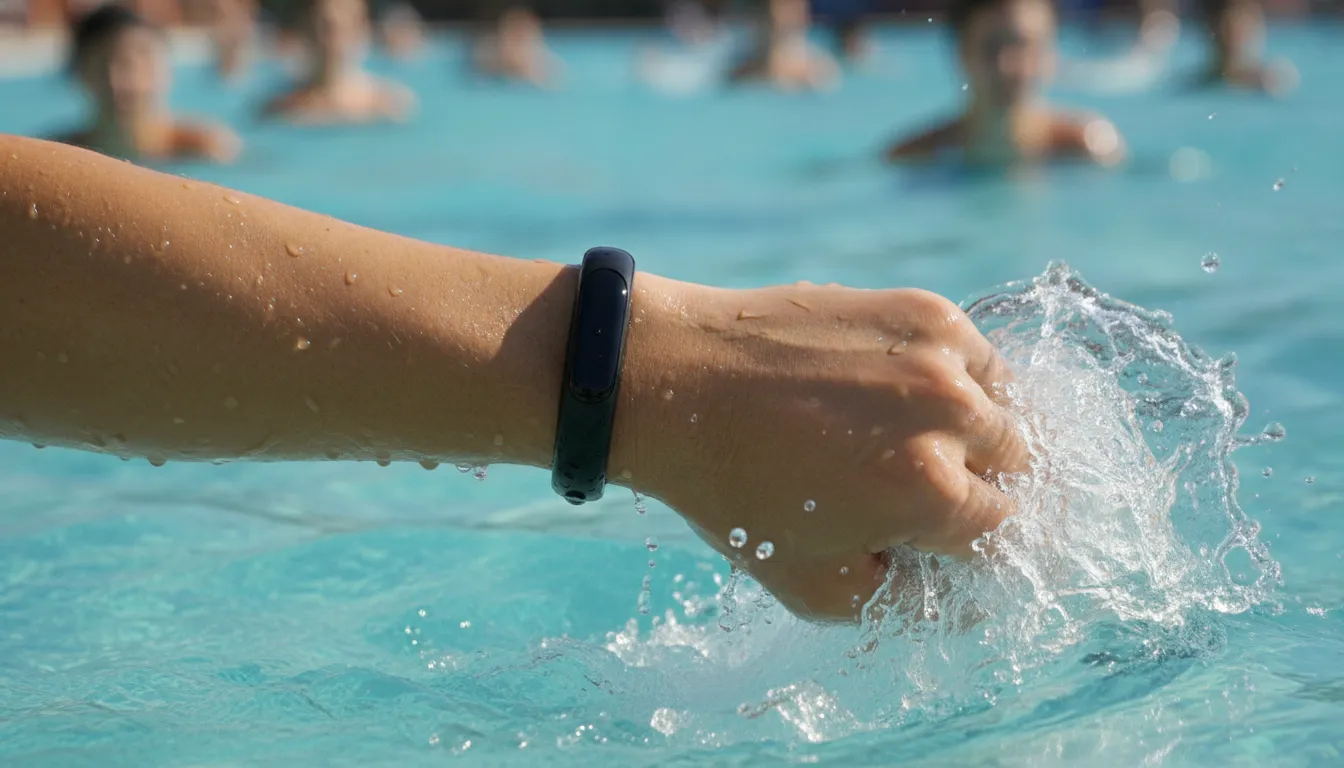
WAVE's system detects prolonged submersion and alerts staff within seconds through vibrating bracelets and facility-wide alarms. A lifeguard wearing an alert device can receive a direct signal, while broader facility alerts can help notify the appropriate response team. This layered notification model supports faster awareness without asking staff to abandon the visual scanning and judgment that remain central to lifeguarding.
For facility leaders evaluating drowning prevention technology guide resources, the operational distinction matters. Detection technology should fit into a broader plan that includes supervision, staff training, communication protocols, and regular review of response procedures. WAVE's role is to enhance lifeguard capabilities and provide an added layer of swimmer protection, rather than promise that any one system can eliminate every risk.
Detection that works across changing water conditions
Public pools and aquatic facilities do not always provide the same visual conditions. Water may be clear during normal operations, but darkness, murkiness, glare, or other conditions can make camera-based detection more difficult. WAVE's wearable, wireless technology is designed to work in clear, dark, and murky water, unlike camera-based systems that require clear water and permanent construction.
That approach can give operators more flexibility when considering how to improve protection without committing to extensive pool infrastructure. The solution is non-invasive and does not require permanent construction as part of its deployment. Facility leaders can review the system's components, alert paths, and operating model on the how WAVE works page before determining how it fits their site-specific procedures.
Designed for practical daily operations
Technology only helps when staff can use it consistently. AquaSense swimmer wearables feature a multi-year battery life, removing the daily recharging burden associated with many competing wristbands. That can simplify routine readiness for facilities managing rotating shifts, seasonal staff, multiple activity areas, or a large inventory of equipment.
WAVE's GUARDian Hub, AquaSense swimmer wearables, and lifeguard tags can be evaluated as part of a coordinated alerting approach. The right configuration depends on the facility's layout, staffing model, and swimmer-protection goals. In every case, the objective is the same: support attentive lifeguards with an additional signal so they can assess the situation and act according to their training.
Building and Funding Your Pool's Drowning Prevention Plan
A strong public pool safety program is built through coordinated decisions, not a single product or policy. Facility leaders can make progress by reviewing current practices, assigning clear responsibilities, strengthening physical safeguards, and then adding tools that help staff respond quickly. This approach keeps lifeguards at the center while creating additional layers of protection.
Use the following sequence to turn prevention goals into an operational and fundable plan.
- Audit current supervision, barriers, and training. Start with an honest review of how the pool is supervised during normal operations, peak attendance, lessons, breaks, and emergencies. Confirm that lifeguard coverage, scanning practices, emergency action plans, and staff training match the facility's risks. Review fencing, gates, access points, signage, rescue equipment, and maintenance records. Document gaps rather than assuming that a policy is effective simply because it exists.
- Establish supervision protocols and designate responsible staff. Define who is responsible for active surveillance, who takes command during an emergency, and who contacts emergency services and facility leadership. Put handoff procedures, break coverage, incident reporting, and escalation steps in writing. Train every relevant employee on the plan, including front-desk, maintenance, and seasonal staff. Lifeguards remain essential to public pool safety, and technology should support their judgment and response, never replace their presence or attention.
- Reinforce barriers and maintenance using recognized guidance. Compare current practices with applicable local and state requirements, then consult the CDC's Model Aquatic Health Code guidance as an additional operating reference. Build recurring checks for gates, doors, drains, rescue equipment, water clarity, and chemical controls into the maintenance schedule. The same CDC guidance recommends testing pH and disinfectant levels at least twice daily. Or hourly during heavy use, and maintaining a minimum free chlorine level of 1 part per million.
- Add wearable detection technology as a force multiplier. Once supervision and facility fundamentals are in place, evaluate whether wearable detection can close response gaps. WAVE technology is designed to detect prolonged submersion and alert staff through vibrating bracelets and facility alarms, helping lifeguards act faster. Its non-invasive, flexible deployment does not require permanent construction or extensive pool downtime, making it practical for facilities that need to improve protection without a major structural project. Review how WAVE works and define how alerts integrate with existing emergency procedures.
- Build a funding plan before selecting the final scope. Identify eligible public, municipal, and nonprofit funding sources, then align the requested equipment and training with documented safety needs. The CPSC Pool Safely grant program is a potential federal source for drowning prevention and related safety technology. Qualified nonprofit facilities may also seek financial assistance through WAVE's scholarship program. Review this article on funding drowning prevention technology and WAVE's grants and funding page when preparing an application, budget, or board presentation.
After implementation, assign an owner to review incidents, near misses, staff feedback, and equipment performance on a regular schedule. A prevention plan should evolve as attendance patterns, staffing, facility conditions, and community needs change.
Get started building a safer public pool today.
Frequently Asked Questions
What are the most effective strategies for preventing drowning in public pools?
Use multiple safeguards together: active lifeguard supervision, trained staff, clear operating procedures, appropriate barriers and swimmer rules, and technology that can alert staff to a possible submersion. No single measure is sufficient. The CDC also recommends following applicable pool codes and consulting the Model Aquatic Health Code: CDC public pool guidance.
How can lifeguards be supported in preventing drowning?
Facilities can support lifeguards with effective training, well-defined zones and response procedures, manageable scanning conditions, and an additional alert layer. WAVE technology detects prolonged submersion and alerts staff through vibrating bracelets and facility alarms. It is designed to enhance lifeguard capability, not replace lifeguard supervision: WAVE drowning detection technology.
Do anti-drowning bracelets work?
Wearable detection systems can add an alert layer when used as part of a supervised pool safety plan. WAVE AquaSense wearables are designed to detect prolonged submersion and communicate alerts to staff. They do not guarantee safety or eliminate the need for lifeguards, facility procedures, and active supervision.
How safe is it to swim in a public swimming pool?
Safety depends on the facility's supervision, staff training, operating practices, water conditions, and the behavior of swimmers and guardians. Drowning can happen quickly and silently, so swimmers should follow posted rules and adults should avoid distractions while supervising children. Swimming lessons help, but do not replace close, constant supervision: CDC drowning prevention guidance.
Schedule a Free Consultation for Your Pool
Every aquatic facility has different supervision routines, swimmer populations, and operational needs. A conversation with WAVE can help your team evaluate where wearable drowning detection technology may add another layer of protection while supporting lifeguards. Schedule a free consultation to learn how WAVE can fit your public pool or aquatic facility.
