
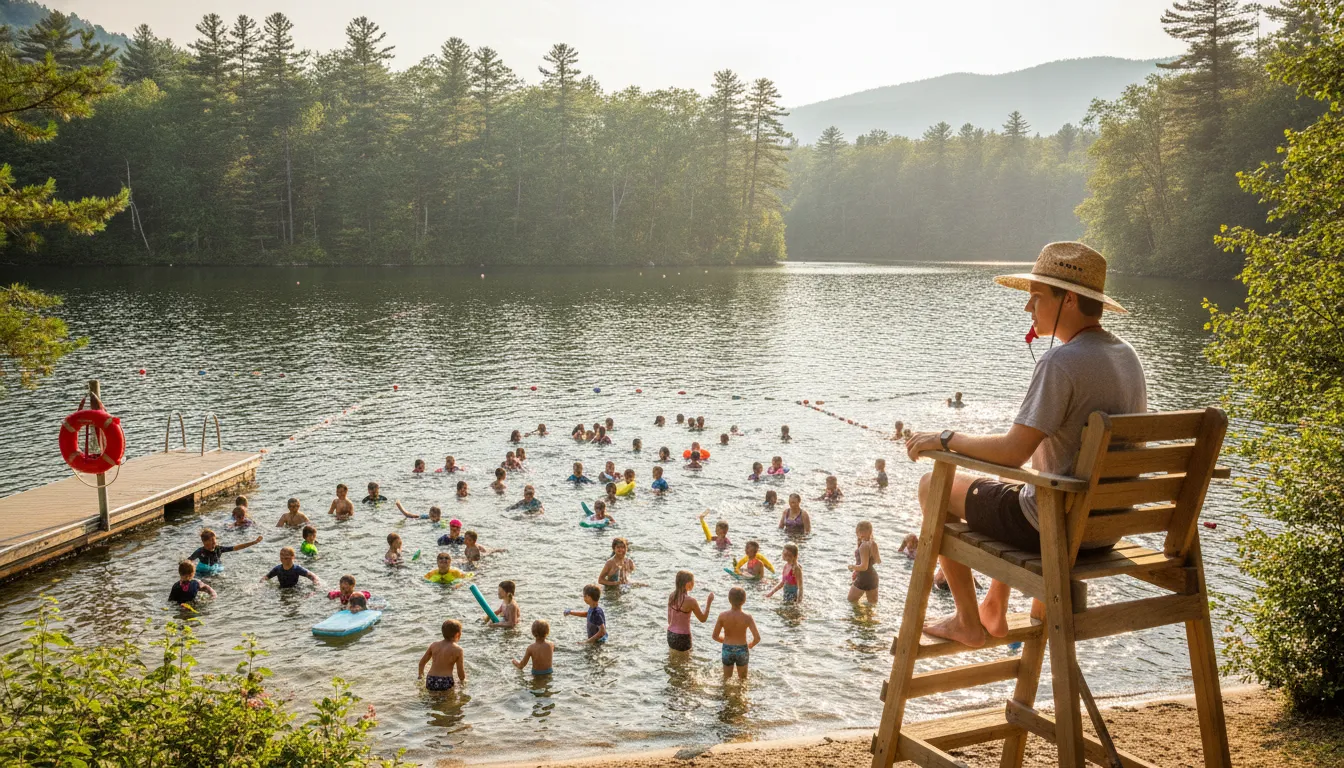
Summer camp waterfront safety technology gives trained lifeguards an additional alert layer at supervised lakes. Where dark or murky water, glare, changing weather, and rotating activity groups can make visual supervision more demanding. The right technology supports active scanning, buddy checks, swim tests, and a rehearsed emergency action plan. It does not replace any of them.
Explore WAVE swimmer equipment for supervised camp waterfronts.
For camp directors, the practical question is not whether a device sounds impressive in a demonstration. It is whether the full system fits the lake, the seasonal workforce, the daily schedule, and the team's response procedures. This guide provides an operations-first framework for evaluating, deploying, and managing a wireless swimmer alert system at a natural-water waterfront.
Why Summer Camp Waterfront Safety Technology Needs a Layered Plan
A layered waterfront safety plan combines qualified people, clear procedures, suitable equipment, and technology that reinforces the response workflow. At a camp lake, no single layer can address every condition. Directors should design the system so that each layer remains effective when visibility changes, attendance peaks, or staff members rotate.
Natural water changes throughout the season
A camp lake is not a controlled indoor pool. Rain can affect water clarity. Wind can move swimmers, lane markers, and equipment. Glare can make surface scanning harder, and an uneven bottom can complicate how campers stand or move. Even the same waterfront can look and behave differently from the morning swim period to an afternoon activity block.
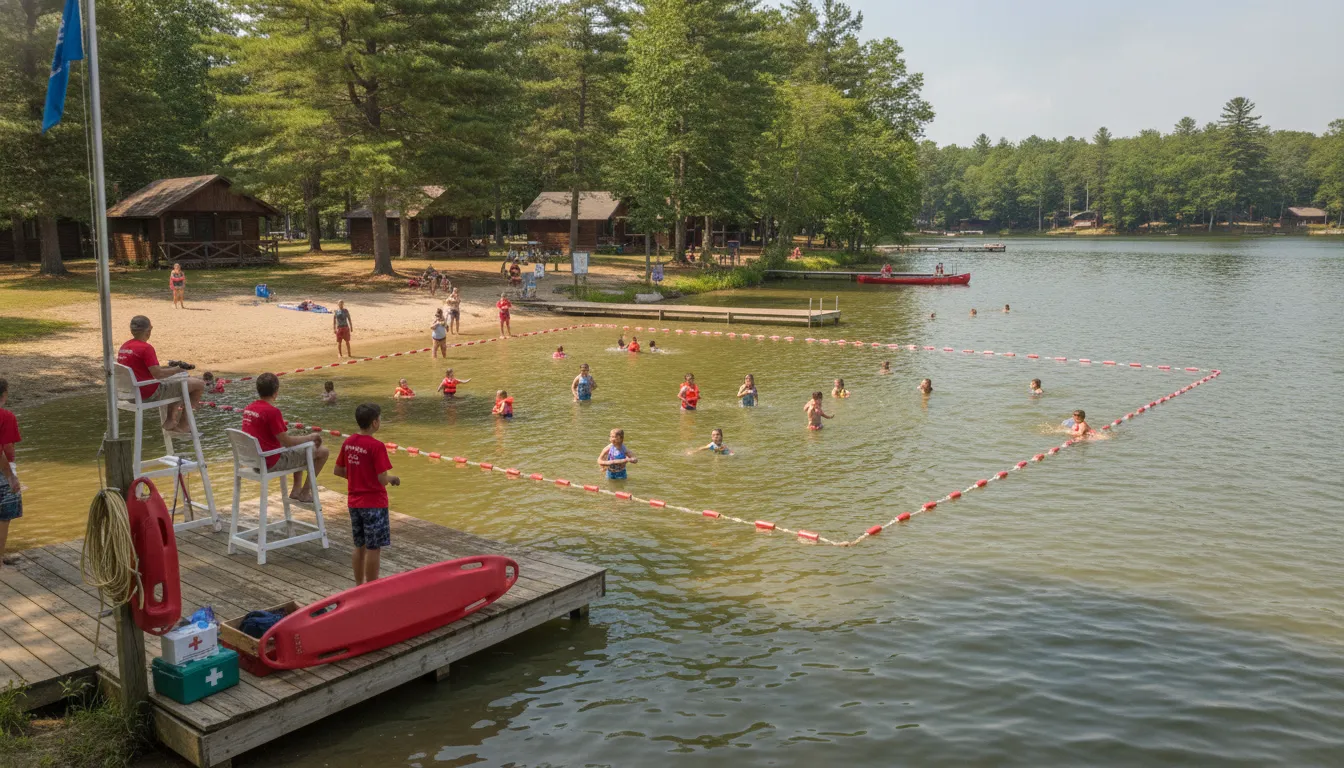
These variables make consistent operations essential. Waterfront leaders should map swimming zones, docks, entry points, lifeguard positions, communication paths, and emergency access before opening day. They should revisit that map when conditions or programming change.
Supervision practices remain the foundation
Technology should sit alongside qualified lifeguards, active scanning, ability-based swim areas, buddy checks, head counts, swim-proficiency testing, and a rehearsed emergency action plan. Camps should also follow all applicable laws, certification requirements, and accreditation standards when designing procedures.
A device is most useful when it gives staff another signal that fits an already-defined response. If roles are unclear, an alert can create confusion instead of improving coordination. Directors should document who assesses an alert, who maintains supervision, who enters the water when necessary, and who manages communications.
How Does Swimmer Wearable Technology Work at a Camp Lake?
Wireless swimmer wearables add an alert layer without relying on a camera's view through the water. Each participating swimmer wears a sensor. If the sensor detects prolonged submersion beyond a configured period, the system alerts designated staff so they can assess the situation and follow the camp's emergency procedures.
This approach is particularly relevant to natural water because it can operate in clear, dark, or murky conditions. WAVE's wearable, wireless system is designed to support lifeguards and can be deployed without the permanent construction often associated with camera-based systems. The GUARDian drowning detection system connects swimmer wearables, staff alerts, and management tools as part of that additional safety layer.
Alerts should match the response workflow
Camp leaders should decide how alerts fit into the waterfront's existing command structure before swimmers enter the water. An alert should reach the right staff members without causing every person to abandon an assigned position. The response plan should preserve active supervision for the rest of the waterfront while designated staff assess the event.
Practice should include both emergency response and false-alert handling. A good drill tests whether staff can identify the correct zone, communicate clearly, maintain coverage, and reset the equipment. It also gives leaders observable evidence about where the workflow needs improvement.
Wearable accountability is an operational task
A wearable system introduces daily responsibilities that should be treated as deliberately as other safety-equipment checks. Staff need a repeatable process for issuing, fitting, collecting, inspecting, cleaning, storing, and accounting for devices. Tie each wearable to the roster or group for the swim period so the team can identify a missing device before the next transition.
What Should Camp Directors Look for in Waterfront Safety Technology?
Camp directors should evaluate waterfront safety technology by how reliably it fits real operations, not by the length of a feature list. The strongest buying process uses actual lake conditions, peak attendance, staff workflows, seasonal setup needs, and drill observations as evaluation criteria.
| Buying criterion | Why it matters at camp | What to ask |
|---|---|---|
| Performance in murky water | Natural-water visibility can change quickly. | Does detection depend on a clear camera view? |
| Wireless, portable deployment | Seasonal programs need flexible setup and storage. | What installation, power, and connectivity are required? |
| Staff alerting | Alerts must reach the right people without confusing the team. | How are lifeguards notified, acknowledged, and trained? |
| Swimmer capacity and scalability | Group sizes and schedules vary during the season. | How is the system sized for peak participation and multiple zones? |
| Daily device management | Wearables must be issued, inspected, collected, and stored. | What daily checks and accountability steps are recommended? |
| Training and support | Seasonal staff need repeatable onboarding. | What training, testing, and ongoing support are included? |
Evaluate the full operating fit
Ask the vendor to demonstrate the system under conditions that resemble the camp's lake and typical activity schedule. Include waterfront leadership and frontline lifeguards in the evaluation. Their feedback can reveal whether staff alerts, device handling, and daily testing fit the way the camp actually operates.
Confirm how the system handles multiple swim areas, how staff test alerts before a session, and how equipment is stored outside the season. Pricing, quantities, swimmer capacity, coverage, and technical requirements should be confirmed directly with the vendor for the specific site.
Use measurable acceptance criteria
Before a demonstration, create a short acceptance checklist. Record whether alerts reach every assigned recipient, whether staff can identify the relevant zone. Whether devices remain accounted for during group changes, and whether the team can complete opening checks within the planned routine. These site-specific observations are more useful than broad claims because they show how the system fits the camp's own procedures.
For more context on how wearables support natural-water supervision, review WAVE's guide to wearable drowning prevention technology for lakes.
Schedule a free consultation to evaluate your camp waterfront.
How to Deploy a Safety Alert System Before Camp Opens
A seasonal waterfront deployment should be planned as an operational change, not a one-time equipment installation. The process begins with mapping and response design, then moves through testing, staff training, camper orientation, and daily readiness checks.
- Map the waterfront. Document swim zones, docks, entry points, staff positions, communication paths, and emergency access.
- Define the response protocol. Decide who receives and acknowledges alerts, who maintains surveillance, and how the team escalates an incident.
- Size and test the system. Use anticipated peak participation and actual lake conditions to plan equipment needs and confirm site-specific requirements.
- Train every waterfront staff member. Incorporate the technology into lifeguard orientation, counselor briefings, and emergency action plan drills.
- Orient campers. Explain how to wear and care for devices without suggesting that the technology makes risky behavior acceptable.
- Run daily readiness checks. Verify wearables, staff alerts, equipment counts, and assignments before swimmers enter the water.
- Review after drills and the season. Record observations, equipment issues, and process improvements for the next session or season.
Build training for a seasonal workforce
Seasonal staffing creates a specific challenge: the system must be understandable and repeatable for people who may be new to the waterfront. Training should explain what the technology does, what it does not do. How staff receive alerts, and how an alert changes or does not change each person's assigned responsibility.
Use scenario-based drills rather than a simple equipment demonstration. Rotate team members through realistic roles and test a busy transition period, not only a quiet swim session. Debrief the drill with specific questions: Was the alert recognized? Was the zone clear? Did supervision remain in place elsewhere? Were devices collected and reset correctly?
Plan opening, transition, and closing routines
Daily procedures should cover more than turning equipment on. Opening checks should confirm device counts, alert recipients, assignments, and system readiness. Transition procedures should control the handoff between camper groups. Closing procedures should reconcile, inspect, clean, and store devices while recording any issue that needs attention before the next swim period.
How Technology Fits Into Daily Waterfront Operations
Waterfront technology works best when it becomes part of ordinary camp routines. Staff should know exactly when devices are issued, how readiness is confirmed, who manages alerts, and how observations are documented. This reduces reliance on memory during a busy activity schedule.
Keep buddy checks, swim zones, and active scanning
Wearable alerts do not replace buddy checks, ability-based swim areas, head counts, or lifeguard scanning. They provide an additional signal when a swimmer may have remained underwater longer than expected. Counselors and lifeguards should still perform every required check and maintain the supervision practices defined by the camp.
Track a small set of useful operational measures
Camp directors can improve the process by tracking measures from drills and daily checks. Useful examples include the time needed to complete readiness checks, the number of unaccounted-for devices at each transition. Whether alerts reached all assigned staff, and which communication steps caused uncertainty during drills.
These are not performance guarantees. They are management signals that help waterfront leaders identify where training or procedures need attention. Review them regularly with the team and adjust the workflow before small inconsistencies become routine.
Compare the system with the broader camp safety plan
A technology review should connect to the camp's wider risk-management process. Confirm that the alert workflow aligns with emergency communications, waterfront access, counselor responsibilities, and leadership escalation. Camp operators comparing options can also review WAVE's guide to drowning detection systems for summer camps, while keeping this guide's natural-water operating criteria in focus.
Questions to Ask During a Waterfront Technology Demonstration
A demonstration should answer practical questions about the camp's specific environment. Ask vendors to show how the system performs, how staff interact with it, and what the camp must manage throughout the season.
- Can you demonstrate the system in dark or murky water?
- How does the system detect prolonged submersion and notify staff?
- What equipment must be placed around the waterfront?
- How are alerts acknowledged, reset, and reviewed?
- How long do seasonal setup, daily testing, and end-of-season storage take?
- How should the system be sized for peak swimmer counts and multiple zones?
- What training and support are available for seasonal staff?
- How can alerts be incorporated into our existing emergency action plan?
- What ongoing maintenance and device-management tasks should we expect?
- Which site conditions or technical requirements should we verify before purchase?
Request clear answers for the exact site rather than relying on general examples. Waterfront leaders should leave the demonstration understanding the equipment, the daily workload, the response workflow, and the steps required before opening day.
Frequently Asked Questions
Does drowning-detection technology replace lifeguards?
No. Drowning-detection technology is an additional layer of protection for supervised aquatic environments. Trained lifeguards, active scanning, buddy checks, swim tests, and emergency procedures remain essential.
Can swimmer wearables work in a murky lake?
Wearable-based systems do not depend on a camera seeing through the water, making them suitable for consideration in clear, dark, or murky bodies of water. Camp directors should request a demonstration and confirm the requirements for their specific site.
When should a camp begin planning a deployment?
Planning should begin before seasonal staff training. This gives the camp time to map workflows, size equipment, test the system, train staff, and incorporate alerts into drills and camper orientation.
What existing practices should remain in place?
Keep all required supervision and risk-management practices, including qualified lifeguards, active scanning, designated zones. Buddy checks, swim-proficiency tests, head counts, personal flotation devices where appropriate, and a rehearsed emergency action plan.
How should a camp evaluate a system before buying?
Use a demonstration in realistic lake conditions, involve waterfront staff, and evaluate the entire operating fit. Confirm alert workflows, device accountability, training, seasonal setup, technical requirements, and support directly with the vendor.
Build a Stronger Alert Layer for Your Camp Waterfront
The best summer camp waterfront safety technology supports the people and procedures already protecting campers. A wearable, wireless alert system can give lifeguards another source of information in natural water while fitting a seasonal operating model. It should be evaluated with the same care as any other part of the waterfront safety plan.
Schedule a free consultation with WAVE to discuss your lake conditions, staffing workflow, seasonal schedule, and equipment needs.
