
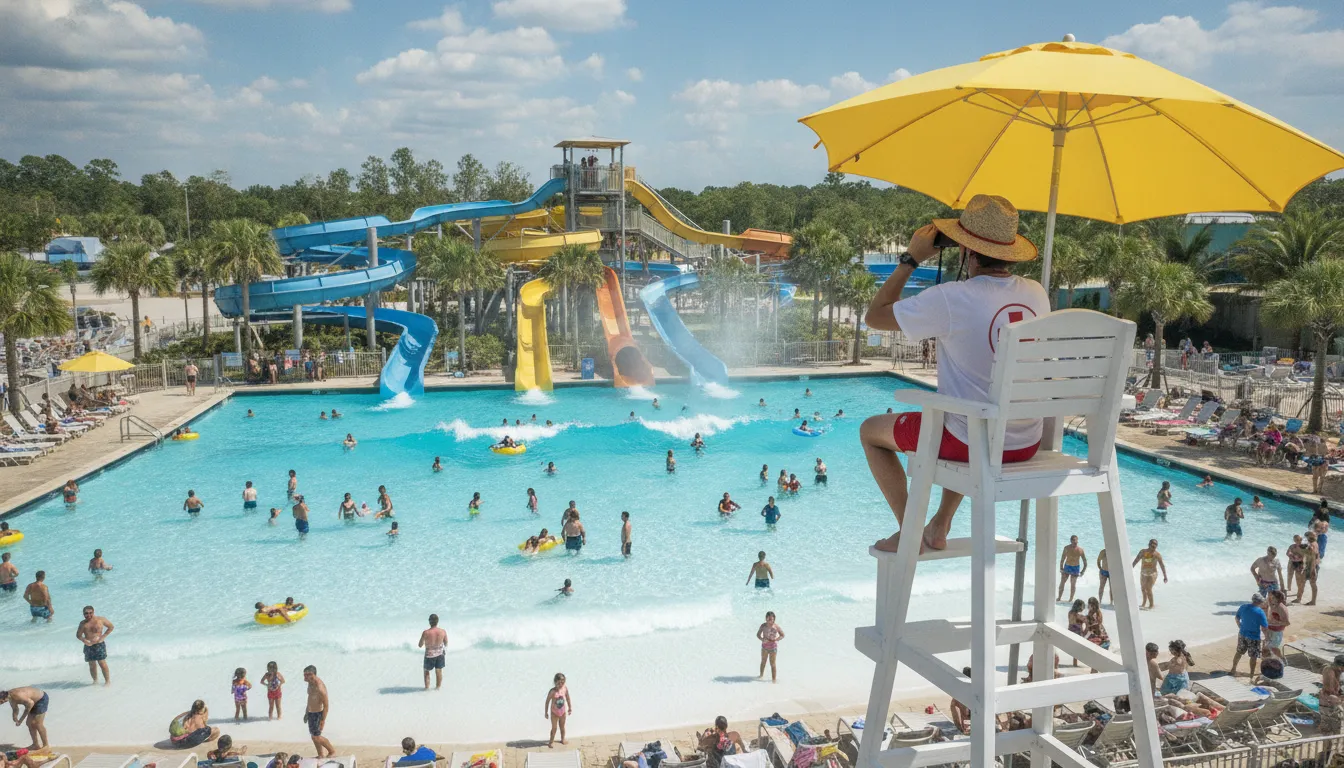
A water park can have trained lifeguards, clear operating procedures, and attentive staff, yet still face moments when a guest needs help before anyone sees the problem. Drowning can happen quickly and silently, and the CDC recommends close supervision even when lifeguards are present. That makes layered protection an important part of responsible aquatic operations.
Water park drowning prevention combines trained lifeguards, active supervision, clear emergency procedures, and detection technology that adds another layer of protection. WAVE supports this approach with wireless AquaSense wearables and staff alerts, helping teams respond faster without replacing the people responsible for guest safety.
For operators, the goal is not to replace human judgment or promise that technology eliminates risk. It is to strengthen the safety system around staff and guests, especially across busy attractions. Changing water conditions, and large areas that are difficult to watch from one position. Understanding where traditional supervision is most challenged provides a practical starting point for evaluating added protection.
Water Park Drowning Prevention: Why Traditional Supervision Falls Short in Water Parks
Traditional lifeguard supervision remains essential, but water parks create conditions that make continuous visual coverage difficult. Large crowds, complex attractions, moving water, and changing sightlines can divide attention across several active zones. A layered approach to water park safety helps staff respond when an incident develops outside a clear line of sight.
Water parks are dynamic environments rather than single, open pools. Slides release swimmers into splash zones, wave pools shift bodies and surface conditions, and lazy rivers move guests through irregular paths. Glare, bubbles, spray, and crowd movement can briefly obscure a swimmer, even when a trained lifeguard is actively scanning. Irregularly shaped pools and river-style attractions can also create blind spots that are difficult to eliminate through positioning alone. Active detection technology is designed to address the need for coverage in complex water features, including irregular pools and river pools (AngelEye).
Staffing pressure adds another operational challenge
Coverage depends not only on facility design, but also on having enough qualified staff to maintain it. Recreation Management's 2025 Aquatic Trends report found that 41.8% of aquatic facilities were affected by lifeguard staffing shortages in 2024. Staffing pressure can affect zone assignments, breaks, training capacity, and the ability to add personnel during peak attendance. Technology cannot replace lifeguards, but it can provide an additional alerting layer that supports the team already responsible for supervision.
Why constant vigilance still needs reinforcement
Drowning can happen in seconds and is often silent. The CDC identifies drowning as a leading cause of death for children, and emphasizes that adults should supervise children closely even when lifeguards are present (CDC drowning prevention guidance). That guidance reinforces an important operational point: supervision, staff training, clear protocols, and detection technology should work together rather than operate as substitutes for one another.
For operators reviewing water park drowning statistics, the practical question is not whether lifeguards are valuable. It is how to give them timely information when visibility, staffing, or attraction design makes visual detection harder. A wireless system that alerts staff to potential prolonged submersion can strengthen that response without changing the central role of professional lifeguards.
How WAVE Wearable Technology Protects Water Park Guests
WAVE adds a wireless layer of water park drowning prevention by detecting prolonged submersion through non-tethered AquaSense wearables, then alerting lifeguards through vibrating bracelets and facility-wide notifications. The GUARDian Hub can monitor 300+ swimmers within a 700+ foot range, helping staff respond quickly without relying on visibility alone.
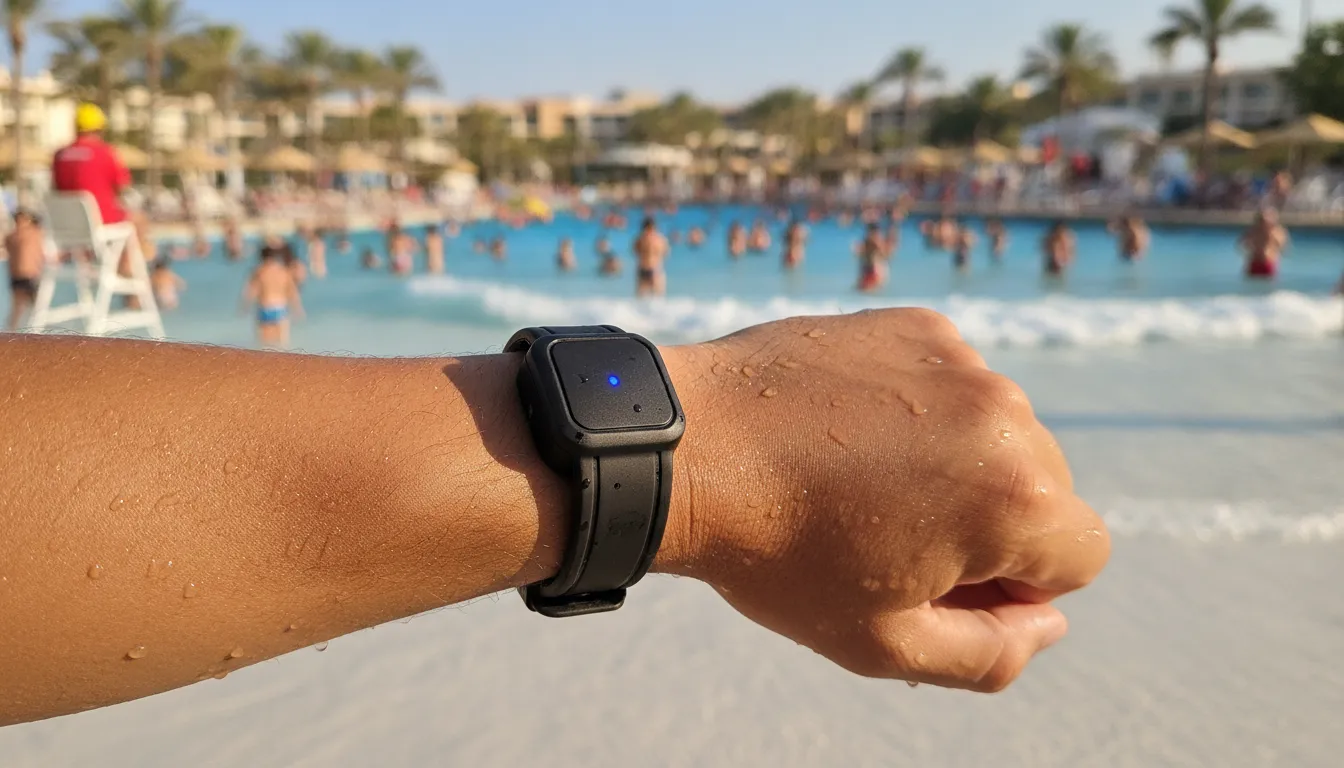
Water parks combine large crowds, moving water, glare, and complex layouts. A swimmer in distress may not be immediately visible from a lifeguard station, especially when water becomes turbulent or visibility changes. WAVE's wearable approach gives staff another source of awareness while preserving the central role of trained lifeguards and established emergency procedures.
Guests wear lightweight AquaSense devices, such as headbands or goggle clips, that move with them rather than tethering them to a fixed point. When the system identifies prolonged submersion, it sends an alert through the GUARDian Hub. Lifeguard bracelets provide a direct vibrating notification, while facility alerts can notify designated personnel according to the water park's response plan. This layered communication helps staff recognize a potential emergency and direct attention to the right area.
Coverage that fits large, changing water-park environments
The GUARDian Hub is designed to monitor more than 300 swimmers at a range exceeding 700 feet. That capacity can support broad coverage across pools, splash areas, and other supervised attractions, subject to site-specific planning and system configuration. Because the approach is wireless and non-tethered, operators can adapt deployment as seasonal attractions, guest volumes, or operating zones change.
WAVE works in clear, dark, murky, chlorinated, salt, and natural water conditions. That matters for water parks where bubbles, shadows, water movement, or changing light can make visual monitoring more difficult. The system is not dependent on a camera's view of the water, so it can provide an additional alert pathway when visibility is compromised.
Fast deployment with less operational maintenance
WAVE does not require permanent construction, permits, or complex installation. Operators can use a plug-and-play wireless system instead of committing to a major infrastructure project. AquaSense wearables also use multi-year battery technology, removing the daily recharging burden associated with some swimmer-monitoring devices.
For a practical overview of the alert sequence and system components, review How WAVE works. Facility leaders can also explore WAVE swimmer wearables to evaluate equipment options for their attractions and operating model.
WAVE systems are used by facilities across 33 states and have helped protect more than 300,000 swimmers. Those deployments reflect the role of the technology: not a replacement for lifeguards. But an additional layer of vigilance that can help water-park teams act when every second matters.
Wearable vs. Camera Systems: What Water Parks Should Know
Water parks need detection technology that fits the physical realities of wave pools, splash areas, lazy rivers, and seasonal operations. Camera-based systems such as AngelEye SplashDown use underwater and aerial cameras to monitor designated areas. While WAVE uses wireless AquaSense wearables and a GUARDian Hub to provide another layer of protection for lifeguards. The right choice depends on water conditions, facility construction, deployment plans, and budget.
| Consideration | WAVE wearable system | Camera-based system |
|---|---|---|
| Detection approach | Non-tethered AquaSense wearables communicate wirelessly with the GUARDian Hub and alert staff through connected devices. | Underwater and aerial cameras monitor the water surface and selected critical areas. AngelEye describes coverage for complex features such as river pools and irregularly shaped pools. See the AngelEye water park system. |
| Water conditions | Works in clear, dark, or murky water because detection does not depend on camera visibility. | Camera performance can be affected by cloudy or murky water, bubbles, glare, and high bather loads that make visual interpretation more difficult. |
| Installation and permits | No permanent construction, permits, or camera installation are required. WAVE is plug-and-play and can be deployed in hours. | Fixed camera architectures generally require construction, contractors, permitting, and coordination around existing water features. |
| Operational flexibility | The wireless approach can move with changing layouts and supports seasonal or temporary deployments without committing to permanent infrastructure. | Permanent installations are less suited to facilities that regularly change layouts or need to remove equipment during an off-season. |
| Investment profile | A subscription-based model starts at $299 per month, helping operators add detection without a large construction project or upfront capital commitment. | Construction, equipment, permitting, and contractor work can require significant capital and weeks of planning before deployment. |
Neither approach replaces trained lifeguards or established emergency procedures. For operators evaluating wearable versus camera detection, WAVE is particularly practical when water clarity varies, the facility is seasonal, or rapid deployment matters. It adds a flexible detection layer while allowing staff to remain responsible for supervision and response.
The Real Cost of Water Park Incidents vs. Prevention
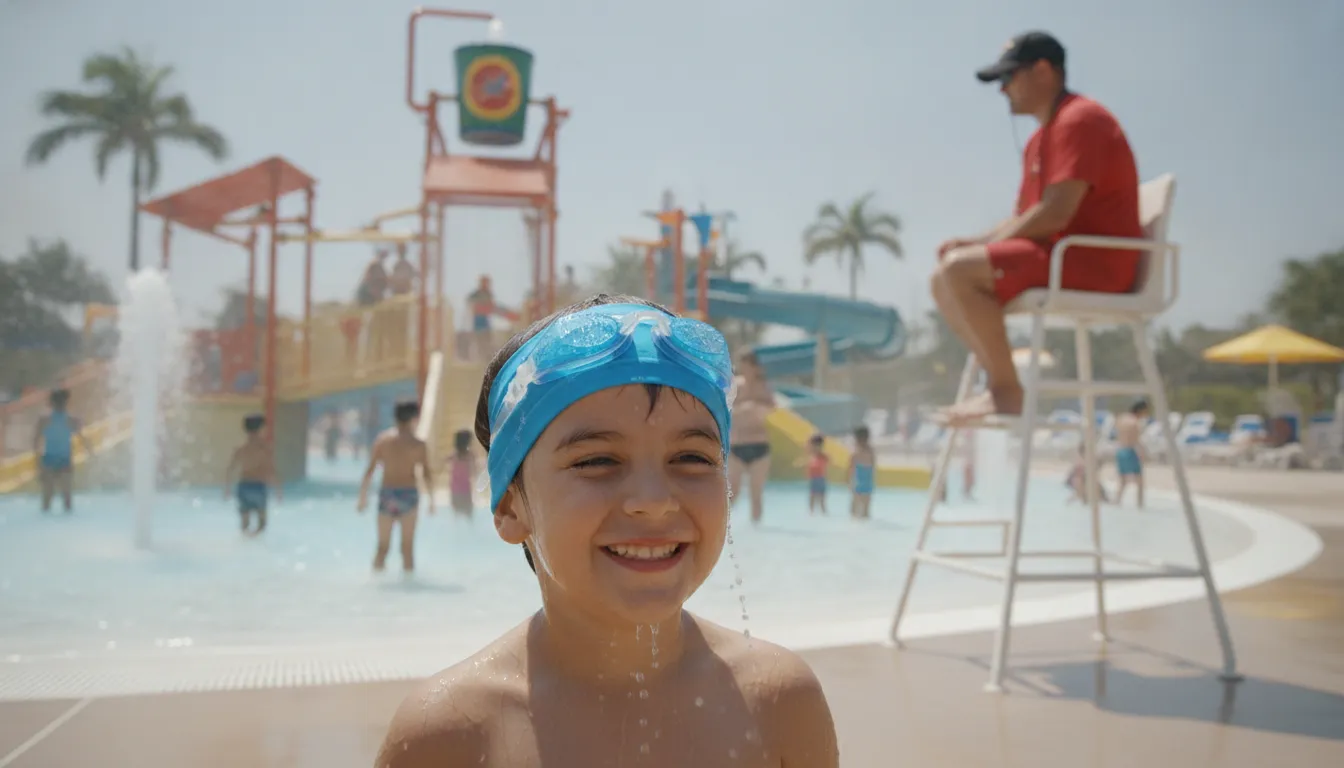
For water park operators, water park drowning prevention is a risk-management decision as much as a guest-safety priority. A layered detection system can help staff respond sooner while giving operators a more accessible way to strengthen protection without committing to a major construction project.
Pool incidents are consistently treated as the highest-severity risk on hotel insurance programs, and the financial consequences can extend well beyond an individual claim. The WAVE hotel safety analysis reports that legal settlements for pool drownings are typically in the $5 million to $20 million range. Those figures are not a prediction for every incident, but they illustrate why risk managers evaluate prevention investments against potential legal action. Insurance exposure, operational disruption, and long-term damage to guest trust.
That evaluation should include the cost of improving the response system before an incident occurs. WAVE starts at $299 per month, offering a subscription-based entry point without a large upfront capital purchase. For a water park, that structure can make it easier to budget for an additional layer of protection alongside lifeguard staffing, training, emergency procedures, and routine facility maintenance. The goal is not to replace lifeguards or promise that technology can eliminate every risk. WAVE acts as a force multiplier, helping existing staff receive alerts when prolonged submersion is detected and supporting faster awareness across the pool deck.
Turn prevention into a planned operating expense
Affordability matters particularly for public, community, and nonprofit facilities that may not have the capital reserves of a large resort. WAVE focuses on advanced, affordable technology so more aquatic operators can strengthen their safety programs rather than limiting modern detection to high-revenue venues. A wireless approach also avoids the permanent construction and installation costs associated with some fixed camera systems, allowing operators to consider prevention as a flexible operating investment.
Funding may help qualified nonprofits get started
Eligible nonprofit facilities may have another path to reduce the financial barrier. Through its partnership with Aquatic Consulting & Underwater Services (ACCU), WAVE offers grant and scholarship assistance for qualifying organizations pursuing drowning-detection technology. Review the grants and funding for drowning prevention page for available programs and eligibility details. For a water park operated by a nonprofit or public-serving organization, that support can make a proactive safety upgrade more attainable.
How to Implement Drowning Detection at Your Water Park
Implementation works best when it is treated as an operational safety project, not simply an equipment purchase. Start with the way guests move through your facility, then build coverage and response procedures around the pools, attractions, and staffing model you already have. A wireless system can provide flexible coverage without permanent, costly construction, making it practical for seasonal parks and facilities that change layouts throughout the year. WAVE's wireless approach is designed to support existing lifeguards as an additional layer of protection.
- Assess your facility's needs. Map swimmer volume by attraction, operating hours, pool depth, water movement, and visibility conditions. Identify coverage priorities such as wave pools, lazy rivers, splash areas, slides, and transition zones, then note where lifeguard sightlines or rapid response may be challenged. Include seasonal changes in your assessment so the system supports both peak attendance and lower-volume periods.
- Choose the right configuration. Match the number and placement of GUARDian Hubs to the areas that require coverage. Add AquaSense swimmer wearables for guests or designated groups, and use lifeguard tags to help staff participate in the alert workflow. Review the GUARDian Hub and GUARDian Lifeguard Alert Bundle options with a specialist before finalizing quantities.
- Deploy the system around your operating schedule. WAVE avoids permanent, costly construction and is designed for rapid, flexible deployment. That means a seasonal water park can set up the system before opening, take it down after the season, and adjust coverage as attractions or operating zones change. This flexibility is a core advantage of wireless implementation. WAVE's deployment model can scale with changing operational needs.
- Train staff on alert response protocols. Define who receives each alert, who confirms the location, who enters the water, and who contacts emergency services or management. Practice the response during opening preparation and refresh it when seasonal employees join the team. WAVE acts as a force multiplier for lifeguards by sending alerts through staff-facing devices and facility notifications, but trained personnel remain responsible for assessment and response.
- Maintain and scale the program. Include wearables, lifeguard tags, hubs, and alert procedures in routine inspections. Track recurring coverage gaps, staff feedback, and changes in guest flow, then add or reposition equipment as needed. A documented review at the start and end of each season helps the system remain aligned with the park's actual risks rather than its original layout.
Frequently Asked Questions
How does drowning detection technology support water park lifeguards?
A wearable detection system adds another layer of vigilance to active supervision. WAVE AquaSense wearables can alert staff through vibrating bracelets and facility alerts when prolonged submersion or another dangerous condition is detected. The technology is designed as a force multiplier for lifeguards, not a replacement for trained staff or established response procedures.
Can WAVE work in wave pools, dark water, or other low-visibility attractions?
Yes. WAVE systems are designed to function in clear, dark, murky, chlorinated, salt, and natural water. That wireless approach can help water parks address attractions where glare, bubbles, water movement, or limited visibility make visual monitoring more difficult. Operators should still assess each attraction and configure coverage around its specific risks.
Do water parks need to modify their facilities to install WAVE?
WAVE is a wireless system that does not require the permanent construction, permits, or extensive installation often associated with camera-based detection systems. This allows operators to deploy coverage without major structural changes and adapt the setup as attractions, operating zones, or seasonal needs change.
How often do AquaSense wearables need to be recharged?
AquaSense wearables use multi-year battery technology, so they do not require daily recharging. That can simplify equipment handling and reduce a recurring maintenance task for water park teams. Operators should follow WAVE care and replacement guidance to keep equipment ready for use.
Can nonprofit water parks get help funding a detection system?
Eligible nonprofit aquatic facilities may have funding options through WAVE's partnership with Aquatic Consulting & Underwater Services, or ACCU. WAVE offers grants and scholarships for qualifying facilities, so nonprofit operators should review the current grants and funding options and confirm eligibility before planning a purchase.
Schedule a Free Consultation
A water park safety plan should account for crowded attractions, changing conditions, and the need to support lifeguards with timely alerts. WAVE can help your team evaluate an approach that adds another layer of protection without replacing professional supervision. To discuss your facility's needs and implementation options, schedule a Free Consultation with WAVE.
