
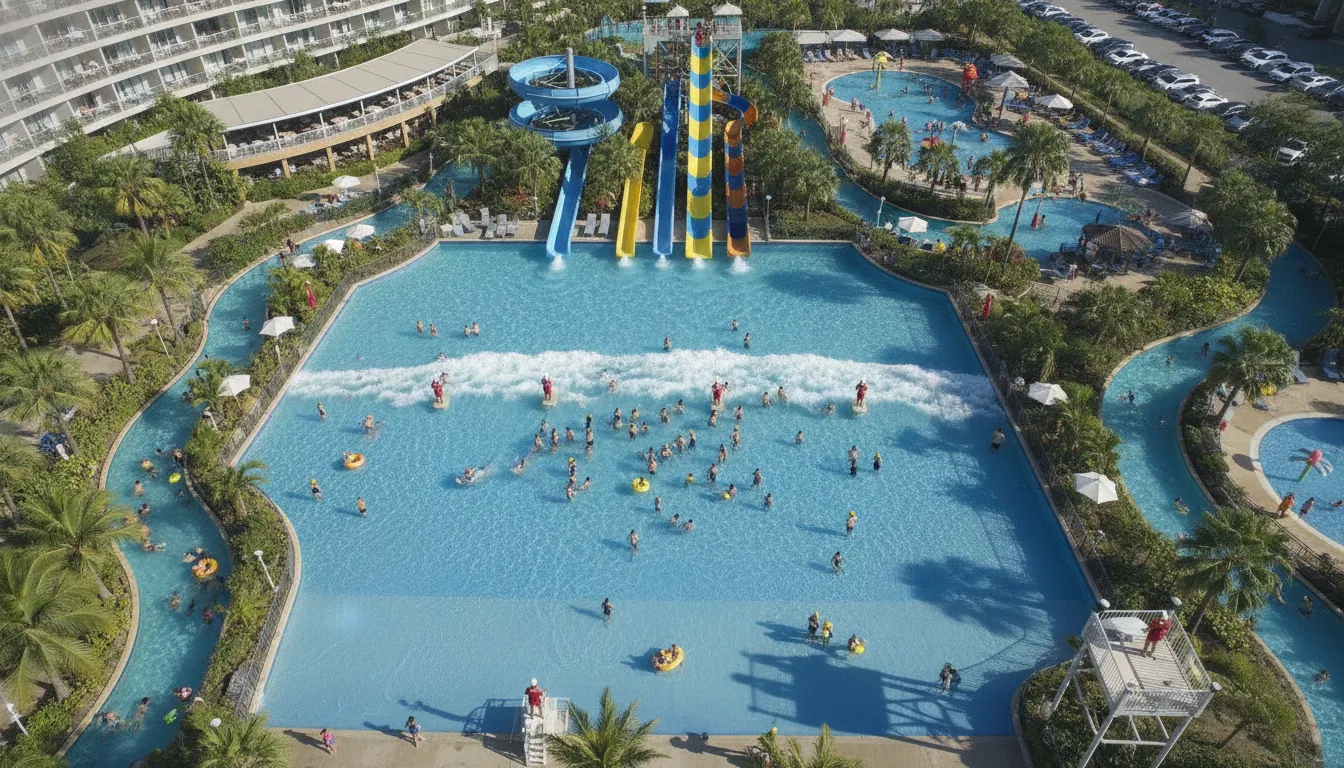
Water park drowning statistics reveal that over 1,000 people drown in these parks globally each year, with most incidents involving children. The CDC reports that over 4,000 accidental drowning deaths occur in the United States annually, often at sites with active watch. Crowded wave pools and splash zones create unique challenges that can overwhelm even the most skilled lifeguard teams during busy shifts. Modern parks now use AquaSense swimmer wearables to provide a new layer of protection for every guest in the water. These sensors alert staff when a swimmer stays under water, acting as a force multiplier that ensures no struggle goes unnoticed. This technology helps guards respond faster to emergencies without replacing the essential human element of aquatic safety and pool watch.
Don't wait for a crisis at your facility. Schedule a free consultation to learn how WAVE wearable technology protects every swimmer in your water park.
Understanding these risks is the first step toward building a safer environment for every guest. We must look at the factors that make these parks more dangerous than a standard pool.The combination of wave action, high bather density, glare, and visual obstructions makes water parks fundamentally more challenging to supervise than traditional pools. Wearable sensor technology addresses these challenges directly by tracking each swimmer individually, regardless of water conditions.
Water Park Drowning Statistics: The Unique Drowning Risks at Water Parks
Water parks offer a mix of waves, slides, and splash zones that draw many guests each year. But these same features create a tough spot for safety teams. While pools have clear sight lines, water parks are full of things that block the view. Many people and moving water make it hard to spot a person in trouble. A study by Hunsucker and Davison found that over 62 percent of rescues involve children between the ages of 1 and 12. These water park drowning statistics show why these sites need extra care.
A fast and silent threat
Drowning does not look like it does in the movies. There is often no splashing or calling for help. It is a silent event that can happen in as little as 20 to 60 seconds. In a busy wave pool, a child can slip under the water without anyone noticing. Even with many people nearby, danger is hard to see. Data shows that 88 percent of children drown with at least one adult present. This fact proves that watching alone is not always enough to keep kids safe.
Tests for water safety teams
Guards at water parks face more tasks than those at a standard lap pool. Glare from the sun and splash from rides can hide a swimmer in need. These parks often have deep zones and shallow areas that change fast. Research found that 65.6 percent of serious rescues happen in shallow water under five feet. This fact shows that water park drowning detection technology is a key tool for modern parks. It helps guards find people in dark water where the eye might fail.
Risks in the wave pool
Wave pools are very popular, but they are also risky. The moving water and the high number of swimmers make it hard to keep a sharp eye. Since over half of child drownings occur at guarded sites, it is clear that guards need more help. Drowning detection systems act as a force multiplier for staff. They add a layer of safety in crowded spots where the view is blocked and the risk of a silent drowning is high.
What Makes Water Parks More Dangerous Than Traditional Pools?
Water parks introduce wave action, water sprays, sun glare, and high guest density that traditional pool safety systems were never designed to handle. Camera-based solutions fail in these environments, while wearable IoT technology adapts to every condition without requiring clear sight lines.
Aquatic safety needs change based on the water environment. A standard lap pool has clear water and still surfaces. In contrast, water parks feature wave pools, splash pads, and rapid slides. These features create bubbles, heavy glare, and murky water that make it hard for staff to see. According to the CDC, drowning is a top cause of injury death, and the complex environment of a water park adds unique risks that standard safety tools may miss.
Environmental challenges for safety tech
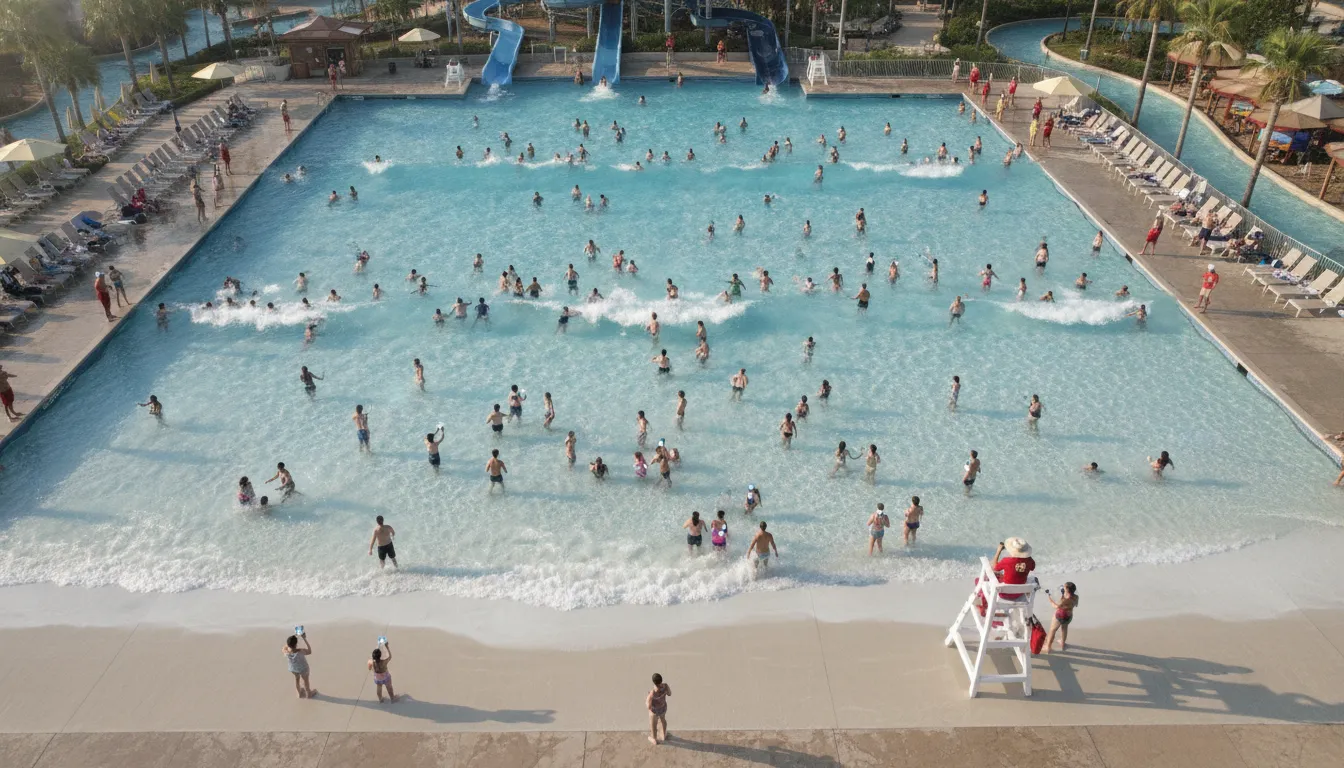
Most camera systems were built for clear, indoor pools. They use computer vision to find a swimmer in distress. This tech often fails in water parks because wave pools and splash zones churn the water. Large crowds and dark water can also block a camera's view. These systems need weeks of work to install and require clear sight lines to work well. In a busy park with many moving parts, these gaps in coverage can be risky.
Wearable IoT systems solve these issues by using sensors instead of sight. WAVE technology works in all water conditions, including murky or bubbly pools. Because the tech is wearable, it tracks the swimmer directly. It does not matter if the water is clear or dark. This makes it a better choice for sites that need a reliable drowning prevention technology in tough settings.
Comparing detection methods
Choosing the right tech depends on your facility's layout and needs. Traditional camera systems offer a broad view but lack the flexibility that a fast-paced water park requires. For example, drowning detection systems that rely on cameras may not cover the full 700-foot range needed for large outdoor areas. The following table compares how these two tools handle common water park needs.
| Feature | Camera Systems | WAVE Wearable IoT |
|---|---|---|
| Water Clarity | Needs clear water | Works in murky/bubbly water |
| Setup Time | Weeks of work | Deploys in hours |
| Coverage Range | Limited by sight lines | Over 700 feet |
| Capacity | Fixed camera count | Monitors 100+ swimmers |
| Installation | Permanent build-out | No construction needed |
Flexibility for large facilities
Water parks often change their layouts or add new rides. A safety system must be able to move with these changes. Camera systems are fixed and hard to adjust once they are set in place. WAVE offers a force multiplier for lifeguards that moves with the swimmer. This tech provides a new layer of protection without the need for permits or long site closures. For park owners, this means better safety for guests with less downtime for the business.
How Does Wearable Detection Technology Protect Water Park Guests?
Wearable sensor technology tracks each swimmer individually through an AquaSense device worn on the headband or goggles. When a sensor detects prolonged submersion, the system alerts lifeguards through vibrating bracelets, voice announcements, and sirens, enabling faster emergency response.
Water parks are loud and busy places. Guards do their best, but they cannot see every inch of a crowded wave pool. Modern water park drowning detection technology helps fill the gaps. This system adds a smart layer of safety. It works as a force helper for guards to find swimmers in need. It is built to work well in clear or murky water where cameras might fail.
Constant Wearable Sensor Checks
The system uses a small sensor that guests wear while they swim. Swimmers can use an AquaSense headband or a simple goggle clip. These small tools use wireless tech to talk to a main hub. They track how long a person stays under the top of the water. This is vital because a drowning event can happen very fast and without a sound. The CDC reports that thousands of people drown in the U.S. each year. Quick alerts save lives by giving guards the lead time they need to make a rescue.
Smart Alert Steps
If a guest stays under for too long, the main hub acts. You can set the time limit to 15 or 30 seconds. This helps stop false alarms while kids play and splash. When the time is up, the system starts a clear set of alerts. This helps the staff respond in the right way at each step of a likely event.
- Staff feel a sharp shake. Guards wear PRO bracelets that vibrate when a sensor is down. This lets them know there is a risk without scaring the whole crowd.
- Voice alerts play over speakers. Small speakers give spoken word messages to the team. These tell the guards which area of the park needs their help right now.
- Sirens sound for a full response. If the person stays under, loud sirens go off. This signal tells the whole team that they must act for an urgent rescue right away.
Simple System Control and Setup
The hub is easy to set up without any new building work or wires in the pool. It has a long range of more than 700 feet from the hub. One hub can track over 100 swimmers at one time in the water. This makes it a great choice for large parks with many slides and pools. The Hub Control Software shows live data on all gear. It tracks battery life and system health to make sure every sensor is ready when it is needed most. This drowning prevention technology keeps your staff ready for any task.
Why Are Drowning Rates Increasing at Guarded Facilities?
Over half of child drownings ages 5 to 14 happen at guarded facilities, according to the CDC. A nationwide lifeguard shortage of 41.8 percent, combined with rising drowning rates of 28 percent among young children, means traditional supervision models need technology support.
Over half of child drownings ages 5 to 14 happen at guarded facilities. This startling reality, reported by the CDC, reveals a critical gap in traditional supervision. For water park operators, this statistic carries extra weight. The same features that make these parks thrilling (wave pools, crowded splash zones, and fast-moving slides) also make it harder for lifeguards to spot danger in time.
Alarming trends in drowning rates
Recent data shows the problem is getting worse. The CDC reported that drowning rates for children ages 1 to 4 increased by 28 percent in 2020 through 2022 compared to 2019. This jump is not limited to residential pools. Public aquatic facilities, including water parks, also see rising risks. Nearly 40 percent of emergency department-treated drowning incidents require hospitalization or transfer for further care, according to the NDPA. These are not minor events. They are life-altering emergencies that stay with victims and their families forever.
The lifeguard shortage factor
Adding to the challenge, 41.8 percent of aquatic facilities now face lifeguard shortages. With fewer guards on deck and the same number of swimmers to watch, each guard must cover more area. Fatigue and divided attention become real threats. In a busy water park, a guard managing a wave pool with hundreds of guests cannot watch every square foot of water every second. Technology that acts as a force multiplier for lifeguards helps close this gap. The water park drowning detection technology available today gives guards a reliable backup that never tires and never looks away.
The cost of inaction
Drowning costs the U.S. economy over $50 billion per year in medical costs, lost productivity, and legal liability. For every fatal childhood drowning, another seven to eight children receive emergency department care for non-fatal drowning. These numbers are not abstract. They represent real families, real facilities, and real consequences for communities. Water park operators who invest in modern safety technology do more than protect lives. They protect their organizations from the devastating financial and reputational impact of a preventable tragedy.
Choosing the Right Drowning Detection Technology for Your Water Park
Selecting a drowning detection system requires evaluating your facility's water conditions, guest volume, budget, and setup timeline. Wearable IoT solutions like WAVE work in any water clarity, deploy in hours, and scale to track 100+ swimmers simultaneously without construction.
Picking a safety system for a water park requires a look at your unique space. Unlike standard pools, water parks have wave pools and splash zones that make water bubbly or murky. These spots often block cameras from seeing well. Operators must find water park drowning detection technology that works in all water types without failing.
Match tech to your water type
Many camera systems need clear water to track people. But high guest counts and moving water in a park often cloud the view. Data from the CDC shows that thousands of people seek emergency care for water injuries each year. To protect them, you need a system like WAVE that uses small wearables. This method works in any water because it does not need a clear line of sight.
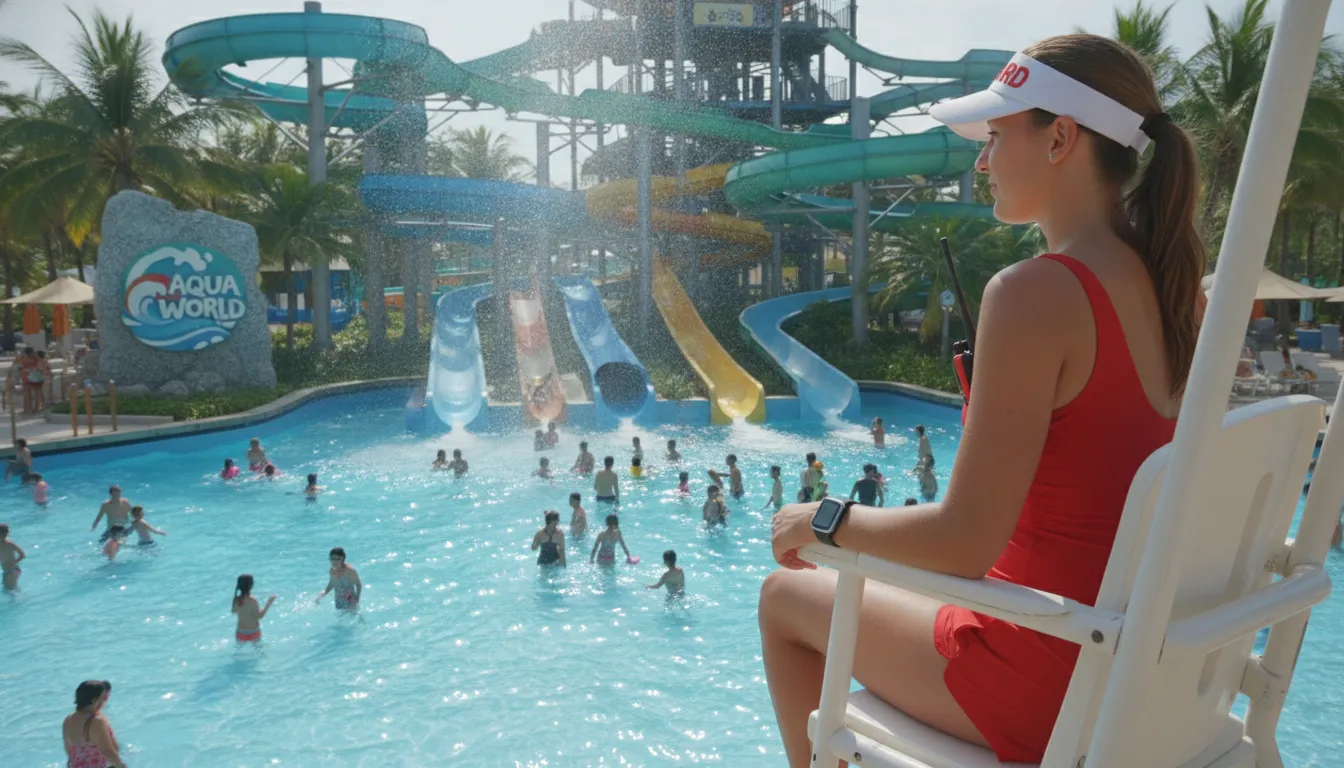
The system should also help your team, not replace them. With more than 40% of aquatic sites facing guard shortages, a force multiplier is key. Wearable tech like AquaSense sensors can track many guests at once. This gives your staff a second set of eyes in busy areas where water park drowning statistics show risks are high.
Check setup and cost needs
Water parks cannot close for weeks to set up safety tools. Older systems often need big building projects and long wires. Modern tools offer quick setups that take only hours to start. This lets your park stay open while you add a new layer of safety for your guests. You get better tech without the need for major construction or permits.
Cost is the other main point for most park heads. A monthly plan helps you avoid huge costs at the start. WAVE has a Lifeguard Alert Bundle for $149 per month and a Swimmer Protection Bundle for $299 per month. These choices give you full monitoring and software through simple monthly costs that fit your budget. You get the best protection without a large capital buy.
Frequently Asked Questions
How many drowning accidents occur in water parks annually?
About 1,000 people drown in water parks every year across the globe. According to the WHO, drowning is a top cause of death from accidents worldwide. These parks often have crowded pools where it is hard to see every guest. Wearable tech helps find people who stay under the water for too long. This adds a key layer of safety to busy water sites.
Why is wearable technology important for water park safety?
Water parks have wave pools and splash zones that create bubbles and glare. These things make it hard for guards or cameras to see through the water. Wearable tech like AquaSense does not need clear water to work. It uses sensors to track swimmers and sends an alert if someone stays under. This helps guards find people fast in places where the water is not clear. It is a useful tool for deep or murky pools.
Are water parks safe for children?
Water parks are fun but carry real risks for kids. A study found that kids under fifteen make up a large part of water park rescues. Many of these happen in shallow water less than five feet deep. While guards are there to help, the parks are often very crowded. Parents should use life vests and look for sites that use extra safety tech to help watch their kids and keep them safe.
How does AquaSense support lifeguards?
This system acts as a force multiplier that helps guards do their jobs better. It does not replace them. Instead, it gives them another set of eyes. When the sensors find a person under water for too long, they alert the staff. Guards get a signal on a vibrating bracelet or through a loud speaker. This helps them act fast during a rescue and keeps every guest safer in the pool or wave tank.
What are common causes of drowning in guarded pools?
Drowning can happen even when guards are on duty. Common causes include a lack of swimming skills and a lack of barriers. In busy pools, guards may have a hard time seeing every swimmer. A lot of noise or crowded water can lead to a silent drowning in just 20 to 60 seconds. Using wearable sensors adds an extra layer of safety to catch what a guard might miss.
Ready to protect every swimmer at your water park?
Recent drowning stats show that even guarded wave pools face high risks that human eyes alone cannot catch. Every day you wait to add safety tech is a day you leave your guests and your staff at risk during peak crowds. You can add a new layer of swimmer protection this week and start saving lives before the next busy season begins. Our team helps you set up a wireless system that works in murky or bubbly water where cameras often fail. Do not wait for a close call to act when you can lead with safety right now.
Ready to get started? Schedule a free consultation to talk to a safety expert about your facility.
