
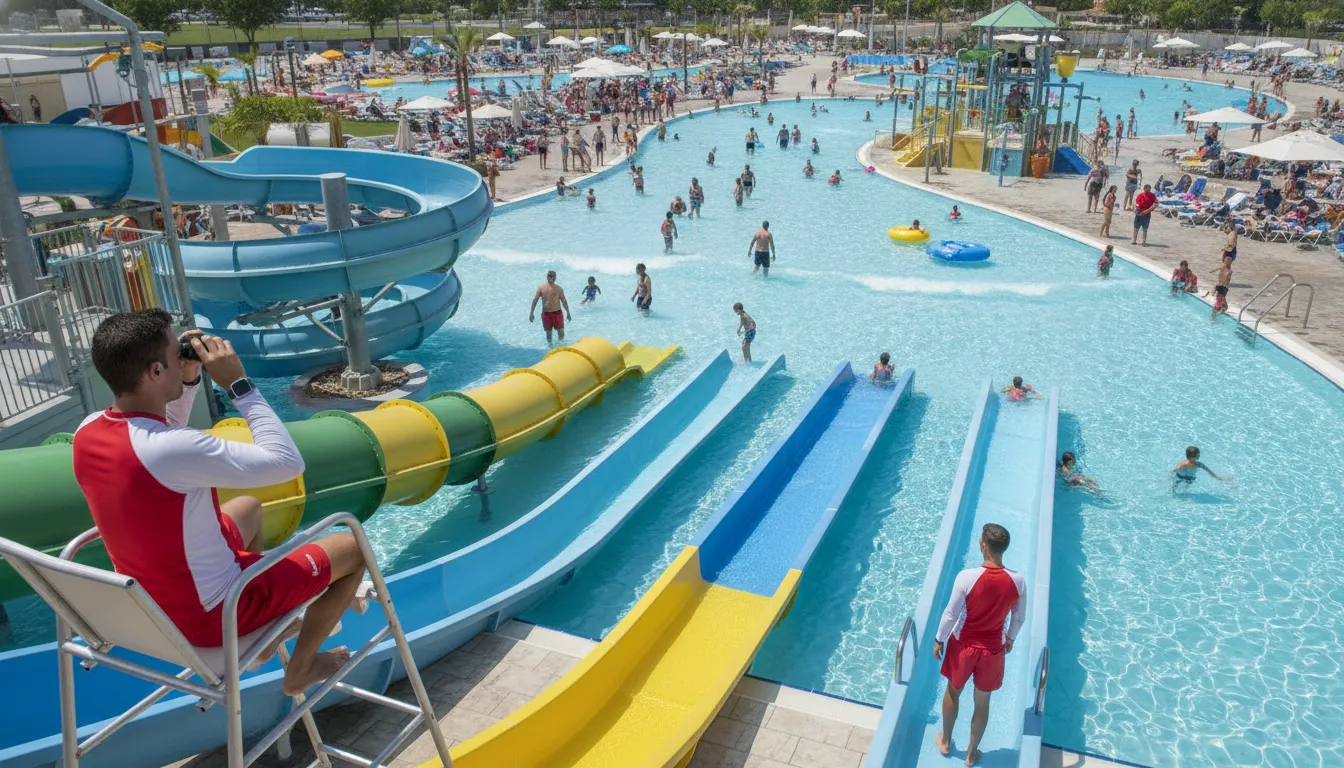
Choosing water park drowning detection technology is not a simple equipment purchase. It is an operational decision that affects lifeguard workflows, guest procedures, training, maintenance, and emergency response. WAVE Drowning Detection Systems is a provider of wearable, wireless drowning-detection technology designed to support lifeguards by detecting prolonged submersion and routing alerts to staff. This guide helps operations directors compare vendors and build a deployment plan without treating technology as a replacement for trained lifeguards.
Schedule a free consultation to discuss your park's safety goals and deployment requirements.
How should a water park evaluate drowning detection technology?
A useful evaluation starts with the park's operating conditions, not a vendor feature list. Directors should map aquatic zones, visibility constraints, swimmer volumes, staff workflows, and response protocols. Then they can test whether each system delivers timely, understandable alerts while fitting daily operations and supporting, rather than replacing, lifeguards.
Water parks create evaluation challenges that do not exist in a uniform lap pool. A single property may include a wave pool, lazy river, splash area, activity pool, and supervised natural-water feature. Moving water, glare, bubbles, variable depth, structures, and changing guest density can affect what staff can see and how quickly they can move.
Start with an operational risk map
Document each aquatic zone before discussing hardware. Note normal visibility, peak attendance, entry and exit points, staff positions, communication methods, and likely response routes. Include areas where moving water, play structures, or crowds make observation more difficult.
For each zone, identify the problem technology must help address. The need may be prolonged-submersion detection, faster alert routing, better escalation, or more consistent event documentation. This prevents a visually impressive feature from being mistaken for a meaningful operational improvement.
Separate required capabilities from preferences
Required capabilities should be measurable. Examples include coverage across the intended zone, an alert that reaches the appropriate responder, equipment that fits daily guest handling, and a practical process for testing readiness before opening. Preferences, such as dashboard layout or reporting format, can be scored after safety and workflow requirements.
Ask vendors to explain both where their system works and where it may not fit. A credible evaluation includes limits, dependencies, maintenance needs, and the conditions required for reliable use. Directors should compare those answers with the park's risk map rather than relying on a generic demonstration.
How should alerts support lifeguard response?
Drowning-detection alerts should give trained staff clear, actionable information without distracting them from surveillance and response duties. The strongest workflow defines who receives the first alert, how that person acknowledges it, when supervisors are notified, and how teams document and review the event after established rescue procedures are complete.
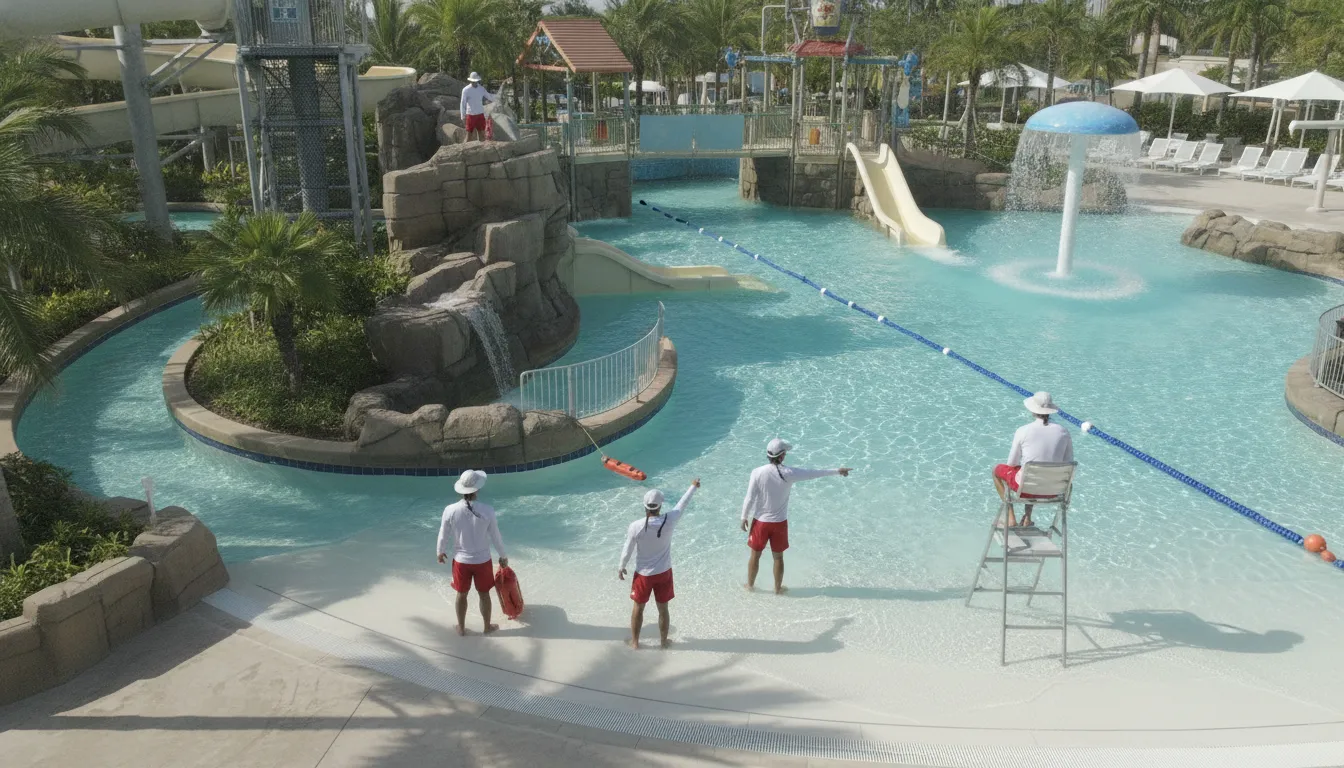
Technology is valuable only when an alert becomes an appropriate staff action. The operating plan should begin with the park's existing emergency action plan, then define how detection and notification fit within it. Lifeguards remain responsible for surveillance, assessment, and response.
Design the complete alert path
A practical alert workflow covers more than the initial notification. Operations leaders should document the entire path:
- Detection: The system identifies the condition it is designed to monitor, such as prolonged submersion.
- Notification: An alert reaches designated staff through the system's available alert methods.
- Acknowledgment: Staff follow a defined process that confirms the alert is being addressed.
- Escalation: Additional personnel are notified according to the park's emergency action plan.
- Review: Supervisors examine the event and use what they learn to improve procedures and training.
Test comprehension, not just signal delivery
A successful signal test proves that equipment can communicate. An operational test proves that a lifeguard understands the alert, knows which area requires attention, and follows the expected protocol. Both tests matter, but they answer different questions.
WAVE's GUARDian approach uses swimmer wearables, the GUARDian Hub, and staff alerts to support this workflow. Directors evaluating the system can review the available lifeguard alert equipment and determine how it would fit current roles, rotations, and escalation procedures.
Wearable monitoring versus fixed-camera detection
Wearable and fixed-camera systems detect risk in different ways. Cameras depend on a useful view of the monitored area, while wearable systems use swimmer-worn sensors and wireless alerts. The right model depends on water conditions, facility layout, installation constraints, guest procedures, staffing, and the park's ability to operate the system consistently.
Vendor comparisons should focus on operating dependencies rather than broad claims that one technology is always superior. Camera-based detection may be suitable where a stable, useful view can be maintained. Wearable detection may be attractive where visibility varies or permanent construction is undesirable.
| Evaluation factor | Fixed-camera approach | Wearable approach |
|---|---|---|
| Primary input | Visual analysis of monitored water | Signals from swimmer-worn sensors |
| Key dependency | A useful camera view of the intended zone | Consistent issue, wear, return, and care procedures |
| Installation planning | May require mounting, wiring, calibration, or permanent changes | Uses wireless equipment without permanent construction |
| Variable visibility | Must be evaluated under actual visual conditions | Can operate in clear, dark, or murky water |
| Daily operations | Requires camera and system readiness checks | Requires wearable inventory, readiness, and guest-process checks |
| Best pilot question | Can the system maintain useful coverage in every intended condition? | Can staff operate the wearable workflow reliably at peak volume? |
Account for the guest journey
A wearable system introduces an operational process that must be designed well. Staff need a reliable method to issue, fit, collect, inspect, and prepare wearables for continued use. That process should be tested at realistic volume so it does not create avoidable friction at entry points.
WAVE AquaSense swimmer wearables monitor prolonged submersion and communicate with the GUARDian system. Operators should determine what the guest-facing process would require.
Evaluate facility disruption
Installation scope affects scheduling, capital planning, and coordination with other departments. Ask whether a system requires permanent construction, electrical work, network changes, closures, or third-party contractors. Confirm which responsibilities belong to the park and which belong to the vendor.
A wireless approach can reduce the need for permanent construction, but it still requires careful coverage planning, equipment setup, training, and testing. A faster installation does not eliminate the need for a disciplined operational rollout.
What should operators ask drowning detection vendors?
Operators should ask vendors to demonstrate performance in the park's real conditions and explain implementation, training, maintenance, support, data handling, and total cost. Strong answers include specific dependencies and limitations. The goal is to establish whether the system can be operated reliably by the park, not simply whether it performs during a controlled demo.
A structured request for information makes vendor responses easier to compare. Use the same operational scenarios, definitions, and scoring criteria for every supplier. Require written answers where possible so stakeholders can review differences without relying on sales-call impressions.
Questions about capability and fit
- What exact condition triggers an alert, and which settings can the park configure?
- How is the alert routed, acknowledged, escalated, and recorded?
- What site conditions can affect coverage or performance?
- How does the system operate in moving, dark, or murky water?
- What equipment must guests and employees wear or carry?
- How does the system support multiple aquatic zones?
Questions about operating readiness
Ask for the complete daily readiness procedure. This should cover equipment inspection, charging or preparation, software checks, inventory reconciliation, and the response to a failed component. Clarify what staff need to do before opening, during shift changes, and after closing.
Also ask how the vendor trains lifeguards, supervisors, guest-services teams, and system administrators. Training should connect the technology to established park procedures and make clear that alerts add another layer of protection. Request guidance for onboarding new seasonal staff and refreshing skills during the operating season.
Questions about support and lifecycle cost
Compare costs over the intended operating period, not only the initial price. Include hardware, software, implementation, training, replacements, support, future expansion, and internal staff time. Ask how pricing changes if the park adds zones or needs more equipment during peak attendance.
Clarify support hours, response channels, replacement procedures, update responsibilities, and any exclusions. WAVE presents its offer as a subscription-based service; directors can review the current pricing approach while building a comparable total-cost model for all vendors.
How do you build a practical deployment plan?
A practical deployment plan translates the selected system into accountable tasks, owners, tests, and launch criteria. It should cover site assessment, coverage design, equipment handling, staff training, guest communication, emergency-procedure updates, pilot testing, and daily readiness. A phased rollout gives leaders time to correct workflow gaps before expanding across the property.
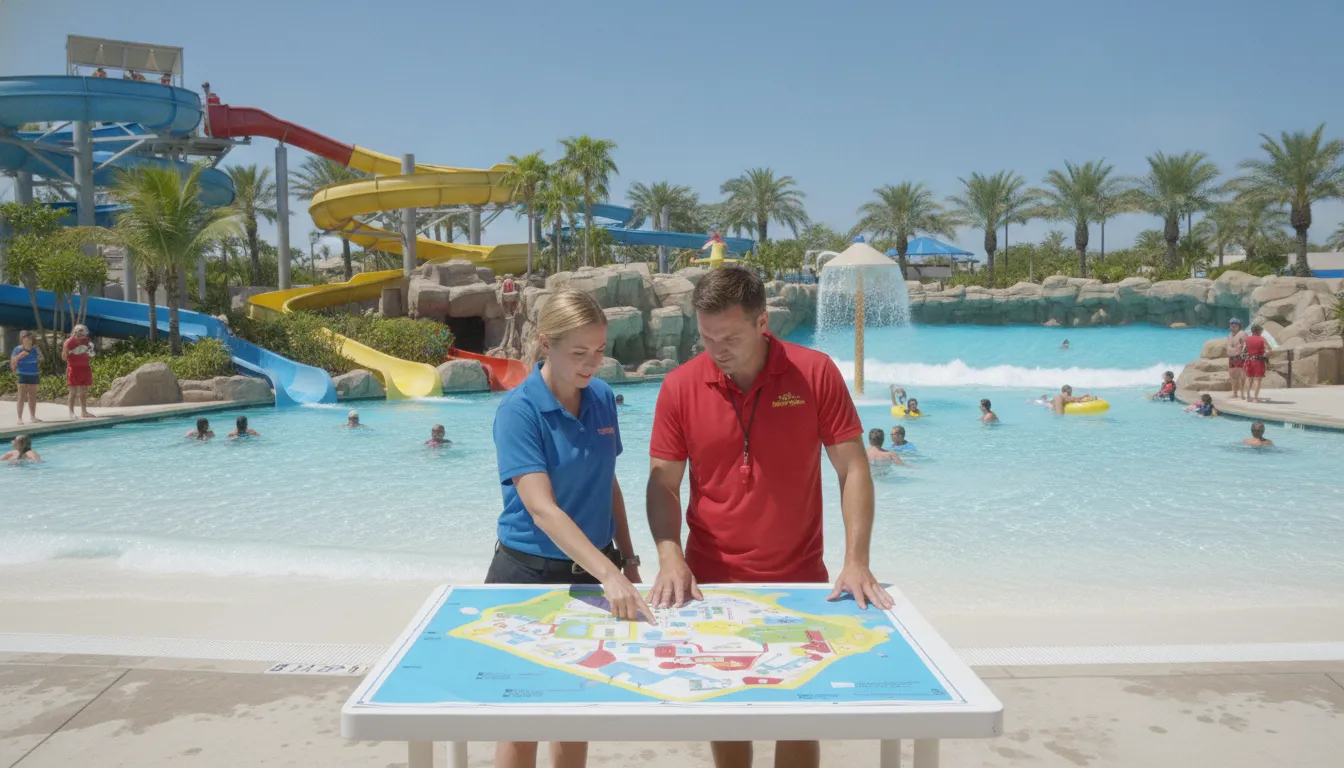
Begin planning before the purchase decision is final. Implementation requirements can expose hidden costs or show that a promising system does not fit the park's staffing model. Include aquatics, operations, risk management, guest services, information technology, facilities, and leadership as appropriate.
Phase 1: Define scope and ownership
Name an implementation owner and establish decision rights. Define which zones are in scope, what success looks like, and which policies may need revision. Create a responsibility matrix covering vendor work, park work, approvals, training, communications, and launch authorization.
Phase 2: Configure and document workflows
Document equipment storage, issue and return steps, readiness checks, alert response, escalation, incident review, and end-of-day procedures. If guests use wearables, create clear language that explains their purpose and proper use without overstating protection.
Review WAVE's GUARDian system overview to identify the components that may appear in these workflows. The GUARDian Hub, AquaSense swimmer wearables, lifeguard tags, Hub Management Software, and CompleteView software should each have a defined operational owner where applicable.
Phase 3: Train, drill, and launch
Train each role on the tasks it must perform, then run drills that combine technology alerts with the existing emergency action plan. Include normal alerts, escalation, equipment issues, and handoffs during shift changes. Supervisors should observe performance and document needed corrections.
Set explicit launch criteria, such as successful readiness checks, trained staff coverage, completed drills, approved procedures, and resolved critical issues. Do not make the calendar date the only launch requirement.
How can a park validate the system before rollout?
A pilot should test the system in representative zones, conditions, and operating workflows before full rollout. Directors should define pass or fail criteria in advance, observe staff and guest interactions, record issues, and retest corrections. The most useful pilot validates operational reliability, not only whether a vendor can produce an alert.
A controlled demonstration is useful for learning how a product works. A pilot is different because it tests whether the park can operate the product. Select a representative zone and include realistic staffing, equipment handling, alert routing, and supervision.
Define pilot measures before testing
Choose measures tied to the requirements established during evaluation. These may include coverage across the intended zone, successful delivery and acknowledgment of test alerts, completion of daily readiness procedures, equipment accountability, staff comprehension, and guest-process efficiency.
Record issues by severity and assign an owner and due date. A missed critical requirement should not be averaged away by strong scores in less important categories. Establish which findings require correction and retesting before expansion.
Test representative operating conditions
Run approved tests under the range of conditions the system is expected to support. Include normal activity, higher guest volume where practical, shift handoffs, and the relevant visibility or water conditions. Keep all testing controlled and consistent with park safety procedures.
Invite frontline staff to explain what was clear, confusing, or difficult. Their feedback often reveals workflow problems that a technical test will miss. Vendor representatives should help diagnose system questions, while park leaders retain responsibility for deciding whether the workflow is acceptable.
Make the expansion decision
After the pilot, compare results with the preapproved criteria. The decision may be to proceed, proceed after corrections, extend the pilot, change scope, or stop. Document the reasoning so leadership understands the operational basis for the recommendation.
Directors who want to explore a pilot can use WAVE's system planning process to discuss site requirements and potential configuration. Any proposal should still be evaluated against the park's own criteria.
How do you build the business case?
The business case should connect the proposed system to documented operational needs, implementation requirements, and measurable readiness goals. Compare total lifecycle cost, facility disruption, staff time, support, scalability, and risk-management value. Present technology as one part of a layered aquatics-safety program led by trained people and established procedures.
A credible recommendation explains the problem, alternatives considered, evaluation method, pilot evidence, implementation plan, and cost. It should not depend on a claim that any technology guarantees safety. Leadership needs a balanced view of benefits, limitations, dependencies, and ongoing responsibilities.
Build a total-cost comparison
Use the same time horizon and cost categories for all vendors. Include initial equipment, recurring fees, implementation, construction or facility changes, training, replacements, support, software, expansion, and staff administration. Separate confirmed costs from estimates and document assumptions.
Connect investment to operating outcomes
Describe how the proposed system would strengthen a specific process. Examples include adding prolonged-submersion detection, routing alerts to designated staff, improving readiness checks, or providing information for post-event review. Avoid treating purchase approval as the outcome; consistent operation is the outcome that matters.
The broader WAVE product lineup shows how swimmer equipment, lifeguard equipment, hubs, and software can form an integrated system. Operations leaders should map each proposed component to a documented need before including it in the business case.
Plan governance after launch
Assign an accountable system owner and define a review cadence. Track readiness checks, training completion, equipment issues, test results, and workflow improvements. Periodic review helps the park maintain the system as staffing, attractions, and operating conditions change.
What do water park leaders ask before choosing a system?
Water park leaders commonly ask whether detection technology replaces lifeguards, how wearable systems work, what conditions should be tested, how to compare vendors, and what belongs in a rollout plan. The answers consistently point back to layered protection, trained staff, representative pilots, clear operating procedures, and honest evaluation of system dependencies.
Does drowning detection technology replace lifeguards?
No. Drowning-detection technology should support trained lifeguards and add another layer of swimmer protection. Lifeguards remain essential for surveillance, judgment, prevention, rescue, and emergency response.
How does WAVE's wearable approach work?
AquaSense swimmer wearables monitor for prolonged submersion and communicate with the GUARDian Hub. The system alerts staff through available facility and wearable alert methods so they can follow established response procedures.
Can wearable detection work when water is dark or murky?
WAVE's wearable, wireless approach can work in clear, dark, or murky bodies of water because it does not depend on a camera maintaining a visual view of the swimmer. The intended site and workflow should still be assessed and tested before rollout.
What should a water park include in a vendor scorecard?
Include required capabilities, operating dependencies, coverage, alert workflow, training, daily readiness, maintenance, support, implementation scope, data handling, scalability, and lifecycle cost. Weight critical requirements more heavily than optional preferences.
What belongs in a deployment plan?
A deployment plan should identify owners, zones, system configuration, equipment procedures, staff training, guest communication, alert response, escalation, readiness checks, pilot measures, launch criteria, and post-launch governance.
Schedule a free consultation to evaluate WAVE for your water park and plan the next step.
