
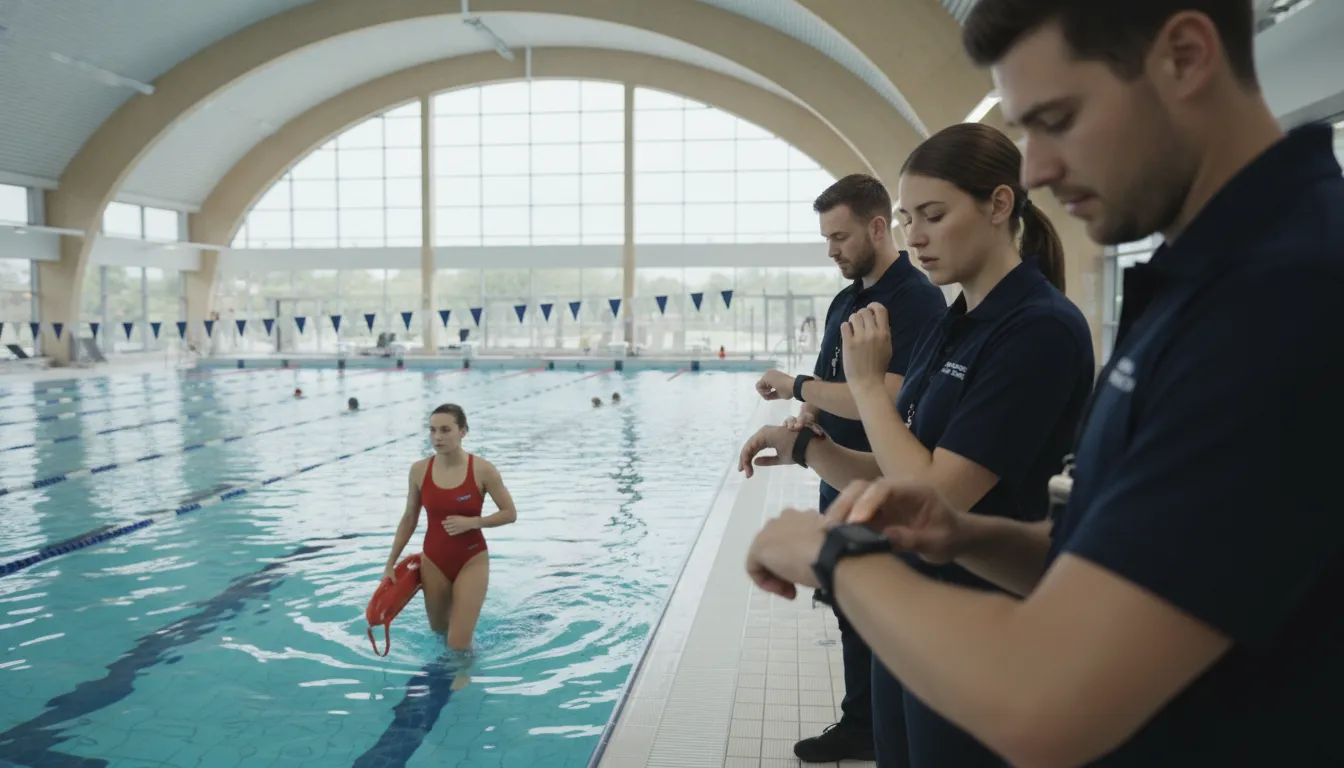
Seconds matter most when a lifeguard leaves their stand to perform a rescue in a crowded pool. Aquatic facility emergency response technology can alert the rest of the safety team so trained staff can begin their assigned backup steps without waiting for a verbal relay.
Learn how the GUARDian system adds a digital-alert layer to your facility's emergency action plan.
Aquatic facility emergency response technology is a smart system that links lifeguards and staff through real-time alerts. When a guard enters the water for a rescue, the system sends a signal to every other staff member on the deck. This allows the team to start backup steps, like clearing the pool, without a single word being spoken. The need for this help is clear since most child drownings for ages five to fourteen happen at pools with active guards. These tools act as a force multiplier that helps guards do their jobs better by closing the gap between seeing a problem and getting help. This ensures that no guard has to handle a big crisis alone.
What is aquatic facility emergency response technology?
Aquatic facility emergency response technology refers to a system of digital tools and alerts that help staff manage water safety events. These systems work with lifeguards to find and help a swimmer in trouble. While no tool can stop every drowning, this aquatic facility emergency response technology provides an extra layer of protection for supervised pools and lakes.
A tool for lifeguard support
This tech acts as a force multiplier for guards but does not replace human eyes. It uses digital alerts to tell staff if a swimmer has been under the water for too long. These alerts help guards see a crisis faster. This is vital since over half of child drownings happen at guarded sites based on WAVE Drowning Detection Systems data. By giving guards more data, the system helps them do their jobs with more speed and care.
Coordinated team response
When a crisis occurs, the system starts a coordinated emergency response across the facility. It can send signals to vibrating bracelets worn by guards or trigger loud alerts in a hub. This ensures that every team member knows about the event right away. Fast action is key because drowning is a process of breathing trouble from being in liquid as defined by the CDC. Quick help can help prevent serious brain damage or long-term health issues that come from nonfatal drowning.
Flexible safety setup
Modern safety tools are built to work in many different settings. This tech can function in clear pool water or in dark and murky lakes. It does not need big building projects or long closures to set up. Most digital safety systems can be set up in just a few hours. This makes it a quick way for facility managers to improve their risk plans and duty of care.
Why a lifeguard water entry changes the whole operation
When a lifeguard enters the water, the facility loses one active surveillance zone and must immediately shift staff roles. A coordinated alert helps the remaining team cover the water, support the rescue, control guests, and begin the facility's emergency action plan.
When a lifeguard jumps into the pool to save a person, the whole site shifts. That guard was a set of eyes watching a part of the water. Now, those eyes are only on the person in need.
This move leaves a hole in the plan to watch the rest of the pool. If another swimmer gets in trouble in that same spot, they might not be seen at once.
Keeping the water in view
Keeping a pool safe takes a full team. When one guard leaves their chair, the other guards must help. They may need to look at a larger area to cover the empty spot.
Staff must move fast. No area should stay without a guard for long. Even a short gap in watching the water can lead to a tragic event.
A fast water entry makes a lot of noise. Splashes fly. This can make it hard for other guards to see if something else is going wrong.
Since drowning is a top cause of death for kids, every second counts. The team needs a clear plan to watch the water while the rescue happens.
Staff roles in a team response
A coordinated emergency response means every person has a job. While one guard is in the water, others may need to clear the pool. Some may call for more help.
Front desk staff or bosses may also need to help with the crowd. This shift in roles must happen fast to keep the scene under control.
Talking is key to this task. Guards use whistles. They also use hand signs to tell the team what is going on in the water.
But in a loud water park or a busy YMCA, these signs can be missed. Having a backup system makes sure the whole team knows the moment a guard hits the water.
Faster alerts for the team
Using aquatic facility emergency response technology helps fix the gap. These tools act as a force multiplier for the team. For example, some tools use sensors to track when a guard goes in.
They also track if a swimmer stays down too long. This info goes to the team through bracelets that shake or loud alerts at a hub.
Fast alerts mean the rest of the staff can act without waiting for a whistle. This helps them take over the empty spot sooner. It also helps bosses see the event as it starts.
These tools help the team work as one unit. This is key to keeping a pool safe. A solid team can respond to any crisis with more trust.
- Alerts sent to the whole team in seconds.
- Bracelets that shake to cut through the noise.
- Clear info on where the rescue is taking place.
These tools are not meant to take the place of human guards. Instead, they give the team the support they need to do their best work. When a guard knows the team has their back, they can focus on the person they are saving.
How digital alerts support a coordinated response
Digital alerts support a coordinated response by notifying multiple staff members at once, even when noise or sightlines make whistles and hand signals easy to miss. WAVE Drowning Detection Systems can send wearable and facility alerts so trained staff can start their assigned emergency action plan roles.
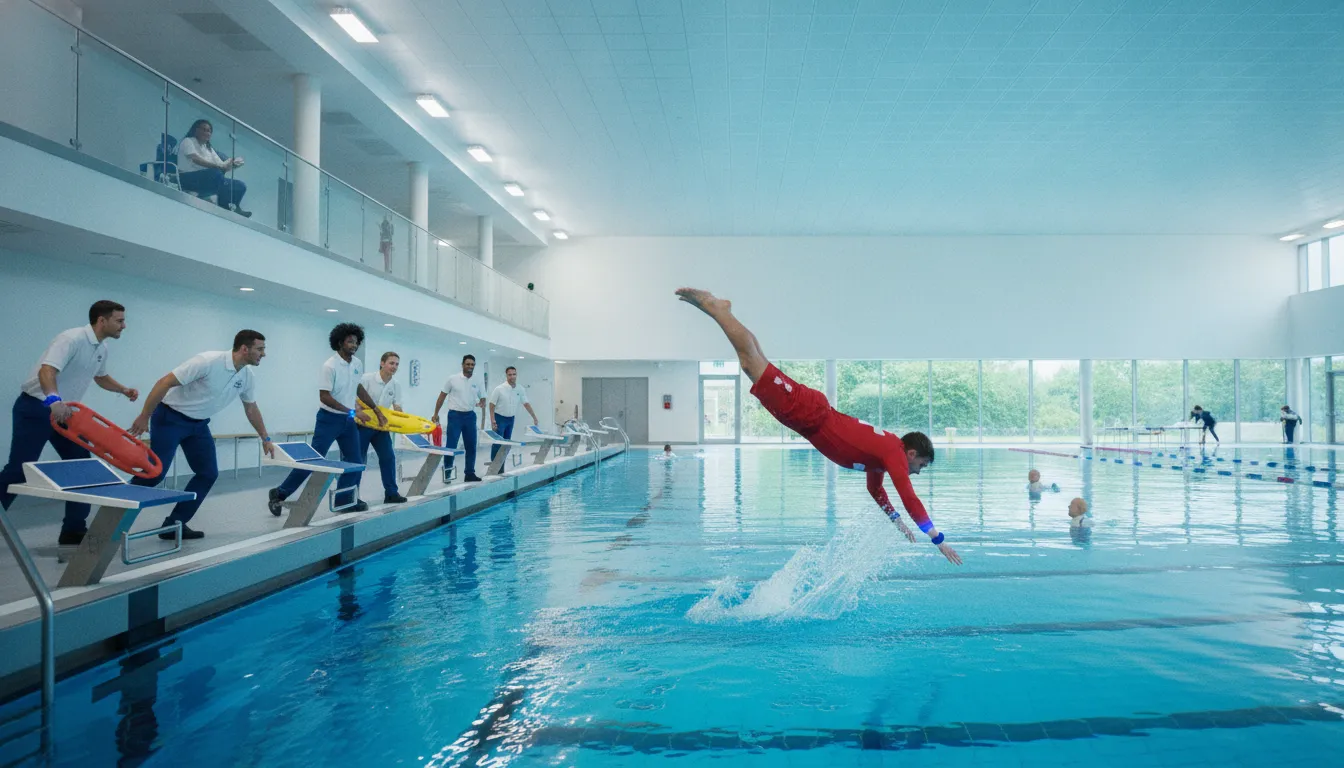
A fast team response can save lives when a swimmer is in trouble in the water. Modern aquatic facility emergency response technology links lifeguards together in real time. This system does not replace staff but acts as a tool that helps them do more. It gives them a better way to work as a joined team. When every person on deck knows their role, the rescue goes much smoother. Most child drownings happen at pools with guards on duty, so extra tools are vital for safety. The tech includes GUARDian Hub units and AquaSense swimmer wearables. Swimmers wear these small clips on their goggles or headbands. These tools track how long a person stays under the water in a pool or lake. If the system finds a risk, it tells the staff right away. This allows for a joined effort that starts in a few seconds. By using aquatic facility emergency response technology, pools can build a much safer area for all guests.
The power of instant alerts
Standard whistles can be hard to hear in a loud. Busy water park or beach. Digital alerts send a direct signal that no one on the team can miss. This helps the whole group move at the exact same time to help. It turns a crew of guards into a single, strong unit. Using digital alerts removes the doubt that comes with a loud and noisy crowd. The alerts go to shaking bracelets on each guard's wrist. This means they do not have to look at a screen to know there is a problem. They can keep their eyes on the water while they get the news. This constant flow of data keeps the team ready for any event. It ensures that no one is left out of the loop during a crisis. Guards can act with more skill and speed when they have the right facts.A 5-step response framework
Most facilities use a set plan to handle water events. Modern tools make these steps faster and more sure than old methods. Here is how a team uses these tools to manage a rescue from start to finish.- The system finds a swimmer who has been under the water for too long. If a guard enters the pool to help, their own sensor also sends a signal to the hub.
- Staff members feel a strong shaking on their wrists from a special bracelet. This alert tells them a rescue is starting without them needing to look away from their zone.
- The main hub sounds a loud alarm and flashes bright lights across the whole area. This tells other staff and guests that an emergency is happening right now.
- Guards tap their bracelets to show they have seen the alert and are moving to help. This lets the lead guard know the team is ready and in place to support them.
- The team follows their training to finish the rescue and give care to the person. This coordinated emergency response ensures the swimmer gets help as fast as possible.
Manual notification versus digital alert coordination
Manual notification depends on staff seeing or hearing a signal, while digital coordination can deliver a direct wearable or facility alert to multiple responders. Digital alerts supplement, rather than replace, lifeguard training, whistles, radios, and the facility's emergency action plan.
Safe water spaces rely on speed. When a person struggles in the water, every second counts. Old ways like whistles and radios have served pools for years. But new aquatic facility emergency response technology now offers a faster way to link staff. These digital tools do not replace guards. Instead, they give teams the data they need to act fast during a crisis.
The speed of old ways
Most pools use whistles and hand signs to call for help. A guard might blow a whistle to get the focus of other staff. In some large parks, teams use two-way radios to share news of a problem. While these tools are common, they have limits. Sound can get lost in a loud pool area. Radios can be hard to hear over splashing water and music. These gaps can slow down the start of a rescue.
Manual chains also rely on a guard seeing every event. But human sight is not perfect. Things like sun glare or crowds can make it hard to spot a swimmer in trouble. The Centers for Disease Control and Prevention states that over half of child drownings for those ages 5 to 14 occur at guarded facilities. This shows that even the best teams can gain from more help.
Digital alert systems
Modern systems use digital alerts to close the gap in safety. WAVE uses AquaSense wearables that track how long a swimmer stays under water. If a person is down for too long, the GUARDian Hub sends an alert. This coordinated emergency response sends signals directly to lifeguard wristbands. These wristbands vibrate, so guards feel the alert even in a loud park. It takes the guesswork out of finding a person who needs help.
This tech works in all water types, from clear pools to murky lakes. It serves as a force multiplier for the staff. The system watches the water at all times. This lets guards focus on their zones with more peace of mind. Using aquatic facility emergency response technology helps teams react within seconds of a crisis.
| Feature | Old Ways | Digital Alerts |
|---|---|---|
| Alert Delivery | Sound and sight | Vibrating wearables |
| Detection Source | Human eye only | IoT sensors and guards |
| Noise Impact | High (hard to hear) | Low (physical feel) |
| Response Speed | Depends on sight | Instant signal |
| Water Clarity | Needs clear sight | Works in murky water |
Tech does not replace a trained team. A lifeguard is still the most important part of pool safety. These digital tools simply help the guard do their job better. By adding a layer of protection, pools can ensure that no swimmer is left alone in a crisis. This blend of human skill and smart tech creates the safest space for everyone.
How should facilities integrate alerts into an emergency action plan?
Facilities should map each digital alert to a defined staff action, practice the alert during drills, verify coverage across all zones, and review the response after exercises or events. Technology works best when it reinforces an emergency action plan that every team member already understands.
A good emergency action plan (EAP) is the heart of any safe pool. Adding aquatic facility emergency response technology makes this plan much stronger. You must map out how your staff will react when an alert sounds. The goal is to use the system as a tool that helps your team work fast. It does not replace the guards but gives them more data during a crisis. This helps your crew stay ready for any risk and keep swimmers safe.
Assign staff roles for technology alerts
Every team member must know their job when a digital alert happens. Your plan should name one guard to start the rescue. Other staff must clear the pool or call for medical help. Use the system to guide these steps. For example, a wrist band can buzz to tell a guard exactly where the trouble is. This clear sign helps the team act without doubt and reach the swimmer in time.
Managers should also set a role for watching the hub. This person can track the status of all swimmers using the GUARDian Hub (w3000). They can help the rescue team by giving updates on the Hub Management Software. Planned roles ensure that no task is missed during a rescue. This setup works well even when you have few staff members on deck. About 41.8% of pools face a lack of guards now. Good tech helps a small team do more to protect people.
Include digital alerts in rescue drills
Practice is the only way to make an EAP work. You should add technology alerts to your regular safety drills. Guards need to hear the hubs and feel the bands while they work. This training helps them react by instinct. It also shows them that the tech is there to help, not to take their place. Make sure to test your AquaSense tags in many zones of the pool to ensure the signal is strong in each spot.
High quality drills are vital because many events happen at guarded pools. In fact, over half of child drownings occur where guards are on duty. You can find more facts on this at the CDC website. Using alerts in drills makes your coordinated emergency response much sharper. It prepares your staff to handle real world stress with speed and care. This practice builds trust between the guards and their safety tools.
Review and fix plans after events
After a save or a drill, you should look at the data. Use your CompleteView software to see how fast the team reacted to the alert. Find any gaps in the plan where things slowed down or felt messy. This review helps you fix small flaws before they lead to big risks. It also keeps your EAP up to date as your site changes over time. Every drill is a chance to learn and get better.
Check the logs for alert times and staff actions in the hub software. This look back is a key part of safety management. It shows where your team is strong and where they need more work. Keeping these records can also help with legal proof of safety efforts. Regular updates to the plan ensure your pool stays as safe as it can be. By using data, you take the guess work out of pool safety.
What should aquatic leaders evaluate before selecting technology?
Aquatic leaders should evaluate alert reach, water conditions, ease of deployment, staff usability, training support, maintenance, and how the technology fits the existing emergency action plan. The right solution adds another layer of protection while keeping trained lifeguards at the center of the response.
Choosing the right aquatic facility emergency response technology is a big choice for any safety team. Leaders must see how a system fits into daily work and how it helps staff. A good system should work as a force multiplier that helps guards rather than trying to replace them. It should give an extra layer of protection to help prevent unintentional drowning deaths which stay a top risk at pools.
Alert reach and water clarity
The first step is to check if the tech works in your water. Some tools only work in clear pool water, but others can track swimmers in dark or murky spots. You should also ask how the system sends alerts to your team. Staff should get clear signs the moment a swimmer stays under too long. This helps them act fast during a crisis.
WAVE works in all water, including murky lakes and clear pools, making it a good choice for many sites. You need to know that your tech will stay reliable even when water quality changes or crowds grow big. Fast alerts mean your staff can start life saving steps with no delay.
Installation and staff use
Facility leaders should also think about how hard it is to set up new tools. Some systems need big building work or permits which can close your pool for weeks. Look for options that deploy in hours with no need for major construction. This saves money and keeps your site open for the public.
Staff training is just as vital as the tech itself. If a system is too hard to use, guards might find it a burden. The best tools feel like a natural part of the guard's gear. When guards feel good about the tech, they can focus better on the water and keep all swimmers safe.
Training and long term care
Finally, look at the costs for training and care over time. A good safety partner should give you full help to keep the system running well. Some plans use a subscription model that covers all care and has a warranty for the gear. This helps you keep a steady budget while making sure your tech stays ready when you need it most.
Before you buy, ask how the system will grow with your facility. You want a tool that stays useful as your needs change. By looking at these points, you can find the best tech to keep your swimmers safe and help your team succeed.
Turning alerts into trusted team habits
Teams turn alerts into trusted habits through realistic drills, clear acknowledgement steps, documented response roles, and regular debriefs. Repetition helps staff treat each signal as the prompt for a practiced action rather than as unfamiliar technology.
New tools only work when your team knows how to use them. In a busy pool, this means turning tech alerts into muscle memory. Drills help lifeguards learn how to react fast when a system signals a risk. This practice builds trust in the tools and keeps staff sharp. Without steady training, even the best system stays as just a tool on a shelf. To make it a part of your daily flow, you must practice until the response is second nature.
Planning real drill events
Good drills mimic real life. Use many spots in the pool to test both the system and the guards. You should have a swimmer act out a stay-under event in a crowded zone or a murky corner. These tests show how your emergency response technology works in tough spots. It is vital to see how the sensors act when there are many people in the water. This helps staff learn the gap between a real event and a test. Regular practice ensures that an alert leads to a quick look and not a slow shrug.
Focus on common risks that happen in your own pool. If you have a deep end or a slide, run drills in those zones. The goal is to make the team feel at ease with the tech in all spots. When guards see the system work during a drill, they gain faith in the data. They will know that a buzz on their wrist is a call to action. This builds a team that is ready for a real event. It also helps you find any gaps in your current safety plan.
Defining clear roles for alert response
Each lifeguard needs a job when an alert hits. One person might scan the zone while another checks the hub for data. A third person can prep a kit or clear the water. Clear roles stop people from bumping into each other during a crisis. When roles are set, your coordinated emergency response feels smooth and fast. This plan helps guards feel sure of their next move. It cuts down on the time it takes to reach a swimmer who may need help.
Clear roles also cut the stress of an alert. When everyone knows their task, the team stays calm. You should write these roles down and post them where staff can see them each day. Update the roles as your team size or pool layout changes. This keeps the plan fresh in everyone's mind. A well-set team can manage an alert with less noise and more focus. This level of order is what turns a group of guards into a true safety team.
Learning from every alert event
Every time the system goes off, it is a chance for the team to get better. Hold a quick talk after a drill or a real alert to see how the team did. Ask what went well and what felt slow or hard. These talks are not about blame; they are about progress. Use the data from these events to update your training plan. Drowning often leads to emergency department visits and long-term health issues. Daily learning helps your team stay ready to help prevent those outcomes.
Note that no system can promise total safety, so human eyes are always the first line of defense. Tracking your drills and real alerts also helps with your records. It shows that your center takes safety seriously and works to get better. This cycle of doing, talking, and updating creates a strong safety culture. It turns a piece of tech into a core part of the daily team habit. A team that learns together stays together and keeps swimmers safer every day.
Frequently Asked Questions
Can this safety technology work in dark or cloudy water?
Yes, advanced drowning detection systems work in all types of water. Unlike camera tools that need clear views, these wireless systems work well in both clear pools and cloudy lakes. This makes them a great choice for many aquatic sites. According to WAVE Drowning Detection Systems, you can set up these systems in hours without any permanent building work or facility closures.
Does this digital technology replace the need for lifeguards?
No, this technology is a tool to support lifeguards, not replace them. It acts as a force multiplier that helps guards find and help swimmers faster. Since over half of child drownings occur at guarded pools, an extra layer of protection is vital. The WAVE Drowning Detection System helps guards do their jobs better by closing the gap between seeing a crisis and taking action.
How do digital alerts help when a lifeguard enters the water?
Digital alerts send immediate signals to the entire safety team when a rescue begins. When a guard enters the water, vibrating bracelets and loud facility alerts tell other staff to take action. This ensures the rest of the pool stays watched while the rescue happens. Fast action is key because drowning can lead to brain damage or permanent injury within a few minutes.
Is it hard to set up this type of safety system?
Most digital safety systems are very easy to set up and use. You can often put them in place in just a few hours without the need for building permits or major construction. These systems use wireless tech and wearables, so they do not require you to close your pool for a long time. This allows facility managers to improve their risk plans quickly and with very little stress on daily work.
Ready to improve your aquatic facility emergency response?
WAVE Drowning Detection Systems helps aquatic leaders evaluate how wearable, wireless alerts can reinforce an existing emergency action plan. The technology supports lifeguards and adds another layer of protection for supervised aquatic environments.
Schedule a free consultation to explore a GUARDian system for your facility.
