
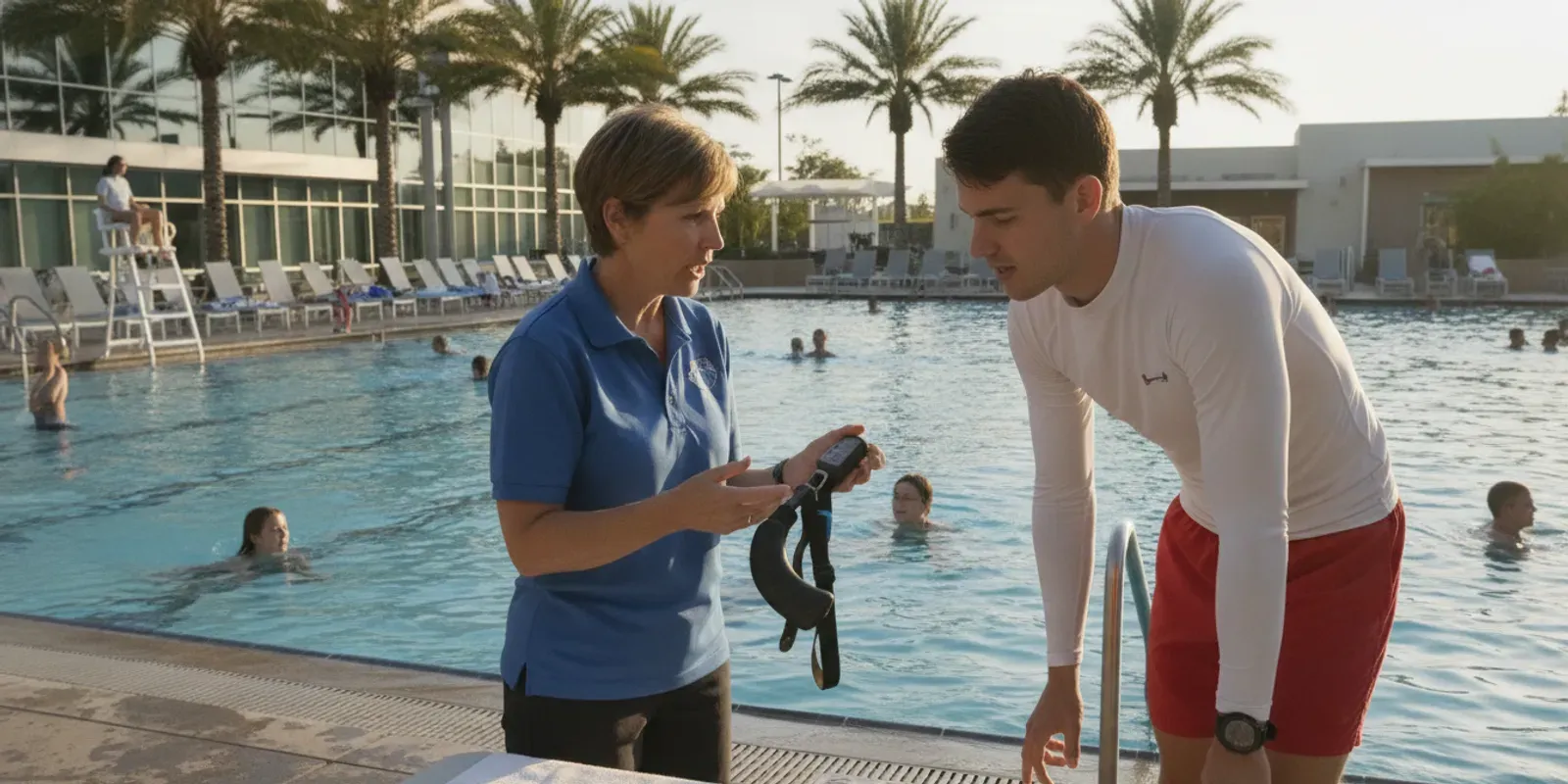
A lifeguard technology agreement can shape what support your team receives long after equipment arrives. For facility buyers evaluating a drowning detection system service agreement, the monthly fee is only one part of the decision. The document should explain what is included, how staff get help, and what happens when equipment or service is unavailable.
Use this guide to prepare questions for vendors and compare written answers. It focuses on service coverage, response paths, software, warranty and replacement, contract terms, and facility readiness—not on choosing a particular detection method or replacing your emergency action plan.
What should a drowning detection service agreement define?
A useful agreement identifies the covered system, provider obligations, facility responsibilities, and procedures for alerts and service issues. It should distinguish what is included from what costs extra and name the right contact when conditions change.
Start by checking that the agreement identifies every included component and service. A wearable system may include a hub, swimmer wearables, lifeguard tags, alert devices, software, and listed accessories. The document should specify whether the service covers one site, several pools, or other aquatic areas, and how changes are authorized.
Ask the provider to separate hardware, software access, automated system-health monitoring, human support, and on-site work. These are different commitments. “Monitoring” may refer to a device status check, swimmer detection, or a person watching the facility. Do not assume the word describes all three.
WAVE describes its GUARDian Hub (w3000) as part of a wearable aquatics safety system. Compare the proposed scope with the GUARDian Hub information, then have the agreement name the actual bundle and components. Detection technology supports lifeguards; it does not replace trained supervision, facility response procedures, or an emergency action plan.
How should support and response commitments be written?
Ask for written support hours, contact methods, priority definitions, response targets, and escalation steps. A response target is not automatically a repair or resolution deadline, so ask the provider to define each stage.
A promise of “responsive support” is difficult to evaluate unless staff know what event starts the clock and what outcome to expect. The agreement should distinguish an urgent operational interruption from a routine question. It should also explain how the provider reports progress when a problem remains open.
Walk through likely issues: a hub loses connectivity, a wearable will not register, an alert device fails, a staff member cannot access software, or a supervisor needs help reviewing an alert. Ask whether the facility should call, submit a request, or use another channel. Confirm whether that process works outside regular business hours.
- Coverage window: Which days and hours have live support? Is automated system monitoring a separate service?
- Starting point: Does the response clock begin when a request is sent, acknowledged, or complete with required details?
- Priority levels: What counts as a full outage, partial fault, or routine question?
- Response versus resolution: Is the commitment to acknowledge, diagnose, provide a workaround, ship equipment, or restore service?
- Escalation: Who takes over if the first contact cannot resolve the issue, and who updates facility staff?
- Interim procedure: What should staff do while the system or a device is unavailable?
WAVE company information describes weekday live customer service and automated monitoring around the clock, alongside tiered response targets. Confirm current commitments in the agreement rather than relying on a conversation or older document. The support and help center can help staff locate available resources.
Request a sample issue timeline. If a hub fault is reported before opening, who confirms receipt, who advises the facility on interim procedures, and when does the next update arrive? Such a walkthrough reveals whether the written service level fits your operation. For broader system comparison questions, consult the pool drowning alarm system buyer guide; this article focuses on service terms.
What should the agreement say about software and system changes?
Confirm who can access and manage the system, what updates are included, how changes are communicated, and what happens to facility data at renewal or termination. Identify any feature or integration that needs separate approval or payment.
Connected safety technology involves both physical equipment and software. Buyers should not assume every update, new feature, integration, or data request is included just because access appears in a subscription. Ask the provider to state the limits in the agreement or an incorporated service document.
Find out whether updates are automatic, scheduled, or applied after the provider contacts an administrator. Ask how material changes are announced and whether training materials are revised when screens or procedures change. If a change could affect alert routing or staff actions, agree on a way to test and document the new workflow before use.
Discuss account ownership before launch. The documentation should explain how administrators are appointed, how access is removed when an employee leaves, and how a replacement administrator is added. Avoid making facility-wide access depend on one person's account.
Ask what information is collected, how long it is retained, who can view it, whether it is used for service operations, and how it can be exported or deleted when the contract ends. If your organization has privacy, retention, procurement, or cybersecurity requirements, have the relevant internal reviewers compare them with the written terms.
Use a demonstration to test the administrative workflow, not only the alert. The drowning detection system demo checklist can help staff prepare questions. Ask the vendor to identify which capabilities belong to the current plan and which are optional or outside the agreement.
How do warranty, replacement, and equipment responsibilities compare?
Compare coverage period, fees, exclusions, reporting steps, shipping responsibility, replacement timing, and any loaner arrangement. Confirm what the facility must do to keep equipment eligible for service.
Warranty language affects cost and continuity. Read it alongside the service terms because replacement coverage may not include shipping, labor, or every operational expense. The contract should identify covered equipment and explain how staff report a fault and receive a replacement.
| Agreement area | Questions to ask | What to confirm in writing |
|---|---|---|
| Covered items | Which hubs, wearables, tags, and accessories are included? | Equipment schedule and covered components |
| Warranty | Which failures qualify, and what exclusions apply? | Coverage period, fees, and exclusions |
| Replacement | How is a fault reported, approved, shipped, and tracked? | Required steps, shipping terms, and timing |
| Continuity | Is a loaner available, and what should staff do meanwhile? | Availability, eligibility, and interim responsibilities |
| Facility care | What inspection, storage, cleaning, or handling is required? | Care instructions and effect of damage |
Ask staff to demonstrate the recommended routine for issuing, collecting, storing, and inspecting devices. If a wearable is missing or damaged, who records it, who contacts support, and how does the facility ensure the device is not treated as ready for use? These are practical operating questions as well as contract questions.
Confirm whether replacements are new, refurbished, or equivalent units, who decides between repair and replacement, and how repeated faults are handled. WAVE's lifeguard equipment and swimmer equipment pages can help identify device types to discuss; the signed equipment schedule controls what is included.

Which contract and renewal terms deserve a closer review?
Before signing, establish the term, total payment obligation, renewal notice period, cancellation rights, permitted changes, and fees. Compare the quote with the agreement and make sure both describe the same bundle and service scope.
Subscription agreements can appear simple at a monthly level while including important rules about duration, renewal, cancellation, and payment. Compare the complete commitment, not just a displayed rate. Consider what happens if your facility changes its season, expands, closes temporarily, or needs to end service early.
Ask for the contract length and payment schedule in plain language. If multiple term options are offered, compare the total cost across the whole term and any conditions attached to a discounted option. Confirm whether taxes, shipping, optional components, or other charges are additional. WAVE's pricing page can provide package context, but the quote and signed documents establish your facility's price and terms.
Read the renewal clause carefully. Does it renew automatically? How much advance notice is required to stop or change renewal? Does the provider send a reminder, and which contact receives it? Record dates in a calendar owned by a role, not just an individual.
Check exit and change provisions. Ask whether the organization can cancel for convenience, terminate for an uncured service breach, or pause service during a closure. Clarify what happens to devices, data, account access, and balances at termination. For multiple sites, ask whether one location can be changed without altering every site's agreement.
- Does the quote match the contract's bundle, quantities, service period, and payment terms?
- Are renewal dates and notice deadlines assigned to a responsible role?
- Are price changes, additional fees, and optional services described?
- Are cancellation, breach, assignment, and dispute terms clear?
- Does the agreement say what happens to facility data and equipment at the end?
- Have procurement, risk, IT, privacy, and legal reviewers been included as required?
The WAVE service guide may help locate service information, but it does not replace review of the current agreement. Request clarification in writing or ask your legal or procurement adviser to review unclear clauses. This is an operational checklist, not legal advice.
How can a facility check whether the service fits its operation?
Validate fit by mapping coverage, assigning alert recipients, defining staff actions, and testing the plan under realistic conditions. Keep lifeguards and existing emergency procedures at the center of the response plan.
A complete contract can still fail to reflect how a pool is staffed and used. Before signing, describe the facility's zones, operating hours, swimmer flow, staff roles, and emergency procedures to the provider. Check that the proposed scope and support commitments match those conditions.
Prepare a short site profile: aquatic areas, seasonal or year-round schedule, busy periods, entry and exit arrangements, and conditions that affect operations. Explain how lifeguards move between zones and how supervisors receive information. Ask the provider to identify assumptions that affect coverage or performance.
Assign people and actions. Who receives an alert? Who confirms it, communicates with other staff, and initiates the emergency action plan? What happens if the intended recipient is off duty or working elsewhere? The system should add an alert layer to the existing response structure, not create uncertainty about who is in charge.
Clarify onboarding and practice. Does the provider train administrators, guards, or both? Are materials available for new staff? How are refresher questions handled? A 2025 academic study on specialized lifeguard training reports an association with improved detection-related brain dynamics in novice lifeguards. It does not measure service-agreement performance, but it supports asking how staff will learn and practice system-specific alert recognition.
During setup, confirm each role understands the alert, devices are assigned and collected reliably, and staff know how to report faults. Practice in a controlled drill consistent with facility policies; do not create a real emergency to test equipment. Record the test, unresolved question, owner, and due date before routine use.
Set a review cadence for contact lists, staff access, inventory, support contacts, renewal dates, and fault procedures. Revisit the plan after changes in layout, programming, staffing, or contract scope. For broader preparedness, see the aquatic emergency action plan review guide.
What should buyers ask before choosing a provider?
Request the complete proposal and agreement, then compare scope, support, updates, warranty, replacement, training, privacy, and renewal terms side by side. Resolve every operationally important ambiguity before approval.
Ask each provider the same questions and keep the answers in writing. A feature score alone will not show whether a service fits your facility's hours, staffing, procurement rules, or technical needs. Use the comparison to identify gaps and assign follow-up.
- What equipment and software are included, and what is excluded?
- Which conditions or locations affect system coverage?
- Who receives alerts, and what staff actions are expected?
- What support is available during and outside operating hours?
- How are priorities assigned, and what does each response commitment mean?
- What updates, onboarding, refresher resources, and account administration are included?
- What data is collected, who can access it, and what happens at contract end?
- Which devices are covered, and what is the replacement workflow?
- What are the term, renewal, cancellation, total cost, and additional-fee rules?
- What should staff do if the system, connection, or a device is unavailable?
Request supporting documents: equipment schedule, service-level description, warranty terms, data and privacy materials, training plan, support instructions, and current quote. Aquatics operations can explain shift needs; IT can review network and account questions; procurement can review purchasing terms; risk and legal teams can identify organizational requirements.
Keep a decision record with each question, the vendor answer, the document that confirms it, and any open point's owner and deadline. This helps when a proposal changes between demonstration and signature. If a promise matters to operations or budget approval, ensure it appears in the executed documents.
WAVE's commercial pool safety products page and FAQ can help prepare questions. For a product conversation, ask for details specific to the facility and proposed package.
Frequently Asked Questions
These answers summarize common review points, but the signed agreement and incorporated documents control a facility's terms. Confirm any point affecting safety, privacy, legal obligations, or cost with the provider and the appropriate internal reviewer.
Does a service agreement replace lifeguard coverage?
No. Detection technology supports lifeguards and adds another layer of protection in supervised aquatic environments. Trained staff remain responsible for supervision and response under facility policies and its emergency action plan.
Is a response-time promise the same as a repair deadline?
Not necessarily. A response target may mean acknowledgement or initial assessment, while diagnosis, replacement, or full resolution may have a different timeline. Ask the provider to define each stage.
Should software updates and training be included?
Ask what updates, account support, and training are included and how staff will be notified of changes. The agreement or incorporated service document should identify limits, optional services, and extra charges.
What should we do if a wearable or hub fails?
Follow the facility's approved operating and emergency procedures, report the issue through the agreed channel, and follow provider troubleshooting instructions. Confirm the warranty and replacement process before launch.
Can one agreement cover multiple facilities?
A multi-site arrangement should state scope, pricing, equipment, and service coverage for each location. Ask whether one site can be added, removed, or changed without altering the terms for all sites.
Who should review the agreement?
Include the aquatics or facility leader and procurement and legal reviewers as required. IT, privacy, risk, finance, and operations may also need to review specific clauses or system requirements.
What documents should we retain after signing?
Keep the executed agreement, quote, equipment schedule, warranty, support instructions, training materials, data terms, and written clarifications together. Make renewal and notice deadlines visible to the responsible contract administrator.
A careful service-agreement review helps your team understand what the provider will deliver and what your facility must do in return. Use written answers to make a decision that supports lifeguards, fits your operating plan, and gives staff a clear path when a question or equipment issue arises.
