
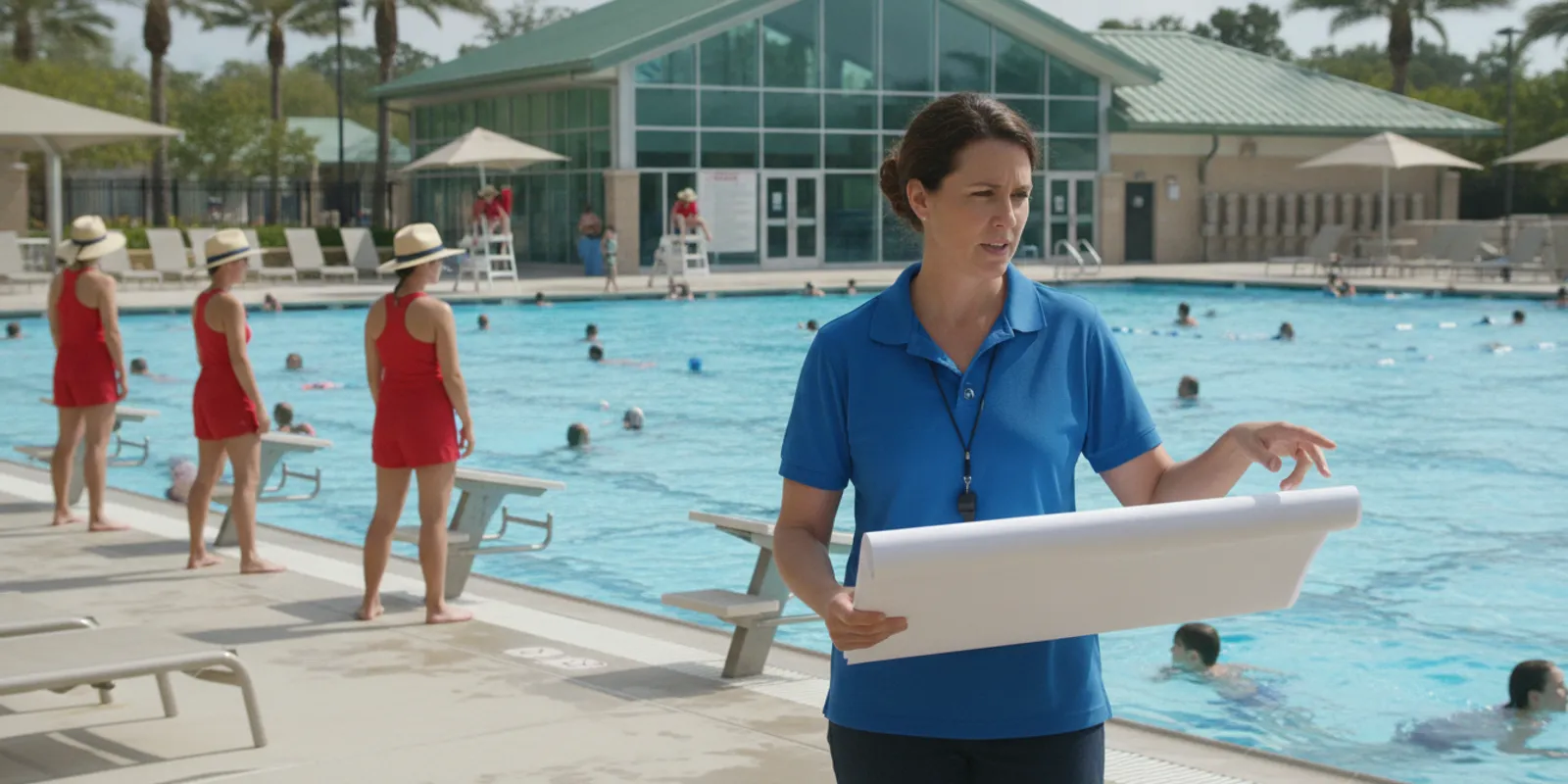
Multi facility aquatic safety management is not a matter of making every pool follow an identical script. It means giving leaders a consistent way to understand site risks, assign responsibilities, prepare staff, and learn from operations, while preserving local procedures that reflect each pool or waterfront.
Why does multi-site aquatic safety need a shared operating framework?
When an organization oversees more than one swimming location, each site still has its own layout, operating hours, staffing pattern, and emergency plan. Without shared management practices, leaders may have difficulty seeing whether each location has current procedures, trained people, and a clear route for escalating safety concerns. A common framework helps make expectations visible without pretending that every site is the same.
Standardize the management process, not every local detail. Establish a common baseline for responsibilities, records, training, alert handling, and review, then document the site-specific choices needed to make that baseline usable at each location.
Aquatic safety is a system of people, procedures, equipment, and communication. An organization may have strong individual teams but still lack an organization-wide picture of who owns a task, whether a procedure is current, or how an event at one location should inform another. The CDC’s Model Aquatic Health Code provides a public-health reference for aquatic facility operation; leaders can use relevant guidance as one input to local review, alongside applicable laws, health-department requirements, and qualified safety advice.
This framework is useful for YMCAs, municipalities, camps, schools, clubs, and other organizations that coordinate multiple supervised aquatic environments. It does not replace local emergency action plans, qualified lifeguards, regulatory review, or professional judgment. Instead, it gives leaders a repeatable way to check that the essentials are assigned and reviewed.
What should leaders standardize, and what should stay local?
A multi-site program works best when the organization names its non-negotiable operating expectations and gives site leaders a controlled way to adapt them. A baseline should define how responsibilities are assigned, where current documents are kept, how changes are approved, and when information must be escalated. Local plans should then describe the physical site and the people who will carry out those expectations.
Use a two-layer model: an organization-wide standard sets minimum expectations and oversight, while each facility maintains a site plan for its own hazards, layout, staffing, communications, and emergency response. Review both layers together so local adaptations remain clear and intentional.
Start by distinguishing policy from procedure. Policy states the required outcome, such as maintaining a current emergency action plan and ensuring staff know their assigned roles. A local procedure explains how a specific team will accomplish that outcome in its space, with its equipment and staffing. This distinction reduces needless variation while avoiding a generic document that does not match actual operations.
For each requirement, identify an owner, a location for the record, and a review trigger. The owner may be an organization-level aquatics leader, a facility manager, or a designated staff member. The key is that the assignment is explicit and backed up when someone is absent or changes roles. A record should be easy for authorized staff to find and should show its version or review date.
- Set centrally: minimum documentation expectations, approval routes, required training topics, incident escalation, equipment check principles, and the cadence for reviewing the program.
- Set locally: zone maps, staff positions, emergency contacts, evacuation routes, site-specific hazards, operating hours, and the response sequence appropriate to the facility.
- Review together: whether a local exception is documented, who approved it, and whether it affects another procedure or training requirement.
A useful test is to ask whether a new site leader could identify the baseline and the local exceptions without relying on informal memory. If not, clarify the documents before adding another reporting layer. Leaders can also consult the CDC Model Aquatic Health Code when checking what facility-operation topics may warrant review; its use does not replace determining which rules apply in a particular jurisdiction.
How can an organization create a reliable view of sites, equipment, and staff?
Visibility starts with an accurate inventory, not with a dashboard. Leaders need a dependable way to identify each operating location, its aquatic areas, the responsible manager, and the records or equipment that need routine attention. The inventory should be modest enough to keep current and detailed enough to support a useful review.
Build a shared register around decisions people actually need to make. Identify sites and accountable contacts, track the status and review date of key records, and note equipment ownership and checks; then define who updates each item and who follows up on overdue work.
A simple register can include a site identifier, aquatic areas, operating season, site lead and backup, current emergency plan location, latest review date, training completion status, equipment inventory, and open corrective actions. Do not collect sensitive swimmer or employee information just because a spreadsheet has room for it. Decide what information is necessary, limit access, and follow organizational retention and privacy policies.
Use an owner and a status for each record rather than relying on a folder full of files. A status can indicate current, due for review, awaiting approval, or action required. Establish a process for updating records after a staffing change, a facility modification, a new operating season, or an incident. A stale but well-formatted register is not meaningful oversight.
Equipment records should support decisions about readiness and accountability. The organization can define what needs to be checked, who performs the check, how a problem is reported, and how resolution is recorded. The detail depends on the equipment and applicable procedures. Avoid claiming that a device, software view, or centralized product automatically verifies readiness unless that function has been confirmed for the tool and configuration in use.

Technology can contribute to a broader safety process, but its role should be described precisely. WAVE’s system is designed as an additional layer that supports lifeguards, with wearable sensors that can detect prolonged submersion or lifeguard water entry and alert staff through vibrating bracelets and facility alerts. It does not replace lifeguards, supervision, or an emergency action plan. To understand how the available WAVE products fit a particular site, ask what is included, what staff must do, and which functions are available in the proposed configuration.
For multi-site use, do not assume that a single screen provides organization-wide monitoring, that records synchronize across facilities, or that alerts can be managed centrally. Ask a provider to demonstrate the actual workflow for the intended arrangement. WAVE’s service guide is an appropriate starting point for questions about service and support; confirm current capabilities, access, and operating responsibilities directly before making a process depend on them.
How should alerts and emergency response work across different locations?
An alert is only useful when the people who receive it know what to do next. Each location needs an understandable response sequence that identifies the responsible roles, immediate actions, communication path, and handoff to emergency services when needed. At organization level, leaders should make sure each site has those basics and that changes are communicated to affected staff.
Define an alert-to-action chain for every location: who receives the signal, who acts, who backs them up, who contacts emergency services when appropriate, and who records the event. Practice the sequence locally and review whether the technology and staffing workflow match the written plan.
Start with the local emergency action plan. It should describe how staff recognize an emergency, who responds, how other staff protect the rest of the swimmers, where relevant equipment is located, and how the facility communicates with responders. The organization can supply a consistent template or minimum topics, but the site team must verify the details against the actual layout and staffing model.
Then map how any technology-generated alert enters that plan. Specify the alert recipient, what the signal means, who verifies and responds, what happens if the primary responder is unavailable, and how the team communicates that the response is underway. For a WAVE deployment, discuss the system's wearable alerts and facility alerts with staff, and clarify how those notifications fit existing lifeguard positions and procedures. Do not assume that an alert automatically dispatches emergency services or completes a rescue.
Consider the practical conditions that can interrupt a response: a staff member away from their normal position, a noisy environment, a crowded event, a network or power issue, a device needing attention, or an unavailable supervisor. These are prompts for site teams to assess, not claims that any particular system will or will not perform under them. Document the backup procedure and practice the communication handoff.
Standardize the elements that help staff respond consistently, such as alert terminology, escalation expectations, and the incident documentation route. Keep the exact positions, radio channels, access points, and responder assignments local. A review of the aquatic emergency action plan can help leaders develop questions for each facility rather than copy one site's plan to every other location.
How can training and reporting remain consistent without becoming generic?
Organization-wide training should create a shared minimum level of understanding, while local orientation prepares staff for the site where they will work. A staff member who has completed general training still needs to know the local pool zones, assigned role, emergency signals, equipment locations, and reporting process. Treat the two as connected parts of onboarding and refresher planning.
Use a common training matrix to show what each role must learn, how completion is recorded, and when refreshers or local orientation are due. Then verify readiness through site-specific practice, not attendance records alone.
A role-based matrix can list lifeguards, supervisors, maintenance staff, front-desk or support staff, and administrators where relevant. For each role, identify the required orientation, procedures to review, practical exercises, and the person responsible for confirming completion. The exact requirements should follow applicable rules, the facility’s plan, and appropriate training standards; this article does not establish certifications or legal requirements.
When a technology is introduced or changed, train the people who will interact with it. Explain what the device is intended to detect, what an alert looks and feels like, who responds, how to report a concern, and what to do if a component is unavailable. For WAVE, confirm the correct use of the applicable AquaSense swimmer wearables, lifeguard tags, and alert equipment with the provider and facility procedures. Keep device training within the larger supervision and response program.
Reporting should help an organization improve, not simply count events. Define what staff should report, who reviews it, how urgent issues are escalated, and how corrective actions are closed. A near miss, equipment concern, unexpected alert, or training gap may reveal a process issue even when no emergency occurred. Use consistent categories where they support comparison, but preserve enough context to understand each site’s circumstances.
Make information easy to act on. A monthly or seasonal review might summarize records due, training gaps, unresolved equipment issues, incidents or near misses, and corrective actions by owner and due date. The purpose is not to rank sites without context. It is to identify support needs, recurring issues, and lessons that deserve attention elsewhere. Protect personal information and share only what each reviewer needs.
Facilities evaluating digital tools can ask how the products and workflow connect to their own records and responsibilities. WAVE describes its software as GUARDian Hub (w3000) and names Hub Management Software (HMS) and CompleteView among its approved terms. Do not infer specific reporting, multi-site administration, staff-record, or data-export capabilities from those names alone. Request a demonstration of the exact proposed setup and confirm which functions are available, who maintains them, and what remains a facility responsibility.
Which choices belong in a central review and which need local judgment?
A regular review helps leaders keep the framework useful as staffing, facility layouts, equipment, and operating patterns change. A short review can focus on whether each location has a named owner, current core documents, clear response roles, prepared staff, and a way to close open actions. The right cadence depends on the organization and local requirements; major changes or incidents may justify review sooner.
Central oversight should ask whether every site meets the agreed baseline and whether exceptions have an owner and review date. Local leaders should verify that procedures work in real conditions. Escalate unresolved risks through the organization’s established leadership and safety channels.
| Management area | Organization-wide baseline | Local decision or evidence |
|---|---|---|
| Site and role register | Required fields, update owner, and review cadence | Current facility contacts, aquatic areas, and assigned backups |
| Emergency procedures | Minimum topics, approval route, and change control | Site-specific plan, maps, assignments, and communication steps |
| Training | Role-based matrix and completion record expectations | Local orientation, practice schedule, and demonstrated familiarity |
| Equipment and technology | Inventory and issue-escalation process | Checks, placement, staff workflow, and open service actions |
| Reporting and improvement | Common review categories and action tracking | Event context, corrective action, owner, and closure evidence |
For each row, decide what evidence demonstrates that the process is working. A current document may demonstrate review, while a staff drill or observed practice may reveal whether the response is understood. An equipment record may show that a check occurred, while a follow-up note shows whether a reported issue was resolved. Match the evidence to the decision; do not create a reporting burden simply to generate more files.
Leaders should also decide how an exception is approved. A site might need a different staffing arrangement or procedure because of its physical environment or operating schedule. Record the reason, the approving person, the risk controls, and the date for reconsideration. If an exception cannot be resolved locally, define who can authorize a temporary measure and how that decision is escalated.
Compare sites carefully. Similar events or repeated process gaps may point to a training or equipment issue worth addressing organization-wide, but raw counts alone can be misleading when sites differ in size, hours, activities, or reporting practices. Review context before drawing conclusions. Where the organization needs a structured starting point for technology evaluation, its commercial pool safety system guide can support a site-level discussion of needs and questions.
What should organizations ask before adopting a shared safety tool?
A product decision should follow a defined operational need, not substitute for one. First identify the sites and swimmers in scope, the conditions staff need to manage, the response roles, and the gaps the organization is trying to address. Then evaluate whether a tool fits the workflow and whether its limits are understood by the people expected to use it.
Ask providers to demonstrate the precise workflow your staff would use at each site. Confirm what the system detects, how staff are notified, what they must do, how service questions are handled, and which administrative functions are included before relying on any claimed multi-location capability.
Useful questions include:
- What operating environments and use cases is the proposed system designed for, and what conditions or limitations should staff understand?
- What equipment is included at each site, who wears or checks it, and how are device issues reported and resolved?
- What alert types are generated, who receives each alert, and what action is expected from the recipient?
- How does the system fit the site's supervision model and emergency action plan without displacing lifeguard responsibilities?
- Which records or views can managers access, and can the provider demonstrate the exact organization-wide and site-level workflow being proposed?
- What training, support, maintenance, and recurring review are required from the facility?
- What happens to the workflow if a component, connection, or staff role is unavailable?
Ask for a demonstration using realistic scenarios, not only a product overview. Include people who will manage the program and staff who will use alerts in daily operations. Have them trace a scenario from detection or observation through notification, response, escalation, reporting, and follow-up. Capture unanswered questions and assign an owner to resolve each one before a rollout decision.
WAVE provides information about its frequently asked questions, pricing, and consultation and getting-started process. Confirm current scope, configuration, pricing, contract details, and capabilities directly rather than applying a general description to every site. A consultation can establish what is suitable for evaluation; the organization remains responsible for its staffing, policies, and site procedures.
Technology is one part of a layered safety program. WAVE’s wearable detection approach is intended to support staff in supervised aquatic environments, not to guarantee an outcome or replace attentive supervision. A sound purchasing decision defines both what the technology contributes and what people and procedures must continue to do.
Frequently Asked Questions
These answers summarize the operating principles in this guide. Apply them with local procedures, applicable requirements, and the needs of each facility in mind. Ask site leaders and qualified safety professionals to review decisions that affect emergency response.
The central idea is consistency with documented local judgment. Keep a shared baseline, assign owners, train staff for their actual site, and verify any tool’s capabilities before making it part of a safety-critical workflow.
What is multi-facility aquatic safety management?
It is the coordination of safety expectations, responsibilities, training, records, equipment processes, and review across multiple aquatic sites. A useful approach establishes common organization-wide practices while preserving local plans for each facility’s layout, staffing, and operating conditions.
Should every site use the same emergency action plan?
No. An organization can set minimum topics and document-control expectations, but each site should maintain a plan that reflects its own space, hazards, staff roles, communications, and response routes. Review local plans against the shared baseline and applicable local requirements.
What should a multi-site aquatic safety register include?
At minimum, consider site identity and contacts, accountable owners, review dates for key procedures, training status by role, equipment records, and open corrective actions. Collect only information needed for operational decisions, restrict access appropriately, and assign someone to keep the register current.
Can a digital detection system replace lifeguards or supervision?
No. Detection technology can provide an additional layer of support, but it does not replace lifeguards, active supervision, staff training, or emergency procedures. A facility should define how alerts connect to its response plan and confirm the system’s capabilities and limitations.
How can leaders check whether a product supports multiple sites?
Ask the provider to demonstrate the exact proposed configuration and workflows. Confirm which views, administrative tools, records, alerts, service arrangements, and user roles are actually included, and distinguish demonstrated functions from assumptions. Document what the facility must manage outside the product.
How often should a multi-site safety framework be reviewed?
Set a regular review cadence that fits the organization and applicable requirements, and define additional triggers such as a staffing or facility change, a new operating season, an incident, or a material equipment change. Record who reviews each item and how overdue or unresolved actions are escalated.
When each site knows its responsibilities and leaders can see where follow-up is needed, an organization is better positioned to keep aquatic safety practices consistent without ignoring the differences that matter locally.
