
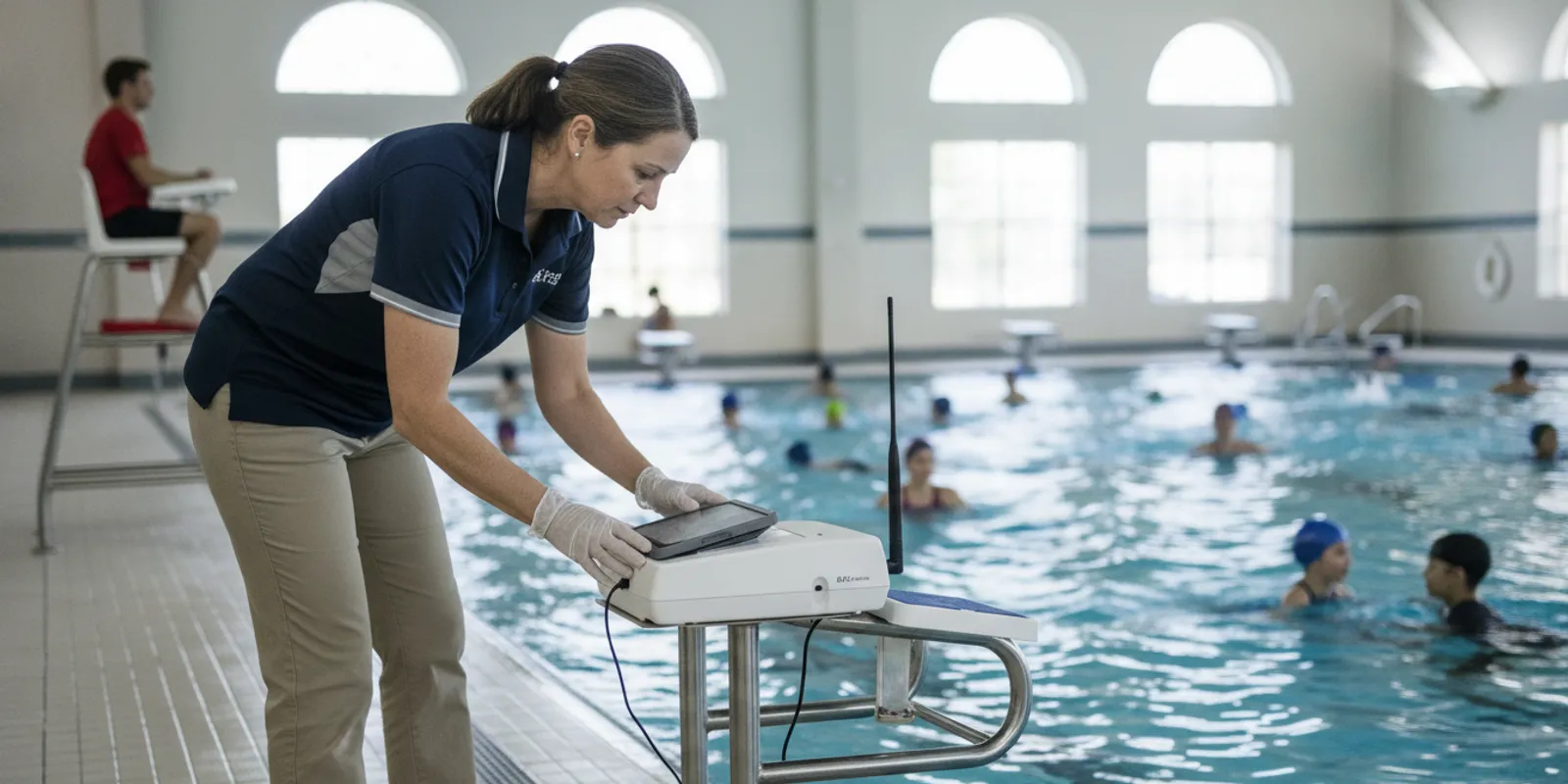
An aquatic facility sensor maintenance checklist helps aquatics directors and facility operators catch equipment and alert-pathway issues before a busy swim session. Maintenance is more than wiping down hardware: it means confirming that devices are present, usable, communicating as intended, and connected to a response plan staff understand. Wearable drowning-detection technology can add another layer of protection by alerting staff to prolonged submersion or lifeguard water entry, while lifeguards remain essential.
What should an aquatic facility sensor maintenance checklist cover?
A useful checklist follows the full path from a sensing device to a staff response. A wearable that is charged or otherwise ready is only one part of that path; the related hub, alert, communication route, and response procedure also matter. Facilities should use the equipment manufacturer's instructions and their own approved procedures to set actual inspection intervals and pass/fail criteria.
Think of maintenance in four connected areas: device condition and availability, alert transmission, staff readiness, and documentation. The exact checks depend on the equipment and the facility, so do not assume that one checklist or interval applies to every product. WAVE's wearable, wireless approach is designed to support supervised aquatic environments; it is a force multiplier, not a substitute for lifeguards or established emergency procedures.
A strong aquatic facility sensor maintenance checklist examines the whole alert pathway, not just the sensor. Check physical readiness, communications, staff response, and records using the manufacturer's instructions and facility procedures as the controlling references.
- Devices: Are assigned sensors present, identifiable, intact, and ready for use according to their instructions?
- Connections: Can the device communicate with the relevant monitoring equipment, and can staff recognize the expected alert?
- People: Do the staff on duty know what the alert means and what action they should take?
- Records: Can the facility show what was inspected, what failed, and how issues were resolved?
For broader context, compare this routine with your facility's aquatic emergency action plan and its written equipment procedures. If your operation uses a GUARDian Hub (w3000), follow the system-specific guidance supplied for that equipment rather than adapting a generic consumer-device checklist.
How should staff inspect sensors before use?
Before opening or at the start of a shift, assign a trained staff member to confirm that required sensing equipment is available and in serviceable condition. Make the inspection practical: staff should be able to identify which units are in use, which are spare, and which have been removed from service. Avoid relying on an informal assumption that a device is ready because it worked the previous day.
Visual inspection should follow the manufacturer's directions. Look for visible damage, loose or missing components, signs of wear, contamination, or anything that could make the equipment uncomfortable or unsuitable to use. Check the fit and condition of wearable items in accordance with their intended use; do not modify, open, or repair sealed equipment unless the manufacturer authorizes it.
Readiness checks must also reflect the device design. Some wearable products have different power and charging requirements, so do not create a daily charging step unless the equipment instructions call for it. WAVE's AquaSense swimmer wearables are described as having a multi-year battery and not requiring daily recharging; a facility should still track units and follow current product guidance for inspection, service, and replacement.
At the start of a session, confirm that assigned sensors are present, identifiable, physically fit for use, and ready according to product instructions. Keep damaged or uncertain devices out of service until an authorized person has assessed them.
- Count the devices needed for the session and confirm that spares are accessible.
- Match equipment to its assigned use or location when your procedure requires that tracking.
- Inspect visible condition and cleanliness using the manufacturer's approved method.
- Check battery, charging, or status indicators only as directed for that product.
- Record missing, damaged, or questionable devices and arrange a replacement or approved service.
Cleaning deserves special attention in aquatic environments. Follow product-specific instructions for approved cleaning agents, water exposure, drying, and storage. Do not assume that pool chemicals, disinfectants, or immersion are harmless to every sensor or strap. Your facility's general cleaning routine should not override the equipment manufacturer's care instructions.
Which alert-pathway checks belong in routine maintenance?
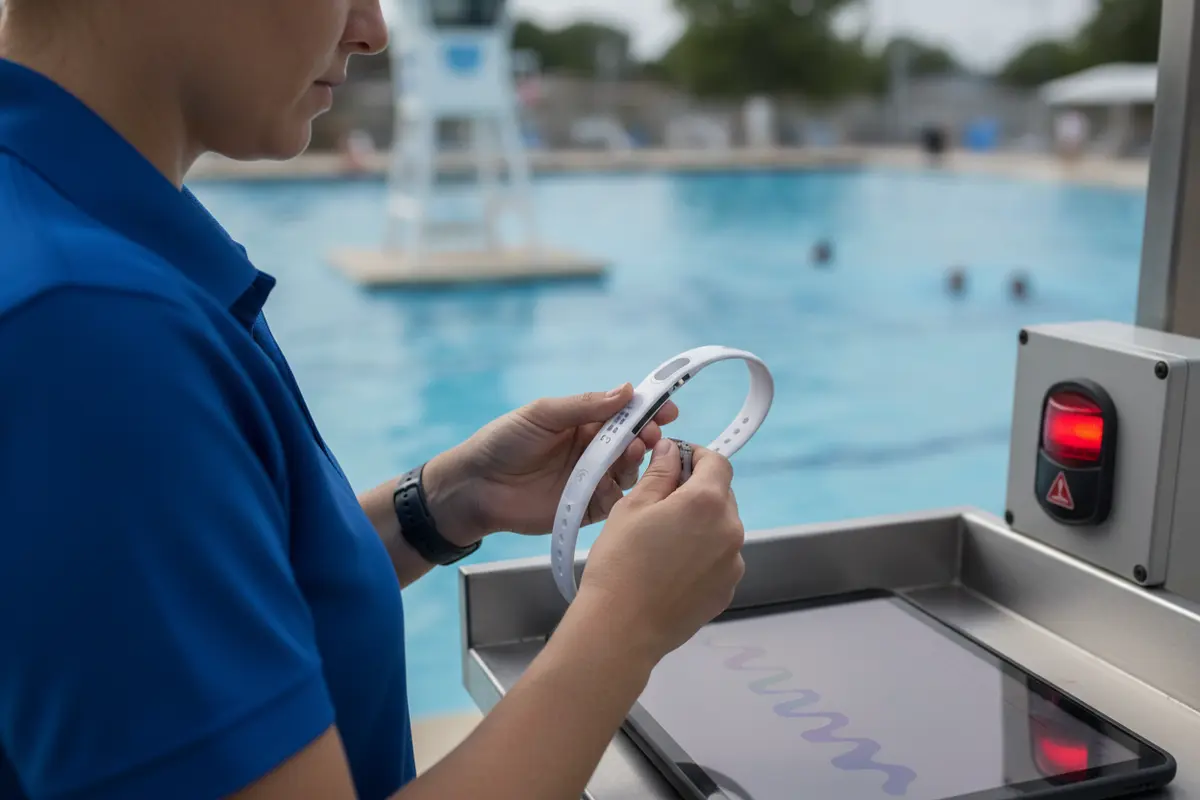
A sensor is useful to an operational team only when its signal reaches the right people and prompts an understood response. Build checks around the complete chain: sensing equipment, the monitoring system, the alert device or facility notification, and the staff member who receives it. If any link is unavailable, record the limitation and use the facility's approved fallback procedures.
Test alerts only by the procedure authorized for your equipment and facility. A controlled test should not create confusion among swimmers or staff, interrupt supervision, or be mistaken for a real emergency. Coordinate the test with the shift lead, tell affected personnel what to expect, and confirm afterward that the system has returned to its normal operating state.
WAVE's system uses wearable sensors to detect prolonged submersion or lifeguard water entry and can alert staff through vibrating bracelets and facility alerts. The details of a test, alert range, or system status must be confirmed from current instructions for the installed configuration; this article does not set device-specific thresholds or technical acceptance limits.
Test the alert route from device to responder, not merely whether a screen or indicator turns on. Use a planned, authorized test, confirm the people responsible received and understood it, and restore normal operations afterward.
- Confirm the monitoring equipment is powered and shows the expected operating status.
- Use only the approved test method to verify that a sample device communicates.
- Check that the intended staff alert endpoint is available and recognizable.
- Confirm the person on duty can explain the required response to the test alert.
- Document test results, faults, corrective action, and any equipment kept out of service.
Where the facility has multiple pools, zones, shifts, or alert endpoints, define which part of the pathway is tested and by whom. Do not allow a successful check at one location to stand in for confirmation at all operating areas. Keep the process consistent with your facility's lifeguard water-entry alert procedures and lifeguard support system planning.
How often should an aquatic facility check its sensors?
There is no single inspection schedule that can be prescribed for every aquatic facility sensor. Frequency depends on manufacturer instructions, the environment, use patterns, staffing, and the facility's risk and operating procedures. The facility should establish a written schedule, identify who owns each check, and review it when equipment or operations change.
It can help to separate checks by purpose instead of calling every task “maintenance.” A readiness check before use confirms that required equipment is present and usable. A scheduled review may cover records, condition, cleaning, configuration, and service needs. A post-incident or fault review asks whether any sensor, alert, or workflow issue needs investigation before normal use resumes.
Public health and inspection resources can help operators build a broader facility review process, but they do not replace product-specific maintenance guidance. The CDC's Cross-Reference Guide for the Aquatic Facility Inspection is an inspection resource, while Western Australia's aquatic facility operator resources and checklists provide another example of operational guidance. Apply requirements from the authority that governs your location.
Set inspection intervals from product instructions, applicable rules, actual facility use, and documented operating procedures. Separate pre-use readiness checks from scheduled service reviews, and reassess the schedule whenever equipment or operating conditions change.
| Check type | When to consider it | What it should confirm | Record or follow-up |
|---|---|---|---|
| Pre-use readiness | Before the equipment is relied on for a session, as defined by facility procedure | Required devices are available, appear serviceable, and have expected status | Mark complete; report absent or questionable equipment |
| Alert-pathway test | At intervals set by current equipment guidance and facility policy | Authorized test reaches intended alert endpoints and staff recognize it | Log result, faults, corrective action, and restoration to normal operation |
| Care and condition review | On the schedule and after exposure or conditions specified by manufacturer | Cleaning, storage, and physical condition meet product guidance | Note wear, servicing, removal from service, or replacement needs |
| Operational review | After a change, fault, incident, or planned procedure review | Assignment, staff understanding, fallback, and escalation remain workable | Update procedures and brief affected staff as appropriate |
This table is a planning framework, not a manufacturer's service schedule or a statement of legal requirements. Before adopting it, align each row with the applicable codes, health authority requirements, insurance conditions, and written instructions for the equipment in use. An operator can also consult the facility's pool safety equipment overview when mapping devices to the wider safety program.
What should staff record when a sensor fails a check?
Maintenance records turn a one-time check into a usable history. A clear entry lets the next shift see whether a device was available, tested, taken out of service, or returned after an authorized fix. It also helps managers identify repeated problems that may need a process or supplier discussion rather than another informal reminder.
Keep records concise but specific enough to act on. Include the date and time, location or zone, device identifier if applicable, person completing the check, type of check, result, and action taken. If an alert test is involved, record who received it and whether the result matched the approved procedure. Store records according to the facility's retention and privacy policies.
When a check fails, do not treat the sensor as available until the issue is resolved under the manufacturer's directions and facility policy. Notify the responsible supervisor, label or separate the affected item as appropriate, and apply the facility's established contingency plan. Never suggest that a sensor fault makes normal supervision optional; staff must continue the required coverage and response procedures.
Record what was checked, what happened, who was notified, and how the issue was closed. Remove questionable equipment from reliance, follow the approved contingency process, and verify its return to service rather than assuming a repair worked.
- Identify the equipment or alert pathway affected and the location where it is used.
- Describe the observed issue without guessing at its cause.
- Note the immediate operational action, including any approved fallback.
- Record who was notified and any supplier or authorized service follow-up.
- Document the verification that supports return to service, following product procedures.
Good maintenance should connect to training, not sit in a binder. A supervisor can use recurring issues to refresh staff on the alert meaning, communication chain, and emergency action plan. WAVE's how-it-works information and FAQ can help teams understand system concepts; use current system onboarding and official facility procedures for hands-on instruction.
How can facilities keep technology aligned with lifeguard operations?
Maintenance works best when it reflects the actual pool operation. A device check should not pull a lifeguard away from assigned surveillance or leave an area without required coverage. Plan checks during a suitable time, assign tasks to trained personnel, and identify who has authority to pause use or escalate a fault.
Staff should know what different alerts mean, who responds, and how to communicate if a device or endpoint is unavailable. Include seasonal and relief staff in briefings. A sensor alert supports awareness; the facility's staffing plan, active supervision, emergency action plan, and local requirements still govern the response.
Wearable, wireless detection offers a different operational approach from permanently installed camera systems and may suit facilities where construction or water visibility creates constraints. Technology selection does not remove the need to check fit with staffing, layout, connectivity, training, and documented procedures. Review the specific configuration rather than assuming every facility uses the same workflow.
Make maintenance compatible with active supervision: assign checks to trained staff, keep required coverage in place, and train responders on what alerts mean. Detection technology adds information and another layer of protection; it does not replace lifeguards or emergency planning.
During a periodic review, walk through a realistic scenario with the people who would receive an alert. Can they identify it, reach the appropriate supervisor, and follow the facility response without confusion? If the answer is unclear, update the briefing or workflow and test the change using an approved, controlled method.
For a wider safety-system review, compare sensor maintenance with your facility evaluation of pool safety tools and the role of real-time submersion monitoring. These resources can help frame questions; your local codes, manufacturer's guidance, and operational plan remain controlling.
How can managers make the checklist usable across shifts?
A checklist is only reliable when staff can complete it consistently during real facility operations. Keep the form short enough to use, but specific enough that “checked” has a shared meaning among operators. Assign clear responsibility for completion, review, escalation, and follow-up so an unresolved fault cannot disappear between shifts.
Separate routine confirmation from work that requires a supervisor, technician, or manufacturer. For example, a front-line operator may be authorized to confirm that equipment is present and perform an approved status check, while diagnosis or repair may require a different role. State those limits on the checklist, and do not encourage staff to open or alter equipment outside their authorization.
Make the checklist easy to find at the point of use, with an accessible record system and a clear path for reporting exceptions. If operations span several pools or shifts, identify the area and shift on each record rather than relying on a single daily tick. A manager can then compare trends across locations while limiting access to records according to facility policy.
Make the checklist repeatable: name the responsible role, define what counts as a pass, state who handles exceptions, and make the record easy to hand over. Keep troubleshooting and repairs within the role authorized by the facility and equipment instructions.
- Define a pass: Use observable outcomes drawn from product instructions rather than vague labels such as “looks fine.”
- Assign a backup: Name who completes the check when the usual staff member is absent.
- Make exceptions visible: Provide a place to note unavailable devices, failed alerts, and pending service.
- Close the loop: Identify the person who confirms corrective action and return to service.
- Review the form: Remove obsolete equipment names and update roles when layouts, systems, or procedures change.
Managers should periodically sample completed records and speak with staff who perform the checks. Ask whether the written steps match the equipment they see and whether handoffs explain what remains unresolved. This is a process review, not a substitute for manufacturer servicing, regulatory inspection, or staff training. For team orientation, use the facility's swimmer monitoring technology overview alongside current system materials and local procedures.
Frequently Asked Questions
These answers offer a starting point for a written facility procedure. Check current product documentation and local requirements before setting a specific interval or technical test. The right schedule and record format depend on the facility and the specific sensing equipment in service. Review changes with the staff members who perform the checks.
Use these answers to clarify the maintenance approach, then make the checklist specific to your equipment, staff roles, and governing requirements. A general article cannot set universal device intervals or replace manufacturer instructions, applicable local requirements, or facility procedures.
How often should pool sensors be checked?
Use the inspection frequency stated by the manufacturer and in your facility procedures, while meeting applicable local requirements. Establish a pre-use readiness process where appropriate and separate it from scheduled service and condition reviews. Do not rely on a generic interval from another facility.
Should wearable swimmer sensors be charged every day?
Not necessarily. Charging needs vary by product, so follow its instructions instead of assuming daily charging is required. WAVE describes AquaSense wearables as having a multi-year battery without daily recharging; operators should still track device availability and follow current guidance for condition and service.
What should we do if a sensor or alert fails a test?
Notify the responsible supervisor, record the issue, and follow the facility's approved contingency procedure. Do not rely on questionable equipment until it has been assessed and returned to service in accordance with the manufacturer's instructions. Maintain required lifeguard coverage and supervision throughout.
Can a sensor maintenance checklist replace lifeguard training?
No. A checklist supports equipment readiness and maintenance records. Staff still need role-appropriate training in supervision, alert recognition, communication, and the facility's emergency action plan. Drowning-detection technology supports lifeguards; it does not replace them.
What should a facility include in its maintenance log?
Record the date, equipment or zone, check performed, result, staff member, fault or observation, notification, corrective action, and verification before return to service. Follow the facility's retention and privacy rules, and use device identifiers where helpful.
Do the same sensor checks work for every facility?
No. Equipment, water environment, operating hours, staffing, and local requirements differ. Use the product-specific manual and an approved facility procedure to define the correct checks and schedule. Review the checklist when equipment or operations change.
A consistent maintenance routine helps facility teams keep sensing equipment, alert pathways, and staff response aligned, while preserving active lifeguard supervision as the foundation of aquatic safety.
