
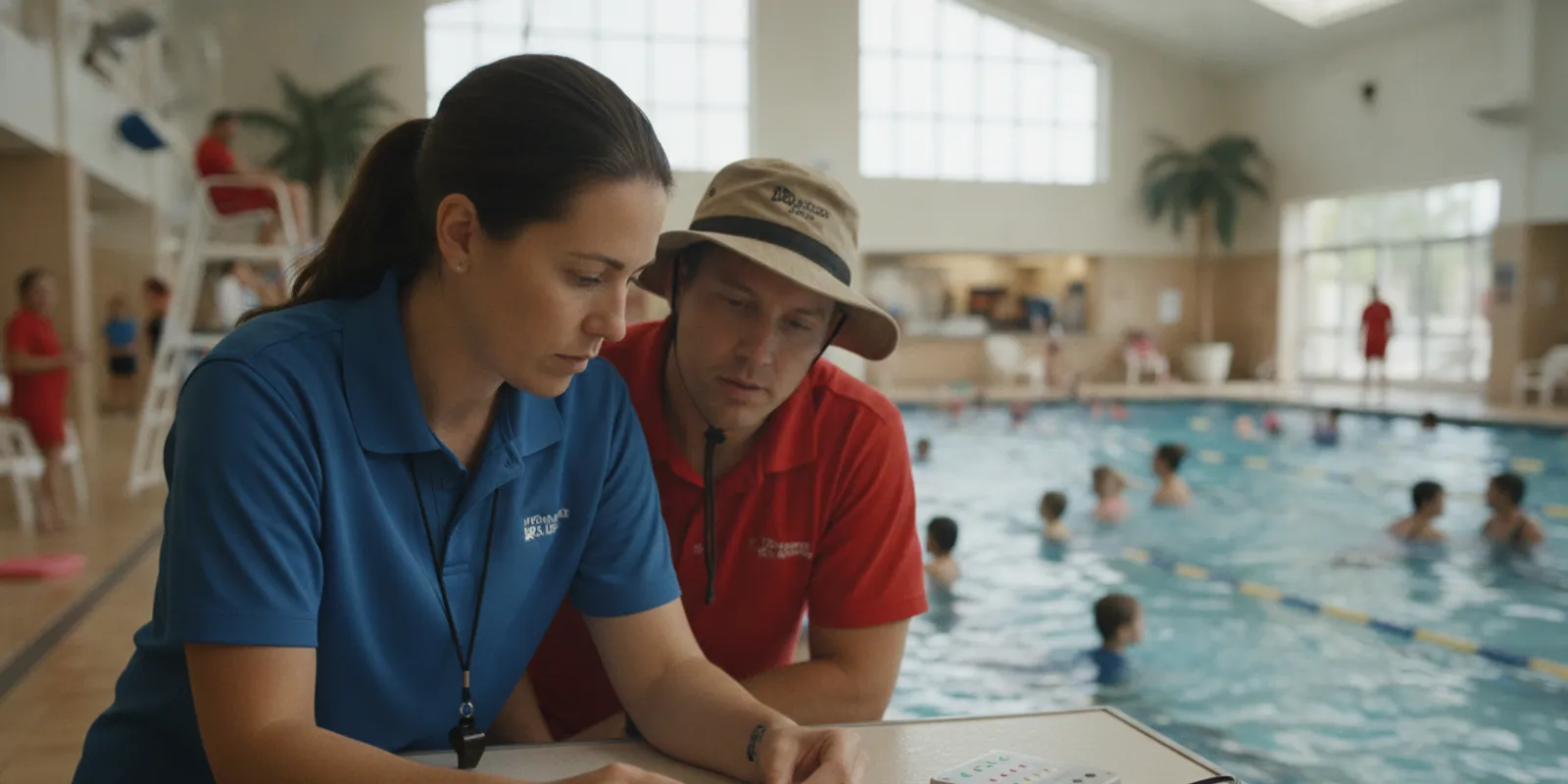
Aquatic safety technology renewal planning gives facility leaders a structured way to decide whether to renew a service, replace equipment, adjust coverage, or keep the current setup. The decision should start with how the system supports staff and the facility’s emergency procedures—not simply with a contract date or a product feature list.
What should renewal planning answer?
A renewal review should establish whether the current safety layer still fits the facility, whether staff can use it as intended, and what must change for the next term. It should cover operational readiness as well as documented service terms. It is a documented decision, not an automatic purchase or a substitute for lifeguard supervision.
For aquatics directors and facility operators, renewal planning connects several decisions that are often handled separately: equipment condition, staff procedures, service expectations, budget timing, and stakeholder approval. Bringing them into one review helps the team identify gaps before a contract expires or equipment needs attention.
Start with a clear decision statement. Is the facility considering renewal of an existing service, replacing aging components, expanding coverage to another water area, or reassessing the technology approach? These are different decisions and may require different evidence. A focused scope prevents a renewal meeting from turning into a broad product discussion with no agreed outcome.
Technology should remain one layer in the facility’s safety plan. WAVE’s wearable, wireless drowning-detection approach is designed to support lifeguards and staff with alerts; it does not take the place of trained supervision, scanning, rescue skills, or an emergency action plan. Review how the system fits with your written procedures and the roles staff are expected to perform.
- Renew: Keep the current arrangement when it remains appropriate and service needs are being met.
- Adjust: Change the operational setup, training, deployment, or coverage when the facility’s needs have changed.
- Replace: Plan a transition when equipment condition, suitability, or support requirements call for a different arrangement.
- Pause or seek clarification: Resolve unanswered questions before committing to a new term.
Before the review, collect the current agreement, equipment inventory, staff guidance, service contacts, and any facility-specific setup documentation. If the system is new to a decision-maker, start with WAVE’s GUARDian Hub information and the facility’s own current documentation.
Which records and operational evidence should the team review?
Use records that show how the technology fits daily operations: inventory and condition, staff familiarity, alert handling, support history, and changes in the aquatic environment. Compare more than one source, such as documented checks and staff feedback. Look for recurring patterns and unresolved issues, without assuming an alert system measures overall safety by itself.
Renewal decisions are stronger when the team can distinguish documented facts from impressions. Pull together the records available for the current term and assign someone to summarize them. If a record was not kept, note that gap rather than treating the missing information as proof that the system worked—or did not work.
Build a simple current-state file
- Equipment: Record each component, its location, its condition, and the person responsible for routine checks. Note missing, damaged, or unassigned items.
- Use and readiness: Review how staff learn the alert process, where instructions are kept, and whether new or seasonal team members receive the same orientation.
- Alert response: Check whether staff understand who receives an alert, who takes action, and how the team coordinates with existing emergency procedures.
- Service: Keep support requests, response communication, troubleshooting notes, and outstanding questions together. Separate provider response from facility-side setup or training issues.
- Facility changes: Note changes to water areas, operating schedules, staffing patterns, programs, or the groups using the facility that could affect deployment or procedures.
- Contract and ownership: Confirm renewal dates, notice requirements, named contacts, included support, training arrangements, and who can approve changes.
Use several perspectives. Ask the aquatics director about program and coverage changes, the lifeguard supervisor about usability and response practice, maintenance staff about storage and care, and finance or procurement about term and approval timing. Keep questions specific: “Which alert step is unclear?” is more useful than “Do you like the system?”
Where it is appropriate and consistent with privacy and facility policy, review de-identified operational notes rather than collecting unnecessary personal information. The purpose is to understand process and readiness, not to build a record about individual swimmers. If the team lacks a consistent process for emergency roles, review its aquatic emergency action plan guidance as a separate planning aid.
How should the team assess lifecycle, service, and fit?
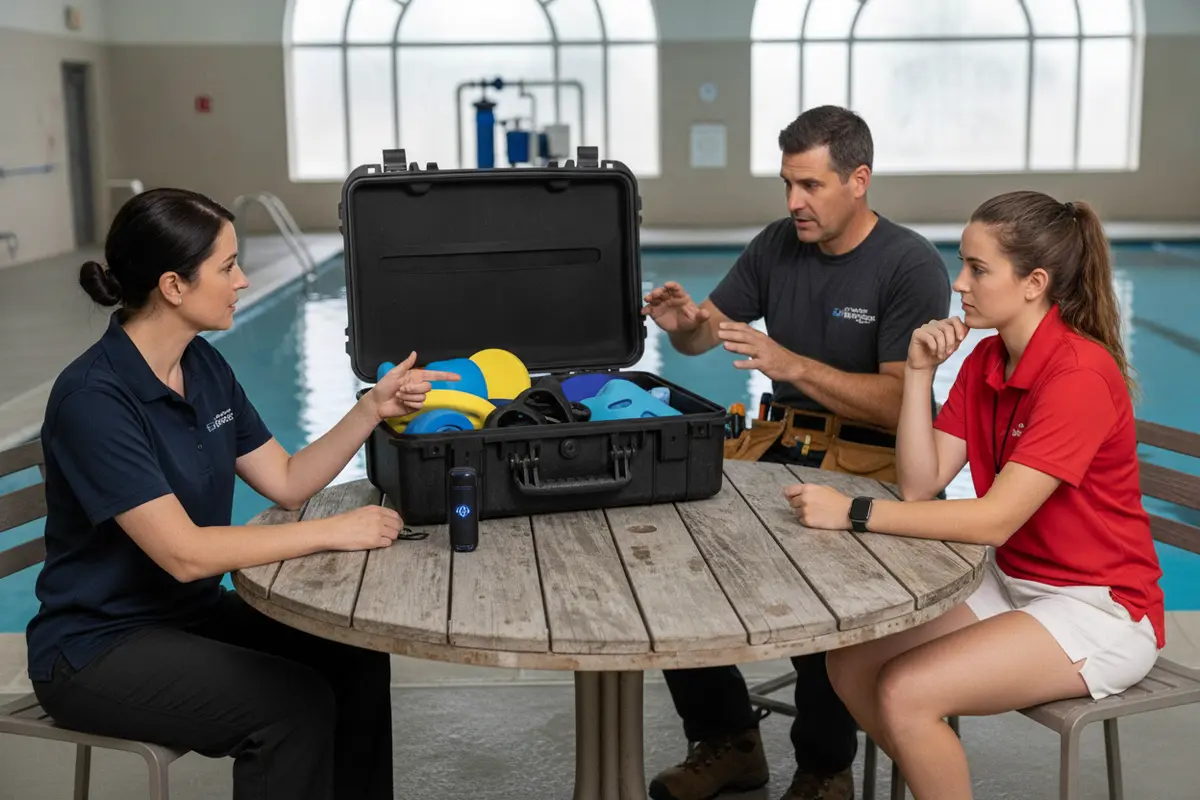
Assess the whole operating arrangement, not a single device or feature. Confirm what is in service, what the agreement covers, how support works, and whether the current approach suits the facility’s water conditions and response workflow. Ask the provider to clarify any lifecycle or service detail that is not documented.
Lifecycle review is not the same as assuming that equipment has reached a universal replacement age. Different components and service agreements may have different care, support, or replacement considerations. Use the provider’s current documentation and the facility’s own records to identify the actual condition and applicable terms.
For a wearable, wireless system, the review can include where staff store and issue wearables, how they confirm availability, how concerns are reported, and how a wearable relates to the facility’s alert and response process. WAVE describes AquaSense swimmer wearables as non-tethered and designed with a multi-year battery, without daily recharging; confirm current product details and care guidance with the provider during the review.
Compare the facility’s environment and operational needs with the detection approach. A camera-based system and a wearable system have different deployment considerations. WAVE positions its wearable approach for use in clear and dark or murky water and describes deployment without permanent construction. If water conditions, layout, or infrastructure have changed, ask the provider to explain what those changes mean for suitability and deployment rather than relying on a general claim. A research article on next-generation pool drowning-prevention strategy discusses automated safety systems as part of the technology landscape; facility leaders can use it to develop questions, while still relying on site-specific assessment and written product details (review the research article). For a public-sector perspective, ICMA’s account of an AI-driven pool safety project by Selwyn District Council describes one local-government example, not a universal requirement or outcome (read the council case article).
Review service as a working relationship. Identify the support channel, the facility’s internal owner, how staff report a fault, what information to supply, and what the agreement says about support and replacement. Ask for current written terms rather than relying on a prior quote, an old presentation, or informal recollection. WAVE’s support information and FAQ can help frame questions, but the signed agreement and current provider confirmation govern the facility’s specific arrangement.
A renewal review is also a useful time to test staff understanding. Walk through a realistic alert scenario during a staff meeting or drill, following the facility’s approved procedures. Observe whether personnel know who receives the notification, who directs the response, and how the team avoids conflicting instructions. This is a process check, not a test of whether technology alone can rescue a swimmer.
What should a renewal comparison include?
Compare options against the same operational requirements and evidence. Include the current arrangement as a real option, alongside a revised setup or replacement. Capture both documented terms and unresolved questions so decision-makers can distinguish known costs and responsibilities from items that still need confirmation.
A short comparison table makes tradeoffs visible to operational, finance, and leadership reviewers. Use the facility’s own costs and agreement details; do not fill blanks with estimates that have not been confirmed. The example below is a framework, not a price quote or recommendation.
| Review area | Renew current arrangement | Adjust current arrangement | Replace or transition |
|---|---|---|---|
| Fit to current needs | Which needs remain well served? | What coverage or workflow change is needed? | What unmet need justifies a change? |
| Equipment and lifecycle | What condition checks and care remain? | Which components or locations change? | What transition and disposition steps apply? |
| Staff readiness | Can current staff follow the alert process? | What retraining or revised guidance is needed? | What onboarding and practice are required? |
| Service and terms | What is included in the next term? | How do support and responsibilities change? | What support, warranty, and handoff terms are documented? |
| Budget and approvals | What confirmed recurring or renewal amount applies? | What confirmed change in scope or cost applies? | What transition costs and approvals need verification? |
| Open questions | Which issues remain unresolved? | What must be confirmed before approval? | What conditions must be met before transition? |
Use a consistent evidence scale for every option: documented, observed, staff-reported, or not yet confirmed. That simple distinction prevents a projected benefit or a verbal assurance from being mistaken for a verified feature or contract term. Ask each reviewer to identify the evidence behind their recommendation.
When comparing providers or approaches, keep the criteria tied to your own facility: environment, operating schedule, deployment constraints, staff workflows, service expectations, privacy considerations, and budget process. Do not treat a feature checklist as proof of suitability. WAVE’s commercial pool product information and current pricing page can be starting points for questions, but confirm any quote, scope, current offer, and contract language directly before approval.
How can leaders prepare the approval and implementation plan?
Make the decision easy to review: state the recommended option, summarize the evidence, and identify the budget and approval path. List conditions that must be resolved before commitment. If the choice changes equipment or workflow, pair approval with named owners, staff communication, and a transition schedule.
Map the approval route early. A facility may need operational, finance, procurement, legal, risk, or executive review, depending on its governance. Ask who owns each step and what information that person needs. A renewal request that reaches the approver near its deadline can leave little time to resolve terms or prepare staff.
- Set the decision date. Work backward from the agreement’s notice and renewal dates. Confirm those dates from the contract.
- Write the recommendation. State renew, adjust, replace, or defer, and give the operational reason in plain language.
- Attach the evidence. Include the inventory, staff feedback themes, service record, facility changes, option comparison, and provider clarifications.
- Identify budget facts. Use confirmed current pricing and terms, distinguish recurring from one-time items, and mark any unknowns for follow-up.
- Name owners. Assign a decision owner, an operational lead, a staff-training lead, and a contact for provider questions.
- Plan the next review. Put the next lifecycle and service check on the calendar rather than waiting for the next renewal deadline.
If the decision is to continue, document what will stay the same and any actions needed to improve readiness. If the setup changes, establish who coordinates delivery or deployment, how staff receive instructions, how the team validates alert routing, and what contingency applies while the transition is underway. Keep the facility’s lifeguard roles and emergency procedures in force throughout.
Keep the review active between contract dates
A renewal process works better when it is not rebuilt from memory every few years. Set a light-touch review cadence that fits the facility’s operating calendar. At the start of a season or program cycle, confirm equipment inventory, staff ownership, and alert instructions. During operations, route equipment or service concerns to a named owner and record how they were resolved. After a change in layout, schedule, or staff workflow, check whether the documented setup and instructions still match the facility.
Choose a few process indicators that staff can maintain without creating unnecessary paperwork. Examples include whether required components are accounted for during the facility’s own checks, whether new staff receive orientation, whether open support issues have an owner, and whether emergency procedures identify the relevant alert and response roles. These are readiness checks, not measures of drowning prevention effectiveness. Interpret them alongside direct observation, staff feedback, and the specific system’s operating guidance.
At a regular review meeting, record the date, participants, decisions, unresolved questions, and due dates. Close the loop by confirming that action items were completed and that updated instructions reached the staff who need them. This record will make the next renewal review more efficient and help leaders explain why the facility renewed, changed, or replaced an arrangement.
Facilities planning across several sites can use a shared review template while retaining site-level findings. Standardize the questions and approval record, but do not assume that water conditions, staffing, or response workflows are identical. A municipal operator can also consult this municipal pool safety planning guide for considerations specific to public facilities.
To understand the questions a provider discussion can cover, review WAVE’s drowning detection system demo checklist and lifeguard support system guide. Use them as discussion resources, then verify the details against current product documentation and the facility’s own requirements.
What questions should the team ask its provider?
Ask for answers in writing when they affect scope, service, or approval. Connect questions about equipment and contract terms to the facility’s actual operating conditions. Include staff responsibilities and the next review date, not just details from a feature demonstration.
Prepare a short, prioritized list and send it before a review meeting. Ask for specific documentation or an owner for any item that cannot be answered on the call. Helpful questions include:
- Which equipment and services are included in the proposed renewal, and what has changed from the current term?
- What current care, inspection, storage, and troubleshooting guidance applies to each component?
- What should staff do when a wearable is unavailable, a device appears damaged, or an alert does not behave as expected?
- How are alerts delivered to staff, and what setup or role assignments must the facility confirm?
- What staff orientation or refresher resources are available, and who should receive them?
- What support is included, how does the facility request it, and what response commitments are in the written agreement?
- How would a change in water area, schedule, or operating workflow affect the recommended setup?
- What are the renewal term, applicable charges, notice requirements, and any conditions for changes or replacement?
- What records should the facility retain for its own equipment and service review?
A useful provider response is clear about boundaries. It explains what the technology does, what it does not do, what the facility must configure or maintain, and how staff should respond. Be cautious of language implying that technology alone guarantees safety or replaces lifeguard responsibilities.
For a product-specific discussion, compare the provider’s response with the facility’s written requirements. WAVE’s swimmer equipment information and lifeguard equipment information can help identify topics for follow-up. Keep the final decision grounded in confirmed details and actual staff workflows.
Frequently Asked Questions
When should a facility begin renewal planning?
Begin early enough to review contract notice dates, collect staff and service feedback, seek current terms, and complete internal approvals. The appropriate lead time depends on the facility’s agreement and purchasing process, so confirm dates rather than relying on a general calendar rule.
Does a renewal review mean the facility must replace its technology?
No. The review may support renewal as-is, a change in setup or procedures, a replacement, or further investigation before a decision. Use equipment condition, facility needs, staff readiness, service experience, and confirmed terms to compare the options.
Can a drowning-detection system replace lifeguards?
No. WAVE should be positioned as an additional layer that supports lifeguards and staff. It does not replace supervision, scanning, training, rescue skills, or the facility’s emergency action plan.
What information should be included in the renewal approval request?
Include the decision requested, operational rationale, equipment and service review, staff feedback themes, comparison of options, confirmed agreement and budget details, open questions, approval owners, and any transition or training actions.
How should a facility compare wearable and camera-based approaches?
Compare the approaches against the facility’s water conditions, infrastructure, deployment constraints, staff workflows, service expectations, and documented requirements. Ask providers to explain limits and confirm how each approach fits the actual environment; do not rely on a generic feature list alone.
What if staff feedback is mixed?
Separate specific workflow concerns from general preferences. Ask for examples, observe an approved practice scenario, and determine whether the issue relates to training, alert routing, equipment availability, or suitability. Document any unresolved concern and address it before final approval where possible.
A repeatable review helps facilities make renewal decisions with clearer evidence, defined responsibilities, and a practical plan for the next term. Keep the process centered on the people, procedures, and safeguards that make aquatic environments safer.
