
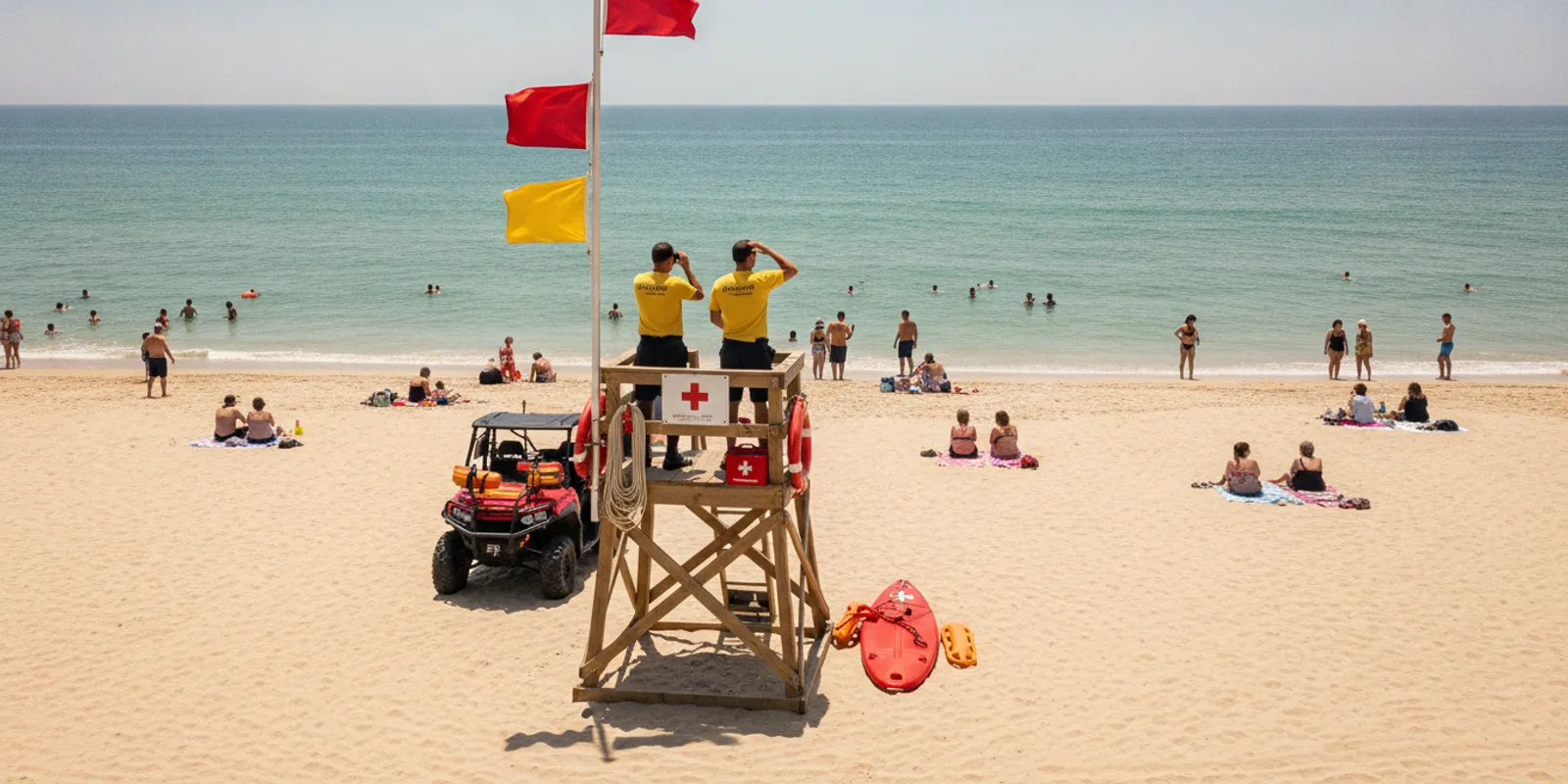
Beach drowning prevention is an operational responsibility, not a single piece of equipment or a posted warning. Municipalities, camps, resorts, and other supervised waterfront operators need a plan that accounts for their shoreline, visitors, staff, changing conditions, and emergency response capacity.
This guide focuses on day-to-day operations at supervised beaches. It covers how to define the area your team is responsible for, organize supervision, prepare staff to communicate and respond, and assess whether an additional detection layer fits the actual environment. No plan or technology can eliminate risk. The goal is to make responsibilities clear and response readiness consistent.
What does beach drowning prevention require from an operator?
Prevention works best as a set of connected practices: understand the site, provide active supervision, communicate changing conditions, and prepare responders to act. A written plan should make those practices visible in everyday assignments, not just during an annual review.
A beach is not a uniform space. Shoreline shape, water depth, access points, currents, weather, visibility, crowd density, and the presence of structures or vegetation can all affect how staff observe and manage an area. Conditions may change during a shift, so planning should include both a baseline site assessment and a way to share updates.
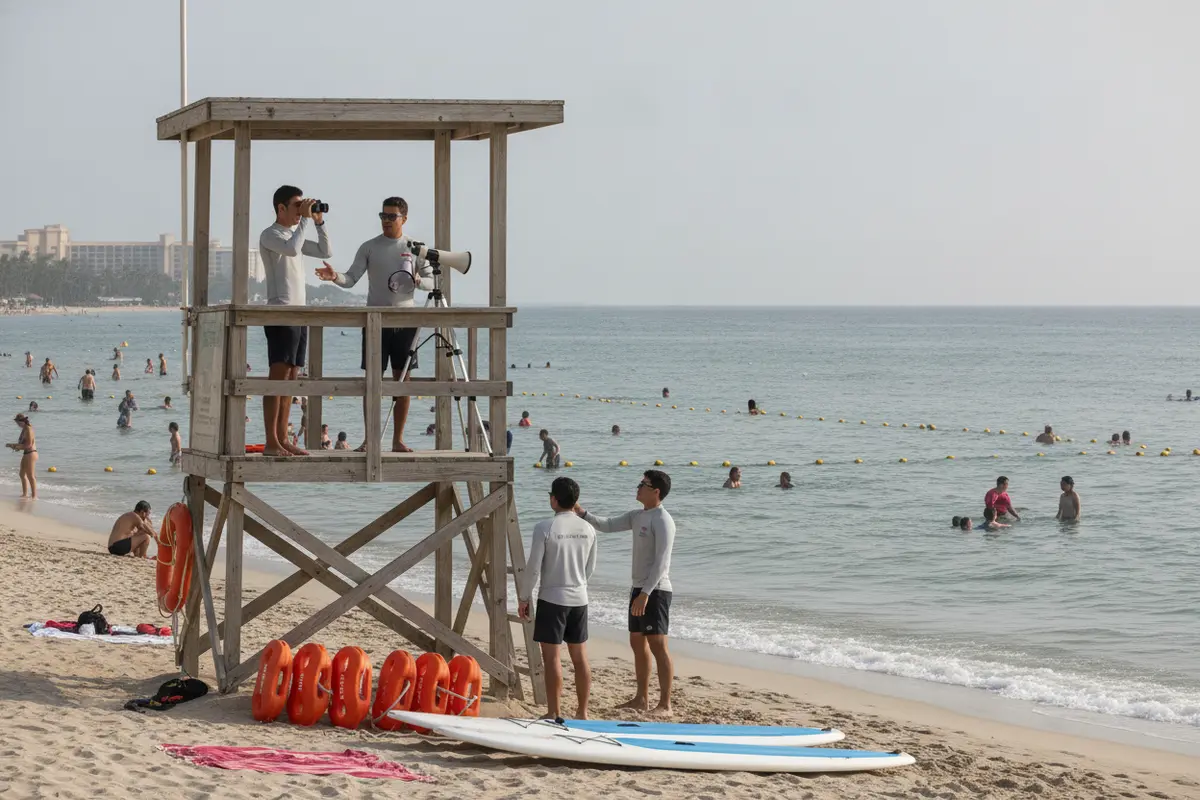
Start by identifying the boundaries of the supervised area and the activities permitted there. Mark the points where visitors enter and leave the water, where staff are positioned, and where a person could move beyond the area your team monitors. Record practical details such as access routes for emergency responders, locations of rescue equipment, communication coverage, and any known environmental hazards.
Next, clarify the operator's responsibilities. Who decides whether conditions require a warning, a restricted area, or a temporary closure? Who checks equipment? Who coordinates with emergency services? Written answers help prevent uncertainty when the beach is busy or a staff member is absent. A useful plan is specific enough to guide action but simple enough for seasonal employees and substitute staff to follow.
Public health guidance supports using multiple prevention strategies rather than relying on one intervention. The CDC's overview of global drowning prevention describes prevention as a broad effort to adapt measures to local conditions. For a supervised waterfront, that means connecting local procedures, staffing, communication, visitor information, and emergency readiness.
How should a beach team define its supervision plan?
Set supervision boundaries that staff can see and explain. Assign zones, relief coverage, and escalation responsibilities in advance, then adjust the plan when attendance or conditions change. A defined plan supports consistent attention; it does not make any one staff member responsible for watching every person at every moment.
Supervision begins with a realistic description of the area and service being provided. Avoid language that promises constant observation or guaranteed safety. Instead, document what staff are assigned to monitor, how they will cover the designated area, and what they should do when conditions exceed the plan.
Divide the supervised area into practical zones based on sightlines, access points, and how visitors use the beach. Assign primary coverage and a clear backup or relief arrangement for each operating period. The plan should explain how staff communicate a handoff, what happens when a station is temporarily unattended, and who can authorize a change in coverage. Do not depend on informal assumptions such as “someone will notice” or “the team knows who has that side.”
Use a pre-opening briefing to confirm assignments, hazards, expected activities, and any changes since the previous shift. During operation, supervisors should monitor workload and visibility, not just the roster. A zone may become harder to cover when attendance grows, weather changes, or an activity moves closer to a boundary. Staff should have a defined way to request help, reposition, or recommend restricting access.
Relief breaks deserve explicit attention. Identify who takes over, how the outgoing and incoming staff exchange relevant information, and how an interruption is handled. If a staff member has to leave a position unexpectedly, the team needs a prompt method to restore coverage or adjust operations. The procedure should work across the whole shift, including opening, closing, and periods with fewer staff.
Review the organization's broader aquatic emergency action plan guidance alongside local policies and applicable requirements. The article can help frame planning questions, but beach operators should adapt procedures to their own site and consult the authorities responsible for local rules.
What should the team check before opening?
A repeatable opening check can reveal whether the planned operation still fits the conditions. Staff should verify the area, communication methods, equipment, and assignments, then report anything that changes the level of supervision or the response plan before visitors enter the water.
A short checklist helps turn the plan into a routine. The person completing it should know where to record a concern and who can decide what happens next. Keep the checklist focused on observable conditions and the actions that staff are authorized to take.
- Walk the supervised boundary. Check access points, sightlines, signs, barriers, and any newly observed hazards. Confirm that the area being opened matches the area assigned to staff.
- Review environmental conditions. Follow local procedures for weather, water, and shoreline conditions. Note changes that could affect visibility, safe access, or the ability of staff to carry out their roles.
- Confirm assignments and readiness. Verify who is covering each zone, who is supervising the whole operation, and how relief or an unexpected absence will be handled.
- Check rescue and communication equipment. Confirm that designated equipment is present, accessible, and checked according to the facility's maintenance procedures. Test the communication method staff are expected to use.
- Review the emergency route. Make sure responders can be directed to the correct entrance or meeting point and that staff know who will call for assistance and who will guide responders.
- Record exceptions and decisions. Document the check, unresolved issues, and any change to the operating area or visitor access. Share the change with the team before service begins.
A checklist is not a substitute for judgment or training. It makes omissions easier to spot and gives the supervisor a consistent starting point. If a check raises a concern, the plan should name the person who assesses it and the permitted options, such as correcting the issue, restricting a section, or delaying opening.
Operators can also review the municipal aquatic safety planning guide for ideas on documenting equipment, assignments, and review responsibilities. Apply only the elements that fit a waterfront operation; a beach is not interchangeable with a pool.
How can staff communication support a fast, coordinated response?
Communication should be planned before an emergency. Staff need to know which channel to use, what information to give, how to acknowledge an alert, and who coordinates the response. Practice should include routine updates and urgent messages, not only a classroom review of the written plan.
In an emergency, unclear roles and vague location details can slow coordination. A communication plan should describe the ordinary route for staff updates and the escalation route for urgent concerns. It should also account for dead zones, noise, distance, and the possibility that one method is unavailable.
Use simple, agreed language for locations and zones. A caller should be able to identify the nearest landmark or access point and explain what assistance is needed without giving a long, improvised description. If the operation uses radios or phones, establish who carries each device, how staff confirm receipt, and what backup method is available.
Assign emergency responsibilities in advance. Depending on the operation, roles might include initiating the response, providing care within the person's training, contacting emergency services, meeting responders, managing bystanders, and accounting for other visitors. One person may have more than one role in a small operation, but staff should understand the order of priorities and how assignments change if someone is unavailable.
Include a process for notifying a supervisor when conditions or crowd patterns change. Not every message is an emergency, but small changes can affect coverage. Staff should be encouraged to raise a concern early and know that a supervisor will acknowledge it and make a decision.
Run short scenario-based drills. For example, have the team practice reporting an incident location, requesting additional help, and directing responders from the access point. Debrief afterward: Was the message received? Did everyone know their task? Could the team reach equipment and the scene as planned? Record actions to improve and repeat the exercise when staffing, site layout, or procedures change.
For additional planning prompts, review WAVE's lifeguard water-entry detection overview and lifeguard support system guide. These resources discuss alert and response workflows; the beach operator must decide what applies to its own staff, site, and approved procedures.
Which environmental changes should trigger a review?
Set review triggers before the conditions change. Establish who watches for relevant weather, water, visibility, and crowd changes, what information they use, and who can alter operations. The trigger should lead to a defined action, not merely a note that conditions are different.
Environmental awareness is an operating responsibility, not a one-time opening task. Conditions may shift during a session, and a plan based on the morning's situation may no longer fit later. Identify the conditions your local policies require staff to monitor and the official or site-specific information sources they should use.
Write down thresholds and decision authority where appropriate. The precise thresholds depend on location, local authorities, and the nature of the operation, so do not borrow a generic number from another beach. Instead, specify who evaluates a change, who can restrict access or suspend water activity, how the decision is communicated, and what must happen before normal operations resume.
Include visibility and crowd movement in the review. A dense gathering, an event, a new activity, or a change in water color may affect staff's ability to monitor their assigned area. Staff should have a practical route for reporting that their view or workload has changed. The supervisor can then add coverage, change the permitted area, communicate a warning, or take another action supported by the local plan.
Post visitor information where people make decisions about entering the water. Use clear, accessible wording and symbols where appropriate. Explain the supervised-area boundary, any current restrictions, and how visitors can ask staff for help. Signs support staff communication; they do not replace it or guarantee that visitors understand or follow every instruction.
Keep a simple log of meaningful changes and decisions. Record the time, condition observed, person notified, action taken, and any follow-up needed. Reviewing these records can help managers identify recurring staffing, communication, or site-layout issues and make the next operating plan more practical.
How should operators evaluate an additional detection layer?
Evaluate detection tools as one possible layer within a staffed response plan. Ask what the device detects, what conditions it has been assessed for, how an alert reaches staff, and what action follows. Do not assume that a product designed for one aquatic setting is suitable for a beach.
Technology can support awareness and staff communication, but its value depends on fit with the site and a reliable response process. Before selecting a tool, define the operational problem you want to address. Is the concern delayed awareness in a particular zone, a gap in alert delivery, or a need to coordinate staff when someone enters the water? A clear use case makes product comparisons more useful.
Ask suppliers for specific, documented information about the intended environment and limitations. Confirm the water conditions, operating boundaries, communications infrastructure, device wear requirements, maintenance, training, and alert behavior covered by the product documentation. Do not assume that a system tested or described for a pool, lake, or other setting has also been validated for surf, beach currents, saltwater, or a particular shoreline.
| Evaluation area | Questions for the operator | What to document |
|---|---|---|
| Site fit | Is this exact environment within the stated intended use? Which conditions are outside its limits? | Written compatibility details and excluded conditions. |
| Detection and alert | What event is detected? How is an alert delivered, and what does it not detect? | Alert sequence, limitations, and staff notification path. |
| Response workflow | Who receives the alert, who confirms it, and who responds at the site? | Named roles, backup coverage, and scenario test results. |
| Operations | What setup, checks, maintenance, training, or visitor participation is needed? | Responsibilities, schedule, records, and support process. |
| Evaluation | How will the operator assess whether the tool fits the plan? | Defined trial boundaries, success questions, and review date. |
Where wearable detection is being considered, ask how the device is worn, how it communicates with the monitoring equipment, what alerts staff receive, and what happens if the wearable is removed or outside its operating range. Ask to see the complete workflow, not only a demonstration of an alert. A demo should include the staff member who will receive the signal and the person responsible for coordinating the response.
WAVE describes its products as wearable and wireless drowning-detection technology for supervised aquatic environments. That description alone does not establish suitability for a specific beach, surf zone, or operating condition. If you are considering a WAVE system, ask the company directly to confirm whether the precise site and intended use are supported before making a purchase decision. Read about the GUARDian Hub, swimmer equipment, and lifeguard equipment as part of that evaluation, not as proof of beach validation.
The WAVE FAQ and pricing information can help operators prepare questions about equipment and service. Confirm current product details directly with the provider and compare them with your written operating plan. Do not replace trained responders, established supervision, or required emergency procedures with an alert device.
Public health prevention recommendations also emphasize multiple measures. The American Academy of Pediatrics' drowning prevention report provides a broader prevention framework. Operators should use authoritative guidance alongside local rules, professional training, and site-specific assessment when deciding which measures belong in their program.
How can managers review and improve the plan?
Review the plan after drills, meaningful operating changes, and incidents or near misses. Use documented observations to make specific adjustments to boundaries, staffing, communication, training, or equipment checks. Assign an owner and completion date to each improvement so that lessons lead to action.
A plan is only useful when staff can find it, understand it, and use it under ordinary operating pressure. Keep the current version accessible to relevant employees and make sure updates reach seasonal, temporary, and relief staff. Remove outdated copies where possible so a past procedure is not mistaken for the current one.
Choose a regular review point before the operating season and a short post-season review. Revisit the site map, staff roles, emergency access, communication equipment, visitor notices, and maintenance process. Also review changes to the physical site, services offered, local requirements, and the number or experience of staff. A change in any one of these can affect how the plan works.
After a drill or actual event, gather observations from the people who carried out the roles. Ask what was clear, where a handoff failed, whether the communication method worked, and whether equipment was accessible. Focus the review on improving the system rather than assigning blame. Record changes, identify who is responsible for making them, and schedule a follow-up check.
Managers can compare their communications and maintenance procedures with WAVE's emergency action plan resource and safety tools evaluation guide. These are planning references, not substitutes for local beach procedures or advice from the authorities overseeing the site.
Discuss your waterfront safety questions
Frequently Asked Questions
Can any safety technology replace beach staff?
No. Detection technology may provide an additional alert layer when it is appropriate for the site, but it does not replace trained responders, active supervision, emergency procedures, or other required safeguards. Operators should define who responds to every alert and continue to follow their staffing and operating plans.
Should a pool detection system be assumed to work at a beach?
No. The conditions and operating environment can differ substantially. Ask the manufacturer to confirm in writing whether the specific beach environment and intended use are supported, what limitations apply, and how the system's alert process fits the response plan.
What belongs in a beach opening checklist?
Include a boundary and access-point check, review of relevant environmental conditions, confirmation of staff assignments, inspection of designated communication and rescue equipment, and a check that emergency access arrangements are understood. Record concerns and make sure a supervisor addresses them before opening.
How often should waterfront staff practice emergency communication?
Set a schedule based on the operation, applicable requirements, staffing changes, and the complexity of the response plan. Practice when staff or procedures change and use drills to test the actual communication route, roles, and access paths. Document findings and follow-up actions.
What should an operator ask a detection technology provider?
Ask about the intended environment, detection limits, alert delivery, device requirements, communications coverage, maintenance, training, support, and documented operating constraints. Then test the end-to-end workflow with the staff who will use it and decide how the tool fits into the site's existing response plan.
Does a warning sign provide enough protection?
No. Clear visitor information is useful, but signs alone do not provide supervision, assess changing conditions, or carry out an emergency response. Use them as one part of a broader plan that includes staff responsibilities and an accessible way to communicate concerns.
Consistent beach safety depends on clear responsibilities, conditions-aware decisions, practiced communication, and a response plan that staff can carry out. Review those layers together and make adjustments whenever the site or operation changes.
