
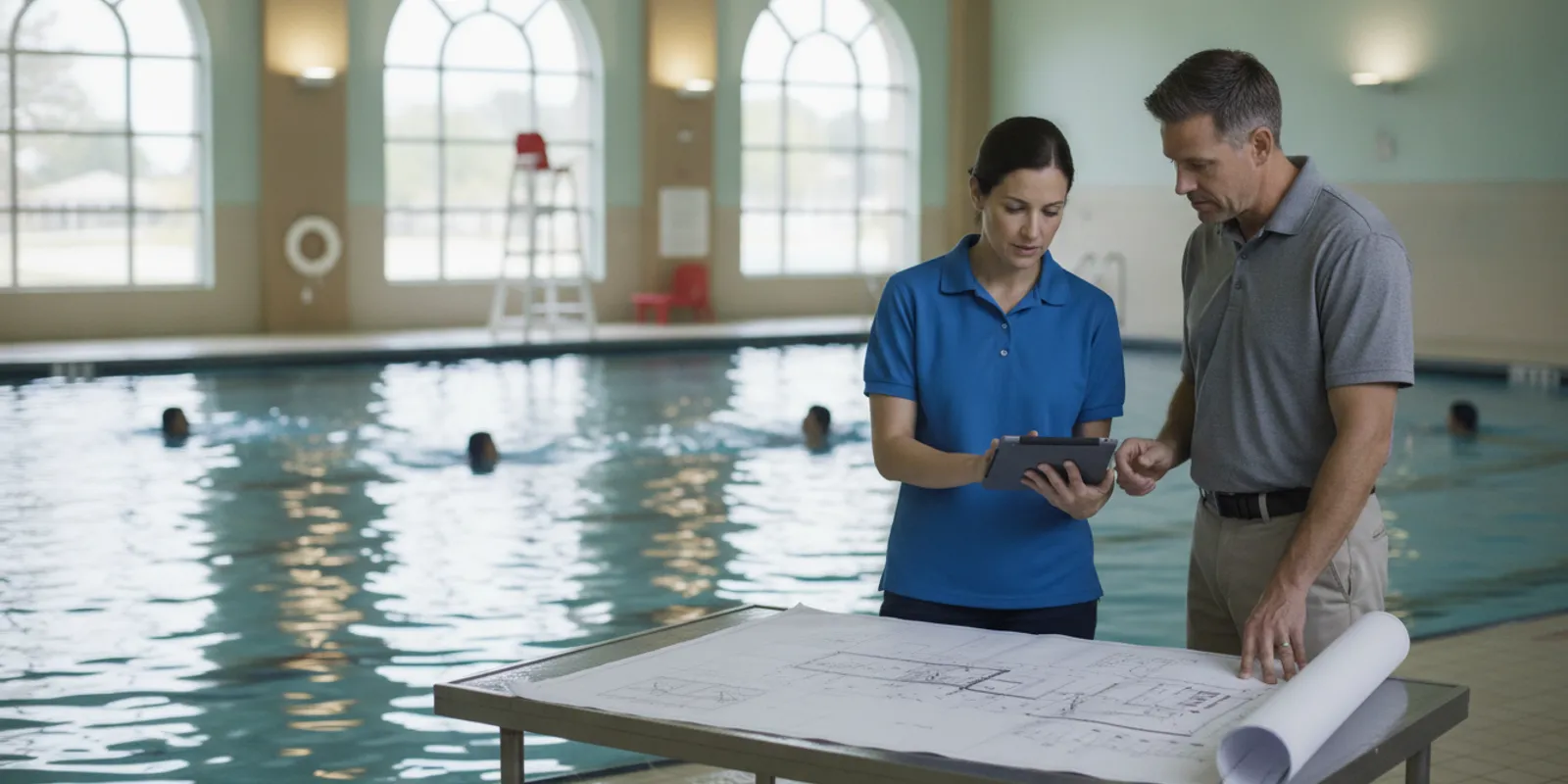
A pool safety technology procurement checklist helps facility leaders compare options against real operating needs instead of buying based on a feature list alone. For aquatics directors, executives, and procurement teams, the process should start with the environment and response plan, then test how a system fits staff routines, budget, and maintenance capacity.
What should a facility define before it evaluates technology?
Start by describing the safety problem, the facility, and the people who will respond. A written baseline gives every vendor the same context and makes proposals easier to compare. It also helps leaders distinguish essential requirements from attractive but unnecessary features.
Procurement is more useful when the team can explain what it needs a system to do. Begin with a short statement of purpose: what event or condition should be detected, who needs to know, and what staff should do next? Keep the objective focused on supporting existing supervision and response practices. Technology is an additional layer, not a replacement for lifeguards, staff training, or an emergency action plan.
Document the facility profile before requesting proposals. Include the number and type of water areas, indoor or outdoor operation, hours and seasons, typical activity, visibility conditions, and how different areas are staffed. Note whether the facility includes a lap pool, leisure area, therapy pool, water features, or supervised natural water. Include the approximate dimensions and locations of entrances, lifeguard stations, staff work areas, and likely response routes.
Next, map current roles and communication. Who is responsible for surveillance? Who responds when a lifeguard enters the water? Who can hear or feel an alert? Who takes charge if the first responder is already assisting someone? List the existing alarms, radios, whistles, public-address equipment, and emergency action plan. A vendor should understand how its proposal will fit those procedures rather than assume that a new device automatically creates a reliable response.
- Write down the facility's primary use cases and the areas in scope.
- Identify the staff roles that receive alerts and those that provide backup.
- Record current response procedures, communication tools, and escalation steps.
- Set practical limits for budget, procurement schedule, installation activity, and staff time.
- Separate non-negotiable requirements from preferences the team can evaluate later.
For a broader framework to organize the facility profile, review WAVE's facility evaluation guide to swimming pool safety tools. The pool evaluation checklist described in a journal article also illustrates why factors such as pool classification, use, and size belong in an initial assessment. Use sources as prompts for your own review, not as a substitute for applicable local requirements.
How should water conditions and site constraints shape the requirements?
Technology that fits one pool may not fit another. Ask vendors to explain how their approach works in the actual water conditions, physical layout, and operating schedule at your site. Verify deployment needs early so a preferred option does not create avoidable construction or service disruption.
Water visibility and activity can vary by facility and even by time of day. Record conditions that may affect a proposed detection method, including clarity, lighting, reflections, bubbles, water movement, and the presence of features or obstructions. Ask vendors to describe the limits of their approach in those conditions and to demonstrate the relevant functions in a representative environment. Avoid accepting a broad claim without asking what it means for your specific pool and use case.
For camera-based proposals, ask what views are required, how water clarity and lighting affect operation, and where cameras or other hardware must be placed. Clarify whether permanent mounting, cabling, electrical work, network changes, permits, divers, or facility closures are expected. Ask for a site plan and a written list of responsibilities: which work is performed by the vendor, the facility, or a contractor? If the plan assumes clear water or a specific angle of view, ask how the team will validate coverage before purchase.
For wearable or wireless approaches, ask how devices communicate with the monitoring equipment, what range assumptions apply at your site, and what happens when a device is out of range or unavailable. Clarify how wearables are issued, collected, stored, inspected, and assigned to swimmers or staff. Confirm charging or battery maintenance expectations, device cleaning guidance, and how staff identify a device that needs attention. Do not infer these details from the word “wireless”; require clear, product-specific answers.
Facilities with dark or murky water should ask vendors directly whether their detection method relies on visual clarity. WAVE describes its wearable approach as working in clear and dark or murky water, while camera-based approaches may have visibility constraints. Ask for an explanation of the system's operating boundaries and evidence relevant to your facility; do not treat a general statement as a guarantee of detection in every circumstance.
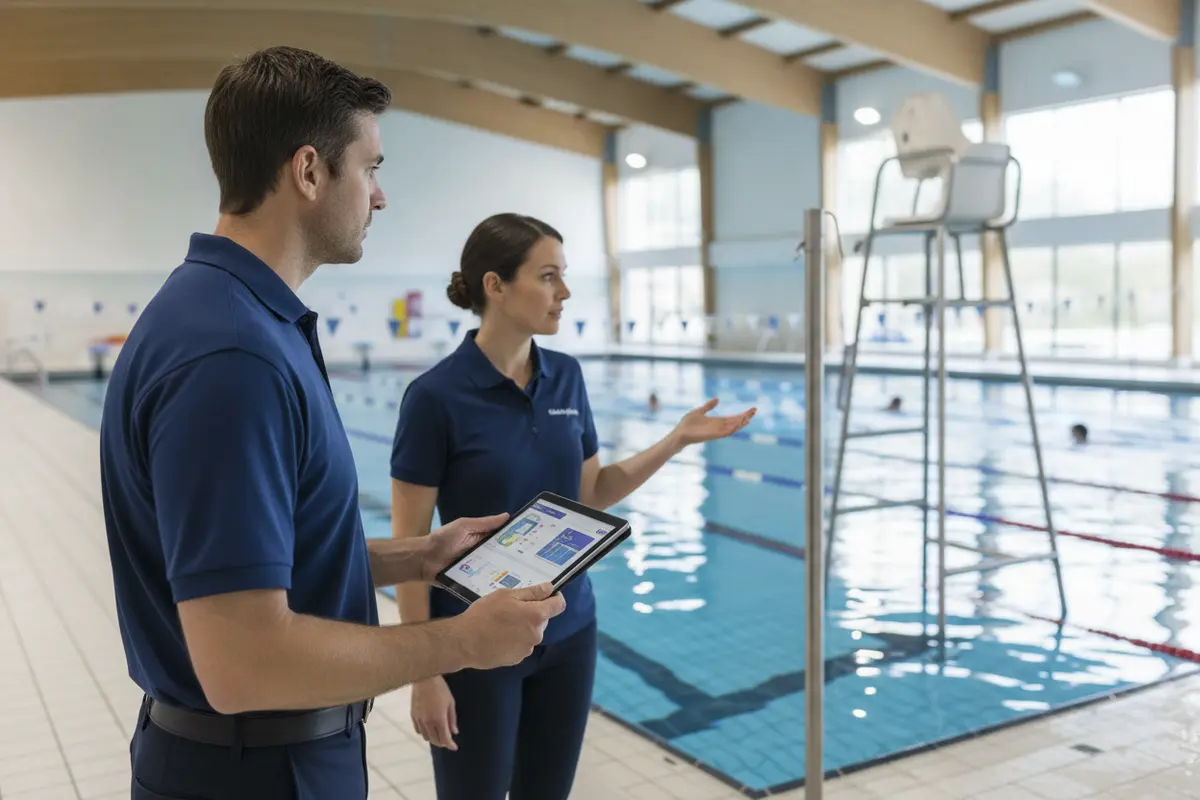
Site constraints are not limited to the water. Consider deck traffic, access to power and network services, equipment storage, the location of staff stations, and whether deployment can happen during normal operation. A technology option that requires permanent work may still suit a particular site, but the work, schedule, approvals, and disruption should be identified before the team commits.
The U.S. Consumer Product Safety Commission's Pool Safely barrier checklist covers barriers for pools and spas. Its subject is a reminder to keep physical safeguards in view alongside detection technology; confirm which barriers or other protections apply to your facility and jurisdiction rather than treating a consumer checklist as a commercial code specification. Municipal leaders can also review this municipal pool safety planning guide when documenting site-specific needs.
Which alert and response details should procurement test?
An alert is only useful when the right person receives it and understands what to do. Evaluate the complete chain: detection, delivery, acknowledgment, escalation, and response. Ask vendors to demonstrate that chain with the roles, equipment, and routines your staff actually use.
Request a workflow diagram for each important scenario. It should show what starts an alert, who receives it, what form it takes, how staff acknowledge it, and what happens if no one responds. Have vendors explain how the workflow differs for a swimmer alert and a lifeguard water-entry alert, if both are in scope. Ask whether alerts reach staff through wearable notifications, audible facility alerts, software, or a combination, and which pieces are included in the proposal.
Use realistic scenarios during evaluation. For example, ask the vendor to demonstrate an alert while a lifeguard is on the opposite side of the pool, a responder is already occupied, or the facility is busy and noisy. Have staff identify the signal, state their next action, and demonstrate how they would contact backup. Do not rely only on a presentation or a vendor-operated demonstration; include the people who will use the equipment during an ordinary shift.
Clarify the difference between detecting a condition and resolving an emergency. Ask what the system does and does not detect, what staff must still observe, and what factors can affect alert timing or delivery. Request examples of false, missed, delayed, or repeated alerts and how the system handles them. A responsible evaluation makes limitations visible so the facility can decide whether procedures, training, or other safeguards need to address them.
WAVE's materials describe a wearable system that can alert staff through vibrating bracelets and facility alerts, including detection of prolonged submersion or lifeguard water entry. If evaluating this type of approach, ask to see the staff notification and response path using the proposed configuration. The GUARDian Hub information, swimmer equipment details, and lifeguard equipment overview provide starting points for questions about system components.
Put the responses in a comparison worksheet. Score vendors against the same scenarios rather than allowing each to choose a different demonstration. Ask at least one supervisor, one frontline responder, and one person responsible for emergency procedures to independently note what was clear, confusing, or missing. Resolve differences before procurement approval.
How can teams compare technology proposals fairly?
Use common criteria and ask each vendor for evidence, not just assurances. A structured comparison exposes trade-offs among operating fit, deployment, staff workflow, support, and cost. It also creates a record explaining why the selected option best meets the facility's needs.
Procurement teams can use the table below to organize an initial review. Adapt the criteria to the facility, mark each item as met, partly met, or unresolved, and record the proposal page or demonstration that supports the rating. An unresolved item should become a written question rather than silently becoming an assumption.
| Evaluation area | Questions to ask every vendor | Evidence to request |
|---|---|---|
| Detection fit | What conditions does the system monitor? What are its operating limits in our water and activity conditions? | Product documentation and a demonstration in a representative scenario. |
| Site and deployment | What equipment, network, power, mounting, permits, or facility downtime are required? | Site plan, responsibility matrix, schedule, and written scope. |
| Alert workflow | Who receives each alert, how do they acknowledge it, and what is the escalation path? | Workflow diagram and staff-led scenario test. |
| Staff readiness | What training, onboarding, and refresher support are included? | Training plan, role descriptions, and sample materials. |
| Ongoing support | How are faults reported, support requests handled, software updated, and equipment replaced? | Support terms, service hours, response commitments, and warranty language. |
| Lifecycle cost | What recurring and one-time expenses or staff tasks apply over the contract term? | Itemized quote, renewal terms, and total-cost assumptions. |
| Privacy and information | What information is collected, who can access it, and how is it retained or deleted? | Written data handling and access documentation relevant to the proposed system. |
Weight criteria before scoring. A facility with limited construction windows may give more weight to deployment constraints, while a busy aquatic center may prioritize clear alerts and staff workflow. Keep required safety functions separate from conveniences, and record why each criterion matters. The purpose is not to force every consideration into a single numerical score; it is to make trade-offs explicit and defendable.
Ask for references or examples that resemble your operation, where available, and request permission to discuss day-to-day use with the facility. Ask how implementation went, what training was needed, which tasks proved less obvious than expected, and what the customer would clarify before purchasing again. Separate a vendor's factual response from a customer's experience, and do not treat an anecdote as proof of outcomes.
For context, the ICMA example of a municipal AI-based pool safety system highlights a distinct technology approach; it is an example, not a substitute for evaluating your own facility's needs. For a guided demonstration, WAVE provides a drowning detection system demo checklist. A commercial pool alarm buyer guide can help teams frame questions about alert approaches, while the provider evaluation guide offers additional vendor-review prompts.
What should leaders include in cost, contract, and support review?
Compare the full operating commitment, not a single monthly or equipment figure. Include implementation, staff time, maintenance, replacement terms, software, support, and renewal conditions. Ask vendors to state assumptions in writing so finance and operations teams can review the same scope.
Request an itemized quote that separates hardware, software or subscription charges, onboarding, training, shipping, installation, and any third-party work. Ask which components are optional and which are necessary for the proposed use case. For recurring plans, confirm the billing schedule, contract term, renewal process, price-change provisions, and any fees for ending or changing service. Do not compare proposals until you understand whether they cover the same functions and period.
Lifecycle cost includes operational effort. Ask how much staff time is typically needed for issuing devices, checking readiness, charging or replacing batteries if applicable, cleaning, inventory, software administration, and documenting faults. Clarify who performs each task and how often. A low purchase price may not represent the lowest total effort; a subscription may include services that another proposal lists separately. Compare what is actually included without assuming either model is automatically more economical.
Read the warranty and support terms closely. Confirm the length and scope of coverage, deductible or replacement charges, exclusions, the process for reporting a fault, and what happens if a component is unavailable. Ask which support is live and which monitoring is automated, what hours support staff can be reached, and how urgent issues are escalated. If a proposal references updates or remote monitoring, clarify what the facility must do and what information or connectivity is required.
Use a total-cost worksheet covering at least the initial term and likely renewal. Put one-time and recurring amounts in separate columns, then note assumptions about staffing, replacements, connectivity, and expansion. WAVE publishes current plan information on its pricing page; verify the live terms and the precise bundle scope when requesting a quote. Do not rely on an old proposal or remembered price in place of current written terms.
Budget conversations may also include external funding. Confirm program eligibility, deadlines, and requirements with the relevant program administrator. Treat potential funding as a separate contingency until approval is documented. Do not make a purchase decision on the assumption that an unawarded grant or scholarship will cover the cost.
How should the team prepare for selection and rollout?
Choose a solution only after the team has tested the proposed workflow, reviewed limitations, and assigned ownership for rollout. Procurement should end with an implementation plan, not just a signed order. Set a review date so the facility can identify gaps and adjust procedures after staff begin using the system.
Before approval, assemble a decision record: the defined need, options considered, evaluation criteria, demonstration results, open risks, cost assumptions, and the reason for selection. Confirm that legal, risk, facilities, IT, finance, and frontline stakeholders have reviewed the parts relevant to them. For public or nonprofit organizations, follow the applicable purchasing process and document any required approvals or competitive review.
Make implementation responsibilities explicit. Identify a facility owner, vendor contact, technical contact, training lead, and staff representatives. Agree on milestones for site review, delivery, setup, training, testing, and operational handoff. Confirm what must be ready before the system is used, including staff assignments, device storage, written procedures, and any network or site prerequisites. If setup is expected to happen while the facility operates, document how activities will be coordinated around swimmers and staff.
Before relying on the equipment, test the full alert chain with representative staff. Verify each device and notification path, check that alerts can be recognized in the actual environment, practice acknowledgment and escalation, and record defects or confusing steps. Define how staff report a problem and what procedure they follow if technology is unavailable. Training should reinforce the facility's emergency action plan, not create a parallel process that staff must guess between.
After launch, schedule a check-in with staff and the vendor. Review alert records or system status information that the product makes available, recurring user questions, maintenance tasks, and any changes to facility layout or staffing. Update written procedures when roles or equipment change. WAVE's aquatic emergency action plan review guide and lifeguard support system guide can help teams consider how technology fits into established response practices.
Frequently Asked Questions
Procurement decisions depend on the facility's water, staffing, policies, and budget. These answers offer a starting point for discussion, but each organization should verify system details and local requirements before selecting or deploying equipment. Keep lifeguard-led supervision and established emergency procedures central throughout the process.
What should be the first step in a pool safety technology purchase?
Document the facility's operating conditions, safety objectives, current supervision and response procedures, site constraints, and budget limits. That baseline lets the team ask every vendor the same questions and evaluate proposals against a clear need.
Should technology replace lifeguards or existing safety procedures?
No. Treat detection technology as an additional layer that supports lifeguards and staff. Continue to maintain appropriate supervision, training, emergency action plans, and other safeguards for the facility.
What should a technology demonstration include?
Ask the vendor to demonstrate the proposed system in realistic scenarios using the roles and alert paths your facility expects. Test how an alert is detected, received, acknowledged, and escalated, and ask staff to identify limitations or unclear steps.
How should a facility compare a one-time purchase with a subscription?
Compare the complete scope and cost over the same period. Include setup, equipment, software, support, staff tasks, maintenance, replacement terms, renewals, and any third-party expenses. Request itemized written terms rather than comparing headline figures.
What information should vendors provide about data and privacy?
Ask what information the proposed system collects, who can access it, how it is stored and retained, and what options exist for access control, deletion, or export. Request the vendor's written documentation and have the appropriate organizational reviewer assess it.
When should a facility review its technology after purchase?
Set a review after staff have completed initial training and used the system in regular operations, then review it periodically and whenever staffing, layout, procedures, or equipment changes. Include staff feedback, maintenance records, alert-path tests, and unresolved issues.
A thoughtful procurement process helps facility leaders choose technology that fits their water conditions, staff workflows, and operating responsibilities while keeping supervision and emergency readiness at the center.
