
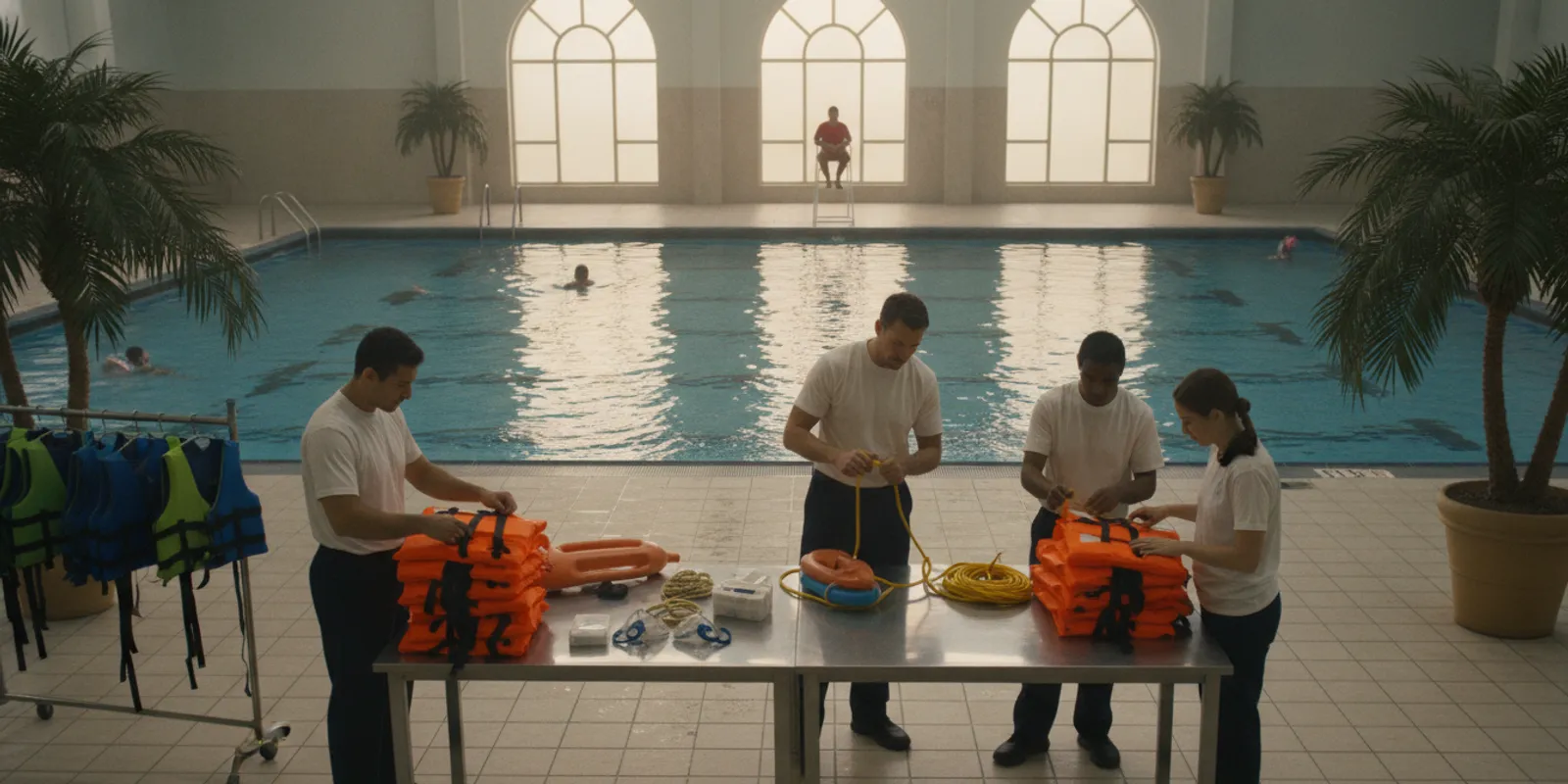
A drowning detection system deployment timeline is the schedule a facility needs from the purchase decision through a ready operating day. Leaders have to plan a site review, configuration, staff training, response testing, and a careful handoff into daily operations. WAVE says a system can be operating in less than 30 days from the purchase decision, and that deployment is plug-n-play rather than a construction project. The right schedule still depends on layout, staffing, monitored areas, and readiness criteria.
A practical deployment plan moves through five checkpoints: define the site, configure the system, prepare staff, test the response chain, and confirm operational readiness. Treat the timeline as a planning framework, not a promise that every facility will finish on the same day.
What determines a drowning detection system deployment timeline?
Each facility's schedule reflects its physical layout, operating calendar, staffing model, and approval process. Map those conditions before setting a launch date, then turn unresolved questions into assigned tasks. Early coordination often saves more time than trying to shorten setup after equipment arrives.
Every aquatic facility has a different operating schedule, water layout, staffing model, and emergency action plan. A single pool with a stable team may move quickly through planning. A campus with several water areas may need more coordination among aquatics, operations, information technology, purchasing, and leadership. Seasonal facilities also need to fit deployment around opening dates, lessons, camps, and peak attendance.
The first step is to identify decisions that can affect timing. Bring the people who understand daily operation, not only the person managing the purchase. Their practical details can prevent a delivery from becoming a stalled launch.
- Water and site layout: Map pools, natural-water areas, deck zones, entrances, staff posts, and locations where alerts must reach responders.
- Swimmer and staff workflows: Define who uses AquaSense swimmer wearables or lifeguard tags, who receives alerts, and who acknowledges them.
- Operating calendar: Schedule setup and training around opening hours, lessons, camps, maintenance, and high-attendance periods.
- Power and mounting: Confirm whether the site will use a portable setup or a permanent mount, and whether any low-power cabling is needed.
- Approvals and procurement: Include internal approval, purchasing, delivery coordination, and staff consultation.
- Response ownership: Name the supervisor who can approve testing, resolve issues, and decide whether the facility is ready.
WAVE describes deployment as plug-n-play. There is typically no need for permits, divers, or licensed contractors, and the facility can keep operating while the system is set up. There is no drilling, cutting, or retrofitting of pool decks, gutters, filtration, or lighting. For a permanent mount, equipment can go on walls, desktops, or poles, and some minor drilling may be needed to mount hardware to walls. Confirm the current scope during a site conversation. The GUARDian Hub (w3000) page explains the central system that ties swimmer wearables and lifeguard alerts together.
Choosing between camera systems and wearables is a separate buying question. If that comparison is still open, start with the camera versus wearable buyer guide, then come back to timing once the technology path is chosen.
How should a facility plan the rollout stages?
Assign an owner, a deliverable, and an approval point to every stage. Some preparation can happen while delivery is arranged, but a facility should not skip hands-on orientation or end-to-end response testing to preserve a calendar date. A staged plan makes dependencies visible.
Breaking the rollout into stages makes a deployment timeline easier to manage. Each stage should have an owner, a clear output, and a decision about what must happen next. Some planning can happen in parallel. Hands-on testing generally depends on configured equipment and staff who understand their roles.
The framework below turns a broad target date into practical milestones. It is a planning sequence, not a guaranteed number of hours or days. The World Health Organization notes that drowning remains a preventable public health crisis, even as global death rates have fallen. That is a reminder to judge readiness by the response chain, not by a feature list. See the WHO drowning fact sheet.
| Stage | Facility actions | Readiness check |
|---|---|---|
| 1. Site review | Map monitored areas, staff positions, entry points, and alert recipients. | Provider and facility agree on scope, assumptions, and responsibilities. |
| 2. Configuration and setup | Identify equipment locations, assign devices, and establish alert routes. | Equipment is present, configured, and communicating as intended. |
| 3. Staff orientation | Train lifeguards and designated responders on devices and escalation steps. | Each role can explain what an alert means and what action follows. |
| 4. Scenario testing | Run approved tests for alerts, acknowledgement, and response handoffs. | Findings are recorded, corrected, and retested. |
| 5. Operational launch | Confirm coverage, rosters, device care, shift handoffs, and contacts. | Supervisor confirms readiness and a review cadence. |
This sequence shows where a facility can save time without skipping safeguards. Leaders can map staff posts, nominate responders, draft communication procedures, and collect approval questions while delivery is arranged. They should not compress training or testing simply to preserve an announced opening date.
A facility preparing for a summer opening can use the procurement period to draft shift rosters, identify primary and backup responders, and reserve training windows. When equipment arrives, the team can focus on configuration and practice rather than locating decision-makers. A year-round facility may instead schedule a quiet operating window, then test each program's alert route without interrupting peak swim periods.
What should happen during the site review?
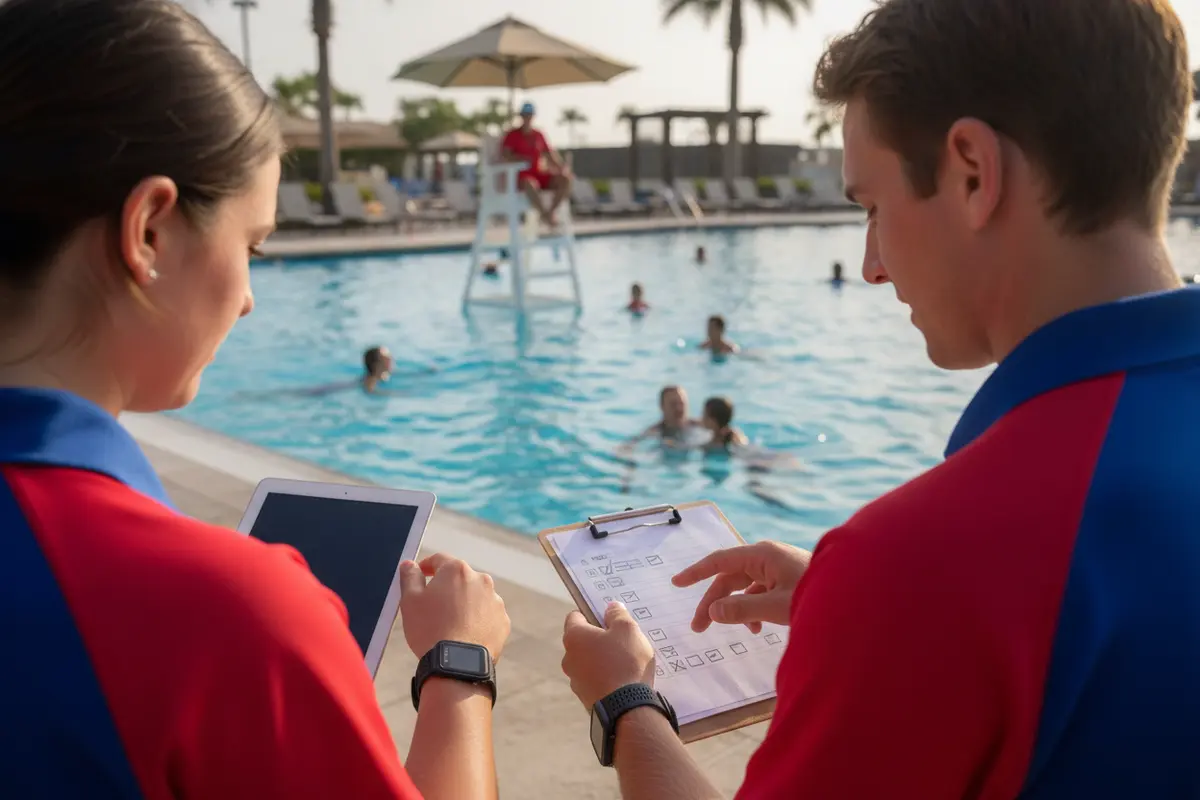
A useful site review produces a written map of monitored areas, device users, alert recipients, open assumptions, and decision owners. It should cover different programs and shifts, not just the facility's most common daily schedule. Resolve scope questions before setup begins.
The site review turns a general product conversation into a facility-specific deployment plan. It should establish what the system is expected to monitor, where alerts must reach people who can act, and how the technology fits the existing emergency action plan. Include aquatics leadership, response staff, and anyone who can explain physical constraints.
Mark each monitored area and identify staff positions during different programs. A lesson schedule may differ from open swim, a camp, a competition, or a natural-water program. Record seasonal areas and times when staffing patterns change. If one hub will support several zones, ask the provider to explain coverage assumptions and limits that belong in the operating plan.
Ask for a plain-language explanation of equipment placement, device assignment, notification paths, and test requirements. Compare the proposed workflow with the commercial pool system options and document which component supports each agreed need. Because WAVE avoids permanent construction, the practical questions are about placement, power, and who carries each device, not about closing the pool for a retrofit.
Use a site-review record with these fields:
- Areas included and excluded from the initial scope.
- Expected users of swimmer wearables and lifeguard tags.
- Primary and backup alert recipients for every operating period.
- Equipment locations and assumptions requiring provider confirmation.
- Training groups, available dates, and staff coverage during training.
- Open questions, owners, and the date each item must be resolved.
Make the record operational rather than aspirational. For each area, note what the team will do if staffing changes or a program uses a different deck arrangement. If the facility shares staff across zones, confirm how those people will know which alerts and response duties apply during each assignment. A clear record also gives incoming supervisors a reference when the original project lead is unavailable.
Which staff and response steps need to be ready?
People and procedures determine whether an alert can lead to a timely, coordinated response. Name responsibility for device distribution, alert acknowledgement, escalation, and shift handoff. A detection system is an additional layer of protection, not a replacement for lifeguards or established emergency procedures.
Technology contributes to an aquatic safety plan only when people know how to respond. A detection system can serve as a force multiplier by identifying a prolonged submersion or a lifeguard water entry and alerting staff through vibrating bracelets and facility alerts. It does not replace lifeguard supervision, trained responders, or established emergency procedures.
Assign responsibility for distributing devices, checking them, receiving alerts, acknowledging notifications, and coordinating response. Make the assignment specific to shifts and programs. A supervisor should decide how substitutes, new hires, and seasonal employees receive orientation before they work within the alert workflow.
Before launch, confirm that:
- Every assigned wearer knows how to use the device and what to do if it signals.
- Responders recognize alert signals and know who acknowledges them.
- Supervisors understand escalation and backup communication procedures.
- Staff can explain how the system fits, rather than replaces, direct observation and emergency action plans.
- New hires, substitute staff, and seasonal teams have a repeatable orientation process.
- Device care, storage, assignment changes, and shift handoffs have named owners.
Review the lifeguard equipment information when preparing questions about staff devices. Facilities can also review the swimmer safety equipment overview to organize questions about wearer assignments and operating routines. Day-to-day task lists for a lifeguard alert rollout live in the lifeguard alert implementation checklist. Use that page for the task list, and use this timeline to decide when each task must be done.
Build a short role card for each response position. A lifeguard may need to know the alert cue and immediate action. A supervisor may need to know how to confirm coverage and coordinate backup. A front-desk or operations contact may need to know whom to notify without assuming responsibility for water rescue. Keep the role card consistent with the facility's existing emergency action plan, and have the responsible leader approve it before training.
Plan for turnover as part of deployment, not as an afterthought. If a seasonal employee joins after launch, the facility should know who provides orientation, how completion is recorded, and how the person practices the relevant handoff. Likewise, define what happens when a device changes hands between shifts so the next staff member receives both the equipment and the necessary instructions.
How can teams test before operational launch?
Test the whole alert-to-action chain, not just whether equipment powers on. Verify the approved event, alert destination, acknowledgement, and response handoff. Log any problem, assign its resolution, and retest. Include each materially different shift or operating area.
Testing should confirm the full chain from a device or provider-approved test event to the person expected to act. A successful power-on does not prove that the staffing workflow is ready. The team needs to practice the handoff, identify confusion, and correct issues before the system becomes part of normal operations.
Build testing around actual work. Verify that devices are assigned and functioning, confirm alert destinations, check that recipients notice and acknowledge alerts, and rehearse the handoff to the designated responder. Use provider-approved methods and avoid creating an unsafe distraction for swimmers or staff. Record participants, conditions, results, and follow-up owners.
Test more than one shift when staffing patterns vary. A weekday lesson roster may differ from a weekend open-swim roster. If the facility has several water areas, test the alert path for each area and confirm that the message reaches the right response group. Repeat any test affected by a configuration change, staffing change, or unresolved technical issue.
Keep an issue log with the issue description, severity, owner, correction, and retest result. The WAVE support resources can help facility leaders prepare questions about current procedures. A practical test record can stay brief and still be specific. Note the test date and operating context, which device or approved test method was used, who received the alert, whether it was acknowledged, and whether the expected response role understood the next step.
If an alert reaches the wrong person, mark whether the cause was configuration, a roster gap, or unclear instructions. That distinction helps the team choose a correction instead of repeating the same test without changing anything. Schedule a retest after a meaningful change. A modified monitored area, a new alert recipient, a revised shift roster, or a device reassignment can affect the workflow.
Do not assume a past successful test covers a new configuration. Keep final acceptance with the facility leader responsible for operational readiness. Document any issue that remains open, and record why it does not block launch if the leader decides it does not.
What can delay a planned launch?
Most preventable delays begin as unanswered questions: who approves the scope, when staff can train, how alerts escalate, or who closes test issues. Keep a dated list with one owner and one next action for each item. Protect contingency time before a seasonal opening.
Delays often come from unresolved ownership and scheduling rather than basic setup. Staff may not know who approves the rollout, what training attendance is required, or who can close testing issues. Naming decision-makers early keeps questions visible and gives the provider a clear contact for each phase.
- Late changes to monitored areas or the number of users.
- Training scheduled when key responders are absent.
- Unclear alert escalation or missing backup contacts.
- Procurement, delivery, or internal approvals omitted from the calendar.
- Different shifts using different response instructions.
- Starting operations before test findings are resolved.
- Seasonal opening dates that leave no contingency time.
Maintain a dated issue list and set a decision deadline for each item. Avoid announcing a final launch date until equipment, training, and testing responsibilities are agreed. For a natural-water area or multiple sites, ask whether separate reviews, additional responders, or staged activation are needed.
One useful tool is a simple dependency board with columns for not started, in progress, waiting on a decision, and complete. A task such as alert routing may depend on both a confirmed scope and a current roster. Showing that relationship makes it clear why an item is waiting and who can unblock it. Review the board at regular project check-ins. Close tasks with evidence such as an approved map, a completed training roster, or a recorded retest.
Also distinguish a true blocker from a preference. A missing backup contact may prevent a team from confirming a reliable workflow. A preferred meeting time may simply require scheduling around available staff. Sorting the list this way directs attention to safety-critical readiness and reduces the temptation to treat every open detail as equally urgent.
How can leaders set a practical launch date?
Work backward from the desired operating date, but make readiness, not the calendar, the final gate. Confirm documented scope, role-specific preparation, successful workflow tests, and ownership for ongoing handoffs. Keep normal supervision and emergency procedures in place throughout deployment.
Choose a launch date only after the provider and facility agree on scope, readiness criteria, and accountable owners. Work backward from the desired operating date. Place site review, setup, staff orientation, and testing on the calendar. Add contingency time for staff availability and issue resolution, especially before a seasonal program begins. WAVE's public guidance is that a facility can be operating in less than 30 days from the purchase decision. Use that window as a planning anchor, then confirm the date for your own site, staff groups, and test plan.
A launch decision should answer five questions:
- Is the deployment scope documented and understood by the people who operate the facility?
- Are equipment assignments and intended alert recipients identified for each shift or program?
- Have relevant staff received role-specific instruction and practiced the response handoff?
- Have approved workflows been tested, and have findings been corrected and retested?
- Are maintenance, shift handoff, new-staff orientation, and post-launch review assigned?
Consider a limited operational start only if it is consistent with provider guidance and facility safety policies. Maintain lifeguard supervision and emergency procedures throughout the rollout. After launch, ask supervisors to collect questions from each shift and review whether the process works across lessons, open swim, camps, and other programs.
For related planning, see WAVE's aquatic emergency action plan guide, drowning detection system demo checklist, and facility evaluation guide. A facility can also review the system FAQs and current pricing information while preparing internal approval questions.
After the first operating period, schedule a short review with representatives from different shifts. Ask whether alerts were understood, whether device assignments matched the roster, and whether any program required a different handoff. Record small corrections while details are fresh. The review is not a substitute for incident procedures. It is a way to keep the deployed workflow aligned with the way the facility actually operates.
Facilities with several sites can use one common readiness template while preserving site-specific details. A central team might standardize the required fields: scope, alert routing, training completion, test outcomes, and approval. Each location records its own monitored areas, staff positions, and schedule. This gives leadership a consistent way to review progress without assuming every location has the same timeline.
For timing, ask the provider to distinguish the physical setup window from the broader readiness period. Equipment may be placed quickly because the system does not require a pool retrofit. Arranging staff availability, approvals, and scenario practice may take longer. That distinction helps leaders set expectations with executives and avoid presenting a brief setup estimate as the complete facility launch schedule.
Frequently Asked Questions
How long does a drowning detection system deployment timeline take?
Timing varies by site scope, staffing, and readiness. WAVE says a facility can be operating in less than 30 days from the purchase decision, and that setup is plug-n-play rather than a construction project. Confirm the timeline for your monitored areas, staff groups, and testing with the provider.
Does deployment require closing the facility?
WAVE says the facility can keep operating while the system is set up. There is typically no need for permits, divers, or licensed contractors, and no drilling or cutting of the pool itself. Confirm how setup, training, and testing will fit the operating schedule, and whether any activity needs a controlled area. Minor drilling may be needed only to mount equipment on walls.
Can training happen before equipment arrives?
Some planning and role orientation can begin in advance. Hands-on instruction and workflow testing may depend on configured equipment. Ask which activities can run in parallel so the calendar does not stack every task into the week of delivery.
What does a facility need before launch?
Agree on scope, device assignments, alert recipients, staff response steps, test criteria, issue ownership, and new-staff orientation. Keep existing supervision and emergency procedures active during deployment. Do not treat a delivery date as a launch date.
Do detection systems replace lifeguards?
No. A detection system is an additional layer of protection that supports trained staff. Lifeguards, direct supervision, and established emergency procedures remain essential. At sites without dedicated lifeguards, such as some hotels, frame the system as a way to alert staff who can respond, not as a substitute for a lifeguard.
What should leaders do if a test fails?
Record the result, assign an owner, correct the configuration or workflow, and repeat the relevant test before declaring readiness. Do not hide an unresolved issue to preserve a target date.
A clear deployment plan gives staff time to learn the workflow, test alerts, and prepare for a responsible operational launch.
