
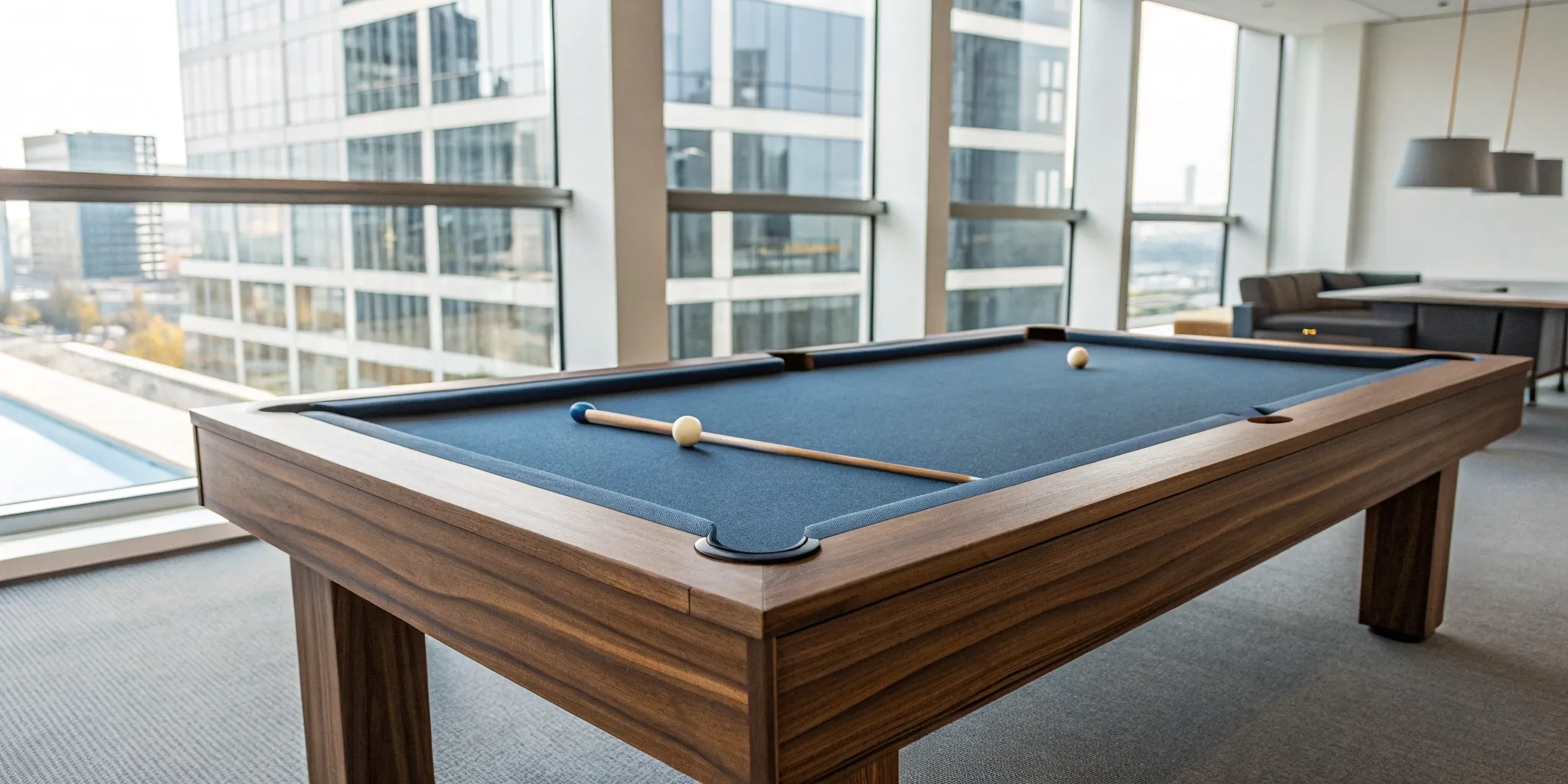
A great pool game is built in layers. It’s about more than just sinking shots—it’s about building a solid foundation of skills. You start with a solid stance, add a consistent grip, and then learn how to aim and control the cue ball. Each skill builds on the last, making you a more confident and consistent player. This guide will teach you the fundamentals of how to play pool, breaking the game down into these essential, easy-to-learn layers. You'll be playing with confidence in no time.
Key Takeaways
- Learn the rules before you play: Understanding the basics of 8-ball, what makes a shot legal, and what causes a foul is the fastest way to play with confidence and avoid giving your opponent an easy advantage.
- Focus on your form for better shots: Your stance, grip, and bridge are the foundation of every shot. By practicing a consistent physical setup, you will naturally improve your accuracy and control over the cue ball.
- Play with respect for the game and your opponent: Good sportsmanship, like staying out of your opponent's way and keeping the game friendly, is essential. It creates a better atmosphere and makes the experience more enjoyable for everyone involved.
So, You Want to Play Pool?
So, you're ready to pick up a cue and learn how to play pool. At its core, pool is a game of angles, strategy, and a little bit of physics, all played out on a felt-covered table. The main goal is simple: use a long stick, called a cue, to hit a white ball (the cue ball) into other colored balls, sending them into one of the six pockets on the table. While it might look intimidating at first, the basics are easy to pick up. Before we get into how to hold a cue or make a shot, let's clear up some common terms and cover the fundamental objective of the game.
Pool, Billiards, or Snooker: Which Are You Playing?
You’ve probably heard the words "pool" and "billiards" used to mean the same thing, and for the most part, that’s perfectly fine in casual conversation. Technically, though, they aren't identical. "Billiards" is a broad term for any game played on a table with balls and a cue stick. Pool, also known as pocket billiards, is a specific type of billiards played on a table with six pockets. There are many different pool games), but the most common ones you'll run into are eight-ball and nine-ball. Snooker is another cue sport, but it's played on a much larger table with smaller balls and different rules. For now, we'll focus on pool.
How a Game of Pool Is Played
The objective in pool changes depending on the game you're playing. In eight-ball, the most popular version, the game starts with fifteen numbered balls. One player is assigned the solid-colored balls (1-7), and the other gets the stripes (9-15). The goal is to pocket all of your assigned balls and then sink the black 8-ball to win the game. In nine-ball, you only use balls 1 through 9, and the goal is to pocket the 9-ball after legally hitting the lowest-numbered ball on the table. No matter which game you play, the official rules of pool require you to make a legal shot, which usually means the cue ball must hit one of your balls first.
A Quick History of the Game
The game of pool feels timeless, like it’s always been a fixture in game rooms and community halls. But like any classic game, it has a fascinating history that shaped it into the sport we play today. Its story begins a few centuries ago, evolving from other tabletop games and slowly developing its own unique identity, rules, and even its name. Understanding where it came from can give you a new appreciation for the strategy and skill involved every time you line up a shot. The game’s journey includes changes in equipment, the rise of different variations, and a name with a surprisingly debated origin.
Why Is It Called "Pool"?
Ever wonder why we call it "pool"? The exact origin is a bit of a mystery, but there are a couple of interesting theories. One popular idea is that the name comes from the French word "poule," which translates to "hen." In this context, the "poule" was the prize or pot that players competed for in various games. Another straightforward theory suggests it comes from the practice of players "pooling" their bets together into a collective pot for the winner. The term was first connected with billiards-like games) back in 1797, and the name stuck as the game grew in popularity.
How Pool Became the Game We Play Today
Modern pool traces its family tree back to two English games that were popular in the 1800s: English billiards and pyramid pool. From these ancestors, new and exciting variations started to emerge. Around the turn of the 20th century, games like Kelly pool and the now-famous eight-ball began to catch on, each with its own set of rules and objectives. Even the equipment went through a transformation. Before 1889, most pool balls were simply red and numbered. The iconic solid and striped ball set that we all recognize today was introduced later, making it easier for players and spectators to follow the action on the table.
Fun Facts and Historical Tidbits
The world of pool is filled with fun details that add to its character. For example, the game wasn't always played with the familiar solids and stripes. Before 1889, the balls were mostly just red and white, and the colorful set we use today was invented to make the game easier for spectators to follow. While eight-ball is what most people play, there are many other pool games to explore, like nine-ball, straight pool, and one-pocket, each requiring a different approach. Even the cue stick has a fascinating past; it evolved from a tool called a "mace," which had a larger head and was used to shove the balls instead of striking them. These little pieces of history really show how much the game has changed over the years.
Gearing Up: What You Need to Play Pool
Getting started with pool doesn't require a ton of gear, which is great news for beginners. Most bars, pool halls, and community centers will have everything you need to play. But if you're thinking about setting up a table at home or just want to know what you're looking at, here’s a breakdown of the essential equipment.
The Playing Field: The Pool Table
The centerpiece of the game is, of course, the pool table. It’s a large, felt-covered table with six pockets: one at each corner and one in the middle of each long side. You’ll find them in a few standard sizes), typically ranging from 3.5 by 7 feet to a larger 4.5 by 9 feet. The size you play on can affect the game's difficulty, with smaller tables being a bit more forgiving for beginners. No matter the size, the goal is the same: use the pockets to your advantage and clear the table.
Your Most Important Tool: The Cue Stick
Your main tool in pool is the cue stick. This long, tapered stick is what you use to strike the white cue ball and send it toward your target. Most pool cues are about 58.5 inches long, a length that gives most players a good balance of reach across the table and control over their shots. While house cues are usually one solid piece, you can also buy two-piece cues that screw together in the middle, making them easy to transport. Finding a cue that feels comfortable in your hands is a great first step.
The Balls and Rack Explained
A standard game of eight-ball uses sixteen balls in total. There's one white cue ball, which is the only ball you're allowed to hit with your cue stick. Then you have fifteen object balls: seven striped, seven solid-colored, and the black 8-ball. At the start of the game, these fifteen balls are grouped together using a triangular rack. The rack helps ensure the balls are packed tightly, which is key for a clean, powerful break. The official rules of pool will tell you exactly how to set them up for a proper game.
Ball Specifications and the Coin-Op Cue Ball
It might seem like all pool balls are created equal, but that's not always the case, especially with the cue ball on a coin-op table. For fair and predictable play, standard pool balls have uniform specs—usually 2.25 inches in diameter and about 5.9 ounces. The cue ball on a bar table, however, is the clever exception. It's often slightly larger, heavier, or even magnetic. This isn't a mistake; it's how the table's mechanism identifies the cue ball to send it back to you after a scratch, while keeping the other pocketed balls. Keep in mind that this difference can change how the ball responds, so you might need a few practice shots to get a feel for it.
Popular Ways to Play Pool
Once you have the basics down, you can try your hand at a few different games. While there are dozens of variations, most of what you’ll see played at bars, pool halls, and friendly get-togethers are one of a few popular versions. Each has its own set of rules and strategies, but they all build on the fundamental skills of aiming and cue ball control. Getting familiar with the most common games is the best way to feel confident walking up to any table, ready to play.
How to Play Classic Eight-Ball
Eight-ball is easily the most popular pool game in the world, and it's probably the one you're most familiar with. The game uses all fifteen object balls. After the break, the first player to legally pocket a ball claims that suit, either solids (1-7) or stripes (9-15). The goal is to pocket all the balls in your assigned group. Once you’ve cleared your suit from the table, you must then legally pocket the 8-ball into a called pocket to win the game. It’s a straightforward game that’s easy for beginners to learn but still offers plenty of strategic depth for experienced players.
A Faster Pace: How to Play Nine-Ball
If you’re looking for a faster-paced game, nine-ball is a great choice. As the name suggests, this game only uses the balls numbered one through nine. The rules are simple: on every shot, you must make contact with the lowest-numbered ball on the table first. You don’t have to pocket that ball, but you must hit it before any other. The game ends when a player legally pockets the 9-ball. This can happen at any point, even on the break, which makes for some exciting and quick matches. Many professional pool games) you see on TV are nine-ball tournaments.
Ready for a Challenge? Try One-Pocket and Cutthroat
Ready to mix it up? One-pocket is a highly strategic game that really tests your defensive skills. Each player is assigned one of the corner pockets at the foot of the table. The objective is to score a total of eight balls in your designated pocket before your opponent does. It requires incredible precision and planning. Another great option, especially for three people, is cutthroat. Each player claims a group of balls (1-5, 6-10, or 11-15). The goal is to pocket your opponents' balls while keeping yours on the table. The last player with at least one ball remaining wins.
Exploring Other Game Variations
Once you feel comfortable with eight-ball and nine-ball, you'll find there's a whole universe of other pool games waiting for you. These variations are a fantastic way to challenge yourself and sharpen specific skills. Some games demand incredible precision, while others are all about creative problem-solving or pure speed. Trying out different rule sets keeps the game fresh and can make you a more well-rounded player. Think of it as cross-training for your pool game. You’ll learn to see the table in new ways and develop a deeper appreciation for the physics and strategy that make pool so compelling.
Straight Pool (14.1 Continuous)
If you love strategy and precision, you should give Straight Pool a try. Also known as 14.1 Continuous, this game isn't about solids or stripes. Instead, players try to score a set number of points, usually 100 or 150, by pocketing any ball on the table. The catch? You have to call your shot, announcing which ball you're aiming for and which pocket it's going into. Each legally pocketed ball is worth one point. The "continuous" part comes in when only one object ball is left on the table; the other 14 are re-racked, and play continues. It’s a true test of consistency and planning.
Bank Pool
Bank Pool is all about mastering your angles. In this challenging game, every shot must be a bank shot, meaning the object ball has to hit at least one cushion before it drops into a pocket. Direct shots don't count. The goal is simple: be the first player to legally bank a set number of balls, often five in a casual game. This variation forces you to think several steps ahead and develop a keen sense for how balls rebound. It’s an excellent drill for improving your position play and understanding the geometry of the table, skills that will translate to any pool game you play.
Artistic Pool and Three-Ball
For those who appreciate creativity or just want a quick, fun game, Artistic Pool and Three-Ball offer two very different experiences. Artistic Pool is less of a competitive game and more of a performance. It involves setting up and executing impressive trick shots that showcase incredible skill and control over the cue ball. On the other end of the spectrum is Three-Ball, a fast-paced game played with just three object balls. Players try to pocket the balls in any order, and whoever sinks the last ball wins the game. It’s a great warm-up or a fun way to settle a quick score.
Playing by the Rules (and How to Avoid Fouls)
Every game needs rules to keep things fair and fun, and pool is no exception. Getting a handle on the basics will help you play with confidence and avoid giving your opponent an unnecessary advantage. Once you understand the objective, what counts as a foul, and how to make a legal shot, you’ll be well on your way.
The Must-Know Rules for Any Game
In the popular game of 8-ball, the goal is pretty straightforward. The game uses fifteen balls (seven striped, seven solid, and one black 8-ball) plus the white cue ball. After the break, the first player to legally pocket a ball claims that suit, either stripes or solids. From there, your objective is to pocket all the balls in your suit. Once you’ve cleared your group from the table, you can then legally pocket the 8-ball to win the game. For a complete guide, you can review the official rules of pool for more detailed scenarios.
What Counts as a Foul?
A foul can quickly turn the tables in a game of pool, so it’s important to know what to avoid. The most common foul is scratching, which happens when you accidentally pocket the cue ball. Other fouls include hitting your opponent's ball before your own, failing to hit any ball at all, or knocking a ball completely off the table. If you commit a foul, your turn ends immediately. Your opponent then gets "ball-in-hand," meaning they can place the cue ball anywhere on the table for their next shot. This is a major advantage, so playing clean is key to a good strategy.
Game-Losing Fouls in 8-Ball
While most fouls just hand your opponent a good opportunity, there are a few specific mistakes in 8-ball that will cost you the entire game on the spot. These are the ones you really want to avoid. The most common game-losing foul is pocketing the 8-ball before you’ve cleared all the balls in your suit. According to the official rules of pool, this results in an immediate loss. The same goes for scratching the cue ball while legally pocketing the 8-ball on your final shot. If the 8-ball goes in but the cue ball follows, you lose. Knocking the 8-ball off the table at any point in the game is also an instant loss. Knowing these critical rules helps you play smarter and avoid that sinking feeling of losing by accident.
What Makes a Shot "Legal"?
To keep your turn going, you need to execute a legal shot every time you step up to the table. It’s a simple, two-part process. First, the cue ball must make contact with one of your own balls (unless the table is still "open" after the break). Second, after the cue ball hits your ball, something else must happen: either a ball must be pocketed, or at least one ball (it can be the cue ball or any other ball) must hit a rail. This rule ensures that every shot is a genuine attempt to play the game and not just a light tap to leave your opponent in a tough spot.
Who Makes the Official Rules?
The Role of the World Pool-Billiard Association (WPA)
Just like any organized sport, pool has an official governing body that sets the standard for how the game is played. That organization is the World Pool-Billiard Association, or WPA. Think of them as the guardians of the game, ensuring that the rules are consistent and fair for everyone, from casual players in a community hall to professionals competing on the world stage. The WPA is responsible for creating and updating the official rules of pool, which cover everything from how to perform a legal break to the exact specifications for the table and balls. This standardized framework is what allows the sport to thrive, providing a clear and reliable structure that helps prevent arguments and keeps the focus on skill and strategy.
The WPA’s rulebook isn’t just for eight-ball and nine-ball, either. They provide comprehensive guidelines for a wide range of pool disciplines, including bank pool and even doubles play. Having these established regulations means that no matter where you play, the core principles of the game remain the same. It also provides a clear process for resolving disputes during a match, ensuring that play can continue smoothly and fairly. So, if you ever find yourself in a friendly debate over a specific shot or foul, the WPA rulebook is the ultimate source of truth. Knowing the official rules helps you play with more confidence and respect for the sport.
How to Rack and Break Like You Mean It
The start of a pool game is just as important as the finish. A proper setup and a solid break can set the tone for the entire match, giving you an immediate advantage. It might look complicated, but once you understand the placement of the balls and the goal of the break shot, you’ll be starting your games with confidence. A strong start can make all the difference, whether you're playing a casual game with friends or getting more serious about your skills. Let's walk through how to rack the balls correctly and how to execute a break that gets the job done.
How to Get a Tight Rack Every Time
First things first, let's get those balls set up. You'll use the triangular rack to arrange the 15 object balls at one end of the table. For a game of eight-ball, the setup is specific. You'll arrange the balls in a tight triangle, placing the 8-ball right in the center. The two back corners of the triangle must have one solid-colored ball and one striped ball. The rest of the balls can be placed randomly within the triangle. This specific arrangement ensures a fair and balanced spread when the balls are broken, adhering to the official rules of the game. Once they're arranged, slide the rack forward so the ball at the very front is centered on the foot spot.
Tips for a More Powerful Break Shot
The break shot is your first move, and it’s all about power and precision. The goal is to hit the cue ball with enough force to scatter the racked balls effectively. A successful break means you either pocket at least one ball or drive a minimum of four object balls to hit the rails, which are the cushioned sides of the table. If you don't meet one of these conditions, it's an illegal break. Your opponent then gets to choose whether they want to play from the current position or have you re-rack the balls so they can take the break shot themselves. Aim carefully and strike with confidence to start the game on your terms.
How to Actually Get Better at Pool
Once you know the rules, you can focus on getting better. Improving your pool game isn’t about complex trick shots; it’s about mastering the fundamentals. Consistency in your form and approach will make a huge difference in your accuracy and confidence. By focusing on three key areas: your physical setup, your aim, and your control over the cue ball, you’ll build a solid foundation that will help you win more games. Let’s break down how to practice each of these elements.
Nailing the Fundamentals: Stance, Grip, and Bridge
Your body is the foundation of every shot. Start with your stance. Stand with your feet about shoulder-width apart to create a stable base. Your front foot should point slightly toward the shot, while your back leg provides support. Next, check your grip. Hold the cue stick lightly with your back hand; a tight grip will only create tension and ruin your shot. Finally, create a solid bridge with your non-shooting hand. This is what guides the tip of the cue. Whether you use an open or closed bridge, make sure your hand is firm on the table so the cue can glide smoothly. A steady foundation is the first step to making a consistent shot.
How to Aim and Shoot with Confidence
Aiming is more than just looking at the pocket. You need to visualize the path the object ball will take. A common technique is to imagine a "ghost ball" directly behind the object ball, showing you exactly where your cue ball needs to strike it. Pay attention to the angles and how balls will react after hitting a cushion. Once you have your line, the key is a smooth, straight stroke. Don't rush your shots. Take a moment to line everything up, practice your stroke a few times without hitting the ball, and then follow through in a straight line. The goal is to pocket your assigned balls, and precise aiming is how you get there.
The Real Secret to Winning: Cue Ball Control
Pocketing a ball is great, but what happens next? Advanced players are always thinking one or two shots ahead, and that starts with controlling the cue ball. Where the cue ball stops after hitting the object ball is just as important as making the shot itself. You can influence its path by applying spin, also known as "english." Hitting the cue ball slightly to the left or right of center will make it spin sideways after it hits another ball. Hitting it high (follow) or low (draw) will make it roll forward or backward. Mastering this is a core part of a winning pool strategy, as it allows you to set up your next move perfectly.
Beyond the Basics: Winning Strategies
Once you're comfortable with your stance and stroke, you can start thinking more like a chess player. Winning at pool is as much about strategy as it is about skill. It’s about seeing the whole table, anticipating your opponent's moves, and making smart decisions that set you up for success, shot after shot. Just as layers of protection are crucial for safety, layering your game with defensive plays, smart shot selection, and even a bit of calculated chaos will make you a much more formidable opponent. Let's look at a few strategies that go beyond just sinking balls.
Play Defensively
Pool isn't always about making a shot; sometimes, it's about preventing your opponent from making theirs. If you don't have a clear, high-percentage shot, playing defensively is a smart move. This means intentionally leaving the cue ball in a difficult position for your opponent. You could tuck it behind one of their balls, forcing them into a tough bank shot, or leave it far away from their next target. This tactic, often called playing a "safety," is a core part of high-level play. It forces your opponent to attempt a difficult shot, increasing their chances of fouling or leaving you a great opportunity on your next turn. A good defensive strategy is about controlling the flow of the game and minimizing risk.
Take the Easy Shots First
When you step up to the table, it can be tempting to go for the most impressive shot you see. But more often than not, the smartest path to victory is paved with easy shots. Scan the table and identify the balls that are closest to a pocket or have a clear, unobstructed path. By pocketing these first, you methodically clear the table, build momentum, and gain confidence. This approach minimizes the risk of missing a difficult shot and handing your opponent ball-in-hand. Think of it as building your inning one ball at a time. A simple, successful shot is always better than a flashy miss that costs you control of the game.
Know When to Cause Chaos
Sometimes, the table just isn't working in your favor. Your balls might be clustered together, blocked by your opponent's, or just in awkward positions with no easy shots in sight. In these situations, playing it safe might not be enough. This is when you might need to cause a little chaos. A powerful, well-aimed shot into a cluster of your own balls can break them apart and completely change the layout of the table. It’s a risky move, as you can’t fully predict where everything will land, but it can turn a losing position into a winning one. A strategic breakout shot can be your best option when you're stuck and need to create a new opportunity for yourself.
Common Pool Myths and Essential Safety Tips
Playing pool is a fantastic way to spend an afternoon, but whether your table is in a basement or beside a swimming pool, it’s always smart to keep safety in mind. Just like in the game, being aware of your surroundings is key. Let's clear up some common misconceptions about both the game and the environment it’s often played in, and talk about how to keep your gear in top shape. A little bit of knowledge goes a long way in making sure everyone has a good, safe time.
Busting the Most Common Pool Myths
One of the biggest myths in pool is that you need raw talent to be good. Not true. Practice and a solid understanding of the fundamentals will beat natural ability almost every time. But when we talk about swimming pools, the myths can be far more dangerous. Many people believe they would hear someone who is drowning, but the reality is that drowning is often silent. It doesn't involve the loud splashing and yelling we see in movies. In fact, a child can drown in as little as one inch of water, and it can happen in seconds.
Another common misconception is that personal flotation devices or swimming lessons make a child completely safe in the water. While these are important layers of protection, they are not substitutes for constant, focused adult supervision. Similarly, some floating solar or winter covers can look like a solid surface, but they are not safety covers and can create a serious drowning risk if a child or pet walks onto them.
How to Make Your Equipment Last
Taking care of your pool table and cues will make them last for years. Keep your table’s felt clean by brushing it regularly and try to avoid placing drinks on the rails. For your cue stick, use chalk before every shot to prevent miscues and store it upright in a rack to avoid warping. Wiping it down after playing removes oils and dirt.
Just as important is caring for your safety equipment, especially if you have a swimming pool. Make sure you have rescue gear, like a life ring or reaching pole, easily accessible and in good condition. You should also have a phone nearby with emergency numbers posted. Proper supervision and safety measures are the foundation of water safety, which includes maintaining physical barriers like four-sided fencing and self-latching gates. Modern technology also offers advanced layers of protection, creating a comprehensive system to support lifeguards and protect swimmers.
Another Kind of Pool: The Rise of "Play Pools"
When we talk about pools, it's not always about swimming laps or diving into the deep end. A different kind of aquatic environment has become popular, especially in community centers and water parks: the play pool. These pools are designed specifically for fun, games, and simply cooling off. Unlike traditional pools with varying depths, a play pool typically has a consistent, shallow depth of about three to five feet all over. This design makes them perfect for a wide range of activities and accessible to swimmers of all ages and abilities, shifting the focus from athletic swimming to recreational enjoyment and social interaction.
This single-depth design is not just about fun; it also introduces a different set of considerations for facility managers and lifeguards. While the absence of a deep end removes certain risks, the often-crowded and active nature of these pools requires a dedicated approach to supervision and safety. Understanding the unique dynamics of a play pool is the first step in creating a secure and enjoyable experience for everyone who wants to make a splash. It’s a different kind of playing field, but the rules of safety remain just as important.
What Defines a Play Pool?
So what exactly is a play pool? Think of it as the fun-sized version of a traditional swimming pool, built for recreation rather than competition. The key feature is its shallow, uniform depth. You won't find a deep end here, which makes it an ideal spot for water games, lounging on floats, or for kids and less confident swimmers to enjoy the water without the anxiety of deep water. They are often outfitted with features like water jets, fountains, or built-in seating areas to enhance the relaxation and fun. The entire space is designed to encourage interaction and play, making it a popular choice for aquatic facilities aiming to cater to families and groups.
Play Pools vs. Other Small Pools
While a play pool is smaller than an Olympic-sized lap pool, it stands apart from other small pools, like plunge pools or spas, because of its purpose. It’s all about active recreation. From a facility management perspective, they also present a different economic profile. Generally, play pools are less expensive to build and maintain than their larger counterparts. They require less water, fewer chemicals, and reduced filtration, which can lead to lower operational costs over time. This makes them an attractive option for community centers or clubs looking to add a water feature without the financial commitment of a full-sized competition pool.
Safety Considerations for Play Pools
The shallow, even depth of a play pool is one of its biggest safety advantages. It eliminates the immediate danger of a deep end, which can be a source of anxiety for new swimmers and a high-risk area for lifeguards to monitor. This design is inherently more forgiving for children and patrons who are still building their water confidence. However, no body of water is without risk. Constant supervision is still the most critical layer of protection. Even in shallow water, a slip or fall can happen in an instant. That’s why it’s essential to complement the inherent safety of the design with other measures, like non-slip surfaces and proper fencing.
Enhancing Safety with Technology
While supervision and physical barriers are foundational, modern technology offers a powerful additional layer of protection. In a busy play pool, where splashing and activity can make it difficult for lifeguards to see everything at once, a drowning detection system can be a game-changer. These systems use advanced technology to monitor swimmers and provide immediate alerts to staff if a swimmer is in distress or has been submerged for too long. By supporting lifeguards with real-time data, facilities can create a comprehensive safety net that allows everyone to enjoy the fun of a play pool with greater peace of mind.
Taking the Game Online: The World of Digital Pool
If you don't have a physical table nearby, or just want to practice your strategy, you can always take your game online. Digital pool has become a huge world of its own, with countless websites and apps offering a way to play from your computer or phone. These games are a fantastic way to learn the rules, visualize angles, and think through your shots without the pressure of an opponent standing across from you. Whether you're a complete beginner or a seasoned player looking to kill some time, online pool offers an accessible and fun way to engage with the sport anytime, anywhere.
How to Play Pool on Your Computer or Phone
Getting started with online pool is incredibly easy. Many platforms, like CrazyGames, let you play a variety of pool games for free directly in your web browser, with no downloads or installation required. You simply visit the website, choose a game like 8-ball or 9-ball, and start playing. The controls are usually intuitive, using your mouse or touchscreen to aim the cue stick and adjust the power of your shot. Some games even offer advanced controls that let you apply spin to the cue ball, allowing you to practice more complex techniques from the comfort of your couch.
The Good and the Bad of Free Online Pool
The biggest advantage of free online pool is its accessibility. Websites like 247 Pool offer games that are available around the clock on any device, so you can play online pool whenever you have a spare moment. It’s a great, no-cost way to get familiar with the game's strategy and rules. The downside, of course, is that it can't replicate the physical skill involved in the real game. You won't be developing your stance, grip, or stroke. However, for practicing shot selection, planning your next move, and understanding the geometry of the table, digital pool is an excellent and convenient training tool.
The Unwritten Rules of Pool Etiquette
Pool is more than just sinking balls; it’s a social game built on skill, strategy, and respect. Whether you’re playing a friendly match at a community center or competing in a local league, good sportsmanship is what makes the game enjoyable for everyone. It ensures a positive atmosphere where players can focus on their shots and have a good time, win or lose. Think of it as the foundation of a great game. When everyone follows a shared code of conduct, it prevents arguments and keeps the focus on the fun. This is especially important in shared recreational spaces where a little consideration goes a long way in making sure everyone feels welcome.
Practicing good sportsmanship comes down to two key areas: your behavior around the table and your attitude toward your opponent and the space you’re in. Mastering these simple courtesies will earn you respect and make you a sought-after opponent and teammate. It’s not about memorizing a long list of rigid rules, but about being mindful and considerate of the other people sharing the experience with you. A respectful game is a safe and enjoyable game, and that principle applies whether you're at the billiards table or by the water. Below, we’ll cover the simple habits that make a big difference in creating a positive playing environment for all.
Your Guide to Good Table Manners
Proper table etiquette is all about giving your opponent the space and focus they need to play their best. When it’s not your turn, stand back from the table and stay out of your opponent’s line of sight. Avoid moving around or making distracting noises while they are aiming or shooting. A key part of this is simply knowing the rules of the game, which helps you understand the flow of play and avoid unintentional interference. Also, be mindful of your equipment. Chalk your cue stick away from the table to prevent dust from settling on the felt, and never place drinks on the table rails where they could spill and cause damage.
Respecting Your Opponent and the Venue
Beyond the table, showing respect for your fellow players and the venue is crucial. Keep any banter light and friendly, and never criticize your opponent’s skills or blame your own mistakes on the equipment or bad luck. At the end of the match, a handshake is a classic sign of respect, regardless of who won. This positive conduct helps build a strong community around the game. Just as aquatic safety relies on layers of protection to keep everyone secure, the game of pool relies on layers of courtesy to keep the environment fun and fair. By respecting the game, the players, and the place, you contribute to a better experience for all.
The Surprising Benefits of Playing Pool
Beyond being a fun way to pass the time, playing pool offers some great benefits for your mind and social life. It’s a game that perfectly blends physical skill with mental strategy, making it engaging for players of all levels. Whether you’re looking for a new hobby, a way to connect with friends, or a method to keep your mind sharp, picking up a cue stick is a fantastic choice. It’s an accessible activity that provides a perfect backdrop for both friendly competition and casual conversation, giving you a great reason to get out and play.
Connect with Friends (Old and New)
One of the best things about pool is its relaxed, social atmosphere. It’s a game of skill and strategy that’s popular everywhere from local pubs to community centers. Unlike more intense sports, pool gives you plenty of downtime between shots to chat and connect. This creates a low-pressure environment where you can enjoy some friendly competition while catching up with friends or meeting new people. The game itself is a natural icebreaker, making it easy to strike up a conversation. It’s an activity that brings people together, whether you’re playing a casual game or just watching from the sidelines.
Improve Your Focus and Strategic Thinking
Pool is as much a mental game as it is a physical one. Every shot requires you to think about angles, predict how balls will react, and plan your next few moves. Learning how balls bounce off cushions and interact with each other is key to getting better. Playing regularly can seriously improve your hand-eye coordination and develop your strategic thinking. The more you practice, the more you’ll see the table differently. Taking the time to learn the official rules and strategies not only helps you avoid common mistakes but also makes the game more rewarding and enjoyable for everyone involved.
Frequently Asked Questions
What's the single most important rule for a beginner to remember? The most crucial rule to internalize is how to make a legal shot. After you strike the cue ball, it must first hit one of your designated balls (a solid or a stripe). After that contact, either one of your balls must go into a pocket, or any ball on the table (including the cue ball) must touch a rail. This rule keeps the game moving forward and prevents players from just tapping the balls without a real objective.
Which game is best for a total beginner, eight-ball or nine-ball? For someone just starting out, eight-ball is usually the better choice. The goal is very clear: you are assigned a group of balls (solids or stripes), and your job is to pocket all of them before sinking the 8-ball. Nine-ball is faster, but its rules, like always having to hit the lowest-numbered ball first, can be a bit more complex for a new player to track.
What's the difference between a "scratch" and other fouls? A "scratch" is a specific type of foul where you accidentally sink the white cue ball into a pocket. While it's the most common foul, it's not the only one. Other fouls include hitting your opponent's ball first or knocking a ball completely off the table. The penalty for any foul, including a scratch, is typically the same: your turn ends, and your opponent gets to place the cue ball anywhere on the table for their shot.
Do I need to buy my own cue stick to start playing? Absolutely not. Every pool hall, bar, or community center with a table will have "house cues" available for anyone to use. These are perfect for learning the fundamentals of your stance, grip, and stroke. While having your own cue later on can help with consistency, you can become a great player just by using the cues provided.
How do I know if I made a legal break shot? A successful break shot in eight-ball has a clear outcome. To be considered legal, your break must result in one of two things happening. You must either pocket at least one of the object balls, or you must drive at least four of the object balls into contact with a rail. If neither of those things happens, it's an illegal break, and your opponent gets to decide how to proceed.
Related Articles
