
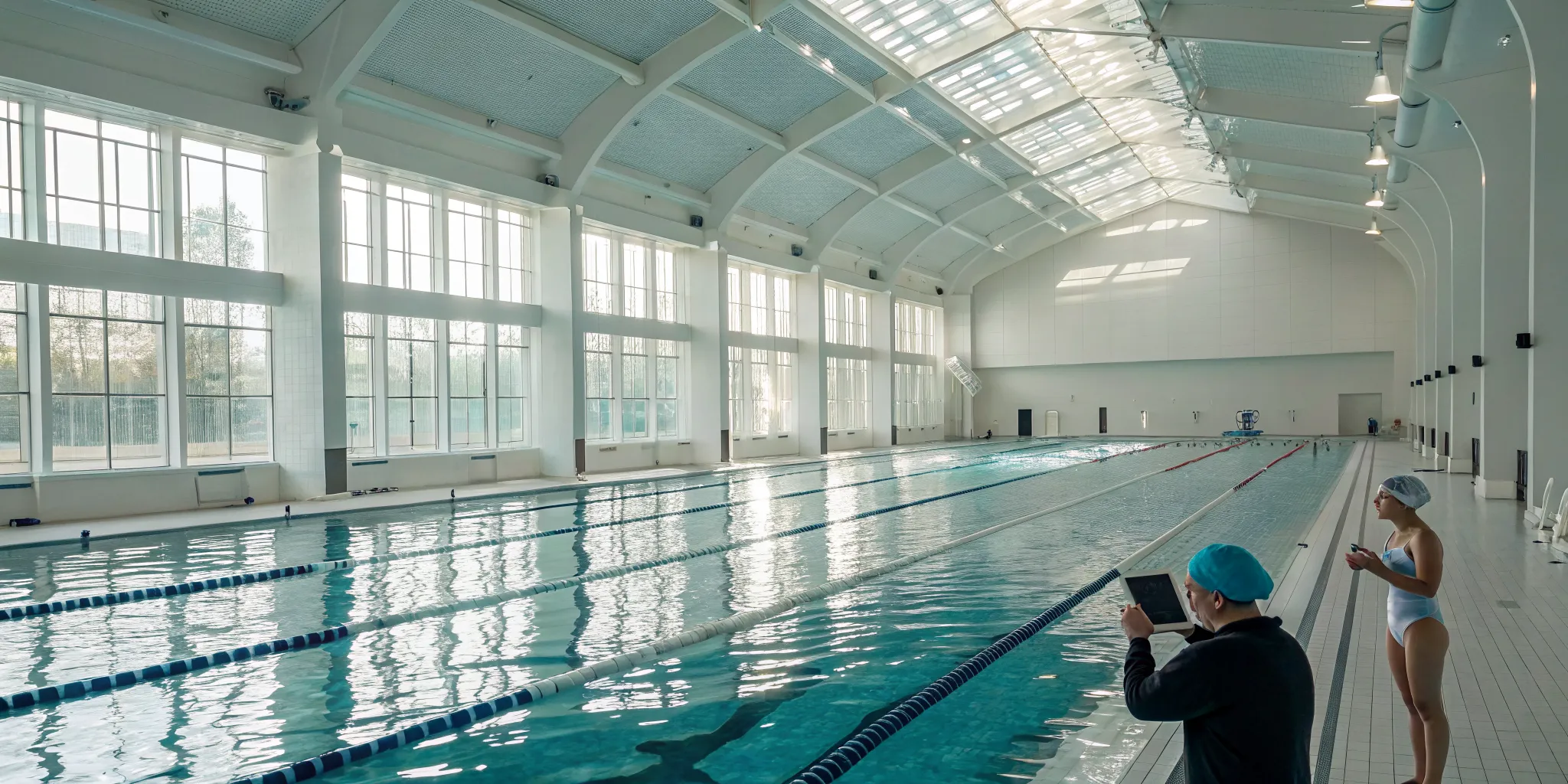
Your competitive swimmers want an edge. They’re asking, "is there an activity tracking software that supports both pool and open-water swim metrics with automatic lap detection and stroke analysis?" But your non-negotiable priority is keeping every guest safe. What if your staff had access to information the human eye can’t see? That’s the promise of real-time swimmer monitoring. Using lightweight wearables, these systems give your team a complete overview of the pool. Instead of relying only on scanning, your lifeguards get instant, precise alerts the moment a swimmer may be in distress, empowering them to create a more secure environment.
Key Takeaways
- Distinguish Between Performance and Safety: Decide whether your main goal is to provide athletes with detailed training data or to implement a facility-wide safety system. This distinction is the most important factor in choosing the right technology for your aquatic center.
- Look for Accuracy and a Simple Interface: The best systems use smart technology like AI to provide reliable alerts and minimize false alarms. Ensure the dashboard or app is easy for your staff to use, so they can get critical information at a glance without confusion.
- Recognize the Dual Value: A comprehensive system offers a dual return on investment. It acts as a vital support tool for your lifeguards by enabling faster emergency response, and it provides valuable performance data for coaches and competitive swimmers.
What Exactly Is Real-Time Swimmer Monitoring?
Imagine having an extra set of eyes on every swimmer in your pool, tracking their every move in real time. That’s the core idea behind real-time swimmer monitoring. This technology uses wearable devices, often worn as a headset or goggle attachment, to collect data as people swim. This information is then sent instantly to a central hub, giving you a live view of what’s happening in the water.
Originally, this tech was all about performance. Competitive swimmers and their coaches used it to get immediate feedback on things like stroke rate, lap times, and heart rate. This data helps athletes refine their technique and train smarter. You can see exactly where a swimmer is gaining or losing speed, allowing for precise adjustments during a training session.
But the technology has evolved to become a critical safety tool. Beyond just tracking performance metrics, advanced systems now focus on swimmer safety. They monitor for signs of distress, such as a swimmer becoming motionless or submerged for too long. When the system detects a potential problem, it sends an immediate alert to lifeguards. This is a huge step forward for aquatic safety, providing an essential layer of protection that supports your lifeguard team. Understanding how these systems work is key to seeing their full potential for your facility. It’s about combining human expertise with smart technology to create the safest possible environment for everyone.
Personal Swim Trackers: What Individual Swimmers Are Using
When we talk about swimmer monitoring, it’s easy to picture the fitness trackers and smartwatches many people wear daily. These personal devices have become incredibly popular, and for good reason. They offer swimmers a wealth of data to analyze their workouts, track progress, and stay motivated. For competitive athletes and fitness enthusiasts, they are fantastic tools for performance enhancement. However, it's crucial to understand that these consumer-grade trackers are designed for individual performance, not for facility-wide safety. Their focus is on metrics like speed and stroke efficiency, which is a world away from the critical safety monitoring required to protect every person in a commercial aquatic environment. While your patrons might be using them to count their laps, these devices don't provide the reliable, real-time distress detection that your lifeguard team needs to ensure everyone's well-being.
A Look at the Consumer Market: From Watches to Goggles
The market for personal swim trackers is booming, with options to fit nearly every budget and goal. The most common devices are smartwatches, which range from high-end models packed with features to more budget-friendly options focused on the basics. These watches are designed to be worn on the wrist and automatically track a variety of metrics during a swim. Beyond watches, the technology has expanded into other form factors. You can now find smart goggles that display data directly in the swimmer's line of sight, providing real-time feedback without needing to pause and check a watch. There are also smaller, dedicated devices called tempo trainers that clip onto goggles or a swim cap to help swimmers maintain a consistent stroke rate. Each of these products is built around a single user, giving them personal insights into their own performance in the water.
High-Performance and Triathlon Watches
At the top end of the market, you'll find high-performance watches like the Apple Watch Ultra and premium models from Garmin. These devices are a triathlete's dream, built to handle the rigors of swimming, cycling, and running. In the water, they can automatically detect the swimmer's stroke type, provide a precise stroke count, and track laps with impressive accuracy under ideal conditions. They are highly waterproof and often integrate seamlessly with popular fitness apps like Strava and TrainingPeaks, allowing athletes to sync and analyze their data. For a competitive swimmer, this information is invaluable for fine-tuning their technique and tracking progress over a season. The focus is entirely on capturing detailed performance analytics for personal improvement.
Dedicated and Budget-Friendly Swim Watches
You don't need to spend a fortune to track your laps. Many brands offer dedicated swim watches that are more affordable but still get the job done for casual and fitness swimmers. While they might not have all the bells and whistles of a triathlon watch, they reliably track core metrics like distance, time, and pace. The most important feature in this category is waterproofing. For any kind of swimming, you'll want a watch with a rating of at least 10 ATM, which means it can withstand pressure equivalent to a depth of 100 meters. This ensures the device can handle repeated use in the pool without failing, providing a durable tool for anyone looking to add data to their swim routine.
Alternative Tracking Devices: Smart Goggles and Tempo Trainers
Watches aren't the only option for personal swim tracking. Smart goggles are an exciting innovation that embeds a small display into the goggle lens, showing metrics like lap splits and time in the swimmer's peripheral vision. This allows for immediate feedback without disrupting the swimmer's rhythm. For those focused purely on pacing, a tempo trainer is a simple yet effective tool. This small device emits an audible beep at a set interval, helping the swimmer maintain a consistent stroke rate. For open-water swimmers, a GPS-enabled watch is essential for tracking distance and path in a lake or ocean. These alternatives show how the consumer market is geared toward providing personalized data to help individuals achieve their specific training goals.
Key Metrics and Features in Personal Trackers
Personal swim trackers are all about the data. They are designed to capture a wide range of metrics that help swimmers understand and improve their performance. These features are tailored for individual analysis, giving athletes the numbers they need to refine their technique, build endurance, and swim more efficiently. From measuring efficiency with a single score to tracking heart rate and pace, the goal is to quantify every aspect of a swim. Understanding these key metrics shows what these devices are built for: personal athletic development. This data is powerful for a coach and swimmer but serves a very different purpose than the information needed for a comprehensive aquatic safety system.
Measuring Efficiency with the SWOLF Score
One of the most popular metrics in swim tracking is the SWOLF score. The name is a combination of "swim" and "golf," and like golf, a lower score is better. It's a measure of swimming efficiency calculated by adding your time for one lap to the number of strokes you took for that lap. For example, if you swam a 25-meter lap in 30 seconds with 15 strokes, your SWOLF score would be 45. Swimmers use this score to find the sweet spot between speed and effort. In addition to SWOLF, these trackers measure stroke rate, pace per 100 meters, distance, and often heart rate, giving a complete picture of an individual's workout.
Understanding Waterproof (ATM) Ratings
When you see a waterproof rating on a watch, it's usually given in atmospheres (ATM). This rating indicates how much pressure the device can withstand, which translates to a certain depth in water. For instance, a 5 ATM rating means the watch can handle pressure equivalent to 50 meters, making it suitable for surface swimming. However, for serious lap swimming and diving, experts recommend a rating of at least 10 ATM (100 meters). This higher rating ensures the watch's seals can hold up against the repetitive pressure changes and movements of swimming. It’s a practical feature that speaks directly to the device's durability for its intended use as a personal fitness tool.
Open-Water GPS and App Integration
For swimmers who venture beyond the pool, GPS is a must-have feature. Since there are no walls to push off from, GPS is what allows a watch to track distance and map a swimmer's route in open water. The data collected during a swim—whether in a pool or a lake—can then be synced to a companion app on a smartphone. These apps, like Garmin Connect or COROS, provide detailed charts and graphs of the workout. Many also connect to third-party platforms like Strava, where swimmers can share their activities, compare results with friends, and join virtual challenges. This ecosystem is built around personal achievement and community engagement for athletes.
The Hidden Downsides: Inaccuracies of Personal Trackers
While personal trackers are fantastic for training, they have significant limitations that make them unsuitable for safety monitoring. These devices are engineered for performance metrics, not for reliably detecting distress. Their accuracy can be surprisingly fragile and depends heavily on ideal conditions and specific swimming styles. Simple things like performing a drill, swimming a different stroke, or even just a loose watch strap can lead to incorrect data. These inconsistencies are acceptable for an athlete tracking their workout, but they are a critical failure when it comes to safety. For a facility manager, relying on this technology for protection would introduce unacceptable risks. True aquatic safety requires a system designed from the ground up for one purpose: detecting distress with unwavering accuracy, which is exactly how our system works.
Why GPS and Wrist-Based Heart Rate Falter in Water
Two key features of high-end smartwatches—GPS and wrist-based heart rate—struggle to perform accurately in the water. GPS signals do not travel through water, so a watch can only get a fix when the swimmer's arm is out of the water during a stroke. The watch then essentially "guesses" the path between those points, which can lead to inaccurate distance and mapping. Similarly, wrist-based heart rate monitors, which use light to detect blood flow, are often unreliable in the water. The presence of water between the sensor and the skin can interfere with the readings, and the constant motion can cause the watch to shift, further compromising accuracy. For this reason, many serious athletes still use a separate chest strap for reliable heart rate data.
Common Errors in Lap and Stroke Recognition
Personal trackers determine laps by sensing the push-off from the pool wall and the subsequent glide. However, this detection isn't foolproof. A weak push-off, a crowded lane that forces a mid-lap stop, or an open-turn (instead of a flip-turn) can confuse the watch and cause it to miscount laps. Stroke recognition also has its limits. Most watches are optimized for freestyle, as the arm motion is distinct and regular. They often struggle to accurately identify or count strokes for breaststroke and backstroke. This means the data, from lap counts to SWOLF scores, can be flawed, reinforcing that these devices are best used as a guide for training, not a source of truth for facility safety.
Why Drills and Kick Sets Confuse Most Watches
Perhaps the biggest blind spot for personal swim trackers is their inability to track anything other than standard swimming. When a swimmer performs a drill or a kick set with a kickboard, their arms are either still or moving in a way the watch doesn't recognize as a swimming stroke. As a result, the device won't record any distance, leaving a significant gap in the workout data. For a safety system, this is a non-starter. A person is just as vulnerable to drowning while doing a kick set as they are when swimming laps. This highlights the fundamental difference: performance trackers monitor arm movement, while a true safety solution must monitor the swimmer themselves, regardless of what they are doing in the water.
What to Look For in Swimmer Monitoring Tech
When you start looking at swimmer monitoring systems, you’ll quickly see that they vary a lot in what they can do. Some are built for elite athletic training, while others are designed purely for safety. The best systems often blend both, giving your facility a comprehensive tool for swimmer safety and performance. To help you sort through the options, I’ve put together a list of the most important features to look for. Think of this as your checklist for finding a system that truly meets the needs of your swimmers, lifeguards, and coaches. Understanding how it works is the first step in choosing the right technology for your facility.
1. Instant Safety Alerts and Drowning Detection
This is the most critical feature for any aquatic facility focused on safety. A monitoring system must be able to identify a swimmer in distress and send an immediate alert. In a potential drowning situation, every second is vital. The technology should be sophisticated enough to distinguish between playful underwater swimming and a genuine emergency, minimizing false alarms while ensuring no event is missed. While many systems track performance, a true safety system prioritizes instant, reliable alerts that direct your lifeguards to the exact location of a swimmer who needs help. This capability is the foundation of modern water safety and a non-negotiable for protecting everyone in your pool.
2. AI-Powered Stroke and Technique Analysis
Artificial intelligence is a game-changer for monitoring technology. Instead of just collecting data, AI-powered systems can analyze it to provide meaningful insights. As eo SwimBETTER notes, AI can create "a clear, easy-to-understand report" that saves coaches time and gives swimmers personalized advice. For safety, this means the system learns to recognize the subtle patterns that signal distress. For performance, it can automatically analyze a swimmer's technique and offer suggestions for improvement. An AI-driven approach turns raw data into actionable steps your team can use to enhance both safety protocols and training programs.
3. Wearables That Track More Than Just Heart Rate
Wearable devices provide the most detailed information about an individual swimmer. These trackers, often worn in a cap or on goggles, can monitor a swimmer's every move. Some of the most advanced systems, like Swimtraxx, also include vital sign tracking to monitor heart rate in real time. This is incredibly valuable for both safety and performance. A sudden spike or drop in heart rate can be an early indicator of distress or exhaustion, allowing for proactive intervention. For athletes, tracking vitals helps ensure they are training within the right zones. WAVE's own Swimmer Alert wearables are designed to be lightweight and non-intrusive, so swimmers forget they're even there.
4. Measuring What Matters: Stroke Rate, Speed, and Laps
Even if your primary goal is safety, robust performance metrics are a huge plus. This data is invaluable for swim teams, coaches, and anyone looking to improve their swimming. A good system should track key metrics like stroke rate, lap times, turn speed, and distance per stroke. As Swimtraxx highlights, this information helps swimmers "improve technique, and get personalized training plans." Having this data readily available can make your facility more attractive to competitive swimmers and teams, providing a tool that helps them train smarter and achieve their goals right in your pool.
5. Does It Actually Work? Accuracy and Reliability
A monitoring system is only effective if it's accurate. In a busy pool with lots of splashing and activity, the technology must be able to perform without constant errors. False alarms can cause lifeguards to become desensitized, while a missed event is the worst-case scenario. Look for systems that use advanced AI algorithms to ensure high accuracy, like the technology Phlex Swim Tracking uses with its Apple Watch integration. It's always a good idea to ask for case studies or check testimonials to see how the system performs in real-world aquatic environments similar to your own.
6. An Interface Your Team Will Actually Use
The most advanced technology in the world won't help if your staff finds it confusing. The system's dashboard or app must be intuitive and easy to use, especially in a high-pressure environment. As Wylas Timing points out, some apps allow coaches to "monitor many swimmers at once in real-time." Your lifeguards need to be able to see alerts clearly and understand the information at a glance. The interface for your lifeguard alert equipment should be simple enough for a new team member to learn quickly but powerful enough for managers to pull reports and analyze facility usage over time.
7. Keeping Swimmer Data Safe and Private
Swimmer monitoring systems collect sensitive information, from a swimmer's location in the pool to their heart rate. Protecting this data is essential. Before you invest in a system, ask the provider about their data security and privacy policies. You need to know how the data is encrypted, where it's stored, and who has access to it. A trustworthy company will be transparent about its security measures and committed to protecting the privacy of your members. This commitment to professionalism and security is often a core part of a company's mission, which you can learn more about on its About page.
A Head-to-Head Look at Top Swimmer Monitoring Systems
When you start looking at swimmer monitoring technology, you'll find systems built for two different goals: enhancing safety and improving athletic performance. While some features might seem to overlap, their core purpose is what sets them apart. Understanding this difference is the first step in choosing the right technology for your facility. Are you looking to give competitive swimmers detailed data on their stroke, or are you focused on adding a critical layer of safety for every person in your pool?
Performance trackers are fantastic for individual athletes, providing metrics on speed, form, and efficiency. Safety systems, on the other hand, are designed for facility-wide implementation to monitor all swimmers, regardless of their skill level, and alert staff to potential emergencies. It's not about which technology is "better" overall, but which one is the right fit for your specific objectives. Let's look at some of the top options available so you can see how they compare and decide what best fits the needs of your swimmers and staff.
1. WAVE Drowning Detection System (GUARDian System)
The GUARDian System is a comprehensive drowning detection system designed specifically for aquatic facilities. Unlike performance trackers, its sole focus is swimmer safety. The system uses lightweight, comfortable wearables that track swimmers' submersion times. If a swimmer is submerged for too long, the system automatically sends a precise location alert to lifeguards through dedicated equipment. This creates an essential layer of protection that supports your staff's vigilance. It’s built to monitor every swimmer in the water, not just athletes, providing peace of mind for your team and guests in any supervised aquatic environment.
2. eo SwimBETTER
The eo SwimBETTER is a high-tech wearable created for competitive swimmers and triathletes who want to analyze their performance. Think of it like a power meter for cycling, but for the water. It attaches to a swimmer's hand and provides detailed feedback on their stroke, helping them understand where they can be more efficient. The data it collects is all about refining technique and gaining speed. While it offers incredible insights for athletes in training, it's designed as a personal coaching tool rather than a facility-wide safety system for drowning prevention.
3. Swimtraxx
Swimtraxx offers another wearable device geared toward swimmers and their coaches. The Swimtraxx One is a small tracker that fits onto goggles to monitor key metrics like heart rate, stroke count, and lap times in real time. This immediate feedback is great for swimmers who want to adjust their technique during a training session. The goal is to help athletes optimize their training and push their performance to the next level. It’s a powerful tool for individual athletic development but isn't designed to monitor large groups of recreational swimmers for safety purposes.
4. Phlex Swim Tracking
Phlex Swim Tracking positions itself as a personal swimming coach that provides in-depth performance analytics. The device measures a wide range of metrics, including speed, distance, and heart rate, across different swimming styles. The system is designed to give swimmers actionable data to help them train more effectively and reach their competitive goals. Like other performance-focused trackers, Phlex is an excellent resource for dedicated athletes looking to improve. However, its function is centered on individual performance enhancement, not on providing the real-time safety alerts needed for drowning detection in a busy facility.
Performance and Accuracy: How Do They Stack Up?
When you’re looking at real-time monitoring systems, it’s easy to get caught up in the numbers. But “performance” and “accuracy” can mean very different things depending on a system’s primary goal. Is it built to make swimmers faster, or is it built to keep them safe?
Many systems on the market are designed for athletic training. Tools like Phlex Swim Tracking and TritonWear are fantastic for competitive swimmers, offering precise data on stroke rate, speed, and heart rate. Their accuracy is geared toward shaving seconds off a lap time and perfecting technique. They provide actionable insights for athletes and coaches who want to analyze and improve athletic output. This technology is all about measuring a swimmer’s physical performance with incredible detail.
WAVE, on the other hand, defines performance and accuracy through the lens of safety. For us, performance isn’t about how fast a swimmer is, but whether they are safe. Accuracy is measured by our system’s ability to reliably detect the signs of drowning and instantly alert your staff. The WAVE GUARDian System is engineered to distinguish between active swimming and the subtle, often silent, signs of a swimmer in distress. Its performance is judged by its ability to provide an extra layer of protection for every person in your facility, from the playful child to the lap swimmer. While a performance tracker helps an individual swim better, a drowning detection system helps your entire team protect everyone.
How Much Does Swimmer Monitoring Technology Cost?
Let's talk about the numbers. The cost of swimmer monitoring technology can vary quite a bit, and it really depends on what you’re looking for. The market includes everything from individual wearables designed for athletic training to comprehensive, facility-wide systems focused on safety. Understanding the difference is key to figuring out your budget.
Systems designed for performance tracking are often priced per device or on a subscription model. They are fantastic tools for competitive swimmers and their coaches. On the other hand, a complete safety solution like the WAVE system is an investment in your entire facility’s infrastructure. The pricing for these systems is typically customized based on the size of your aquatic center, the number of swimmers you need to monitor, and the specific equipment you need. While it’s a different kind of purchase, looking at the cost of individual trackers can give you a helpful baseline for what this technology costs.
Breaking Down the Price Tag
When you look at performance-focused wearables, you’ll see a range of price points. For example, the eo SwimBETTER device, which offers advanced stroke analysis, starts at $799 and requires a membership to access your data. Another option, the Swimtraxx One, is a smart wearable that tracks pool metrics and heart rate for about €250. For teams, a system like Phlex Swim Tracking offers a yearly membership that gives both athletes and coaches access to performance data. In contrast, a comprehensive safety system is priced to your facility's specific needs, so you'll typically get a custom quote based on your venue.
What You Get for Your Money
So, what does that investment actually get you? With performance trackers, the focus is on athletic improvement. These devices provide detailed data on things like stroke rate, hand velocity, and heart rate to help swimmers refine their technique. They are excellent for training and competitive analysis.
A safety-focused system, however, offers a different kind of value. Instead of just tracking one swimmer’s performance, a solution like the WAVE GUARDian System monitors every swimmer for signs of distress. It’s designed to act as a critical support tool for your lifeguard team, providing real-time alerts to help prevent drowning incidents. The return on this investment isn't just faster lap times; it's enhanced safety and peace of mind for your staff and guests.
What to Know Before You Buy
You’ve compared the top systems and have a good idea of what's out there. Before you make a final decision, it’s smart to think about a few practical details. How a system performs day-to-day depends on more than just its core features. Your specific environment, the comfort of the wearables, and how you handle the data are all key pieces of the puzzle. Let’s walk through what you need to consider to ensure you choose a system that truly fits your facility’s needs.
Will Your Pool Environment Cause Interference?
The physical environment of your pool plays a big role in how well any wireless technology works. A system that performs perfectly in a clear, indoor lap pool might face challenges in a crowded, outdoor facility with lots of splash zones. Some systems are specifically designed for certain conditions, like competitive swimming. Before you commit, ask potential providers how their technology handles signal interference. The WAVE GUARDian system is built to function reliably in various aquatic environments, but it's always a good idea to discuss your unique setup, including water clarity and facility layout, to ensure optimal performance and safety.
Battery Life and How Comfortable Are the Wearables?
For any wearable technology to be effective, people have to be willing to wear it. Look for devices that are lightweight and comfortable, so swimmers almost forget they have them on. Some trackers weigh as little as 12 grams. Just as important is battery life. Your team won't have time to constantly charge dozens of devices, so find out how long the batteries last and how simple the charging process is. The goal is a system that integrates smoothly into your daily operations, and our Swimmer Alert wearables are designed for exactly that, prioritizing both comfort and long-lasting power.
How to Manage All That Data
A monitoring system gathers a ton of data, but that information is only useful if you can easily understand and act on it. Drowning detection is the priority, but many systems also offer performance metrics. Look for a user-friendly interface, like an app or dashboard, that presents information clearly. The best systems use smart programming to translate complex data into simple insights for your lifeguards and coaches. This makes it easy to track swimmer safety and performance without needing a degree in data science. Understanding how it works behind the scenes will give you confidence that the data you receive is both accurate and actionable.
Better Safety, Faster Swims: The Benefits of Real-Time Monitoring
Real-time monitoring technology offers a powerful one-two punch for any aquatic facility. It's not just about adding a layer of safety; it's also about giving swimmers and coaches the tools they need to excel. By tracking key metrics as they happen, these systems provide immediate, actionable insights that can transform both safety protocols and athletic performance. This dual benefit makes it one of the most impactful upgrades you can make to your operations.
For swimmers, this means getting a clear picture of their technique and physical condition in the water. Instead of guessing, they receive concrete data on their stroke, speed, and endurance. For coaches and facility managers, it means having a comprehensive overview of every person in the pool, allowing for data-driven training decisions and, most importantly, a faster response when every second counts. This technology moves your facility beyond traditional observation, creating a smarter and safer aquatic environment for everyone. It bridges the gap between what the eye can see and what the data reveals, leading to significant improvements in both how people swim and how they are protected. Ultimately, it empowers everyone, from the elite athlete to the lifeguard on duty, with the information they need to perform at their best and stay safe.
For Swimmers: Fine-Tuning Technique and Staying Injury-Free
Think of real-time monitoring as a personal coach that's with you for every stroke. Wearable devices can track detailed aspects of your swim, like your stroke efficiency and power output, showing you exactly where you might be losing speed or wasting energy. This kind of specific feedback is incredibly difficult to get from poolside observation alone.
With this data, you can swim smarter, not just harder, by making targeted adjustments to your technique. Understanding the nuances of your stroke helps you correct bad habits before they become ingrained, which not only improves your speed but also helps prevent common swimming injuries caused by improper form. It’s a proactive way to enhance performance while looking after your long-term physical health.
For Lifeguards and Coaches: Focusing on What Matters
In a busy aquatic facility, your staff's attention is their most valuable resource. Real-time monitoring technology helps them direct that attention where it's needed most. By collecting data from every swimmer and sending it to a central hub, the system provides a live overview of the entire pool. This means that instead of trying to visually scan every corner at once, your lifeguards receive immediate, specific alerts when the system detects potential signs of distress, like a swimmer being motionless for too long. This data-driven approach doesn't replace your staff; it empowers them. It transforms safety protocols by turning raw data into actionable insights, allowing your team to move from general observation to swift, targeted intervention when seconds are critical.
For Coaches and Facilities: Smarter Coaching and Faster Response
For coaches, this technology is a game-changer. Instead of relying on a stopwatch and a spreadsheet, you can get a live dashboard of your entire team's performance. You can monitor heart rates, split times, and stroke counts for multiple swimmers at once, making it easier to spot trends and tailor your training plans to individual needs. This data-driven approach helps you make more informed coaching decisions.
Beyond performance, the most critical benefit is enhanced safety. Real-time monitoring systems provide an extra set of eyes on every swimmer. If a swimmer shows signs of distress, the system can send an immediate alert to your staff. This allows your lifeguards to respond faster and more effectively than ever before, creating a safer environment for competitive athletes and recreational swimmers alike.
Is Real-Time Swimmer Monitoring Worth It?
Deciding to invest in new technology for your facility is a big step. You want to be sure it delivers real value for your team and the swimmers you protect. Real-time monitoring offers an incredible opportunity to enhance safety and even performance, but it’s natural to have questions about its practicality. Let's break down who this technology is for and address one of the most common concerns: false alarms.
Who Is This Technology For?
While some monitoring systems are built for elite athletes, the technology has a much broader application. Performance-focused tools like eo SwimBETTER are fantastic for competitive swimmers and triathletes who want to analyze their stroke and shave seconds off their time. They provide detailed feedback that helps individuals refine their technique.
However, for an aquatic facility, your responsibility extends to every person in the water. That’s where comprehensive safety systems come in. This technology is for facilities that want to provide an extra layer of protection for all swimmers, from the child taking their first lesson to the adult swimming laps. Systems like the WAVE GUARDian System are designed to monitor every participant, supporting your lifeguards and ensuring that everyone has a safer, more enjoyable experience at your pool.
What About False Alarms?
It’s a fair question. The last thing you want is a system that cries wolf, causing unnecessary disruptions and leading to alarm fatigue for your staff. The key to avoiding this lies in the sophistication of the technology. Many modern systems use advanced AI to ensure they are tracking information accurately. For example, performance trackers like Phlex Swim Tracking use smart algorithms to give precise feedback on an athlete's form.
Safety-focused systems apply similar intelligence to detect signs of distress. They are engineered to differentiate between playful splashing and a genuine emergency. While no technology is perfect, a reliable system is designed to be a trustworthy partner for your lifeguards. It acts as a second set of eyes, providing critical alerts that allow your team to respond faster and more effectively when it matters most.
Related Articles
- Drowning Prevention Technology for Commercial Pools 101
- How to Buy Swimmer Safety Wearables: A 2026 Guide
- Drowning Detection Systems: The Ultimate 2026 Guide
- Drowning Prevention Technology: A Facility Guide
- Anti-Drowning Wearable: A 2026 Buyer's Guide
Frequently Asked Questions
What's the main difference between a performance tracker and a safety system like WAVE? Think of it this way: performance trackers are designed to help an individual swimmer get faster, while a safety system is designed to help your facility keep every swimmer safe. A performance tracker provides data on things like stroke rate and lap times for athletic training. A safety system, like the WAVE GUARDian System, is focused on one critical task: detecting if a swimmer is in distress and immediately alerting your lifeguards so they can respond. Both use technology, but they have very different goals.
Will this technology replace my lifeguards? Absolutely not. This technology is designed to be a powerful tool for your lifeguards, not a replacement. Think of it as an extra set of eyes that can monitor every swimmer simultaneously without getting tired or distracted. When the system detects a potential issue, it sends a precise alert to your staff. This allows your highly trained lifeguards to respond faster and more effectively, enhancing their ability to protect everyone in the water.
How do you prevent false alarms in a busy, active pool? This is a great question and a key focus for any reliable safety system. Advanced systems use smart technology and sophisticated algorithms to tell the difference between normal activity, like kids playing underwater, and the specific signs that indicate a swimmer is in distress. The system is engineered to recognize the subtle patterns of a potential drowning event, which helps minimize false alarms and ensures your team can trust the alerts they receive.
Will swimmers actually be willing to wear the tracking devices? We know that for any safety measure to be effective, it has to be easy to use. That’s why a lot of effort goes into designing the wearables to be as lightweight, comfortable, and unobtrusive as possible. The goal is for swimmers to put them on and forget they are even there. When people understand that this small device provides a significant layer of protection, it becomes a simple and accepted part of a safe swimming experience.
Why is the pricing for a safety system different from a personal performance tracker? The pricing reflects a difference in scale and purpose. A personal performance tracker is a single product for one person. A comprehensive safety system is an investment in your entire facility's safety infrastructure. The cost includes not just the swimmer wearables but also the central hub, the specialized alert equipment for your lifeguards, and the integrated software that makes it all work together. You are getting a complete, facility-wide solution designed to protect every guest.
