
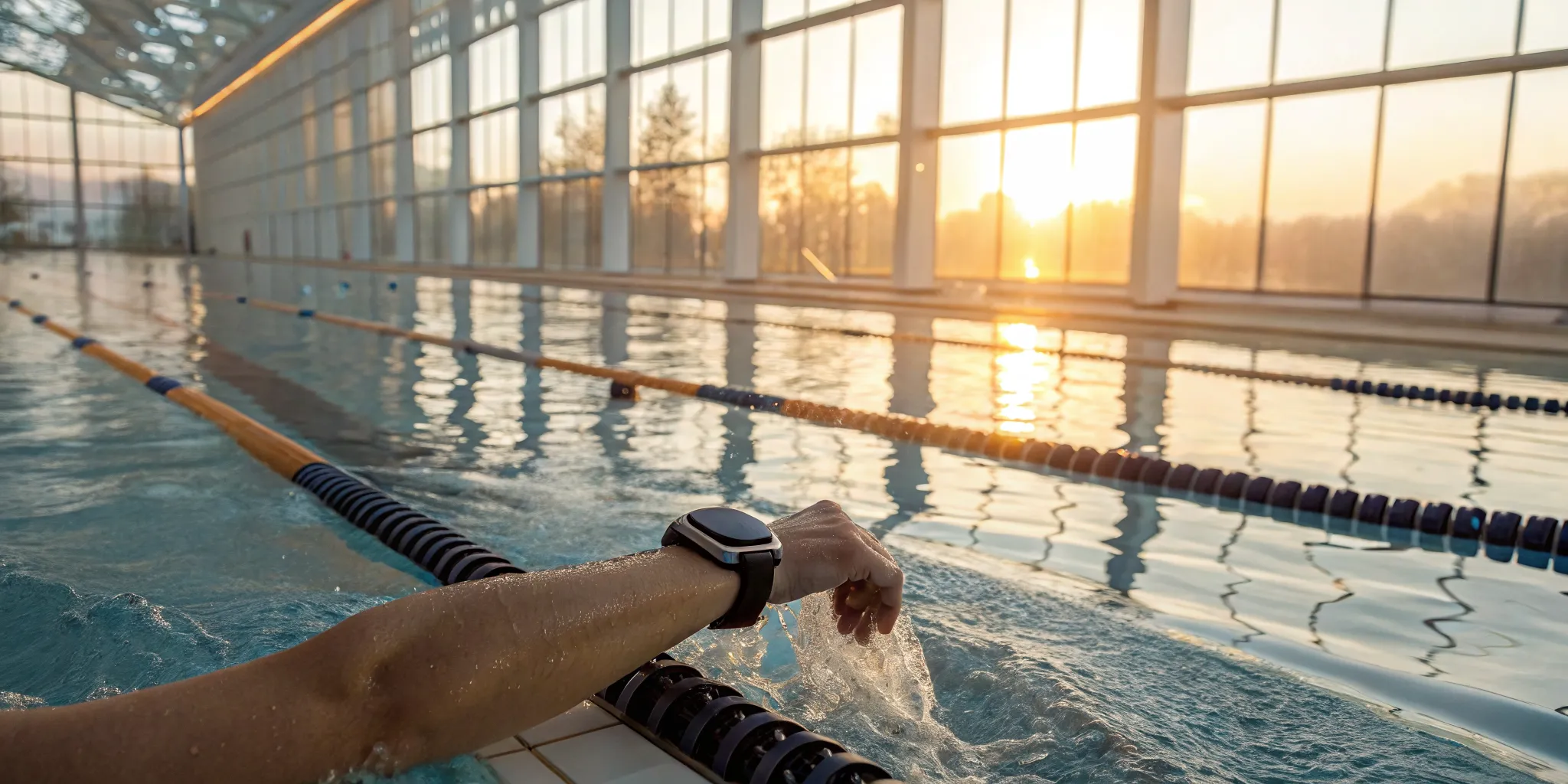
Drowning is often silent. It doesn't look like it does in the movies. For lifeguards, telling the difference between playful swimming and a genuine emergency is a constant challenge, especially in crowded water. This is where a drowning prevention wearable changes everything. The concept is brilliantly simple. Each swimmer wears a small tracker that monitors how long they are submerged. If that time exceeds a preset limit, it sends an instant, loud alert to your staff, pinpointing the swimmer’s exact location. It gives your team the critical information they need to act fast when seconds matter most.
Key Takeaways
- Support your lifeguards with technology: Wearable sensors act as a tireless partner for your staff, providing constant monitoring for every swimmer to cover blind spots and reduce the strain of scanning a crowded facility.
- Enable faster rescues with precise alerts: The system's greatest advantage is saving critical time during an emergency. By sending immediate, location-specific alerts, it allows your team to skip the search phase and go directly to the person who needs help.
- Prioritize practical features for real-world success: A system is only effective if it works for your facility and guests. Focus on key factors like durability, all-day battery life, and swimmer comfort to ensure your investment is reliable, easy to manage, and consistently used.
The Unseen Risks in Water Safety
When we think of drowning, many of us picture the dramatic scenes from movies—loud splashing, yelling for help, and frantic waving. The reality is starkly different and dangerously quiet. Drowning is often a silent event. As one source notes, "Drowning often looks like someone is just playing or swimming underwater, making it very hard to notice." A person in distress is physically unable to call out because their body is instinctively focused on the single, desperate act of trying to breathe. This silent struggle can be easily missed in a busy aquatic environment, mistaken for simple underwater play. It’s a sobering thought that highlights a fundamental challenge in water safety: what you can’t see or hear can be the greatest threat. This risk isn't limited to non-swimmers; it applies to everyone in the water, making constant, accurate vigilance absolutely essential.
Drowning Can Happen to Anyone, Anytime
It’s a common misconception that only inexperienced swimmers or young children are at risk of drowning. The truth is that a water emergency can happen to anyone, regardless of their age or swimming ability. A strong, confident swimmer can suddenly experience a medical event like a seizure or heart attack. A simple leg cramp can become debilitating. Even just misjudging fatigue on a long swim can lead to a dangerous situation. Because these incidents are sudden and unexpected, they can catch even the most prepared person off guard. The quiet nature of these struggles means that even people swimming right next to someone in distress might not realize what is happening until it’s too late. This universal vulnerability is why a multi-layered safety approach is so critical for any aquatic facility.
Understanding the Statistics
The statistics surrounding drowning are a powerful reminder that traditional supervision methods have their limits. Perhaps the most staggering fact is that "88% of all drownings happen even when someone is watching." This isn't an indictment of the people watching; it's a clear illustration of how difficult it is to spot the subtle signs of drowning with the human eye alone. A moment of distraction, glare on the water, or a crowded swimming area can create dangerous blind spots. This statistic forces us to ask a tough question: if watching isn't always enough, what else can we do? It highlights the need to support our human supervisors with tools that can see what they might miss.
Why Supervision Isn't Always Enough
Relying solely on human sight to prevent drowning is like asking someone to find a needle in a haystack, over and over again, for hours on end. Lifeguards are highly trained and dedicated professionals, but they are also human. The environment of a busy aquatic facility is filled with challenges that can compromise even the most diligent supervision. Constant scanning of the water's surface is mentally taxing, and factors like sun glare, water turbidity, and the sheer number of swimmers create a complex and ever-changing visual field. A swimmer in distress who slips below the surface can become invisible in seconds. This is the gap where technology can make a life-saving difference, providing a layer of certainty that the human eye simply cannot guarantee on its own.
The Limits of the Human Eye
Even the most skilled lifeguards face inherent limitations. As one safety analysis points out, "Even highly trained lifeguards can be distracted, and traditional safety tools like whistles aren't always enough." A distraction doesn’t have to be a major event; it can be as simple as answering a patron's question, tending to a minor scrape, or scanning one section of the water while an incident begins in another. These small, unavoidable moments create brief but dangerous lapses in coverage. The human eye can only be in one place at a time, and it can’t see below the surface in murky or crowded water. Understanding how technology addresses these visual limitations is key to building a more robust safety plan that accounts for the realities of human perception and a dynamic aquatic environment.
The Reality of Drownings with Lifeguards on Duty
It’s a difficult topic to discuss, but one that is essential for improving safety: drownings still occur at facilities with certified lifeguards on duty. According to data from the Fit Design Awards, "At least 20% of all drowning deaths happen even when lifeguards are present." This statistic is not a reflection of lifeguard incompetence; rather, it underscores the immense difficulty of their job and the limitations of traditional observation. It proves that even with trained eyes on the water, the silent and rapid nature of drowning can defy detection. For facility operators, this reality is a call to action. It means we must look beyond just staffing and training and equip our teams with advanced tools that provide an extra layer of protection for every single person in the water.
Adding a Layer of Support for Aquatic Staff
Integrating technology isn't about replacing lifeguards—it's about empowering them. Think of it as giving your expert team a superpower: the ability to see beneath the surface and monitor every swimmer simultaneously. Drowning detection systems act as a tireless partner, providing constant vigilance without fatigue or distraction. As WAVE's own mission states, "The system helps lifeguards by watching swimmers in real-time and quickly alerting them to possible danger." When a swimmer is submerged for too long, the system instantly sends an alert to your staff, pinpointing the individual's location. This allows your team to bypass the critical time lost in scanning and searching, enabling a faster and more effective response. By providing lifeguard alert equipment, you give your staff the support they need to perform their duties with greater confidence and precision.
What Are Drowning Prevention Wearables?
Wearable safety sensors are a game-changer for aquatic safety. Think of them as a dedicated spotter for every single person in the water. These small, innovative devices are worn by swimmers and use advanced technology to monitor their activity, providing an extra layer of protection that works hand-in-hand with your lifeguard team. They are designed to detect potential distress situations quickly, giving your staff the critical seconds they need to respond effectively. It's all about adding another set of eyes to your pool, especially in crowded or low-visibility conditions.
How Do These Wearables Work?
So, how does this technology actually function? It's pretty smart. These sensors use a combination of motion detection and submersion monitoring to keep track of a swimmer's status. For example, if a swimmer goes underwater and doesn't resurface within a preset time, the device recognizes this as a potential danger. This triggers an immediate alert, often with both lights and sound, to notify lifeguards that someone may need help. The system provides real-time data that allows your team to react instantly, turning a potential crisis into a successful intervention.
The Motivation Behind the Technology
It’s often a personal story that sparks the most meaningful innovations. That’s certainly true for the WAVE Drowning Detection System. Our co-founders, Mark Caron and Dave Cutler, were moved to action after a tragic drowning happened in their own community. That experience created a powerful drive to prevent similar incidents, which is the real reason this technology exists—to offer a reliable backup for human supervision. This mission feels even more urgent when you learn that drowning is the second leading cause of accidental death for children. To help change that statistic, the goal was to develop a system that was effective, affordable, and easy for aquatic teams to use every day. By combining immediate alerts with precise location tracking, the technology gives lifeguards the information they need to respond with confidence, turning a moment of uncertainty into a swift, successful rescue.
Headbands, Clips, and Goggles: Common Wearable Types
Wearable safety tech comes in a few different forms, each designed for specific needs. You have devices like WAVE's Swimmer Alert wearables, which are comfortable headbands or clips that track how long a swimmer is submerged and send an alert if they stay under for too long. Other options include smart life jackets, which build sensor technology into traditional flotation devices, and emergency flotation devices that can be worn on the wrist and inflate to provide buoyancy in an emergency. Each type offers a unique way to enhance safety in and around the water.
How Do Wearables Detect a Swimmer in Distress?
You might be wondering how a small device can tell the difference between a swimmer having fun and one who is in serious trouble. It’s a smart and straightforward process that focuses on one of the most critical indicators of drowning: time spent underwater. These systems are designed to monitor every swimmer individually, providing an extra layer of protection that works in tandem with your lifeguard staff.
The technology isn't magic; it's a reliable system of sensors, data transmission, and alerts. Each component works together to create a safety net that covers your entire facility. When a swimmer wears one of these devices, they are connected to a system that watches for specific signs of distress. If a dangerous situation is detected, the system instantly notifies your team so they can take immediate action. Let's break down exactly how it works.
Monitoring a Swimmer's Time Underwater
At its core, a wearable safety sensor is a sophisticated timer. Devices like WAVE’s Swimmer Alert wearables, which can be a headband or a clip for goggles, continuously track how long a swimmer is submerged. This is a key metric because a person in distress is often unable to surface for air. While a playful swimmer might spend a few seconds underwater, a prolonged period of submersion is a universal sign that something could be wrong. The system uses a preset time threshold, so if a swimmer stays underwater longer than what is considered safe, the device recognizes it as a potential emergency.
Sending Instant, Real-Time Data
Once a wearable detects that a swimmer has been submerged for too long, it doesn’t wait. It immediately sends a wireless signal containing vital information. This real-time data is transmitted to a central hub, like the GUARDian Hub (w3000), which acts as the brain of the entire system. The message includes which specific wearable was triggered and, most importantly, its precise location in the water. This eliminates any guesswork for your staff. Instead of scanning the entire pool, they know exactly where to direct their attention, saving precious seconds during a critical incident.
Activating an Emergency Alert
The moment the central hub receives a distress signal, it triggers an unmistakable alert for your team. This isn't a quiet notification that could be missed. The system activates dedicated Lifeguard Alert equipment, which uses both loud sounds and bright, flashing lights to get your staff's attention. The alert also displays the swimmer's location on a screen, guiding lifeguards directly to the person in need. This technology gives your team the specific information they need to respond with speed and accuracy. It’s an essential tool that supports their expertise and helps them see what might otherwise be hidden beneath the surface.
A Real-World Alert Escalation Process
A smart system knows that not every alert requires a full-scale emergency response. That's why an effective alert escalation process is so important—it helps manage notifications and prevents alarm fatigue for your staff. For example, if a swimmer is submerged past an initial safety threshold—say, 20 seconds—the system might first send a discreet, silent vibration to the wearable device of the closest lifeguard. This gives them a heads-up to visually check on the swimmer. If the swimmer still doesn't surface after another 10 seconds, the system then escalates. This is when the loud alarms and flashing lights of the full drowning detection system activate, alerting the entire team to the swimmer's precise location. This multi-stage approach ensures that minor situations are handled quietly while true emergencies get an immediate, unmissable response.
What Do the Alerts Look and Sound Like?
When a wearable sensor detects a swimmer who may be in distress, time is of the essence. But what does that detection actually look and sound like in a real-world aquatic facility? A good system doesn’t just send a quiet notification; it commands attention with a clear, multi-sensory alert designed to cut through the noise and chaos of a busy pool or water park. The goal is to equip your staff with the exact information they need to respond instantly and effectively, without causing unnecessary panic or confusion among other guests.
The design of an alert is critical. In a high-stakes environment, your team can experience "alert fatigue" if alarms are frequent, unclear, or non-specific. This is why modern systems focus on delivering distinct, actionable intelligence. The alerts are designed to be impossible to ignore, using a combination of loud sounds and bright lights to ensure your team can act decisively when seconds matter most. It’s about providing a clear signal that something needs immediate attention, while also giving your staff the confidence that it's a real event. This approach transforms a simple alarm into a powerful communication tool that integrates seamlessly into your emergency action plan.
Notifying Lifeguards and Staff Instantly
Imagine the typical sounds of a pool: splashing, shouting, and music. An effective alert needs to rise above it all. When the system detects a potential drowning event, it triggers immediate and loud alarms. These aren't just simple beeps; they are distinct auditory signals paired with bright, flashing lights on the Lifeguard Alert equipment stationed around your facility. This dual-alert approach ensures that even in the loudest, most distracting moments, your lifeguards and staff are instantly made aware of a potential emergency. The system is built to grab their attention and direct it where it's needed most, removing any ambiguity from the situation.
Pinpointing a Swimmer's Exact Location
A general alert is helpful, but a specific one is life-saving. Knowing that someone is in trouble is only half the battle; knowing exactly who and where they are is what enables a rapid rescue. Wearable safety systems excel at this. When an alert is triggered, the system doesn't just sound an alarm. It instantly identifies the specific swimmer in distress and pinpoints their precise location in the water on a digital map of your facility. This information is displayed on the central hub and on devices carried by your staff. This level of detail eliminates the need for a visual search, allowing lifeguards to bypass the scan and go directly to the swimmer. You can see how it works to provide this critical information.
Locating Swimmers in Dark or Murky Water
Clear water presents its own challenges, but what happens in lakes, rivers, or other non-clear bodies of water where visibility is low? Locating a submerged swimmer in these conditions can feel nearly impossible, as the water itself hides the person in need. This is where specialized technology becomes a critical lifeline. For places like lakes or rivers, the WAVE system uses "Location Indicators" that flash brightly in the water near the person in trouble, helping rescuers find them quickly. This innovative feature works with the Swimmer Alert wearables to ensure that even in the most challenging conditions, your team can bypass the search and go directly to the rescue, turning a potential crisis into a successful intervention.
Following an Emergency Escalation Plan
A truly smart safety system accounts for human factors and complex environments. What happens if an initial alert is missed or if a situation requires a broader response? This is where escalation protocols come in. You can configure the system to follow a specific chain of command. For instance, an initial alert might go to the lifeguard in that specific zone. If the alert isn't acknowledged within a set time, it can automatically escalate, notifying a head lifeguard, facility manager, or even a first-aid station via dedicated apps on their devices. The GUARDian Hub manages these complex notifications, ensuring the right people are alerted at the right time and providing a structured response plan for any emergency.
How Wearables Enhance Existing Safety Measures
When you think about water safety, trained lifeguards are probably the first thing that comes to mind. They are, and always will be, the cornerstone of a safe aquatic environment. But even the most skilled lifeguards are human. They face challenges like sun glare, water distortion, and the sheer chaos of a crowded pool. This is where wearable technology comes in, not as a replacement, but as a powerful partner.
Think of it as giving your safety team a superpower. Wearable sensors provide an extra layer of protection that works alongside your staff, filling in gaps and watching over every swimmer simultaneously. The goal isn't to substitute human expertise but to enhance it. By combining the vigilance of your lifeguards with the precision of technology, you create a comprehensive safety net. The entire WAVE system is designed to support your existing protocols and make your facility a safer place for everyone.
Supporting Lifeguards, Not Replacing Them
Modern technology can make swimming safer by helping lifeguards and facility managers. These tools don't replace people, but they do give them extra help to spot dangers faster. A wearable safety system acts as a tireless partner for your staff. It continuously monitors every swimmer wearing a device, tracking key indicators of distress without ever getting distracted or tired. When the system detects a potential issue, it sends an immediate alert. This allows your lifeguards to shift their focus from scanning for a problem to responding to a specific, located event. This technology empowers your team, reducing the mental load of constant scanning and allowing them to perform their most critical duties with more focus and support.
Seeing What Cameras Can't
Many facilities use cameras, but they have significant limitations. Glare, splashing, and crowded water can make it impossible for a camera, or even the human eye, to see what’s happening beneath the surface. This is especially true in murky or dark water where visibility is near zero. Wearable sensors overcome these challenges completely. Because Swimmer Alert wearables track submersion time directly from the swimmer, they are incredibly reliable. They don't care if the water is cloudy, crowded, or dark. This technology provides clear, unambiguous data that visual systems simply can't, ensuring consistent protection in pools, lakes, and other bodies of water where visibility is a concern.
Why a Layered Safety Approach Works Best
The safest aquatic facilities use both people and technology. Combining human watchfulness with devices like wearables and a pool-wide system offers the most complete protection. This layered safety strategy ensures that you have overlapping systems of coverage. Your lifeguards serve as the immediate, intelligent first responders on the scene. Meanwhile, the wearable system works silently in the background, providing a constant, data-driven safety net that catches what the human eye might miss. When you integrate wearables into your safety plan, you create a robust defense where human skill and technological precision work together, significantly reducing risk and speeding up response times during an emergency.
The Role of Formal Swim Lessons
Another critical layer in any comprehensive safety plan is education. While technology provides an incredible safety net, teaching people to be safer in the water is a proactive step that can’t be overlooked. Research shows that formal swim lessons can reduce the likelihood of drowning by a staggering 88% for children between one and four. Given that drowning is a leading cause of unintentional death for young children, learning to swim is more than a recreational activity—it’s a fundamental life skill. Encouraging or offering quality swim instruction is a powerful way for any aquatic facility to build a stronger culture of safety from the ground up.
Special Considerations for At-Risk Swimmers
Even strong, experienced swimmers need supervision, and this is especially true for individuals with certain medical conditions. For guests with seizure disorders or other health issues that could increase their drowning risk, extra precautions are essential. The CDC recommends using a buddy system, which is a simple yet effective strategy to ensure someone is always looking out for another. This is where a layered approach becomes so important. While your lifeguards are scanning the water and a wearable system is monitoring for submersion, having a designated buddy adds another personal level of security. It’s about creating overlapping layers of protection to account for all types of swimmers and situations, ensuring everyone can enjoy the water safely.
Choosing a Quality Swim Program
Not all swim programs are created equal, and helping your community find the right one is another way to champion water safety. The American Academy of Pediatrics and other national safety groups emphasize that established swimming skills are a core part of drowning prevention. When evaluating a program, look for those with certified instructors, a clear curriculum that progresses with a swimmer's ability, and a strong focus on water survival skills—not just swimming strokes. A quality program teaches students of all ages how to handle unexpected situations, like falling into the water, and how to stay calm. Promoting these programs helps create more confident and capable swimmers, which ultimately makes your entire facility a safer environment.
What to Look for in a Drowning Prevention Wearable System
Choosing a wearable safety system is a significant step, and not all options are created equal. To find the right fit for your facility, you need to look beyond the basic features and consider how the technology will perform in your specific environment. The best systems are designed with the realities of a busy aquatic facility in mind, from durability to how they fit into your team's daily workflow. Think of it as adding a new, highly advanced tool to your safety toolkit. This technology should act as a force multiplier for your lifeguards, giving them an extra set of eyes that can see what the human eye might miss, especially in crowded or murky water.
When you start evaluating different systems, it’s easy to get caught up in the technical specifications. But the most important questions are practical ones. How will this hold up after a full season of use? Will it help my team respond faster in an emergency? Will our guests actually wear it? How easily can my staff learn to use it? A system that looks great on paper might fail in practice if it’s not built for the real world. To help you make a confident choice, we’ve broken down the five key areas you should focus on. These pillars will help you assess whether a system is truly a valuable addition to your safety plan or just another piece of complicated tech.
Look for Durability and Water Resistance
An aquatic environment is tough on equipment. Between constant exposure to water, pool chemicals, and daily handling by staff and swimmers, any device you introduce needs to be built to last. Look for wearables made from high-quality, waterproof materials that can withstand the rigors of a busy season. The system’s hardware, from the individual swimmer tags to the charging stations, should be sturdy and resilient. Investing in durable equipment from the start means you’ll have a reliable system you can count on day in and day out, reducing downtime and replacement costs. This isn't just about saving money; it's about ensuring your safety net is always operational when you need it most.
Demand Pinpoint Accuracy and a Fast Response
When a swimmer is in distress, every second is critical. A general alert isn't enough; your team needs to know exactly where to direct their attention. The most effective wearable systems provide pinpoint accuracy, identifying the precise location of an incident in the water. This technology should send immediate alerts with both sound and light, guiding lifeguards to the swimmer who needs help without any guesswork. This level of precision transforms your team’s response, making it faster, more efficient, and ultimately more effective at preventing serious incidents. It removes the uncertainty from the initial moments of an emergency, allowing for a confident and swift rescue.
System Capacity and Range
Your facility's size and peak attendance are two of the most important factors when choosing a safety system. A solution needs to scale to your specific environment, whether that's a large community pool or a sprawling lakefront. Before you commit, verify the system's capacity and range. You need to know how many swimmers it can track simultaneously and how far its signal reaches. A robust system like the WAVE GUARDian Hub, for example, is built to handle the demands of a busy venue, capable of monitoring up to 300 swimmers across a range of 700 feet. Ensuring the system's capabilities match your facility's needs is crucial for creating a safety net without any gaps or dead zones.
Prioritize Comfort and Ease of Use for Swimmers
A safety device only works if people wear it correctly, and comfort is key to compliance. The best wearables are lightweight, unobtrusive, and designed to be forgotten once they’re on. Look for systems that offer comfortable headbands or clips that don't interfere with movement or performance in the water. The easier the device is for a swimmer to put on and wear, the more likely they are to use it consistently. This focus on user experience is crucial for facilities with a high volume of guests. When the safety measure feels like a natural part of the swimming experience, you achieve widespread adoption without resistance.
Ensure Seamless Integration with Existing Tech
Adding new technology shouldn't create new problems. A wearable safety system should seamlessly integrate with your facility’s existing safety protocols and operational technology. The ideal system enhances your lifeguards' abilities without requiring a complete overhaul of their workflow. Consider how the alerts will be received and how the system communicates with your central hub and staff. A smooth integration means your team can adopt the new tools quickly, with minimal disruption and training. This allows them to focus on what they do best: keeping swimmers safe, now with an even more powerful tool at their disposal.
Confirm It Has Reliable, All-Day Battery Life
A safety system is only as good as its power source. You need wearables that can operate reliably throughout your facility’s longest and busiest days. Before committing to a system, ask critical questions about its battery life and charging process. Does it require frequent charging, or can it last for a full day of operation? Is the charging process simple and efficient for your staff to manage? A dependable power supply ensures continuous monitoring, so you never have to worry about a device failing during peak hours. This reliability is the foundation of a trustworthy safety net for your swimmers and staff.
How to Integrate Wearables into Your Safety Plan
Adding wearable safety sensors to your facility is more than just a tech upgrade; it’s a strategic enhancement of your entire safety protocol. The key is to weave this technology into your existing plan so it works in harmony with your lifeguards and procedures. A thoughtful integration ensures your team feels supported, not replaced, and that you’re creating the safest possible environment for your guests. This approach doesn't just add a layer of technology; it builds a smarter, more responsive safety ecosystem where human expertise is amplified by technological precision.
When you get started with a wearable system, think of it as giving your team a new set of eyes that never get tired or distracted. The goal is to create a layered safety approach where your staff's vigilance is complemented by constant, automated monitoring. By focusing on a few core strategies, you can make wearables a seamless and powerful part of your daily operations. These devices help you cover blind spots, react faster during emergencies, and manage busy days with greater confidence. A successful integration involves clear communication and training, ensuring your lifeguards understand how the system works and how it helps them perform their jobs more effectively. This builds trust in the technology and reinforces its role as a supportive tool, not a replacement for their skills.
Eliminate Blind Spots and Cover Every Angle
Even the most diligent lifeguards can’t see everything at once. Sun glare, water ripples, and simple human fatigue can create temporary blind spots. This is where wearables become an invaluable partner. They provide constant, unbiased monitoring for every swimmer wearing one, acting as a digital spotter that never looks away. By combining the vigilance of your staff with the persistent tracking of technology, you create a comprehensive safety net. A system like the WAVE GUARDian works with individual wearables to ensure that no corner of your pool is left unmonitored, giving your team and your guests an added layer of assurance. This layered approach means you have both human eyes and technology covering the water.
Speed Up Your Emergency Response Time
When a swimmer is in distress, every second is critical. The biggest advantage of a wearable safety system is its ability to provide immediate alerts. Instead of waiting for a lifeguard to spot a potential issue, the system automatically detects when a swimmer has been submerged for too long and triggers an alarm. This alert isn't just a generic sound; it’s a specific notification sent directly to your staff through Lifeguard Alert equipment, complete with the swimmer's precise location. This eliminates the search phase of a rescue, allowing your team to respond instantly and directly. Shaving precious seconds off your response time can make all the difference in an emergency, turning a potential crisis into a successful intervention.
Safe In-Water Rescue Techniques
Once an alert is triggered, the focus shifts from detection to action. Knowing a swimmer's exact location allows your lifeguards to bypass the search and immediately apply their life-saving skills. Instead of scanning a wide area, they can approach the victim directly, rescue tube in hand, ready to perform the appropriate in-water rescue. This is where training takes over, but technology provides the crucial head start. The time saved by a wearable alert system means your team can more effectively secure a victim, whether they are active or passive, and begin the process of moving them to safety. These essential lifeguard skills are most effective when they can be deployed instantly, and that's the advantage technology provides.
Performing a Rescue from the Water's Edge
A successful rescue begins the moment an alert is received. The information provided by the wearable system allows your team on the deck to immediately activate your Emergency Action Plan (EAP). While one lifeguard may be preparing for water entry, others can manage the scene from the edge. They can clear the area, prepare backup equipment, and direct other swimmers away from the incident. This coordinated response is made possible because the system provides clear, actionable information to the entire team. Following established protocols on how to carry out a rescue safely is much simpler when technology has already answered the critical questions of "who" and "where," allowing your staff to focus on "how."
Manage Crowds with Confidence
Busy summer days and packed swim sessions can be stressful for any aquatics team. It’s incredibly challenging for lifeguards to keep a close eye on dozens or even hundreds of swimmers at the same time. Wearable technology helps your staff manage these crowds with confidence. Each Swimmer Alert wearable tracks an individual, so the system is effectively monitoring every person simultaneously. If an issue arises, the system flags it for your team, pointing them exactly where they need to go. This allows your lifeguards to focus on proactive scanning and guest interaction, knowing they have reliable backup watching over every swimmer in the facility. It reduces the cognitive load and helps prevent oversight on the busiest days.
What Are the Limitations of Wearable Tech?
Wearable safety sensors are a game-changer for aquatic safety, but like any technology, they have their limits. Understanding these boundaries isn’t about dismissing the tech; it’s about being a smart, informed operator who can build the most effective safety plan possible. When you’re evaluating any system, it’s wise to think about a few key areas: how the environment affects accuracy, the true cost beyond the price tag, and how the system handles sensitive data. Thinking through these points ensures you choose a solution that truly fits your facility’s needs and gives your team confidence.
How Environmental Factors Can Affect Accuracy
No single piece of technology works perfectly in every situation. For instance, some safety systems that rely on cameras can struggle with things like sun glare, water ripples, or cloudy conditions. Wearable sensors help overcome many of these issues, but they can have their own variables. Research shows that some commercial devices can be less accurate at estimating a swimmer's energy use at slower speeds. This doesn't mean they aren't effective; it just means that accuracy can vary. The key is to understand these nuances and integrate a system that provides reliable, consistent data across the diverse conditions in your aquatic environment. A truly comprehensive system will account for these variables to provide a clear picture of what's happening in the water.
Considering Cost and Implementation Time
When you’re looking at a new safety system, it’s easy to focus on the initial price. The real cost of ownership, however, includes much more. Look beyond the upfront purchase to consider expenses for installation, staff training, and any ongoing maintenance fees. Another critical factor is how easily your team can adopt the technology. A complicated system with a steep learning curve can lead to frustration and inconsistent use. You want to choose a system that is intuitive, so your staff feels confident from day one. Planning for a smooth implementation process is just as important as planning your budget.
Understanding the Initial Investment
Putting a comprehensive system in place is a direct investment in safety. The total cost will naturally vary based on the size of your facility and the specific components you need. For example, a WAVE system has a starting price of around $7,500. This initial investment provides a robust support system for your lifeguards, allowing them to focus on their primary duties without the constant strain of scanning crowded areas. Investing in durable equipment from the start means you’ll have a reliable system you can count on day in and day out, which reduces downtime and future replacement costs.
What About Guest Privacy and Data Security?
Wearable safety devices work by collecting data, such as a swimmer’s location and how long they’ve been underwater. This information is absolutely essential for triggering a fast and accurate emergency response. At the same time, it brings up important questions about privacy and data security, especially since your facility serves families and children. When evaluating a system, it’s crucial to ask how that data is stored, who has access to it, and what measures are in place to protect it. A trustworthy provider will be transparent about their data policies and prioritize the privacy of your guests. You can often find answers to these types of questions in a company's FAQ section.
Addressing Health Concerns About Wireless Technology
It’s completely understandable to have questions about the safety of any wireless device, especially one worn so close to the body. The good news is that these systems are designed with safety as the top priority, right down to the technology they use. The wearables, like WAVE's Swimmer Alert, operate on extremely low power. To put it in perspective, they use even less power than many common consumer devices like wireless earbuds. The device sends a brief signal every few seconds to the main hub, and only triggers a full alert if a swimmer remains submerged past a preset safety threshold. This minimal, intermittent communication ensures the technology is both effective and safe for continuous wear during a swim session.
Evaluating Alert Response Times
In any water-related emergency, the clock is your biggest enemy. The single greatest advantage of a wearable detection system is its ability to save critical time when it matters most. Once a wearable detects that a swimmer has been underwater for too long, it doesn't hesitate. The system immediately sends a wireless signal with the swimmer's exact location to your staff. This allows your team to skip the crucial, and often time-consuming, search phase and go directly to the person who needs help. As the WAVE system demonstrates, shaving even a few precious seconds off your response time can be the difference between a potential crisis and a successful rescue. It’s about turning data into immediate, life-saving action.
Is a Drowning Prevention Wearable System Right for You?
Deciding to add a new piece of technology to your safety protocol is a big step. It’s about finding the right fit for your specific environment, your team, and your guests. If you're wondering whether a wearable system is the missing piece in your safety puzzle, let's walk through a few key considerations to help you make a confident decision.
Start by Evaluating Your Current Safety Gaps
Start with an honest look at your current safety measures. Where are the potential weak spots? Even with the most vigilant lifeguards, factors like water glare, high traffic, and underwater blind spots can create challenges. The safest aquatic facilities recognize that the best approach combines human watchfulness with smart technology. A wearable system acts as a constant, attentive partner for your team. It provides an extra set of eyes on every swimmer, filling in the gaps that are inherent in any human-only system. By using a GUARDian System, you can create a more comprehensive safety net that accounts for the unpredictable nature of a busy pool.
How to Prepare Your Staff and Guests
Introducing new technology is as much about people as it is about the hardware. Your team needs to feel confident and empowered by the system, not burdened by it. The right wearable tech gives lifeguards a powerful tool, offering constant monitoring and instant alerts that help them respond faster. When choosing a system, prioritize one that is intuitive and easy to learn. A smooth onboarding process ensures your staff can integrate it into their workflow without friction. Letting guests know you've invested in advanced protection also builds trust and shows your commitment to their wellbeing. Our getting started guide can help you plan a seamless rollout for your team.
Who Can Benefit from Wearable Safety Tech?
Wearable safety systems are particularly effective in dynamic environments like community pools, aquatic centers, and water parks. In these settings, lifeguards are managing large crowds and complex layouts. These tools don't replace your staff; they give them extra help to spot dangers faster. The concept is simple and powerful: swimmers wear lightweight Swimmer Alert trackers that monitor how long they are submerged. If a swimmer is underwater for a concerning amount of time, the system sends a clear, immediate alert to your team, pinpointing exactly who needs help and where they are. This allows your staff to intervene with speed and precision, even on the busiest days.
What's Next for Water Safety Technology?
Wearable safety sensors are already changing the game for aquatic facilities, but the technology is only getting better. The future of water safety isn't about replacing the human element; it's about creating an even more powerful partnership between technology and trained professionals. The goal is always faster, more accurate detection and response. As we look ahead, a few key trends are shaping the next generation of these life-saving systems, promising even greater protection for every swimmer. These advancements are focused on smarter detection, deeper data insights, and expanding safety beyond the pool deck.
Smarter AI for Even Better Detection
The artificial intelligence that powers wearable sensors is constantly learning. Future systems will be even better at telling the difference between a child playing an underwater game and a swimmer in actual distress. This means fewer false alarms and a more focused response from your team. Modern technology is designed to make swimming safer by giving lifeguards and facility managers extra help to spot dangers faster. Instead of just flagging a swimmer who has been submerged too long, smarter AI will analyze subtle movements and patterns to predict potential trouble before it becomes a critical emergency, adding a proactive layer to your safety protocols.
Gaining Deeper Insights with Real-Time Analytics
While instant alerts are the core function, the next wave of technology will offer much more than just an alarm. These systems will provide deep, real-time analytics about what’s happening in your facility. Imagine having a dashboard that shows swimmer counts, identifies high-traffic zones, and tracks how quickly your team responds to alerts. This data helps you make smarter operational decisions, like adjusting lifeguard rotations or identifying areas that might need more supervision. The GUARDian system already provides precise location data, and future versions will build on this to give you a complete picture of your facility’s safety and efficiency, turning raw data into actionable insights.
Expanding Protection Beyond the Pool to Open Water
Most current systems are designed for the controlled environment of a swimming pool, but what about lakes, rivers, and waterfronts? The next frontier for wearable safety is open water. New devices are being developed to work in these challenging environments, using GPS and advanced sensors to track swimmers over larger areas. The goal is to provide early warnings so people can be rescued quickly, even in murky water or strong currents. This technology helps locate people who might get lost or drift away, giving families and event organizers incredible peace of mind. It’s about extending the same layer of advanced drowning detection technology we have in pools to all aquatic environments.
Ready to Add a New Layer of Safety?
Adding swimmer wearable safety sensors to your facility is one of the most impactful ways to enhance your aquatic safety plan. The best approach combines the irreplaceable vigilance of your lifeguards with the precision of advanced technology. The safest aquatic environments use both people and technology, layering human watchfulness with smart water safety devices for complete protection.
Think of it as giving your lifeguards a superpower. Systems like WAVE use small, comfortable wearables, such as headbands or goggle clips, that swimmers barely notice. These Swimmer Alert trackers monitor how long a person is underwater. If a swimmer exceeds a preset time limit, the system doesn't just wait. It sends an immediate, loud alert with both sound and light directly to your lifeguard staff, telling them exactly where to look. This instant feedback is crucial for a fast response when seconds are critical.
The goal of this wearable safety device is to provide early warnings, helping your team locate and rescue a person in distress quickly. This gives an incredible amount of peace of mind to swimmers and their families. While wearables in swimming are constantly improving in accuracy, adopting them now not only makes your facility safer today but also helps push the industry toward even more reliable systems. It’s a proactive step toward ensuring every guest has a safe and enjoyable experience in the water.
Related Articles
- How to Buy Swimmer Safety Wearables: A 2026 Guide
- Anti-Drowning Wearable: A 2026 Buyer's Guide
- Drowning Prevention Technology: A Facility Guide
- How to Buy a Swimmer Safety Alert System in 2026
- Drowning Detection Systems: The Ultimate 2026 Guide
Frequently Asked Questions
Does this technology replace my lifeguards? Absolutely not. Think of this system as a powerful tool designed to support your lifeguards, not replace them. Your staff's training, judgment, and ability to respond are irreplaceable. This technology acts as a tireless partner, monitoring every swimmer simultaneously and alerting your team to the exact location of a potential problem. This allows your lifeguards to shift from scanning for an issue to responding to a specific event, making their jobs more effective and focused.
How effective is the system in challenging conditions like crowded or murky water? This is where wearable technology truly shines. Visual monitoring, whether by a person or a camera, is limited by factors like sun glare, splashing, and water clarity. Our system works differently. Because the wearable tracks submersion time directly from the swimmer, it functions perfectly even in crowded, cloudy, or dark water where visibility is zero. It provides a clear, data-driven alert no matter the conditions, seeing what the human eye simply cannot.
What does the day-to-day management of the wearables look like for my staff? We designed the system to integrate smoothly into your daily operations without creating a burden. The process is straightforward: swimmers receive a wearable upon entry, and your staff can quickly show them how to put on the comfortable headband or goggle clip. At the end of the day, the devices are collected and placed in organized charging stations so they are ready for the next day. It becomes a simple, manageable part of your facility's check-in and check-out procedure.
Will guests be willing to wear the devices, and are they comfortable? Yes, because the wearables are designed to be lightweight and unobtrusive. Swimmers often forget they are even wearing them. When you present the system as a standard safety measure that shows your commitment to their wellbeing, guest adoption is very high. It provides families with peace of mind, which they appreciate. The comfort and ease of use are key to ensuring everyone participates, making the entire facility safer.
How is this different from just telling swimmers not to hold their breath for too long? A simple rule relies on self-monitoring and the hope that someone will notice if something goes wrong. This system creates an active safety net. It doesn't just time a swimmer's submersion; it instantly communicates a potential emergency to a central hub. This triggers loud, flashing alerts for your staff and, most importantly, provides the swimmer's precise location. It closes the gap between a person needing help and a lifeguard knowing exactly who and where they are, which is what saves precious, critical seconds.
