
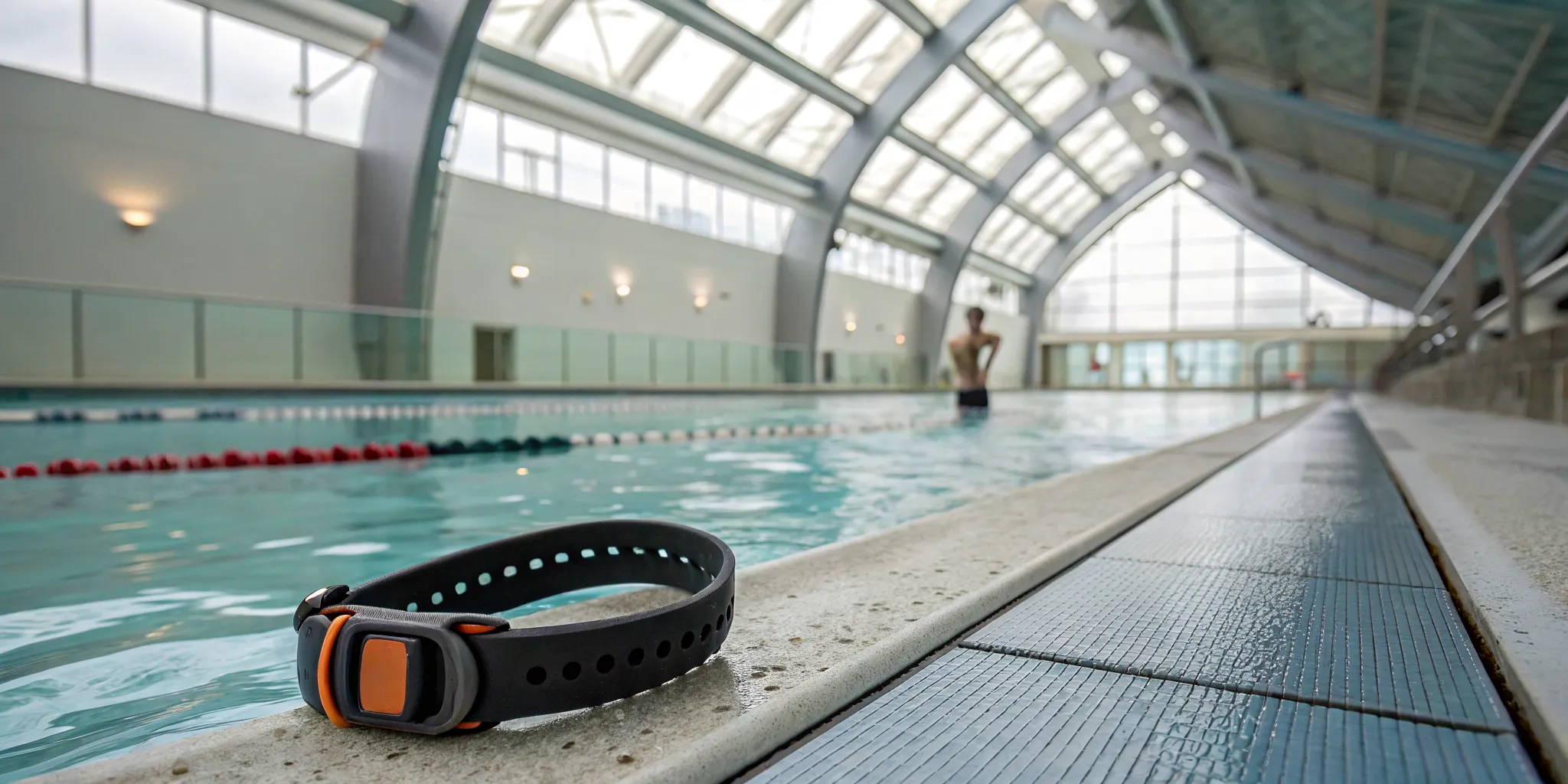
You're responsible for every swimmer at your facility. You know that even the most vigilant lifeguards can't see everything at once. Crowded pools and sun glare create dangerous blind spots where a swimmer in distress can go unnoticed. This is where technology becomes a powerful partner for your team. A wearable drowning detection system adds a crucial layer of protection by monitoring each swimmer individually. Think of it as a second set of eyes that never gets distracted. But how does it actually work? Let's break down the technology, from the sensors to the alerts, so you can see exactly how it supports your safety protocols.
Key Takeaways
- Wearables provide personalized monitoring for every swimmer: These devices act as an extra layer of protection by tracking individual signs of distress, like submersion time or lack of movement, and sending immediate, specific alerts directly to your lifeguard staff.
- This technology overcomes common visual barriers: Unlike camera systems, wearables are effective regardless of sun glare, water clarity, or crowded conditions because they gather data directly from the swimmer, ensuring no one gets lost in the chaos.
- The most reliable systems use multiple sensors for accuracy: To be truly effective, a system must be able to distinguish between play and an emergency. Look for technology that analyzes several data points at once, as this is key to reducing false alarms and providing your team with alerts they can trust.
The Silent Threat of Drowning
One of the biggest misconceptions about drowning is that it’s loud and dramatic, like what we see in movies. The reality is tragically different. Drowning is often a swift and silent event, making it incredibly difficult to spot, even for the most focused lifeguards. A swimmer in distress may not be able to splash, wave, or call for help. Understanding the true nature of this threat is the first step in building a truly comprehensive safety plan for your aquatic facility. It’s not about replacing your skilled staff; it’s about giving them the advanced tools they need to overcome the inherent challenges of supervising a body of water and protect every person who gets in.
A Global Safety Crisis
The challenge of preventing drowning is a global one. According to the World Health Organization, drowning is a leading cause of unintentional death worldwide, claiming hundreds of thousands of lives each year. This statistic isn't just a number; it's a powerful reminder of the responsibility that rests on the shoulders of every aquatic facility operator. It highlights that even with the best training and staffing, human vigilance alone has its limits. This reality is why a new standard of care is emerging, one where facilities implement technology to add a critical layer of protection, supporting their lifeguards and creating a safer environment for everyone.
How Quickly Drowning Happens
Drowning can happen in as little as 20 to 60 seconds. That’s less time than it takes to scan a crowded pool or walk the perimeter. Because a person’s airway can become submerged and blocked, they often can't make any noise to signal they're in trouble. The struggle is internal and silent. What’s more, danger isn’t confined to the deep end; a significant number of incidents occur in shallow water where people can feel a false sense of security. This speed and silence are precisely why technology that provides immediate alerts is so vital. It acts as a dedicated set of eyes on every single swimmer, ensuring that the moment someone is in distress, your team is the first to know.
What Exactly Are Wearable Drowning Detection Devices?
When you're responsible for the safety of dozens or even hundreds of swimmers, every second counts. Wearable drowning detection devices are a game-changing layer of protection designed to support your lifeguards and enhance safety at your aquatic facility. Think of them as a smart, vigilant partner for your safety team. These devices are worn by swimmers and use advanced sensor technology to monitor for signs of distress in the water.
Unlike camera-based systems that rely on a clear line of sight, wearables track each individual swimmer directly, providing personalized monitoring from the moment they enter the pool. This technology is built to catch the subtle, often silent, signs of a drowning event that can be missed by the human eye, especially in crowded or murky water. By providing immediate alerts, these systems give your lifeguards the critical information they need to respond swiftly and effectively, turning a potential tragedy into a successful rescue. They integrate seamlessly into your existing safety protocols, adding a powerful layer of security without disrupting your operations.
How They Work and Why They Matter
At its core, a wearable drowning detection device is designed for one primary purpose: to identify a swimmer in distress and alert your staff instantly. These devices serve as a crucial safety measure by continuously monitoring a swimmer's movements and vital signs. If the system detects patterns that indicate a potential drowning, it automatically sends an alert to your lifeguard team. This immediate notification is what makes the technology so valuable. It shortens the time between the start of an incident and the beginning of a rescue, which is the most critical factor in preventing serious injury or death. These Swimmer Alert wearables are an essential tool for any modern aquatic facility.
What's Inside a Drowning Detection Wearable?
So, what’s the technology behind these devices? Wearables are packed with sophisticated sensors that track several key indicators. Most commonly, they monitor a swimmer's submersion time and movement patterns. If a swimmer remains motionless underwater for a predetermined amount of time, the system flags it as a high-risk event. Some advanced systems also track heart rate and blood oxygen levels to get a more complete picture of the swimmer's condition. All this data is processed in real time to distinguish between normal swimming and signs of distress. You can learn more about how the system works together to provide comprehensive coverage for every swimmer in your facility.
How Do Wearable Drowning Detection Devices Work?
Wearable drowning detection devices are a powerful layer of protection that supports your lifeguards’ expertise. Instead of relying on visual cues alone, these systems use technology to understand what’s happening with a swimmer on and below the surface. Think of them as a smart, vigilant partner for your safety team. The process is straightforward: the device gathers vital information, analyzes it for signs of distress, and sends an immediate alert to your staff if a potential emergency is detected. This allows your team to respond with speed and precision when every second is critical.
How Sensors Collect Life-Saving Data
At the heart of every wearable device is a set of advanced sensors designed to collect critical information. These aren't just simple trackers; they monitor key physiological signs that can indicate distress. Our Swimmer Alert wearables, for example, continuously track metrics like a swimmer's heart rate, blood oxygen level, and time spent underwater. By gathering this data in real time, the device gets a complete picture of the swimmer's condition. This constant stream of information is the foundation for identifying subtle changes that might be invisible to the human eye.
The Power of Real-Time Monitoring
Collecting data is just the first step. The system's real intelligence lies in its ability to analyze that information instantly. The device constantly compares the swimmer's live data against predefined safety thresholds, which are the boundaries between normal activity and potential danger. If a swimmer's metrics cross a threshold for a specific duration, like being submerged too long, the system recognizes it as a high-risk event. This real-time analysis is what makes the technology so effective, allowing it to detect a problem the moment it begins.
Sending an Alert the Second It's Needed
When the system identifies a potential drowning event, it immediately triggers an alert that is sent directly to your lifeguards. This signal is transmitted to the central GUARDian Hub and then relayed to the Lifeguard Alert equipment your team carries. Instead of a generalized alarm, your staff receives a specific notification, allowing them to pinpoint the swimmer in distress and initiate a response without delay. This proactive alert system transforms a reactive situation into a controlled, rapid intervention, giving your team the critical time they need to act.
What Do Drowning Detection Devices Actually Track?
Wearable drowning detection devices are much more than simple alarms. They are sophisticated systems packed with sensors that track a swimmer's condition in real time. By monitoring a combination of physiological and behavioral data, these devices can identify the subtle signs of distress that might otherwise go unnoticed. This multi-faceted approach provides a more complete picture of what’s happening with each person in the water, giving lifeguards the specific information they need to act decisively.
The technology works by continuously collecting data on several key indicators. These include vital signs like heart rate and blood oxygen, as well as physical metrics like movement patterns, submersion time, and body position. When the device’s internal algorithms detect readings that fall outside of safe, pre-set parameters, an alert is triggered. This allows lifeguards and staff to respond immediately to the specific swimmer in need. Understanding how it works is the first step to appreciating the layer of safety it adds to any aquatic facility. By focusing on these specific data points, the system can distinguish between active swimming and a genuine emergency, which helps reduce false alarms and ensures that attention is directed where it's most needed. This intelligent monitoring is what sets modern drowning detection apart from older, less reliable methods.
Tracking Vitals: Heart Rate and Oxygen
Two of the most critical indicators of a swimmer's well-being are their heart rate and blood oxygen level (SpO2). These vital signs offer a direct window into what’s happening inside the body. A wearable device tracks the swimmer's heart rate to detect abnormalities, such as a heart that is beating too fast, too slow, or irregularly, which can be signs of panic or a medical event.
Simultaneously, the device monitors the amount of oxygen in the blood. A significant drop in SpO2 is a clear and immediate sign of respiratory distress, indicating that a swimmer is no longer getting enough air. Since this is a primary physiological response during a drowning event, tracking this metric is essential for early detection. This scientific approach allows the system to catch problems before they become critical.
Analyzing Movement and Time Spent Underwater
Drowning is often silent and can happen with very little splashing or struggle. That's why monitoring a swimmer's movement patterns and how long they've been underwater is so important. Advanced algorithms analyze a swimmer's activity to identify behavior that signals distress. This could be a complete lack of motion or very subtle movements that indicate a person is in trouble.
The system also tracks submersion time with precision. While experienced swimmers may hold their breath for extended periods, the device is programmed to recognize when that time exceeds a safe limit. If a swimmer remains motionless or stays submerged for too long, the system flags it as a potential emergency. You can find answers to more questions about this technology in our drowning detection system FAQs.
Using Adjustable Safety Thresholds
One of the most powerful features of a modern drowning detection system is the ability to set adjustable safety thresholds. Every swimmer is different; a competitive athlete training for a meet will have a very different 'normal' than a young child in a swim lesson. Adjustable thresholds allow your facility to customize the system's sensitivity based on the swimmer's health, age, or skill level. This means the device can distinguish between a swimmer practicing breath-holding and someone who is genuinely in distress. When a swimmer's data crosses a set boundary for too long, the system recognizes it as a high-risk event. This level of personalization is crucial for accuracy, as it helps minimize false alarms and ensures your lifeguards can trust the alerts they receive.
Monitoring Depth and Body Orientation
Knowing where a swimmer is in the water is just as important as knowing what their body is doing. Wearable devices monitor both the swimmer's depth and their orientation. For example, the system can tell if a swimmer is actively swimming near the surface or if they are motionless at the bottom of the pool. This is crucial, as a person lying still in a deep area is a major red flag.
Body position provides another layer of insight. The technology can differentiate between someone swimming horizontally and someone who is vertical and inactive, which could indicate they are unable to keep their head above water. By combining this positional data with vital signs and movement patterns, our swimmer alert wearables create a comprehensive safety net, ensuring that lifeguards are alerted to the most critical situations.
Finding the Right Fit: Types of Wearable Devices
When you start looking into wearable drowning detection technology, you’ll find a few common designs. Each type uses a different approach to monitor swimmers, but they all share the same goal: to provide an extra layer of protection in the water. Understanding the main categories can help you figure out which solution best fits the needs of your facility and your patrons. From simple wristbands to advanced multi-sensor caps, the technology is designed to integrate with your existing safety protocols and support your lifeguards.
Smartwatches and Wristbands
Wristbands and watches are some of the most common and user-friendly options available. Swimmers are already familiar with wearing items like these, which makes adoption much easier. These devices are designed to be lightweight and comfortable, so they don’t interfere with a person’s swimming experience. The WAVE system, for example, uses small Swimmer Alert wearables that track how long a swimmer is submerged. If someone stays underwater beyond a preset time limit, the device automatically sends a signal to the lifeguards. This straightforward approach provides a reliable alert based on a critical indicator of distress, allowing your team to respond quickly.
How Chest Strap Monitors Offer Protection
Another type of wearable you might encounter is the chest strap monitor. These devices are worn around the torso and are equipped with sensors that can identify unusual movement patterns in the water. Some advanced systems can emit a specific distress signal if they detect activity consistent with a swimmer in trouble. A proactive wearable system can use a hydrophone, or underwater microphone, to listen for this signal. Once detected, it triggers an immediate alert for the lifeguard staff. This method focuses on analyzing a swimmer’s physical motions to catch signs of distress that might not be visible from the surface.
Beyond the Wrist: Smart Caps and Other Systems
For a more comprehensive approach, some systems use smart swimming caps. These devices are packed with multiple sensors that track a wide range of physiological data. A smart multi-sensor device can monitor vital signs like heart rate and blood oxygen levels, in addition to tracking movement, body position, and water depth. By analyzing all these metrics together, the system can build a detailed picture of a swimmer’s condition and detect subtle signs of distress. This technology represents a cutting-edge solution that gathers extensive data to help keep swimmers safe and provide lifeguards with critical information.
Differentiating Professional Wearables from Flotation Aids
It's important to understand that professional wearable drowning detection devices are not the same as flotation aids like life jackets or arm bands. While flotation aids are designed to provide buoyancy and help a swimmer stay afloat, they are passive safety tools. They don't actively monitor a swimmer's condition or alert anyone if something goes wrong. In contrast, a wearable detection device is an active monitoring system. Its purpose is to track a swimmer's vital signs and movement patterns to identify signs of distress. This intelligent monitoring is what sets modern drowning detection apart. Instead of just providing support, these systems analyze data in real time to catch a problem the moment it starts, transforming a reactive situation into a controlled, rapid response.
What Happens When a Device Detects a Potential Drowning?
When a wearable device detects the signs of a swimmer in distress, it doesn't just collect data; it initiates a critical sequence of events designed for a swift rescue. The entire process is built around speed and clarity, removing guesswork and ensuring the right people are notified instantly. Think of it as a multi-layered safety net that provides lifeguards with an extra set of eyes on every single swimmer, helping them monitor large zones with greater confidence.
The system’s response is carefully staged to be both immediate and scalable. It begins with a precise, targeted notification sent directly to the lifeguards on duty. This initial step is quiet and discreet, preventing unnecessary panic among other patrons. If the situation requires it, the system can then activate a broader, facility-wide emergency response. This layered approach ensures that an alert is never missed and that every second is used effectively to protect swimmers. You can see exactly how it works to support your existing safety protocols, not replace them. It’s about giving your team the best tools to do their job effectively and creating a safer environment for everyone in the water.
Step 1: An Instant Alert Is Triggered
The moment a wearable device determines a swimmer might be in trouble, its first job is to send a direct signal for help. For example, if a swimmer's vitals or submersion time cross a preset safety threshold, the system immediately triggers an alert. This isn't a vague, general alarm. It’s a specific notification sent wirelessly to the lifeguards on duty. Our Lifeguard Alert equipment ensures that staff receive these critical updates on dedicated devices, allowing them to pinpoint the swimmer's location and respond without delay. This initial alert is the crucial first step, delivering precise information to the people who can provide immediate assistance.
Step 2: The Emergency Response Kicks In
If a potential drowning is detected, the system is designed to escalate the alert to ensure a response. After notifying lifeguards, the GUARDian Hub can activate a facility-wide emergency protocol. This goes beyond a simple notification, using flashing lights, audible alarms, and even spoken announcements to signal that a swimmer needs urgent help. This escalation makes the situation impossible to ignore, drawing the attention of the entire safety team and clearing the way for a rescue. It’s a powerful backup that ensures that even in a busy, noisy aquatic environment, a critical event gets the immediate, full-scale response it requires.
Wearables vs. Traditional Methods: What's the Difference?
When you’re responsible for the safety of swimmers, you want every tool available to prevent accidents. While vigilant lifeguards are the cornerstone of water safety, technology can provide a powerful extra layer of protection. Wearable drowning detection systems offer distinct advantages over other methods, like camera-based surveillance, by focusing directly on the individual swimmer rather than just observing the water's surface. This approach helps cover blind spots and provides crucial data that the human eye might miss, especially in crowded or challenging water conditions.
An Overview of Camera-Based Systems
Camera-based systems are another common form of safety technology. These setups use a network of overhead and underwater cameras to monitor the entire swimming area. The system’s software analyzes the video feeds in real time, looking for patterns that might indicate a swimmer is in distress, like someone remaining motionless on the pool floor. If a potential incident is detected, an alert is sent to the lifeguard staff, often highlighting the exact location in the pool. While these systems can serve as a helpful backup, their performance relies entirely on a clear line of sight. Visual barriers like sun glare, murky water, or even just a lot of swimmers can make it difficult for the cameras to see everything, which is a critical limitation to consider.
Why Wearables Can Be More Effective Than Cameras
Camera systems are a common safety feature, but they have their limitations. They can struggle with sun glare, water turbulence, and low visibility in dark or murky water, making it difficult to track every swimmer effectively. Wearable devices, on the other hand, monitor each swimmer individually, regardless of environmental conditions. Because the Swimmer Alert wearable is on the person, it gathers data directly from the source. This allows the system to distinguish a swimmer in distress from other objects or general pool activity, a task that can be challenging for camera systems that only see the surface.
Gaining Precious Seconds with Faster Alerts
In a potential drowning situation, every second is critical. Traditional safety relies on a lifeguard visually identifying a swimmer in distress, but even the most attentive guard can face distractions or obstructed views. Wearable technology helps close this gap by providing immediate alerts. The WAVE system, for example, is designed to detect when a swimmer has been submerged for a risky amount of time and sends an instant notification. This automated alert system can significantly shorten the time between the start of an incident and the beginning of a rescue, giving your team a crucial head start when it matters most.
Can You Use Wearables with Your Current Safety Gear?
Adopting new technology doesn't mean you have to overhaul your entire safety protocol. Wearable drowning detection systems are designed to work alongside your lifeguards and existing safety measures. Think of it as adding a highly specialized member to your team. When a wearable device detects a potential issue, it sends an alert directly to the Lifeguard Alert equipment your staff already uses. This seamless integration ensures your team can follow their established emergency action plan with an added layer of technological support, making your facility safer for everyone.
Integrating Drowning Detection into Pool Operations
Bringing a new piece of technology into your facility might seem like a huge undertaking, but modern drowning detection systems are designed to fit right into your current operations. The goal isn't to replace your highly trained staff but to empower them with better tools. By integrating this technology, you’re not just adding a safety feature; you’re creating a more cohesive and responsive safety ecosystem. This approach supports your team by providing them with real-time data, which helps them manage their zones with greater confidence and protect every swimmer more effectively.
Enhancing Lifeguard Supervision
Think of wearable drowning detection devices as a smart, vigilant partner for your safety team. They are a game-changing layer of protection designed to support your lifeguards, not replace them. While your staff scans the pool, these devices monitor each swimmer individually, tracking key indicators like submersion time and movement patterns. This provides a constant, reliable second set of eyes on every person in the water, even in crowded conditions or areas with glare. When the system detects a potential issue, it sends an immediate, specific alert to your team, giving them the critical information needed to respond swiftly and effectively. This turns a potential tragedy into a successful rescue by closing the gap between incident and intervention.
Complementing Existing Safety Rules
Adopting new technology doesn't mean you have to overhaul your entire safety protocol. Wearable drowning detection systems are designed to integrate seamlessly with your existing safety measures and emergency action plans. When the system identifies a potential drowning event, it immediately triggers an alert that is sent directly to your lifeguards. From there, your team follows the procedures they already know and practice. This proactive alert system transforms a reactive situation into a controlled, rapid intervention. It complements your facility's rules by providing an earlier warning, giving your team the critical time they need to act with confidence and precision. It’s about enhancing your established protocols, not replacing them.
What Are the Limitations of This Technology?
Wearable devices are a fascinating step forward in water safety, but like any technology, they come with their own set of limitations. Understanding these challenges is key to building a truly comprehensive safety plan for your facility. While wearables offer an added layer of protection, relying on them as your sole detection method can leave dangerous gaps in your coverage. Let's walk through some of the main hurdles these devices face so you can make an informed decision about what’s right for your swimmers and staff.
The Hurdle of Underwater Communication
One of the biggest technical challenges for wearables is sending an alert from underwater. Most of these devices use Wi-Fi to communicate, but Wi-Fi signals can't travel through water. This means if a swimmer is in distress below the surface, the device can record the data, but it can't send an alert to lifeguards until the swimmer (or the device) is out of the water. This delay can be critical in an emergency. The physics of underwater communication create a significant barrier to the real-time alerts needed for a fast response.
How Location and Environment Affect Performance
Many wearables rely on GPS to track a swimmer's location, but this technology has some important drawbacks in an aquatic setting. First, GPS tracks the device, not the person. If a band slips off a swimmer's wrist, the system will continue tracking the floating wearable, unaware that the person is no longer being monitored. Second, GPS can’t determine a swimmer's depth. It can’t tell the difference between someone swimming on the surface and someone submerged at the bottom of the pool. These inherent limits mean GPS alone can't provide the detailed data needed to detect a drowning event accurately.
Performance in Different Water Conditions
If you manage a busy aquatic facility, you know that perfect water conditions are rare. Sun glare, water turbulence, and even just a high number of swimmers can make it incredibly difficult to see everything clearly. These visual barriers are a major hurdle for camera-based surveillance systems, which can struggle to distinguish a swimmer in distress from the chaos of a crowded pool. This is where wearables have a distinct advantage. Because the technology is on the swimmer, it isn't affected by water clarity or surface glare.
The device gathers data directly from the source, allowing the system to detect a problem based on individual metrics like submersion time, not on what a camera can see from above. This provides a consistent layer of protection that works just as well in dark, murky water as it does in a crystal-clear pool, ensuring no one gets lost in the crowd. It’s a reliable solution for facilities where visual monitoring alone isn't enough to guarantee complete coverage for every person in the water.
Will They Actually Wear It? Comfort and Consistency
Beyond the technology itself, there's the human element to consider. For a wearable to be effective, a swimmer has to wear it correctly for their entire visit. While many devices are designed to be lightweight and comfortable, it’s easy for kids, in particular, to forget they have them on or even remove them during play. If a tracker falls off, it creates a gap in safety coverage. This reliance on perfect user behavior can be a significant point of failure. You need a system that works consistently, without depending on every single swimmer to use it perfectly every time.
How Accurate Are Wearable Drowning Detection Systems?
When you’re responsible for the safety of swimmers, accuracy is everything. You need a system that reliably detects genuine emergencies without creating unnecessary panic with false alarms. The effectiveness of a wearable drowning detection system depends heavily on the technology it uses and how it interprets the data it collects. While some systems might only track one or two metrics, which can leave room for error, more advanced systems create a comprehensive safety net by analyzing multiple data points simultaneously. This layered approach helps distinguish between vigorous play and genuine distress.
The goal is to strike the perfect balance. A system that is too sensitive might trigger an alarm every time a child has a splashing contest, leading to alarm fatigue for your lifeguard team. On the other hand, a system that isn't sensitive enough could miss the subtle but critical signs of a swimmer in trouble. That’s why it’s so important to understand how a system works before you implement it at your facility. The best technologies use a combination of sophisticated sensors and smart software to provide lifeguards with alerts they can trust. This allows your team to focus their attention where it's needed most, confident that the technology is providing a reliable second set of eyes on every swimmer.
Technical Accuracy and Sensor Capabilities
The technical accuracy of a wearable system hinges on its sensors' ability to gather and interpret crucial data. Advanced sensors monitor key physiological signs that can indicate distress, not just simple movement. For example, our Swimmer Alert wearables continuously track a swimmer's heart rate, blood oxygen level (SpO2), and time spent underwater. A significant drop in SpO2 is a clear sign of respiratory distress, while an abnormal heart rate can signal panic. This live data is constantly compared against predefined safety thresholds—the boundaries between normal activity and potential danger. If a swimmer's metrics cross a threshold, the system recognizes it as a high-risk event. This multi-faceted analysis is what allows the technology to provide accurate alerts, reducing false alarms and ensuring your team’s attention is directed where it's most needed.
What Can Affect a Device's Accuracy?
Several key factors determine how accurate a wearable system is. First and foremost, the device must be worn correctly by the swimmer. If a wearable comes off in the water, the system loses its ability to monitor that individual, creating a critical gap in safety coverage. This is why a secure and comfortable fit is so important for any swimmer equipment.
The type of technology used also plays a huge role. For example, a system that relies only on GPS can track a device's location, but it can't tell you if the swimmer is safely floating on the surface or submerged and in trouble. True accuracy comes from systems that use multiple sensors to monitor specific indicators of distress, like submersion time and lack of movement, giving a much clearer picture of the swimmer's status.
How Do These Systems Prevent False Alarms?
A constant stream of false alarms can quickly undermine a safety system, causing lifeguards to become desensitized to alerts. To prevent this, leading drowning detection systems are designed to be highly discerning. They analyze a combination of clues, such as a swimmer's movement patterns, speed, and changes in activity, to distinguish between normal swimming and a potential emergency. This multi-faceted approach helps filter out the noise of typical pool activities.
Advanced systems also include features to account for swimmers entering and leaving the water. For instance, WAVE’s system can use optional Exit Detectors to recognize when a swimmer has safely left the pool area, preventing a false alarm from being triggered. You can learn more about these features on our FAQ page. By intelligently processing information, the system ensures that when an alert is sent, it warrants immediate attention.
What's Next for Wearable Drowning Detection?
The technology behind wearable drowning detection is moving forward at an incredible pace. While today’s systems offer a huge leap in safety, the next generation of devices promises to be even smarter, faster, and more deeply integrated into aquatic facility operations. The goal is to create a seamless safety net that combines predictive analytics with instant communication, giving lifeguards and facility managers more powerful tools to protect every swimmer.
Future advancements are focused on a few key areas: making the devices more intelligent through artificial intelligence, adding new layers of detection like underwater sound, and refining the communication systems that connect a swimmer in distress to a first responder. These innovations aren't just about adding new features; they're about creating a more holistic and reliable safety ecosystem. By combining data from multiple sources and using machine learning to interpret it, future wearables will be able to understand the difference between playful splashing and genuine distress with even greater accuracy, ensuring that help arrives precisely when it's needed most.
The Growing Role of AI and Machine Learning
Artificial intelligence is set to play a huge role in the next wave of water safety technology. Instead of just relying on pre-set thresholds for submersion time or lack of movement, future systems will use machine learning to analyze patterns and predict potential trouble. For example, an AI drowning prevention system can process data from wearables and cameras simultaneously, learning to recognize the subtle signs of a swimmer in distress. This means the system gets smarter over time, constantly refining its ability to distinguish between normal swimming and a dangerous situation. This leads to fewer false alarms and a higher degree of trust in the technology.
Getting Smarter with Advanced Sound Detection
Another exciting frontier is the use of sound for detection and alerts. Some emerging systems are exploring wearables that, upon detecting irregular movement, emit a specific, low-frequency distress signal underwater. This signal can then be picked up by hydrophones (underwater microphones) placed strategically in the water. This approach adds a completely new sensory layer to the detection process. It’s particularly useful in crowded or murky water where visual systems might be challenged. By creating a distinct audio alert, these devices offer a clear and unmistakable call for help that can cut through the noise of a busy aquatic environment.
Building Faster, More Reliable Communication
Getting an alert is one thing; getting clear, actionable information is another. The future of wearable safety includes major upgrades to communication networks. Instead of just a simple alarm, lifeguards will receive rich, real-time data directly on devices like smartwatches. This includes the swimmer's exact location in the water, their vital signs, and even a snapshot image from the nearest camera. This level of detail gives responders complete situational awareness before they even dive in. Systems that provide immediate information to Lifeguard Alert equipment are closing the gap between detection and response, ensuring every second is used effectively to help someone in need.
Related Articles
- Anti-Drowning Wearable: A 2026 Buyer's Guide
- How to Buy Swimmer Safety Wearables: A 2026 Guide
- Drowning Prevention Technology: A Facility Guide
- The Best Swimmer Safety Technology for 2026
Frequently Asked Questions
Do these devices replace the need for lifeguards? Not at all. Think of wearable drowning detection systems as a powerful tool that supports your lifeguards, not a substitute for them. The judgment, training, and immediate physical response of a human lifeguard are irreplaceable. This technology acts as an extra layer of protection, monitoring every swimmer individually and providing your team with instant alerts so they can direct their attention where it's needed most, especially in challenging conditions.
How does the system prevent false alarms from normal swimming activities? Accuracy is key, and the best systems are designed to be highly discerning. Instead of relying on a single indicator, they analyze a combination of data points, such as submersion time, lack of movement, and vital signs. By looking for a specific pattern of distress rather than just one trigger, the technology can effectively distinguish between a child playing underwater and a swimmer who is genuinely in trouble. This intelligent approach ensures that when an alert is sent, it's for a situation that requires immediate attention.
Can these wearables work effectively in crowded or low-visibility water? Yes, and this is one of their biggest advantages over camera-based systems. Because the sensors are on the swimmer, the system's performance isn't affected by sun glare, water turbulence, or how many people are in the pool. It gathers data directly from the source, providing reliable monitoring for each individual, regardless of environmental conditions that might obstruct a lifeguard's or a camera's view.
What happens if a swimmer removes their wearable device? This is a practical concern that is best addressed through clear facility procedures. A successful implementation includes training your staff on how to properly fit the devices and educating patrons on their importance. Many systems also incorporate check-in and check-out protocols to ensure every swimmer is accounted for. While no system can be effective if it isn't used correctly, combining the technology with solid operational practices creates a much safer environment.
How does this technology integrate with our existing emergency action plan? These systems are designed to fit seamlessly into your current safety protocols. When a potential emergency is detected, an alert is sent directly to the equipment your lifeguards carry. This signal acts as the trigger for your team to initiate their established emergency action plan. The technology provides the critical first step of detection, allowing your staff to respond faster and with more precise information, but it relies on their training and your facility's plan to carry out the rescue.
