
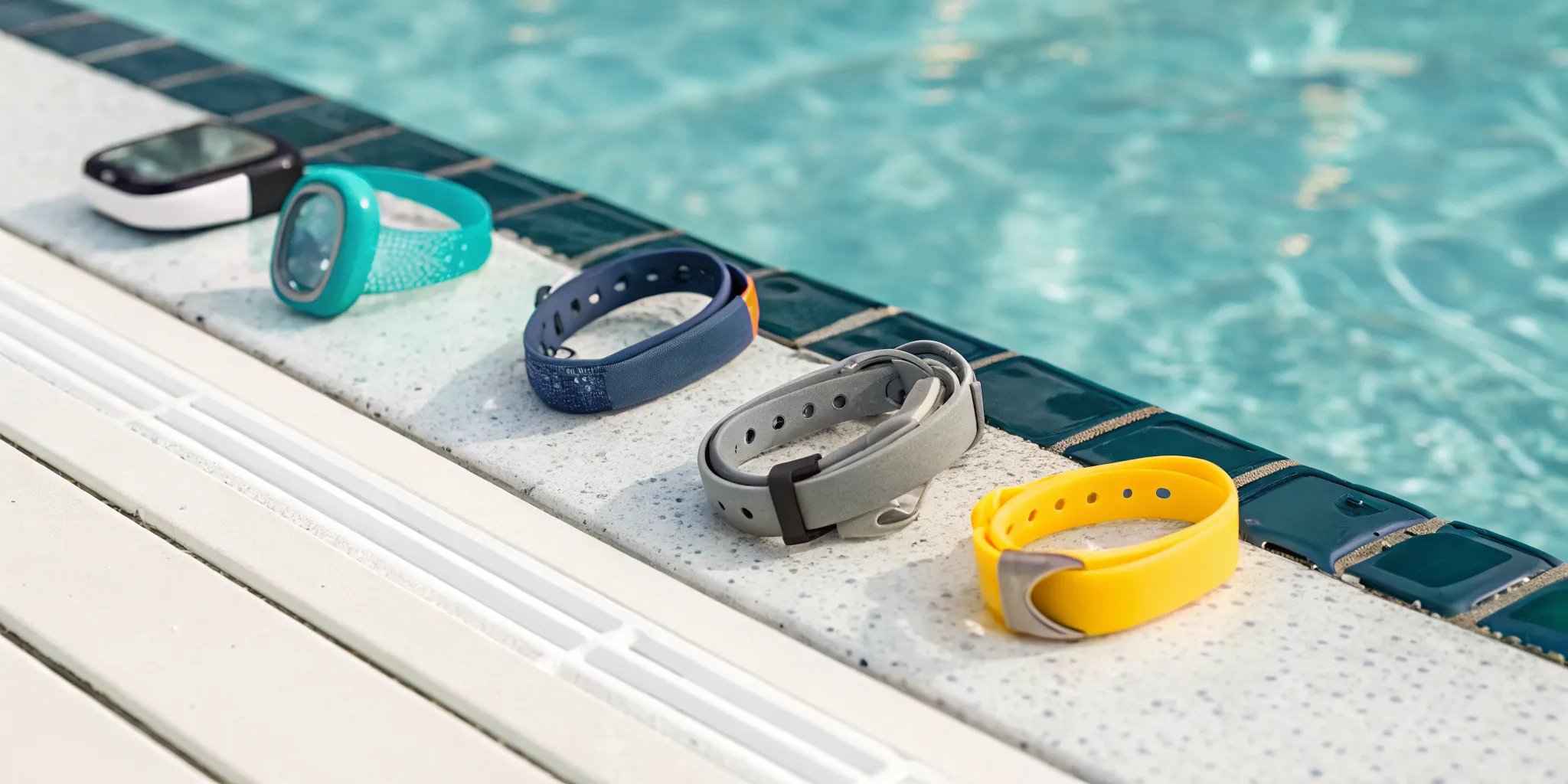
You’ve put strong water safety protocols in place, but what about their blind spots? Cameras get blinded by sun glare. Their view gets murky in cloudy water. And in a packed pool? It's nearly impossible to see everything. This is where a drowning prevention wearable offers a smarter approach. Instead of just watching from above, this wearable drowning detection system tracks each person individually. It's a smart multi-sensor device that detects distress in swimmers by monitoring submersion time, not just a visual. This guide breaks down how this innovative approach works and why it’s the new standard for professional aquatic venues.
Key Takeaways
- Choose Proactive Monitoring for Facilities: Personal safety devices often require a swimmer to be conscious to activate them. For a supervised facility, a proactive system that automatically detects distress and alerts staff provides a much more reliable layer of protection for every guest.
- Use Technology to Support, Not Replace, Staff: The best safety strategy combines skilled lifeguards with smart technology. Wearable detection systems act as an extra set of eyes, providing your team with instant, specific data to help them respond faster and more effectively during an emergency.
- Prioritize Reliability and Integration: Look for a system that delivers real-time alerts directly to lifeguards, is durable enough for daily use, and works in all water conditions. The right technology should integrate seamlessly with your existing safety protocols and empower your team.
The Unseen Risks: Understanding Drowning Statistics
To build a truly effective safety plan, we first need to understand the reality of drowning. The dramatic, splashing scenes we see in movies are a dangerous misconception. The truth is that drowning is often a quiet, quick, and easily missed event. The statistics paint a stark picture of the challenges aquatic facilities face, highlighting gaps where traditional supervision methods can fall short. Understanding these numbers isn't about fear; it's about empowerment. It gives us the knowledge we need to create layers of protection that address the real-world risks swimmers face, ensuring your team is prepared for how these emergencies actually unfold.
The Silent and Swift Nature of Drowning
One of the most critical facts to grasp is that drowning is deceptively silent. A person in distress is often physically unable to shout for help or wave their arms because their body is instinctively focused on trying to breathe. This silent struggle can be over in as little as 20 to 60 seconds. For a busy lifeguard scanning a large area, a swimmer slipping beneath the surface can be nearly impossible to spot in that short window. This is why relying on sight and sound alone is not enough. The quiet nature of these emergencies means that by the time a swimmer is noticed, it may already be too late for a successful rescue.
How Quickly Drowning Occurs
Many people assume drowning is only a risk in the deep end, but that’s another dangerous myth. A person can drown in as little as two inches of water—just enough to cover the mouth and nose. This means every area of your facility, from the shallowest entry points to splash pads, presents a potential hazard. The speed at which this can happen is alarming, and it underscores the need for a safety system that provides comprehensive coverage across your entire venue. A system that monitors each swimmer’s submersion time offers a reliable safety net, regardless of where they are in the water or how deep it is.
Drowning Under Supervision
Even the most highly trained and vigilant lifeguards can’t see everything at once. In fact, a surprising number of drownings occur at supervised facilities. Human supervision is essential, but it has limitations. Factors like sun glare, water turbidity, and large crowds can create blind spots and distractions that make it difficult to monitor every single swimmer effectively. This is where technology can serve as a lifeguard’s most valuable partner. An advanced drowning detection system acts as an extra set of eyes, providing immediate alerts that direct your team to the exact location of a swimmer in distress, helping them respond with speed and precision.
Key Drowning Risk Factors
Drowning is a significant public health issue, and it disproportionately affects younger people. It remains a leading cause of accidental death for children, and statistics show that a majority of drowning victims are under the age of 30. For any aquatic facility that welcomes families, children, and teens, this reality should be a primary driver of safety protocols. Knowing that your key demographic is also the most at-risk group creates a clear responsibility to implement the most effective safety measures available. Proactive monitoring is no longer a luxury; it’s a fundamental component of protecting the very community you serve.
Demographic and Health Considerations
While age is a major risk factor, it isn't the only one. Swimmers with certain underlying health conditions, such as seizure disorders or cardiac issues, may also be at an increased risk. A sudden medical event in the water can quickly become a drowning emergency. This is why a one-size-fits-all approach to safety is insufficient. The most effective solutions are those that monitor each swimmer individually, providing a personalized layer of protection. By tracking every person’s status in the water, you create a safety net that accounts for a wide range of risks, ensuring that every guest receives the same high standard of care and attention.
What Is a Drowning Prevention Wearable?
Wearable swimmer safety devices are exactly what they sound like: tools you wear to add an extra layer of protection in the water. Think of them as a personal safety net, designed to provide help when you need it most. These gadgets come in various forms, from bracelets and headbands to clips that attach to goggles or swimsuits. While some are designed for individual use in open water, others are part of a sophisticated system built for aquatic facilities. Their primary goal is to either help a swimmer stay afloat or to signal for help if a swimmer is in distress.
The rise of swimmer safety technology has given facility managers and lifeguards powerful new tools to support their work. For swimmers and their families, these devices offer peace of mind, allowing everyone to enjoy the water with more confidence. They don't replace the need for swimming skills or vigilant supervision, but they do provide a crucial backup. Whether it's a simple inflatable device for a solo kayaker or a sensor-based system monitoring hundreds of swimmers at a water park, these wearables are changing the conversation around water safety.
How Do These Smart Devices Detect Distress?
These devices generally work in one of two ways. Some are personal, manually-activated flotation aids. If a swimmer finds themselves in trouble, they can pull a lever to inflate a small bag, which helps them float to the surface until help arrives.
More advanced systems use sensors to actively monitor swimmers in real time. These wearables track if a swimmer has been submerged for too long and, if so, send immediate, loud, and visual alerts to lifeguards. This technology is a core part of how a comprehensive drowning detection system functions, giving lifeguards specific, actionable information so they can respond to the right person at the right time.
Who Needs a Drowning Prevention Wearable?
Frankly, anyone who enjoys water activities can benefit from an added layer of safety, regardless of their skill level. These devices are great for swimmers, surfers, kayakers, and sailors. For those who swim in open water, a brightly colored swim buoy is often considered essential, as it increases visibility to boaters and provides something to float on if you get tired.
In a managed facility like a community pool or water park, wearables are less about individual choice and more about a comprehensive safety strategy. Devices like the WAVE Swimmer Alert are designed for every swimmer to wear, creating a network that gives lifeguards an extra set of eyes on everyone in the water.
Ideal for Aquatic Facilities and Commercial Properties
While personal flotation aids are great for solo adventures, they fall short in a busy aquatic facility because they rely on a swimmer being conscious enough to activate them. For supervised environments, you need a system that works proactively. This is where integrated technology makes a huge difference. For example, the WAVE Drowning Detection System equips every swimmer with a lightweight tracker that monitors their submersion time. If someone is underwater for too long, the system automatically sends an alert to your lifeguard team. This approach overcomes common challenges like sun glare, murky water, or a crowded pool, giving your staff a reliable tool that works in any condition. It’s about adding a powerful layer of protection that supports your lifeguards and gives every guest greater peace of mind.
How to Choose the Right Wearable Drowning Detection System
With several types of wearable safety devices on the market, selecting the right one for your facility can feel like a big decision. It’s more than just buying equipment; it’s about investing in a system that integrates with your team and enhances the safety of every person in the water. The best choice depends on your specific needs, the unique environment of your pool or waterfront, and how the technology will support your lifeguards' life-saving work. To make a confident decision, it helps to break it down. By focusing on a few key features that separate a good device from a great one, you can cut through the marketing noise and find a solution that fits your facility perfectly.
Think about how the device communicates alerts, how it stands up to daily wear and tear, and how easily your guests and staff can use it. A system that excels in one area but fails in another won't provide the comprehensive protection you need. For example, a device with amazing monitoring is useless if it’s too uncomfortable for swimmers to wear. Likewise, a comfortable device that can’t withstand pool chemicals is a waste of money. Evaluating each option against the following practical criteria will help you find a system that truly enhances the safety of your swimmers and the effectiveness of your team.
1. Look for Instant Alerts and Quick Response Times
When a swimmer is in distress, every second is critical. The most important feature of any safety device is its ability to provide immediate alerts. Look for a system that sends alerts directly to your lifeguards through dedicated equipment, like a wristband or a central hub. These notifications should be clear, loud, and visual to cut through the noise and distractions of a busy aquatic environment. A system that simply sounds a general alarm isn't enough. You need technology that pinpoints the specific swimmer in trouble, allowing your team to respond instantly and effectively, which can make all the difference in an emergency.
2. Prioritize Durability and a High Waterproof Rating
Aquatic facilities are tough on equipment. Between constant exposure to water, pool chemicals, and daily use by hundreds of swimmers, any device you choose must be built to last. Check for a high waterproof rating and durable construction that can withstand the demands of a commercial environment. The equipment needs to be strong enough to handle regular use without failing. Beyond physical toughness, consider the battery life. A system that requires constant recharging can create logistical headaches for your staff. Look for devices with long-lasting batteries and a streamlined charging process that ensures they are always ready to go.
3. Ensure It's Comfortable and Easy to Use
A safety device is only effective if people wear it. If a wearable is bulky, uncomfortable, or gets in the way of swimming, guests will be reluctant to use it. The best wearable devices are small, lightweight, and have an unobtrusive design that swimmers will barely notice. The fit should be secure enough to stay on during active play but comfortable enough for extended wear. Also, think about your staff’s experience. The process of distributing, fitting, and collecting the devices should be simple and efficient to keep your operations running smoothly, even on the busiest days.
4. Review the Device's Monitoring Features
Different devices track different things, so it’s important to understand what a system is actually monitoring. Many top-tier wearables, like the WAVE system, are designed to track a swimmer's submersion time, which is a key indicator of a potential drowning event. This method is extremely reliable because it works equally well in all types of water, whether it's a crystal-clear pool, murky lake water, or a crowded wave pool. Unlike camera-based systems that can have blind spots or struggle with glare and turbidity, individual wearables provide precise data for each swimmer. Understanding how the system works will help you appreciate why this direct monitoring is so effective.
5. Does It Work With Your Existing Safety System?
New technology should support your existing safety protocols, not complicate them. The right wearable device will feel like a natural extension of your emergency action plan and lifeguard training. Before committing to a system, ask how it integrates with your current operations. The technology should be easy for your team to learn and use. A provider that offers comprehensive training and ongoing support is invaluable, as it ensures your staff feels confident and prepared. Getting started should be a smooth process that empowers your lifeguards and strengthens your facility's commitment to safety from day one.
5 Top-Rated Drowning Prevention Wearables
With so many different types of swimmer safety devices on the market, it’s helpful to see how they compare. The term "wearable safety device" covers a lot of ground, from automated systems designed for aquatic facilities to personal buoys for open-water swimming. Understanding the core function of each device is the first step in finding the right fit for your safety needs. Some wearables actively monitor swimmers and send alerts, some offer a manual way for a swimmer to get help, and others simply make a person more visible in the water.
Exploring the different kinds of swimmer safety technology available can help you identify gaps in your current protocols and build a more robust safety plan. These tools generally fall into three categories: active detection systems that automatically monitor for distress, manual-activation devices that require a swimmer to take action, and passive aids that improve visibility or offer support. Let's walk through five popular wearable devices to see what they do and who they’re best for. This breakdown will give you a clearer picture of what each tool offers so you can make a more informed decision for your swimmers and staff.
1. WAVE Drowning Detection System – Swimmer Alert
The WAVE system’s Swimmer Alert is a lightweight wearable designed specifically for supervised aquatic environments. Swimmers wear a small tracker on a headband or goggle strap that precisely monitors their submersion time. If a swimmer stays underwater longer than a preset limit, the device automatically sends a real-time alert to lifeguards through a dedicated network. This proactive approach doesn't require any action from the swimmer in distress, making it a powerful tool for facilities aiming to provide the highest level of protection. It’s built to support lifeguards, not replace them, by adding a layer of constant, reliable surveillance.
2. Kingii Inflatable Wearable
The Kingii Wearable is a wrist-worn personal flotation device intended for individual recreational water users. It’s designed to provide a safety net in an emergency. If a swimmer feels they are in trouble, they can manually pull a lever on the bracelet. This action triggers a CO2 cartridge to rapidly inflate a small bag, which helps pull the person toward the surface. Because it requires the user to be conscious and able to activate it, the Kingii is best suited for personal use by swimmers who want an extra, manual safety measure on hand, rather than as a primary safety system for a public facility.
3. Safer Swimmer Buoy
The Safer Swimmer Buoy is a passive safety device created for open-water swimmers. This brightly colored, inflatable buoy is worn around the waist with a tether, so it floats behind the swimmer without creating drag or getting in the way. Its primary purpose is to increase visibility. The neon colors make the swimmer much easier for boaters, paddleboarders, and other people on the water to spot from a distance. While it doesn't send alerts, it's an essential piece of gear for anyone swimming in lakes, rivers, or oceans. You can learn more about what swim buoys are and why they are recommended for open water.
4. Swim Secure Tow Float
Similar to the Safer Swimmer Buoy, the Swim Secure Tow Float is another visibility aid for open-water swimming. It’s also a brightly colored, inflatable float that trails behind the swimmer to make them more visible to others. In addition to improving visibility, many tow floats are designed to support an adult's weight, so they offer another key benefit. If a swimmer becomes tired or experiences a cramp, they can hold onto the float to rest without having to tread water. This makes it a dual-purpose tool for both visibility and personal support during long swims in natural bodies of water, but it is not a detection device.
5. SwimTag
SwimTag is a wearable device that focuses primarily on performance tracking for competitive swimmers and fitness enthusiasts. Worn on the wrist, it automatically records detailed metrics like lap count, stroke rate, and speed. This data syncs to an app, allowing swimmers to analyze their workouts and track their progress over time. While its main function is swim tracking technology, some facilities use the platform to monitor how long swimmers are in the pool. It’s a great tool for training and engagement but is not designed as an active emergency alert system and does not notify staff of a potential drowning event.
How Do the Top Devices Compare?
When you start comparing wearable safety devices, you’ll notice they aren’t all created equal. Most options fall into one of two categories: proactive monitoring systems that automatically detect distress, or reactive devices that require the swimmer to activate them for help. Understanding this core difference is the first step in choosing the right solution for your facility.
Proactive systems are designed for constant oversight. For example, the WAVE GUARDian System uses lightweight trackers worn by swimmers that send data twice a second. If the system detects a swimmer has been submerged for a dangerous amount of time, it automatically triggers loud alarms and visual alerts for your staff, pinpointing exactly who needs assistance. This approach is built for early intervention, giving your team critical seconds to respond before an emergency escalates.
Reactive devices, on the other hand, place the responsibility on the individual swimmer. The Kingii Wearable is a well-known example; it’s a wristband that inflates to provide buoyancy, but only after the swimmer pulls a lever. Similarly, a swim buoy is a passive tool that a swimmer can hold onto for rest, but it doesn’t send any alerts. While these are great tools for personal safety, they rely on a swimmer being conscious and calm enough to use them. For a busy aquatic facility, a system that automatically alerts your lifeguards provides a much more reliable and comprehensive layer of protection.
Comparing Wearables to Other Prevention Technologies
Wearable technology represents a significant step forward in aquatic safety, but it’s not the only innovation available. As facility managers explore ways to enhance their safety protocols, they often encounter other high-tech solutions, most notably AI-powered camera systems. Both technologies aim to provide an extra layer of protection by monitoring swimmers and detecting signs of distress. However, they operate on fundamentally different principles, and understanding these differences is key to choosing the most reliable and effective system for your specific environment. Let's look at how wearables stack up against camera-based surveillance.
AI-Powered Camera Systems
At first glance, AI-powered camera systems seem like a futuristic solution. These systems use cameras to feed video to a computer that analyzes swimmers' movements for signs of distress, like prolonged submersion. In theory, the system flags these events and alerts staff. While the concept is promising, the real-world application often runs into practical limitations. The effectiveness of any camera-based system is entirely dependent on its ability to maintain a clear, unobstructed view of every swimmer, which is a major challenge in a dynamic aquatic environment.
The biggest issue for cameras is the unpredictable nature of water. Glare, ripples, and turbidity can create blind spots or distort the image, making it difficult for the AI to monitor swimmers accurately. Unlike camera-based systems, individual wearables provide precise data for each swimmer regardless of these factors. A system like the WAVE GUARDian System tracks submersion time directly from a device worn by the swimmer, offering consistent protection that isn't affected by poor visibility. This gives lifeguards specific, actionable information, allowing them to respond to the right person at the right time.
What's the Cost of a Wearable Safety Device?
The cost of wearable safety devices can vary quite a bit, depending on the technology and what's included in the package. It helps to look at a few different types to understand the range. For personal use, an inflatable device like the Kingii SPORT often retails for around $80. This typically gets you the wearable itself, one CO2 refill cylinder to power the inflation, and a warranty. Many companies also offer bundles, which can bring the per-unit price down. A package with two wearables might cost about $150, while a four-pack could be closer to $280. You’ll also want to factor in the cost of ongoing supplies, like CO2 refill cartridges, which can run about $6 for a two-pack.
On the other hand, for aquatic facilities, the cost structure is different because the technology is more advanced and integrated. Systems designed for professional use, like the WAVE Swimmer Alert, are part of a comprehensive safety solution that provides real-time data to lifeguards. The pricing for these systems isn't a simple one-size-fits-all number. Instead, it's customized based on the size of your facility, the number of swimmers you need to monitor, and the specific components you require. For this type of professional-grade system, you'll want to request a quote to get an accurate picture of the investment for your specific venue.
Why Do Prices Vary So Much?
The price tag on a safety wearable is tied to several key factors. More sophisticated safety technology that offers faster, more accurate alerts will naturally come with a higher price. Think about reliability and speed; a device that instantly and accurately detects a potential issue is more valuable than one with a delay. Durability is another huge piece of the puzzle, especially for devices used constantly in chlorinated or salt water environments. Beyond the device itself, you might find costs for installation, staff training, or even ongoing subscription fees for monitoring services, all of which can influence the total investment.
Example: WAVE Drowning Detection System Pricing
Let's look at the WAVE Drowning Detection System as a real-world example. Because it’s a comprehensive safety solution for aquatic facilities, you won’t find a simple price tag online. The system includes multiple components working together, like the lightweight Swimmer Alert wearables that track submersion time, and the dedicated network that sends instant notifications to your lifeguards. The total investment is customized for each facility based on factors like the size of your aquatic environment and the number of swimmers you need to monitor. This tailored approach ensures you get exactly the coverage you need without paying for unnecessary extras. To understand the cost for your specific venue, the best step is to request a quote, which will give you a detailed breakdown based on your unique requirements.
Are Drowning Prevention Wearables a Worthwhile Investment?
Absolutely. When you invest in a wearable safety device, you're investing in an extra layer of protection and peace of mind. For lifeguards and facility managers, these devices provide instant, actionable information that directs them to a swimmer in distress with incredible speed. In a potential drowning situation, every single second counts, and this technology can save precious time during a rescue. While no device can replace vigilant supervision, it acts as a powerful backup, offering a safety net that can make a life-or-death difference. The confidence that comes from knowing you have this support is invaluable for staff and patrons alike, as many facility managers share in their testimonials.
How Do Wearables Perform in Different Water Conditions?
Water conditions can change in an instant, and your safety system needs to keep up. Sun glare, a sudden influx of swimmers, or water that’s less than crystal clear can create major challenges for safety protocols that rely on visibility alone. This is a critical point to consider when evaluating any new safety technology for your facility. Many systems, especially those that use cameras, can struggle when conditions aren't perfect. Glare can blind an overhead camera, and murky water can hide a swimmer from an underwater one, creating dangerous gaps in your coverage.
This is where wearable devices offer a distinct advantage. Instead of relying on a clear line of sight, these devices track each swimmer individually. A wearable doesn't care if the water is cloudy or if the sun is reflecting off the surface. It focuses on what matters most: the swimmer's status in the water. Because they work well in all kinds of water, from clear to murky and in crowded pools, wearables provide a consistent layer of protection. This reliability is why many aquatic facilities are adding them to their safety toolkit, ensuring their alert systems function no matter the environment. The technology is designed to be a constant, giving your team a dependable source of information when visual cues are compromised.
Clear vs. Murky Water: Does It Affect Performance?
When it comes to water clarity, not all safety systems perform equally. Camera-based systems depend entirely on being able to see a swimmer, which means they work best in perfectly clear water. But what about natural bodies of water or pools that become cloudy during a busy day? In these situations, a camera's effectiveness can drop dramatically. Murky or dark water can easily obscure a swimmer in distress, creating a dangerous blind spot in your safety coverage.
Wearable devices, on the other hand, are completely unaffected by water clarity. Systems like the WAVE Swimmer Alert track a swimmer’s submersion time directly from the device they are wearing. This means the system provides reliable monitoring whether the water is crystal clear or completely opaque. Because the technology doesn't rely on cameras, it bypasses the limitations of visibility and offers a dependable safety net in all types of water.
Crowded Pools vs. Open Water: Key Considerations
A packed pool on a hot summer day is a lifeguard's biggest challenge. The sheer number of people can make it nearly impossible to keep an eye on everyone at once. This is another area where camera systems can fall short, as a crowded environment can confuse the software. Wearable devices solve this problem by assigning a tracker to each individual. The system monitors every swimmer separately, so a person in distress won't get lost in the crowd.
For open water environments, visibility is also a major concern. While individual swimmers often use brightly colored swim buoys to be seen, a facility needs a more comprehensive approach. A system that actively monitors each swimmer provides a much higher level of security. The WAVE GUARDian system integrates wearable alerts directly into the lifeguard's workflow, making it an effective solution for managing safety in larger, more complex aquatic environments, including lifeguarded open water areas.
Are Wearable Devices Enough on Their Own?
Wearable safety devices are a huge step forward for water safety, but it's a common question whether they can handle the job alone. The short answer is no. The most effective safety plans use wearables as one part of a comprehensive system. Think of it as building layers of protection where technology and trained staff work together to create the safest possible environment for swimmers.
Common Misconceptions About Wearable Safety
One of the biggest misconceptions is that technology can replace human supervision. While it might seem like a device that tracks a swimmer's every move is all you need, that isn't the case. Even the most skilled lifeguards can't see everything at once, especially in a busy or large pool. This is where technology shines. It acts as an extra set of eyes, constantly monitoring every swimmer and alerting staff to potential dangers that might otherwise be missed. A wearable device is a powerful tool that supports your lifeguards, it doesn't make them obsolete.
Addressing Concerns About Wireless Technology
It's completely understandable to have questions about wireless technology, especially when it comes to devices worn so close to the body. Many people wonder if the signals used by these systems are safe. The good news is that professional-grade wearables are designed with this concern in mind. The technology used in a system like the WAVE Swimmer Alert relies on extremely low-power signals to communicate. In fact, the power output is even lower than what you’d find in many common personal devices, such as wireless earbuds. The priority is always safety, and that includes ensuring the technology that protects swimmers in the water is also completely safe for them to wear for extended periods.
Understanding Alert Timelines and Device Effectiveness
In a water emergency, the time between a swimmer going into distress and a lifeguard starting a rescue is everything. That’s why effective systems are built for speed. When a wearable detects a swimmer has been submerged past a critical time threshold, it doesn't just sound a general alarm. It sends an immediate, specific alert—often a vibration and a visual cue—directly to the lifeguard equipment. This direct line of communication bypasses the challenges of crowded pools or murky water that can defeat camera systems or the human eye. It gives your team the exact information they need to act fast, turning detection into decisive action and closing the critical gap between noticing a problem and performing a rescue.
How Wearables Support Lifeguards (Not Replace Them)
The safest aquatic facilities combine the strengths of trained lifeguards with the precision of technology. Your lifeguard team brings critical skills to the table: preventative scanning, crowd management, and the human judgment needed to assess complex situations. A wearable device can’t calm a panicked swimmer or perform a rescue. Instead, it provides crucial data that helps your team respond faster and more effectively. This partnership between people and technology is central to a modern safety philosophy and is key to preventing incidents before they happen. This is the core of our mission at WAVE.
The Concept of Blended Lifeguarding
This brings us to the concept of "blended lifeguarding," which is the modern gold standard for aquatic safety. It’s built on a simple but powerful idea: combining the irreplaceable skills of your lifeguards with the precision of technology. Your team is essential for preventative scanning, managing crowds, and using human judgment in complex situations. Technology can't perform a rescue or calm a distressed swimmer. Instead, a system like the WAVE GUARDian System acts as a tireless partner, providing an extra set of eyes on every single swimmer. It delivers instant, specific data that directs your team to the exact person who needs help, allowing them to respond faster and more effectively. This approach doesn't replace your staff; it empowers them, creating a powerful synergy that enhances overall safety.
Using Wearables with a Full Drowning Detection System
This is where the magic really happens. A standalone wearable is helpful, but its power multiplies when it’s part of an integrated system. For example, a Swimmer Alert wearable constantly tracks a swimmer’s time underwater. If that time exceeds a preset safety limit, it doesn’t just vibrate on the swimmer’s head. It sends an immediate signal to a central hub, which then triggers loud, visual alerts on Lifeguard Alert devices. This gives your team instant, specific information, pointing them directly to the swimmer in distress. This seamless integration saves precious seconds when every moment counts.
The Role of Swim Lessons and Water Competency
While technology provides an incredible safety net, another non-negotiable layer of protection is personal skill. This is where water competency comes in. It’s more than just knowing how to swim laps; it’s about having the fundamental skills to handle an unexpected fall into the water, stay afloat, and get to safety. Formal swimming lessons are one of the most effective ways to build this confidence and skill. In fact, research shows that lessons can reduce their drowning risk by as much as 88% for children between the ages of one and four. A truly comprehensive safety plan at any aquatic facility acknowledges this, encouraging patrons to build their skills while technology provides backup.
Expert Guidance on Choosing a Swim Program
Once you decide to enroll your child in lessons, the next step is finding the right program. Not all swim schools are created equal, so it’s important to do a little homework. When choosing a swim program, look for one with qualified, experienced instructors who have a background in water safety, not just competitive swimming. The curriculum should be age-appropriate and focus on building water competency skills—like entering and exiting the water safely and recovering from a fall—in addition to stroke development. A great program builds confidence and teaches children how to react calmly and effectively in the water, creating a foundation for a lifetime of safe swimming.
The AAP's Stance on Infant Self-Rescue (ISR)
There's a lot of conversation around different types of swim instruction, especially for very young children. Many parents wonder about programs that teach infants to roll over and float, often called Infant Self-Rescue (ISR). The American Academy of Pediatrics (AAP) has weighed in on this, stating that swim lessons are beneficial for most children starting at age one. The AAP supports lessons that help children develop self-rescue skills as part of a comprehensive approach to drowning prevention. This endorsement highlights the value of formal instruction in building a child’s ability to help themselves in an emergency, reinforcing that lessons are a key component of a layered water safety strategy.
What Makes the WAVE Swimmer Alert Stand Out?
While many wearable safety devices are designed for individual swimmers, the WAVE Swimmer Alert was built from the ground up for the unique demands of aquatic facilities. It’s not just a single gadget; it’s a key component of a comprehensive safety ecosystem. This distinction is important because managing the safety of dozens or hundreds of swimmers requires a different approach than protecting a single person in open water. The most effective safety strategies use layers, combining attentive lifeguards with smart technology that can monitor every swimmer simultaneously.
The WAVE system stands out by creating a seamless connection between the swimmer, the water, and the lifeguard on duty. Its strength lies in how its different parts work together to provide clear, immediate, and actionable information when seconds matter most. Instead of simply adding another piece of equipment, it integrates into your facility’s safety protocol to support your staff and give them the tools they need to respond effectively. Let’s look at a few of the key features that set the WAVE Swimmer Alert apart from other options on the market.
Technical Specifications of the WAVE System
To really understand what makes the WAVE system so effective, it helps to look at the details. The technology isn't just one device; it's a network of components designed to work together seamlessly. The system is built around two main parts: the lightweight wearables that swimmers use and the central hub that acts as the brain of the operation. Each piece has been thoughtfully designed to be durable, reliable, and easy for both your staff and guests to use. Knowing the specifics of how it works can give you a clearer picture of the protection it offers and how it integrates into a professional aquatic environment to support your lifeguards.
GUARDian Hub Details
The GUARDian Hub is the central command unit that monitors all the wearables in the water. Despite its power, it’s surprisingly portable, weighing just 22 pounds, making setup and takedown simple. When an alert is triggered, the Hub ensures no one misses it. It emits an extremely loud alarm—between 118 and 124 decibels—and flashes 68 bright LED lights, cutting through the noise and distractions of even the busiest facility. With a coverage radius of up to 800 feet and the capacity to track 200 swimmers at once, it’s built to handle large-scale operations. Plus, its rechargeable battery lasts for 16 hours, providing uninterrupted protection for a full day’s work.
Swimmer Alert Wearable Details
The Swimmer Alert is the small, lightweight tracker that each swimmer wears on a headband or goggle strap. Its design is so unobtrusive that swimmers often forget it's there. The device’s sole purpose is to precisely monitor how long a swimmer is underwater. If that time exceeds a preset safety limit, it automatically sends a real-time alert through a dedicated network to the GUARDian Hub and Lifeguard Alert equipment. This proactive approach is a game-changer because it doesn't require any action from a swimmer who may be in distress. It provides a constant, reliable layer of surveillance that empowers lifeguards to act quickly and with certainty.
Built for Aquatic Facilities, Not Just Individuals
The safest aquatic environments rely on a combination of skilled lifeguards and reliable technology. The WAVE Swimmer Alert is specifically designed to fit into this professional, multi-layered safety model. Unlike personal buoys or alarms meant for one person, this system is built to scale for community pools, water parks, and other busy swim areas. Each lightweight wearable acts as an extra set of eyes, providing continuous monitoring for every guest. This facility-focused design ensures that your safety measures can handle the capacity and complexity of your operations, giving your team the support they need to protect every person in the water.
Real-Time Alerts Sent Directly to Lifeguards
When a swimmer is in distress, a quick response is everything. The WAVE system is engineered for speed. The wearables use sensors to track swimmers in real time, and if someone is submerged for a dangerous amount of time, the system doesn't just send a notification to a phone. It triggers immediate, loud, and visual alerts through dedicated Lifeguard Alert equipment worn by your staff. This direct line of communication ensures that the people who can take action are notified instantly, without the delays or distractions that can come with consumer-grade apps. It empowers your lifeguards to act decisively.
How the GUARDian System Improves Wearable Safety
The Swimmer Alert wearables are powerful on their own, but their true potential is realized as part of the complete GUARDian system. This integrated network creates a total safety net over your entire aquatic environment. The lightweight trackers worn by swimmers send data twice every second to a central hub. If a problem is detected, the system doesn’t just sound a generic alarm. It instantly alerts staff and pinpoints the exact swimmer who needs help, displaying their location. This level of precision cuts through the chaos of a crowded pool, allowing lifeguards to find and assist the person in distress without hesitation.
Where to Find the Best Wearable Safety Devices
When you’re ready to add wearable technology to your water safety plan, knowing where to look is the first step. Different devices are built for different needs, from individual swimmers in open water to patrons at a busy aquatic center. Here’s a look at some of the most common options and where you can find them.
WAVE Wearables: These lightweight devices are designed specifically for supervised aquatic facilities. Swimmers wear a small clip or headband that tracks submersion time. If a swimmer remains submerged for a dangerous amount of time, an alert is sent directly to lifeguards through a comprehensive detection system. You can learn more about how the Swimmer Alert wearables work as part of a complete safety solution on our website.
Kingii Wearable: The Kingii is a compact, inflatable device worn on the wrist. If a swimmer feels they are in trouble, they can pull a small lever to inflate a balloon that helps pull them toward the surface. It’s designed as a personal safety tool for an extra layer of confidence in the water. You can typically purchase the Kingii directly from their online store.
Swim Buoys: Often used by open-water swimmers, swim buoys are brightly colored, inflatable floats that attach to your waist with a tether. They float behind you as you swim, making you much more visible to boaters and others on the water. Many also include a dry-bag compartment for personal items. You can find a great breakdown of why you should use one from various swim brands, and they are widely available at sporting goods stores.
Emergency Flotation Devices: This general category includes a variety of wristbands and small packs that can be manually activated to provide emergency buoyancy. Similar to the Kingii, they are designed to help a distressed swimmer stay afloat until help can arrive. These are typically sold through specialized water safety retailers and major online marketplaces.
Related Articles
- How to Buy Swimmer Safety Wearables: A 2026 Guide
- Anti-Drowning Wearable: A 2026 Buyer's Guide
- The Best Swimmer Safety Technology for 2026
- How to Buy a Swimmer Safety Alert System in 2026
Frequently Asked Questions
Do these wearable devices replace the need for lifeguards? Not at all. The best way to think about this technology is as a partner for your lifeguard team. While your staff brings essential human judgment, preventative scanning, and rescue skills, a wearable system provides constant, precise monitoring for every single swimmer. It acts as an extra set of eyes that never gets tired or distracted, alerting your team to potential issues so they can respond faster and more effectively.
What's the main difference between a personal safety wearable and a facility-wide system? The core difference comes down to proactive versus reactive safety. Personal devices, like an inflatable wristband or a tow float, are fantastic tools for individual swimmers, but they generally require the user to take action, like pulling a lever or holding onto the float. A facility-wide system, like WAVE, is proactive. It automatically monitors every swimmer and sends an alert to staff without any action needed from the person in distress, which is critical in a supervised environment.
Will swimmers find the wearables uncomfortable or distracting? This is a common and very practical question. The most effective devices are designed with comfort in mind because a safety tool only works if people are willing to wear it. The WAVE Swimmer Alert, for example, is very small and lightweight. It can be clipped to goggle straps or worn on a soft headband, and most swimmers forget it's even there after a few moments. The goal is for the device to be so unobtrusive that it doesn't interfere with swimming or play.
How does a wearable system perform in conditions where cameras might fail, like in crowded or murky water? This is one of the biggest advantages of a wearable-based system. Camera systems rely on a clear line of sight, which can be easily compromised by sun glare, water turbidity, or simply a lot of people splashing around. Wearable devices don't have this limitation. Because each swimmer has their own tracker, the system monitors them individually based on submersion time, not visibility. This means it works just as reliably in a crowded, murky lake as it does in a crystal-clear pool.
How does an alert from a wearable device actually reach a lifeguard? When a wearable detects a potential emergency, it doesn't just make a noise on the swimmer. It sends an immediate, wireless signal to a central hub. This hub then instantly pushes a loud, clear, and visual alarm to dedicated devices worn by your lifeguards. The alert pinpoints the specific swimmer who needs help, removing any guesswork and allowing your team to respond with speed and precision, which is crucial when every second counts.
