
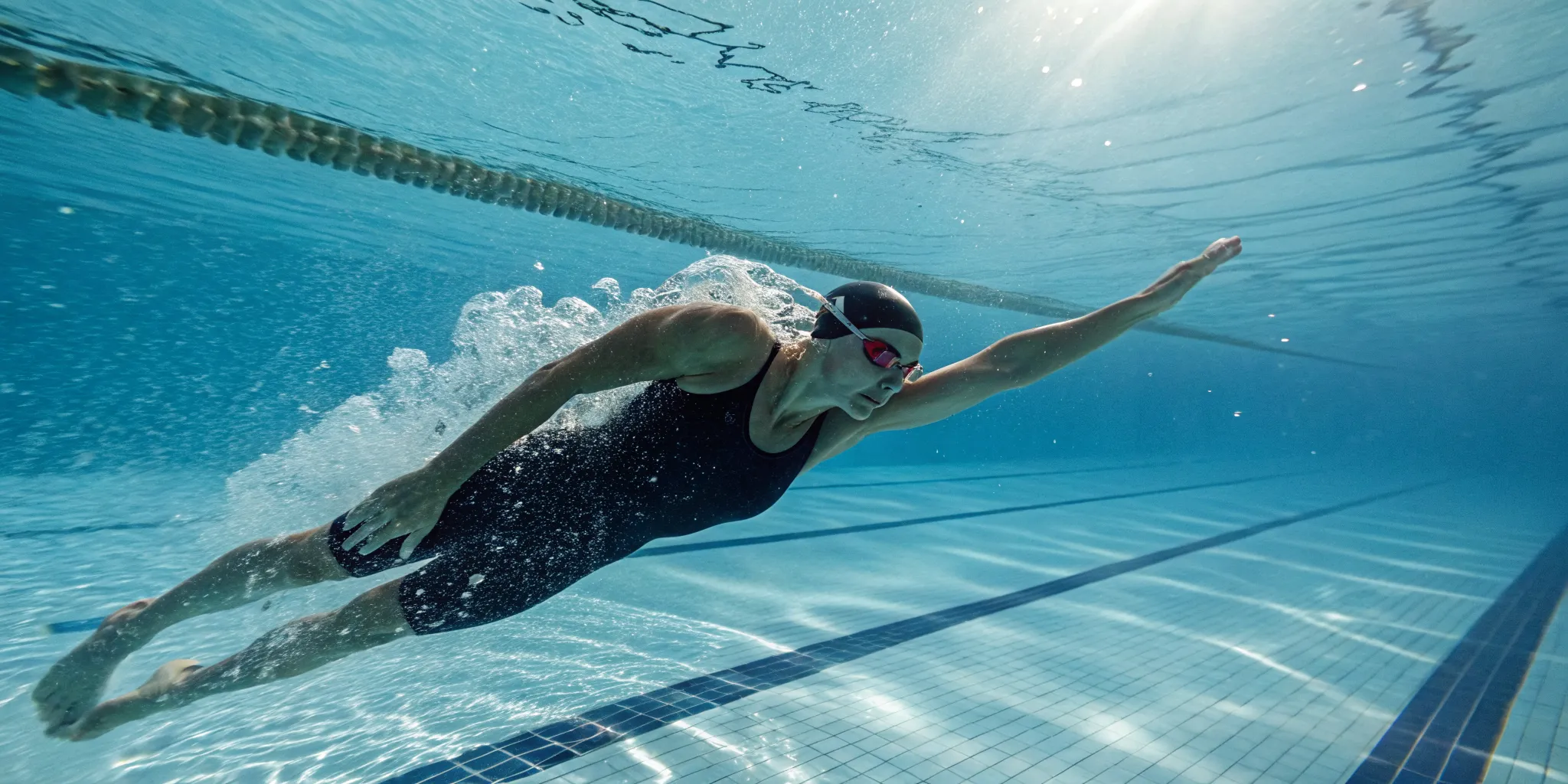
Ask a coach about wearables in the pool, and they'll talk split times and stroke efficiency. But ask a facility manager, and the conversation shifts to safety, drowning prevention, and lifeguard support. So, who's right? Both. A swimmer wearable sensor isn't just for elite athletes or just for safety—it’s a game-changer for everyone. This technology provides critical performance data while also creating a powerful safety net in the water. We'll explore how these devices help refine athletic technique and, more importantly, how they provide an essential layer of protection for every person at your facility.
Key Takeaways
- Beyond Performance Tracking: Modern wearables have evolved into critical safety tools for aquatic facilities, offering real-time monitoring and distress alerts that provide an extra layer of protection for every swimmer.
- A Tool to Support Your Staff: This technology is designed to assist, not replace, your expert team. It provides coaches with objective data for smarter training and gives lifeguards a reliable second set of eyes, helping improve response times and overall safety.
- Implement with a Clear Plan: To successfully integrate wearables, you must have a strategy. This includes educating your staff and swimmers on the technology, using the data to set specific goals, and consistently reviewing the information to make informed decisions.
What Is a Swimmer Wearable Sensor?
You’ve probably seen fitness trackers on people’s wrists at the gym, but what about technology designed specifically for the water? Swimmer wearable sensors are small, waterproof electronic devices that swimmers wear to gather data. While they were once used mainly by elite athletes looking for a competitive edge, these sensors are now becoming a vital tool for everyday aquatic facilities focused on safety and performance. They represent a significant step forward in how we protect people in the water.
Think of them as a dedicated set of eyes on every swimmer. These devices provide real-time feedback and a continuous stream of information, offering insights that are impossible to capture with the human eye alone. For coaches, this data helps refine training and technique. For aquatic managers and lifeguards, it adds a critical layer of protection by monitoring swimmers for potential signs of distress. By tracking movement and biometrics in the water, these sensors offer a clearer picture of what’s happening beneath the surface. This technology helps create a safer and more informed swimming environment for everyone, supporting your staff and giving patrons peace of mind.
Types of Wearable Sensors
Performance and Safety Trackers
This is the category where performance and safety beautifully intersect. Initially popular among elite athletes and coaches for tracking metrics like stroke count and lap splits, these trackers have evolved into powerful safety tools. For aquatic facilities, they act as a dedicated partner to your lifeguard team. Systems like our Swimmer Alert wearables provide an uninterrupted view of every swimmer, tracking their depth and time underwater. This technology gives your lifeguards an extra set of eyes, helping them see through challenges like sun glare, water surface distortion, and the general chaos of a busy facility. It’s not about replacing your skilled staff; it’s about giving them better tools to respond faster and more accurately when seconds matter most.
Continuous Glucose Monitors (CGMs) for Swimmers
Another type of wearable you may see at your facility is the Continuous Glucose Monitor, or CGM. These small sensors are essential for swimmers with diabetes, allowing them to manage their health while enjoying the water. A CGM tracks a person's glucose levels in real-time, sending data to a smartphone or reader. This information is crucial for preventing dangerous highs or lows in blood sugar that can be triggered by physical activity. Many CGMs are water-resistant, but it's important to follow specific guidelines to manage diabetes care devices while swimming. For instance, prolonged time in the water can sometimes weaken the adhesive. Knowing about CGMs helps your team understand the needs of all patrons and support a more inclusive and safe swimming experience for everyone.
How Do Swim Sensors Track Your Every Move?
At their core, swimmer wearables use a combination of small sensors, like accelerometers and gyroscopes, to track movement with incredible detail. These components measure everything from a swimmer's orientation in the water to their speed and stroke efficiency. Some advanced devices also include biometric sensors to monitor heart rate. This information is collected continuously, tracking key metrics like stroke rate, distance per stroke, and time spent underwater. WAVE’s Swimmer Alert wearables use this technology to establish a baseline for each swimmer's normal patterns, allowing the system to detect deviations that could signal distress. Research shows that most modern wearables are highly accurate for measuring swimming activity, making them a reliable tool for aquatic professionals.
Personal Wearables vs. Facility-Wide Systems
It’s important to see the difference between a standalone wearable and a comprehensive safety system. Personal wearables are devices swimmers wear to track their own status, like how long they are submerged. While helpful for individual monitoring, their impact is much greater in a professional aquatic environment when used as part of a connected network. A facility-wide system links every wearable to a central hub, giving your lifeguards a complete, real-time view of every person in the water. This transforms the technology from a personal gadget into a professional safety tool, creating a cohesive safety net that helps your staff keep swimmers safe across the entire facility.
Connecting Wearables to a Central Hub
The central hub is the heart of a facility-wide system. It acts as a command center, processing data from every swimmer's wearable in real time. If the system detects a potential issue, such as a swimmer submerged beyond a safe time limit, it sends an immediate alert to your lifeguard team. Crucially, these alerts specify the swimmer's exact location, allowing for a faster, more precise response. This technology serves as a "co-pilot" for your lifeguards, offering a reliable second set of eyes without replacing their expert judgment. WAVE’s GUARDian Hub is designed to do just this, tracking each swimmer to provide critical alerts that help your team act decisively when every second counts.
Placement Matters: Where to Wear Your Swim Sensor
Swimmer wearables are designed to be lightweight and unobtrusive, so they don’t interfere with a person's natural movement in the water. The placement of the sensor often depends on what it’s designed to track. The most common locations are on the head (attached to goggles or a swim cap), on the wrist, or on the lower back. Head-worn sensors are excellent for tracking body roll and head position, while wrist-based devices offer convenience. When these individual sensors are integrated into a system, they create a comprehensive network that gives lifeguards and facility managers a complete overview of the pool, turning individual data points into actionable safety information.
What Key Swim Metrics Can You Actually Track?
Modern swimmer wearables go far beyond simple lap counting. They offer a detailed look into a swimmer's performance and physical state, capturing data that used to be invisible to the naked eye. For coaches and facility managers, this information is a game-changer for both training and safety. While many devices focus on performance, some systems use this data to create a safer environment. For example, WAVE’s Swimmer Alert wearables use key metrics to monitor for potential signs of distress, adding a crucial layer of protection in the water. Let's look at the specific data points these powerful little devices can track.
Measure Your Stroke Rate and Distance
Think of stroke rate and distance per stroke (DPS) as the two sides of the efficiency coin. Stroke rate measures how many strokes you take per minute, while DPS tells you how far you travel with each pull. Finding the perfect balance is the key to powerful and sustainable swimming. A high stroke rate isn't always better if it means you're just spinning your wheels and not getting much distance. Wearables track both metrics, allowing swimmers and coaches to analyze their swimming technique and find that sweet spot where they can move quickly without wasting energy.
Dial In Your Speed and Pace
How fast are you really going? Wearables answer this question with precision. They track your speed (how fast you move through the water) and your pace (how long it takes to swim a set distance, like 100 meters). This gives you instant feedback during training sets, letting you know if you’re hitting your target times. Over a season, this data creates a clear picture of your progress. For coaches, it’s an invaluable tool for designing effective workouts and ensuring swimmers are training at the right intensity to peak for competitions.
Go Beyond Laps: Tracking Heart Rate and Vitals
Wearables give you a look under the hood at a swimmer's physiological response to exercise. By tracking heart rate, these devices show exactly how hard an athlete's body is working. This information is crucial for establishing training zones, which helps ensure swimmers are pushing hard enough to improve but also getting enough recovery to prevent burnout. Monitoring biometrics over time can also indicate an athlete's overall fitness level and how well they are adapting to their training load. This data provides a more complete picture of a swimmer's health and effort.
Monitoring Blood Oxygen Levels
Beyond heart rate, some of the most advanced wearables also track blood oxygen saturation (SpO2). This metric is a powerful indicator of how efficiently a swimmer's body is delivering oxygen to their muscles. While this is useful for optimizing performance, its real value in an aquatic facility is safety. A significant drop in blood oxygen can be one of the earliest signs that a swimmer is in distress, even before physical signs are visible. As one guide to wearable sensors for swimmer safety points out, these devices track biometrics like blood oxygen level and how long someone is underwater. When these measurements fall outside of a safe range, the system can automatically send an alert to lifeguards. This gives your team critical, real-time information, helping them respond faster when every second counts.
Mastering Your Underwater Time
In competitive swimming, races are often won and lost in the transitions. The time spent streamlining underwater after a start or a turn is critical, and wearables can measure it down to the fraction of a second. This metric, often called underwater time, gives swimmers and coaches concrete data on one of the most important skills in the sport. You can test different push-off techniques or dolphin kick patterns and see exactly what shaves off the most time. It turns the "feel" of a good turn into a measurable skill that you can work on and perfect.
Why Every Swimmer and Coach Needs Wearable Tech
Wearable sensors are changing the game for competitive swimming, moving training beyond the stopwatch and a coach’s keen eye. By capturing objective data, these devices provide deep insights that help swimmers get faster and coaches train smarter. They create a powerful feedback loop that refines technique, personalizes workouts, and even helps prevent injuries. For any team looking to gain a competitive edge, integrating wearable technology is a clear next step.
This data-driven approach doesn't replace great coaching; it enhances it. It gives coaches the tools to confirm what they see and uncover subtle patterns that might otherwise go unnoticed. For swimmers, it provides a clear, unbiased look at their performance, helping them understand exactly what they need to do to improve. Instead of relying on gut feelings, you can pinpoint the exact moment a swimmer’s form breaks down or identify the turn that cost them precious seconds. This level of detail allows for more targeted and efficient training sessions. It’s about working smarter, not just harder, to achieve new personal bests and build a more resilient, informed team of athletes.
Use Data to Analyze Performance and Set New Goals
One of the biggest advantages of wearable tech is its ability to provide detailed performance data. After a practice or a race, you can review precise metrics that are impossible to capture by observation alone. Instead of relying on a general feeling of a good or bad swim, you get concrete numbers on split times, stroke count, distance per stroke, and turn speed. This information allows coaches and swimmers to establish clear benchmarks. By tracking these metrics over time, you can see exactly where you’re improving and which areas still need work, making goal-setting more specific and effective.
Get Instant Feedback During Your Swim
While post-swim analysis is valuable, some of the most effective coaching happens in the moment. Certain wearables offer real-time feedback during a swim, allowing athletes to make immediate adjustments. This could be a subtle vibration to signal a drop in pace or an on-screen display showing heart rate zones. This instant feedback helps swimmers connect what they feel with what the data shows, accelerating the learning process. It’s like having a coach right there with you for every lap, helping you correct form or effort on the fly to build better habits faster.
Build Smarter, Personalized Training Plans
Every swimmer is different, and wearable data makes it easier than ever to tailor training to the individual. By understanding each athlete’s unique strengths, weaknesses, and physiological responses, coaches can move away from one-size-fits-all programs. The data might reveal that one swimmer excels in sprints but struggles with endurance, while another has powerful turns but an inefficient stroke. Armed with this insight, a coach can create better training plans that target specific areas for improvement, ensuring every swimmer gets the focused attention they need to reach their potential.
How to Prevent Injuries and Avoid Burnout
Pushing limits is part of any sport, but it comes with the risk of overtraining and injury. Wearables can act as an early warning system by monitoring training load and biometric data. A consistently elevated resting heart rate or a sudden drop in performance can signal that a swimmer is fatigued and needs more recovery. By paying attention to these trends, coaches can adjust workout intensity and prevent burnout before it leads to a setback. Furthermore, some devices are designed with safety as the primary goal, like WAVE’s Swimmer Alert wearables, which add a critical layer of protection during every practice.
How Accurate Are Swimmer Wearable Sensors?
When you’re considering any new technology for your facility, the first question is always: does it actually work? For swimmer wearables, the answer is a confident yes, but it’s important to understand what “accurate” means in different contexts. The accuracy of a wearable can depend on what it’s measuring, the quality of the device, and its intended purpose. A fitness tracker designed to count laps for a competitive swimmer has a different job than a safety device designed to detect potential distress.
Most modern wearables are quite good at tracking basic metrics like lap count and stroke rate. However, their precision can vary from one brand to another and even from one swimmer to the next. For aquatic professionals, the key is to distinguish between performance-tracking accuracy and safety-monitoring reliability. While a slight error in a lap count is a minor inconvenience, a missed safety alert is not. That’s why specialized systems are engineered for a single, critical purpose. Understanding how it works is the first step to trusting the technology that keeps your swimmers safe.
What Does the Research Say About Accuracy?
If you’re looking for data to back up the claims, the good news is that research is generally positive. A comprehensive review of studies on swimming wearables found that the vast majority, around 82%, concluded that the devices tested were accurate for measuring swimming. This means for core metrics like counting strokes, measuring distance, and tracking time, most devices perform reliably. This broad validation from the scientific community shows that wearable sensor technology is not just a trend; it’s a legitimate tool for gathering useful data in the water. It gives coaches and facility managers a solid foundation of data to work with.
Custom-Made vs. Commercial Devices
It’s also helpful to know where this accuracy data comes from. When you see impressive stats, they often come from studies on custom-made devices. One systematic review found that the vast majority of studies—over 83%—looked at sensors built by researchers for a specific experiment, not the fitness trackers you can buy in a store. This is a critical distinction. A device engineered in a lab for a controlled study is very different from a mass-market product designed for everyday use. While commercial wearables are improving, purpose-built systems designed for a single, critical function, like WAVE’s drowning detection technology, are in a class of their own because they are engineered for maximum reliability in a specific environment.
Common Error Rates in Lap and Stroke Counting
So, how accurate are the commercial devices you’re familiar with? For basic metrics, they’re pretty good. Research shows that popular wearables from brands like Apple and Garmin are typically accurate within a 10-20% error margin for counting laps and strokes. For a recreational or competitive swimmer tracking their workout, that level of precision is usually more than enough to gauge performance and progress. However, that same research notes these devices are less reliable for estimating things like energy expenditure. This highlights an important point: while a 10% error is acceptable for a lap count, it’s not acceptable when a swimmer’s safety is on the line. A dedicated safety system needs a much higher standard of accuracy.
What Factors Impact Your Sensor's Accuracy?
Not all wearables are created equal, and several factors can influence their accuracy. It’s interesting to note that much of the formal research has been conducted using custom-made devices built by scientists, not the commercial ones you can buy online. While store-bought wearables are catching up, their accuracy can be more mixed. Furthermore, most current wearables are great at tracking movement, but they don't typically measure things like propulsion, which is the force a swimmer uses to move forward. This is a highly complex metric that requires more advanced sensors, so it’s a good reminder to match your expectations to the device’s capabilities.
Tips for Improving Data Collection
Getting reliable data from swimmer wearables isn't just about putting on the device and jumping in the pool; it requires a clear strategy. First, it's essential to educate your staff and swimmers on what the technology can—and can't—do. For instance, while most devices excel at tracking movement, they may not measure complex metrics like propulsion, which is the force a swimmer uses to move forward. Understanding these capabilities helps set realistic expectations. Proper placement is also crucial, as where a sensor is worn directly impacts the data. Head-worn sensors are ideal for analyzing body roll, while wrist-based devices offer convenience. Finally, make data review a consistent habit. The real value comes from tracking metrics over time to spot trends, set specific goals, and make informed decisions that improve both performance and safety.
Accuracy vs. Consistency: Why Both Are Crucial
When evaluating data, it’s helpful to think about two different concepts: accuracy and consistency. Accuracy is how close a measurement is to the real value. Consistency is how repeatable that measurement is over time. For example, some studies show that commercial watches are good at counting laps but less accurate at estimating energy use. For a coach tracking progress, a consistent device that is always off by 5% can still clearly show if a swimmer is improving. For safety, however, you need unwavering accuracy. There is no room for error when detecting a swimmer in distress, which is why dedicated Swimmer Alert wearables are built for precision and reliability above all else.
Swim Tech vs. The Coach's Eye: Which Is Better?
The conversation around swimmer wearables often brings up a common question: can this technology replace a coach? The short answer is no. Instead of viewing it as a competition, it’s more helpful to see wearables as powerful tools that can support and enhance traditional coaching methods. A coach’s eye, experience, and ability to connect with a swimmer are irreplaceable. Technology simply provides another layer of objective data to inform their expertise, turning good coaches into great ones.
When you combine the quantitative insights from a wearable with the qualitative feedback of a great coach, you create a more complete picture of a swimmer's performance. This partnership allows for a more detailed and personalized approach to training. Coaches can confirm what their eyes are telling them with hard numbers, and swimmers get immediate, data-driven feedback that helps them connect a feeling in the water with a specific outcome. It bridges the gap between perception and reality. The goal isn't to choose one over the other, but to understand how they can work together to help every swimmer improve their technique, speed, and overall confidence in the water.
When Does Swim Tech Outperform a Coach?
Wearable sensors shine when it comes to collecting objective, consistent data. While a coach has a great eye for form, a wearable can precisely measure metrics that are nearly impossible to track manually. Think of things like distance per stroke, underwater time, and second-by-second changes in heart rate. This technology provides real-time feedback during a swim, allowing athletes to make immediate adjustments. After a session, both the swimmer and coach can review detailed performance data to see exactly what happened during a specific lap or set. This removes the guesswork and provides a solid foundation for tracking progress over time.
Why You Still Need a Coach's Expertise
For all the data a wearable can provide, it can’t replace the human element of coaching. A coach can interpret data within the larger context of a swimmer’s goals, fatigue level, and even their mood on a given day. They see the nuances that a sensor can't, like a subtle hesitation before a turn or a change in body language that signals exhaustion. This is especially true for less experienced athletes, where traditional coaching methods are essential for building fundamental skills and confidence. A coach provides motivation, strategy, and a personalized connection that technology alone cannot replicate.
Combine Tech and Coaching for Maximum Improvement
The most effective training programs combine the strengths of both worlds. Coaches can use wearable data to create smarter, more individualized training plans that address specific weaknesses revealed by the numbers. For example, if data shows a swimmer’s pace drops significantly on their last lap, a coach can design sets focused on building endurance. This approach turns technology into a collaborative tool. By integrating data from performance wearables and safety systems like our Swimmer Alert wearables, aquatic facilities can create an environment that supports both peak performance and unparalleled safety.
Common Hurdles with Swim Wearables (and How to Fix Them)
Wearable technology offers incredible insights, but it’s not a magic bullet. Like any tool, it comes with its own set of challenges and limitations. Understanding these hurdles upfront helps you choose the right technology for your team and set realistic expectations. From navigating competition rules to dealing with setup complexities and data accuracy, being aware of the potential pitfalls is the first step toward successfully integrating wearables into your program. Let's look at some of the most common issues you might encounter.
Are Swim Wearables Legal for Competitions?
If you manage a competitive swim team, this one's for you. While organizations like World Aquatics now permit wearables during races, there are strict limitations. The rules state that a swimmer cannot receive any signals, sounds, or feedback from the device during the competition. This means the tech can’t provide real-time pacing cues or alerts in the middle of a race. Instead, its value comes from the data collected for post-race analysis. Coaches and swimmers can review metrics after the event to identify areas for improvement, but the device itself can't offer an in-race advantage. It’s a tool for training and reflection, not for live guidance during a meet.
Overcoming Setup and Usability Issues
The last thing a swimmer wants to do before a tough practice is struggle with a complicated piece of tech. The same goes for coaches who need to manage data for an entire team. Some wearables come with a steep learning curve, requiring complex setup or clunky software. This can create a barrier to adoption and add unnecessary stress. When you're evaluating different systems, prioritize ease of use. A system should be intuitive for both swimmers and staff. The best technology feels seamless, providing immediate and clear feedback without getting in the way of the actual training. Thinking about how to get started with a new system is a crucial part of the decision-making process.
Why We Need Better Standards for Swim Tech Testing
How do you know if the data you're seeing is accurate? This is a major question in the world of wearables. Research shows that the accuracy of many commercially available devices can be mixed, and they often lack rigorous, independent validation. A device might be consistent in its measurements, which is helpful, but if those measurements aren't accurate, you could be making training decisions based on flawed information. Before investing in a system, ask about its testing protocols. Look for companies that are transparent about their validation process and can back up their claims with data. For a deeper look, some systematic reviews have examined the accuracy of wearables in swimming.
How to Add a Swimmer Wearable Sensor to Your Training
Simply handing out wearables isn't a magic bullet for better performance. The real value comes from how you use the data they collect. Integrating these devices into your training program requires a thoughtful strategy that involves your entire team. By creating a clear plan for how you'll review, interpret, and act on the information, you can turn raw numbers into real, measurable improvements in the pool. Here’s how to get started.
Make Data Review a Team Habit
Data is most powerful when it’s part of a conversation. Make it a habit to sit down with your swimmers and review their metrics together. Looking at detailed performance data after a practice or meet helps connect the numbers to their experience in the water. Ask questions like, "Your stroke rate dropped here, how were you feeling during that lap?" This collaborative approach helps swimmers understand their own performance on a deeper level and take ownership of their progress. It transforms data from a simple report card into a practical tool for improvement, building trust and communication between you and your athletes.
Get Your Swimmers On Board with New Tech
Before you can rely on the data, your whole team needs to understand where it comes from and what it means. Take the time to educate your swimmers and coaching staff on the technology. Explain what each metric tracks, how the devices work, and any potential limitations. A quick kickoff session can get everyone on the same page and answer initial questions. When your team trusts the technology, they’re more likely to buy into the training adjustments you suggest based on the data. This shared understanding ensures that everyone is working with the same information, creating a more cohesive and effective training environment for all.
Turn Your Data Into Actionable, Measurable Goals
Wearable data allows you to move beyond vague goals like "swim faster" and set specific, measurable targets. Use the metrics to create concrete objectives for your swimmers. For example, instead of just working on endurance, you can aim to maintain a specific heart rate for a longer interval. Or, you could focus on increasing underwater time by half a second off each wall. These data-driven goals give swimmers clear benchmarks to strive for in every practice. They can see exactly what they need to work on and adjust their swimming technique based on objective feedback, which is a powerful motivator and a clear path to improvement.
Beyond Performance: How Wearables Improve Swimmer Safety
While performance metrics are valuable, the most significant impact of wearable technology in aquatic environments is the enhancement of swimmer safety. These devices act as a crucial safety net, providing constant monitoring that supports lifeguards and helps prevent incidents before they happen. By tracking key indicators of distress and location, wearables offer an unprecedented layer of protection for every person in the water. This technology empowers aquatic facilities to create a safer, more secure environment, giving staff, swimmers, and their families greater peace of mind.
It represents a fundamental shift from a purely reactive safety model to a proactive one, where technology works in tandem with your highly trained team to anticipate and address risks. For facility managers, this means not only meeting safety standards but exceeding them, building a reputation for excellence and care that attracts more visitors. It's about investing in a system that protects your most valuable asset: the people who trust you with their safety. This added layer of security can also help reduce liability and operational stress, allowing your team to focus on creating positive guest experiences. Ultimately, it's about building a culture of safety that is visible, effective, and reassuring to everyone who walks through your doors.
Using Wearables for Drowning Detection and Alerts
Modern wearable technology is engineered to be more than a fitness tracker; it’s a life-saving tool. Advanced sensors can monitor a swimmer's movements and identify patterns that may signal distress. When these irregularities are detected, the system sends instant alerts to lifeguards. Research in the Journal of Sports Sciences confirms that wearable devices can significantly cut down response times, which is critical when every second counts. Systems with dedicated Swimmer Alert wearables are designed specifically for this purpose, giving your team an extra set of eyes on every person in the water and adding a powerful safety measure to your facility’s protocols.
Tracking Swimmer Location and Water Conditions
In a busy aquatic facility, knowing a swimmer's exact location is vital for a quick response. Wearable sensors with integrated tracking technology can relay a swimmer’s precise position to a central hub in real-time. This is especially helpful in large or crowded pools where visibility can be a challenge. As noted by the International Journal of Aquatic Research and Education, this precise tracking is essential for safety in large venues. Some advanced systems can even monitor environmental factors, providing another layer of proactive safety. This data helps staff identify potential hazards before they become a problem, keeping everyone safer.
A New Tool to Support Lifeguards and Staff
This technology is designed to support lifeguards, not replace them. By automating constant monitoring, wearables free up your staff to focus on active supervision and preventative lifeguarding. A study in the Journal of Safety Research highlights that integrating wearable sensors can improve situational awareness and help staff make better decisions. With tools like Lifeguard Alert equipment, your team receives clear, immediate notifications that direct them to a swimmer in need. This allows them to act with more confidence and efficiency, creating a safer environment for everyone. It’s about giving your highly trained staff the best tools to do their job effectively.
Implementing a Wearable Safety System at Your Facility
Adopting a wearable safety system is a game-changer for any aquatic facility, but it’s about more than just unboxing new tech. It’s a commitment to elevating your safety standards and integrating a new layer of protection into your daily operations. A successful rollout requires a clear plan that involves your entire team, from management to lifeguards to the swimmers themselves. By thinking through the process step-by-step, you can ensure the technology is not just installed, but truly embraced. This approach transforms a simple equipment upgrade into a facility-wide culture of proactive safety, giving everyone—staff and patrons alike—confidence in the water.
Choosing the Right System for Your Needs
With several options on the market, the first step is to choose the right system for your unique environment. Consider the size of your facility, the number of swimmers you serve, and the specific challenges your lifeguards face, like sun glare or blind spots. The best technology acts as a "co-pilot" for your lifeguards, providing an extra set of eyes without getting in the way. It should support your expert staff, not attempt to replace them. Look for a system that integrates seamlessly into your existing operations and offers the flexibility to meet your specific needs, ensuring it enhances your safety protocols rather than complicating them.
Key Features: Durability, Comfort, and Custom Alerts
When you’re comparing systems, focus on the details that matter most in a busy aquatic environment. The wearables themselves must be durable enough to withstand daily use and comfortable enough that swimmers forget they’re even wearing them. Uncomfortable devices won't be worn, defeating the purpose entirely. Most importantly, look for a system that provides immediate, custom alerts that show exactly where a swimmer might be in trouble. This precision is what helps lifeguards respond faster and more accurately, turning a potential crisis into a successful intervention.
Updating Your Emergency Action Plan
Once you've selected a system, your next step is to update your facility's Emergency Action Plan (EAP). This new technology introduces a new type of alert, and your team needs to know exactly how to respond. Create clear, simple rules for what happens when a wearable sensor triggers an alarm. Who is responsible for acknowledging the alert? What is the protocol for verifying the situation and initiating a rescue? Practice these new procedures through regular drills and in-service training. A well-rehearsed plan ensures that your team can act decisively and effectively, making the most of the critical seconds that the system provides. This is a key part of how you get started on the right foot.
Educating Staff, Swimmers, and Families
The final, and perhaps most important, step is communication. Take the time to educate your staff, swimmers, and their families about the new system. For staff, emphasize that these sensors are a tool to support them, giving them an "extra set of eyes" to overcome common challenges. For swimmers and parents, explain how the devices work and why they are an important part of your commitment to their safety. This transparency helps build trust and encourages everyone to participate in your safety culture. When people understand the "why" behind the technology, they are more likely to embrace it, ensuring a smoother implementation. Having a resource with answers to frequently asked questions can be a huge help during this process.
What's Next for Swimmer Wearable Sensors?
Swimmer wearable technology is evolving at an incredible pace. Just a few years ago, tracking laps and splits was revolutionary. Now, we’re looking at a future where these devices do so much more than just count. The next generation of wearables is poised to become an indispensable partner for swimmers and coaches, offering deeper insights, measuring new aspects of performance, and integrating more smoothly into training programs. This isn't just about collecting more data; it's about collecting smarter data and making it more accessible and actionable for everyone, from the competitive athlete to the everyday swimmer. Let's look at what's on the horizon.
Smarter Insights with AI-Powered Analysis
Imagine a wearable that doesn't just tell you your stroke rate, but also uses artificial intelligence to suggest how a small tweak in your form could make you faster. That's where we're headed. Future devices will use AI to analyze your performance data, offering personalized feedback that was once only possible with a coach watching your every move. While research into wearable technology highlights the need for continued improvements in accuracy, AI can help interpret complex data sets to identify patterns and suggest concrete improvements. This will help swimmers understand not just what they did, but why it matters for their performance.
Using AI to Reduce False Alarms and Improve Distress Detection
One of the biggest hurdles for any safety alert system is the risk of false alarms. If a system constantly cries wolf over non-emergencies, lifeguards can experience alert fatigue and may become less responsive. This is where artificial intelligence makes a huge difference. Instead of just flagging any period of submersion, modern systems use AI to learn the difference between vigorous swimming—like an athlete practicing underwater drills—and the subtle patterns that signal actual distress. This smart technology learns and adapts to each swimmer's unique movements, which dramatically reduces false alarms. As a result, your team can trust the alerts they receive, allowing them to focus their attention on genuine risks and respond with confidence when every second counts.
Measuring Hydrodynamics Like Never Before
To get faster in the pool, you need to move through the water more efficiently. A key part of this is "propulsion," which is the force you generate to push yourself forward. Most current wearables don't measure this crucial metric, focusing instead on outcomes like speed and time. The next wave of technology aims to change that by incorporating sensors that can directly measure propulsive force. This will give swimmers and coaches a much clearer picture of a swimmer's efficiency. Instead of guessing, you’ll have data that shows exactly how much power you’re generating with each stroke and kick, helping you refine your technique for maximum impact.
Making Swim Tech Accessible for Every Swimmer
Wearable technology is also becoming more accepted in formal settings, which is a huge step forward. Thanks to recent rule changes from governing bodies like World Aquatics, athletes can now use approved devices during competitions. The main goal is to allow for post-race data collection, giving swimmers and coaches an unprecedented look at performance during a high-stakes event. This move helps legitimize the technology and encourages manufacturers to develop even more accurate and reliable devices. It bridges the gap between training data and actual race-day performance, providing valuable insights that can shape future strategies and goals.
Seamless Integration with Your Coaching Platform
As wearables collect more sophisticated data, the way we interact with that information has to evolve too. The future isn't just about the device on your wrist; it's about how seamlessly that device connects with your overall training ecosystem. We're moving toward smarter integrations where data from your wearable automatically syncs with coaching platforms. This allows coaches to immediately review detailed race or practice analytics, complete with visualizations and performance trends. It removes the manual work of downloading and interpreting data, allowing for more focused, data-driven conversations between coaches and athletes about what’s working and where to improve.
Related Articles
- How to Buy Swimmer Safety Wearables: A 2026 Guide
- Anti-Drowning Wearable: A 2026 Buyer's Guide
- How to Buy a Swimmer Safety Alert System in 2026
Frequently Asked Questions
What's the main difference between a performance tracker and a safety wearable? Think of it like this: a performance tracker is a tool for training, while a safety wearable is a tool for protection. While both collect data, they use it for very different purposes. A fitness watch for swimmers focuses on metrics like pace and stroke count to help an athlete get faster. A safety system, like WAVE’s Swimmer Alert wearables, analyzes data to spot patterns that could indicate a swimmer is in distress. Its primary job is to provide a crucial safety net, not to shave seconds off a lap time.
Are these systems meant to replace lifeguards? Absolutely not. This technology is designed to be a lifeguard’s best partner. It acts as an extra set of eyes that never gets tired or distracted, monitoring every swimmer simultaneously. This allows your highly trained staff to focus more on preventative lifeguarding and guest interaction, knowing they have a system ready to alert them with a swimmer's precise location if a problem arises. It supports your team, making their jobs more effective and less stressful.
How reliable are these devices for safety monitoring? This is a great question, and it’s important to distinguish between different types of wearables. While a consumer fitness tracker might have some variability in its data, a dedicated safety system is engineered for precision and reliability. For performance tracking, consistency is often good enough. For safety, however, you need unwavering accuracy. Professional-grade systems undergo rigorous testing to ensure they can be trusted to detect signs of distress and send immediate alerts when every second is critical.
Can these wearables be used in any type of aquatic environment? Yes, and that’s one of their biggest advantages. Because the technology is based on sensors worn by the swimmer, it works independently of water clarity. This makes it an effective safety solution for all kinds of aquatic facilities, including those with dark-bottom pools, busy wave pools, or other areas where a lifeguard's line of sight might be challenged. The system provides reliable monitoring no matter the conditions.
Is it complicated to get a system like this up and running at my facility? Not at all. Modern safety systems are designed to be intuitive and integrate smoothly into your existing operations. The goal is to provide a powerful safety layer without creating a new headache for your staff. Getting started typically involves a straightforward setup of the main hub and a simple process for distributing the wearables to swimmers. The best technology works quietly in the background, so your team can focus on creating a safe and enjoyable experience for your guests.
Future Hardware Innovations
The sensors and software are getting smarter, but the physical hardware is also making huge leaps forward. The future of wearables is focused on making them more convenient, reliable, and interconnected. Imagine a system that requires less daily management from your staff and works in harmony with all the other technology in your facility. These advancements are designed to remove operational friction and create a truly seamless safety network, making it easier than ever for aquatic facilities to adopt and depend on this life-saving technology. Two of the most exciting developments on the horizon are self-powered devices and deeper integration with other smart equipment.
Self-Powered Devices
One of the biggest operational hurdles for any facility using wearables is battery management. Charging dozens or even hundreds of devices at the end of each day is a significant logistical task for your staff. The next wave of hardware aims to solve this with self-powered devices that don't need to be plugged in. This innovation would be a game-changer, ensuring that every wearable is always ready for use and eliminating the risk of a swimmer receiving a device with a low battery. As the technology evolves, the goal is to create a system that is as low-maintenance as possible, freeing up your team to focus on your guests. This move toward self-sufficiency will make large-scale safety systems more practical and reliable for busy aquatic centers.
Integration with Smart Aquatic Equipment
Today’s advanced safety systems already create a connected network where wearables communicate with a central hub and alert equipment. The future lies in expanding that network to include other smart technology throughout your facility. Imagine a scenario where a distress alert from a Swimmer Alert wearable doesn't just notify a lifeguard, but also automatically triggers underwater lights in that specific zone, sends a signal to your PA system, and logs the event in your facility management software. This level of integration creates a more cohesive and automated response system. By allowing different pieces of smart aquatic equipment to communicate, you build a truly intelligent environment where every component works together to improve safety and operational efficiency, turning individual data points into a coordinated, facility-wide action plan.
