
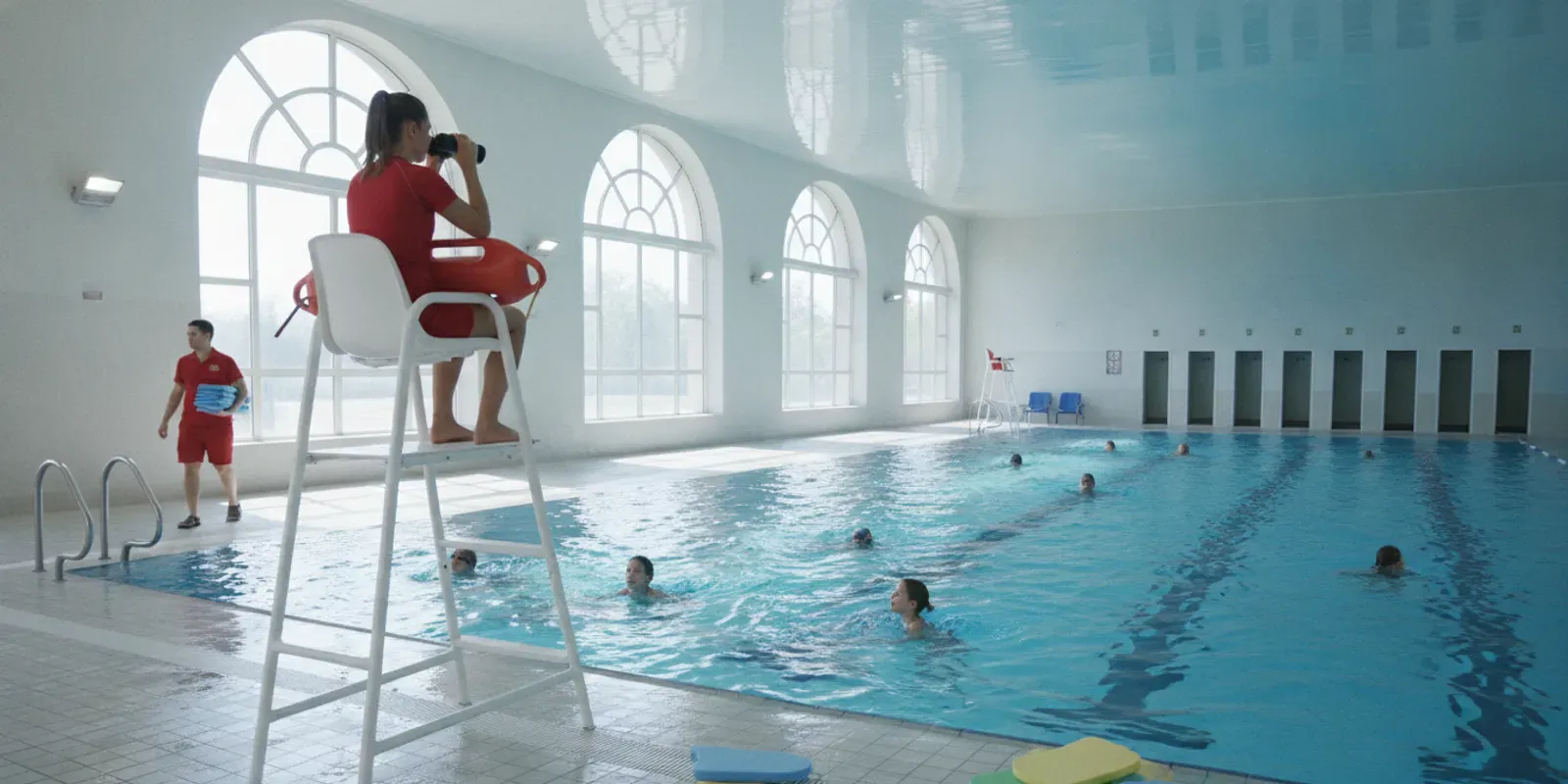
Military pool safety technology should be evaluated as one layer in a supervised aquatic safety program, not as a replacement for lifeguards or established procedures. For military aquatic facility leaders, the useful question is not simply which device has the most features. It is whether a system fits the pool, staff roles, communication routes, and response plan that apply to the facility. Begin with those operating realities, and compare technology against a clearly defined need.
Why evaluate pool safety technology in the context of the facility?
A facility-first evaluation keeps the decision grounded in real swimmers, shifts, activities, and response roles. Technology may add another source of awareness, but its value depends on how staff receive and act on an alert. Leaders should first identify the operational concern and preserve active supervision throughout any evaluation.
Military aquatic programs may serve service members, families, trainees, and other authorized participants. A single facility can host lap swimming, instruction, fitness sessions, and special events, each with different attendance patterns and staff assignments. Pool configuration, visibility, noise, and the location of staff can also affect how an alert is noticed. These conditions make it important to document the facility’s own use rather than assume that another pool’s configuration is a useful match.
Write a short problem statement before looking at products. For example: “During scheduled programs, we want a supplementary alert for a defined event that reaches assigned staff without distracting the lifeguard from scanning.” That statement is more useful than a broad request for better technology because it gives vendors, supervisors, and frontline staff a common question to test.
Be explicit about limits. A detection system cannot guarantee that every emergency will be identified or prevent every drowning. It does not take over active observation, assessment, rescue, or emergency decision-making. WAVE positions its wearable system as an additional layer that supports lifeguards. Review the GUARDian Hub overview as an example of a central monitoring approach, then confirm current functions and limitations with the provider rather than treating marketing descriptions as facility-specific validation.
For broad federal pool and spa safety information, consult the U.S. Consumer Product Safety Commission. That resource does not establish military-specific requirements. Facility leaders should identify and follow the authorities, policies, and procurement processes applicable to their own operations.
What should leaders document before comparing options?
A concise facility profile turns a general discussion into a practical comparison. Record how each aquatic program operates, who supervises it, and how urgent communication works today. Note both normal conditions and exceptions, because a system that fits a quiet lap swim may not fit a busy class or a shift handoff.
Build the profile with the people who use the pool and carry out the emergency action plan. Include supervisors, lifeguards, maintenance or operations personnel, and the staff responsible for communications or purchasing as appropriate. Their questions will differ, and a decision that ignores any of those perspectives may overlook an important task or approval.
- Pool and program: record the number and arrangement of water areas, normal activities, session schedules, user groups, and known changes in traffic or visibility.
- Supervision: map guard positions, coverage assignments, relief practices, shift changes, and who coordinates a response while remaining swimmers stay supervised.
- Communications: identify the channels staff use, where alerts can be perceived, who carries or wears assigned devices, and what backup method exists if a channel fails.
- Emergency procedures: review the facility’s current plan, role assignments, drills, escalation route, documentation, and post-event equipment restoration.
- Technology operations: note storage, readiness checks, charging or battery management if applicable, device assignment, maintenance responsibility, and fault reporting.
- Approvals and constraints: identify site access, information-security or privacy review, installation considerations, procurement steps, training windows, and budget-cycle timing.
Separate must-have needs from preferences. A must-have could be that an assigned staff member can recognize an urgent alert while carrying out their role. A preference might be a particular display or report format. Labeling the distinction helps the team compare options on operational fit, rather than allowing an attractive feature to obscure a weak response workflow.
It can help to draw a one-page map of the current workflow. Show where an incident is recognized, how the response is activated, which staff member takes each action, and who maintains coverage. A simple map exposes unanswered questions early: Is there a clear recipient? Does the alert depend on one person? How does the supervisor know the response has begun? The facility can refer to its own emergency action plan and the WAVE frequently asked questions when preparing questions for a provider.
How do detection, notification, and response connect?
An alert is useful only when it reaches a person who understands it and can act under the facility’s procedures. Trace the entire chain, from the event a system is designed to detect through response, restoration, and review. At every point, account for the swimmers and staff who are not directly involved in the response.
During a product discussion, distinguish detection from response. A wearable sensor may be designed to detect a defined event such as prolonged submersion, while lifeguard equipment may signal water entry. A system may then notify designated staff through wearable alerts or facility alerts. Those functions describe potential support; they do not decide whether an emergency exists or replace the trained staff who assess it.
- Define the event: ask what condition is intended to generate a signal, what conditions are outside the system’s scope, and what the provider means by an alert.
- Identify recipients: specify who receives the signal on each shift, what device or notification they use, and whether a second person is informed.
- Test recognition: ask what the alert looks, sounds, or feels like in the actual environment. Determine whether a recipient can tell an urgent signal from a status or fault notification.
- Connect to roles: document who initiates the relevant response steps, who maintains observation of other swimmers, and who coordinates staff communication.
- Plan for exceptions: decide under facility policy what staff do if a recipient is unavailable, a device is not ready, or the alert channel is interrupted.
- Restore and record: define who checks the system after an event or fault, returns equipment to service, and records any follow-up required.
Use the same scenario in a demonstration and in staff practice. For example, ask the provider to walk through an alert during a busy instructional session. Who receives it? What do they understand it to mean? Who responds, and how is coverage maintained? What would staff do if the first recipient did not acknowledge it? WAVE’s lifeguard alert equipment information can help frame questions about staff alerts, but the facility must verify current product scope and establish its own response process.
Include false or unclear alerts in the discussion without assuming how often they occur. Ask the provider how alerts are categorized, how staff distinguish a system fault from a possible swimmer event, and what information is available to support assessment. The goal is not to minimize alerts or promise perfect detection. It is to make sure staff know what they are receiving and what their procedures require next.
Which technology characteristics matter during daily use?
Feature lists are less useful than a repeatable operating routine. Compare how a system detects and communicates an event, what the water and physical setting require, and how staff keep equipment ready. Ask for limitations and support details alongside any claimed advantage, then test the proposed routine with the people expected to use it.
Different approaches place different demands on a facility. Camera-based approaches rely on visual information and may require permanent site installation. Wearable approaches rely on the assignment, use, and readiness of devices. WAVE describes its approach as wireless and wearable, including AquaSense swimmer wearables and lifeguard alert equipment. The company says the system works in clear and dark or murky water; leaders should ask how the current offering applies to their water conditions and operating setup.
Do not treat a technology label as proof of fit. Ask the provider to explain operating scope in plain language and show what staff will actually see, hear, or feel. If a feature is not demonstrated, record it as unverified rather than assuming that it will be available in the facility’s selected configuration.
| Comparison area | Questions for the facility | What to confirm |
|---|---|---|
| Detection scope | What event is the system intended to identify? | Operating conditions, limitations, and excluded scenarios. |
| Notification | Who is alerted, through what device, and how? | Recipients by shift, recognition, acknowledgment, and backup routing. |
| Staff workflow | What happens after an alert is received? | Response assignments, continued swimmer coverage, escalation, and reset. |
| Deployment | What site preparation, access, or approvals are needed? | Schedule, installation needs, operational disruption, and responsible owner. |
| Device management | How are devices issued, checked, stored, and returned? | A documented routine that works at opening, handoff, and close. |
| Support and cost | What ongoing service, terms, and staff effort apply? | Written scope, support process, recurring costs, warranty, and renewal terms. |
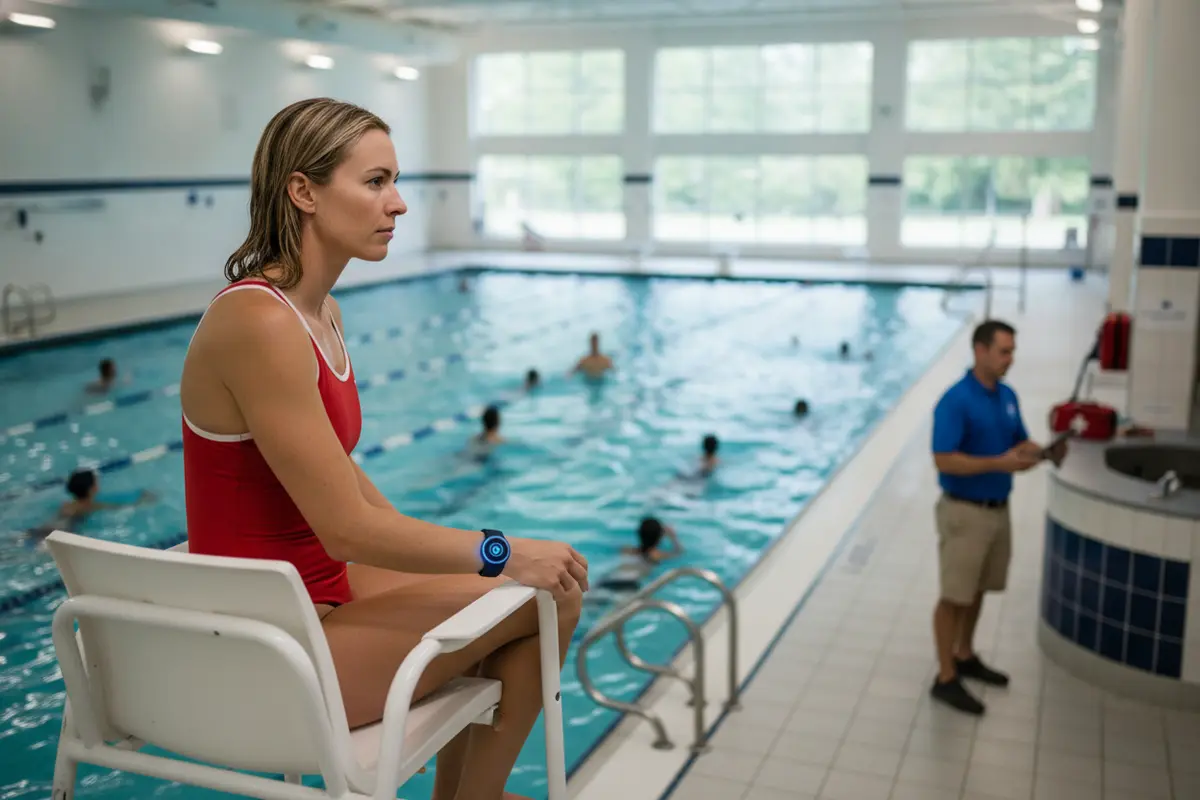
For wearable equipment, agree how staff will track assignment without introducing a confusing extra task. A basic routine might list the person responsible for issuing devices, where equipment is kept, when readiness is checked, how a missing or faulty unit is reported, and how the next shift is told about an unresolved issue. WAVE describes its AquaSense wristband as non-tethered with a multi-year battery and no daily recharging; confirm current specifications, care instructions, and suitability directly before relying on those details. See the swimmer equipment overview and commercial pool safety product range for provider information.
How can a facility compare alternatives fairly?
A fair comparison uses the same use case, staffing assumptions, and questions for every option. Separate what was demonstrated from what was described or left unanswered. A structured comparison helps leaders understand tradeoffs without mistaking a polished demonstration for proof that a system will work in every real operating condition.
Before meeting providers, write two or three realistic scenarios based on the facility profile. One could represent a normal swim period. Another could involve a crowded class or a change between programs. A third might test an unavailable alert recipient or a reported device fault. Keep scenarios within the facility’s procedures and do not conduct an unsafe live test with swimmers.
For each scenario, ask each provider to describe the signal, recipient, and next steps. If a demonstration is available, observe whether staff can recognize the alert and explain their assigned action. Ask what equipment, site conditions, communications, and personnel the demonstration assumes. A useful record might include:
- What was shown directly, and what was explained but not shown?
- Which device or staff role was required at each step?
- How did the proposed process maintain observation of the rest of the pool?
- What happened when the team introduced a handoff, unavailable recipient, or fault?
- Which questions remain open, and who will obtain a written answer?
Compare total operating effort as well as product capabilities. Staff time for orientation, readiness checks, assignments, handoffs, maintenance, and follow-up is part of the practical decision. For budget review, compare the complete written terms and selected configuration, not a headline monthly figure or an assumed package. WAVE’s pricing information is a starting point for a provider discussion; verify current pricing, terms, and included equipment directly, since prices and offerings can change.
Record limits as carefully as strengths. If one option needs permanent installation, document the site and scheduling implications. If another relies on devices being assigned and ready, document how the facility will maintain that routine. Compare the consequences for staff and operations rather than claiming that one general category is universally best. The drowning detection system demonstration checklist and commercial pool safety system guide offer additional prompts for a structured discussion.
How should leaders prepare staff and introduce a new workflow?
Adoption is a staff and procedure change, not just a device handoff. Assign owners, train every relevant shift, and rehearse both routine and exception scenarios before treating the process as established. A staged introduction gives staff an opportunity to identify confusing signals and unclear responsibilities while the team can still adjust the plan.
Start by naming the person responsible for coordinating the work. That owner can track provider questions, staff feedback, equipment readiness, and follow-up items. The owner does not replace the supervisor or the roles set by facility policy; the purpose is to make sure implementation tasks do not disappear between shifts.
- Confirm the use case: share the problem statement, system scope, known limitations, and decisions still awaiting confirmation.
- Update local instructions: describe alert meanings, notification routes, response roles, coverage responsibilities, fault reporting, and restoration steps within the facility’s procedures.
- Train by role and shift: provide hands-on practice for lifeguards, supervisors, and any other staff assigned to receive or route alerts.
- Practice a normal scenario: rehearse recognition, communication, response, and equipment reset in a controlled exercise.
- Practice an exception: walk through an unavailable device, unclear notification, or recipient who cannot respond, following facility policy.
- Check handoff: make sure incoming staff know equipment status, open faults, assigned responsibilities, and who owns follow-up.
- Capture feedback: collect specific observations, assign actions, and clarify steps that staff found ambiguous.
Use scenarios to check understanding, not just attendance. Ask a staff member to explain what a signal means and what action comes first. Ask another to describe how swimmers who are not part of the response remain under supervision. If staff disagree about the sequence, treat that as a procedure question to resolve before the workflow is relied upon.
Keep training materials short enough to use at shift change. A one-page quick reference can identify the alert, the assigned recipient, the relevant response procedure, a backup contact, and the reporting route for faults. It should not introduce instructions that conflict with the facility’s emergency action plan. WAVE’s How It Works information and support information can help organize product questions; local procedures and training remain the facility’s responsibility. Leaders may also compare their preparation with this aquatic emergency action plan review guide.
What should leaders ask a provider before deciding?
Direct questions help separate current capabilities from assumptions and future possibilities. Ask for written answers on scope, limitations, staff tasks, support, data practices, and commercial terms. Then review those answers with the people responsible for supervision, operations, information review, and purchasing before selecting or scheduling a system.
Keep the questions tied to the documented use case. A provider conversation can cover technology, but the facility should also assess whether the proposed workflow is understandable and sustainable. Ask the provider to use plain language and describe what the team should expect during an ordinary session, an alert, and a fault.
- What event is the system intended to detect, and under what operating conditions?
- What limitations should staff understand, and what circumstances can affect its operation?
- How are alerts delivered, acknowledged, and escalated if the recipient is unavailable?
- What must staff do before, during, and after each session to keep equipment ready?
- What site access, network, electrical, physical installation, or privacy review may be needed?
- What training and onboarding are included, and what recurring tasks belong to facility staff?
- How are faults reported, prioritized, and communicated to the facility? What is the backup process?
- What equipment, service, warranty, subscription, renewal, and cancellation terms are included in writing?
- What data is collected, who can access it, how is it handled, and which facility reviews are needed?
Request written details for the exact system configuration under consideration. Confirm what is available now, what is included in the quoted terms, and what depends on a separate service or future change. Avoid relying on informal verbal descriptions for a procurement record. The team can use WAVE’s GUARDian system information as a reference, then confirm current specifications and terms with the company.
Facilities with formal purchasing review can organize the decision around requirements, evidence, and open issues. One useful summary lists each must-have, the source of confirmation, any remaining question, and the role responsible for resolution. This makes it easier for decision-makers to see where an option fits and where a decision still depends on additional review.
How can a facility review the system after rollout?
Review should continue after staff begin using a system. Check whether people understand the alerts, follow the agreed routine, and report faults consistently. Use feedback and drills to improve the workflow, and revisit assumptions whenever programs, staffing, the pool environment, or communication methods change.
Choose practical review questions before rollout so the team knows what it will observe. Can staff explain the meaning of each alert? Do they know who responds and who maintains coverage? Are devices checked and handed off consistently? Are faults reported to the right person? These questions test whether the operating process is clear without suggesting that a particular result proves complete protection.
Use a simple issue log for equipment concerns, confusing signals, missed handoffs, and procedure questions. Record the date, shift or program context, what staff observed, who owns the follow-up, and when the issue will be revisited. Keep personal or sensitive details in the records and systems approved by the facility. The purpose is to make recurring operational gaps visible and track their resolution.
Review the workflow after drills and at suitable facility planning intervals. Bring in people from different shifts, since a process may feel clear to one team and awkward to another. Revisit the setup when pool activities, staff roles, layouts, communication methods, or provider configurations change. The municipal pool safety system planning guide and pool safety continuity planning guide can help frame broader operational review questions.
Leaders should treat any recurring uncertainty as a reason to clarify responsibilities or ask the provider a specific question. If a device is unavailable, staff should follow the facility’s own direction for operating under that condition; do not improvise a replacement procedure on the spot. A clear owner, documented process, and timely review make it easier to keep technology in its proper role as a supplementary tool.
Frequently Asked Questions
These answers summarize the central decision points: define a real facility need, understand system limits, and connect any alert to trained staff and local procedures. Military aquatic facilities should apply the policies and authorities that govern their own operation. Technology can support awareness, but people remain responsible for supervision and response.
Does pool safety technology replace lifeguards?
No. It can provide an additional layer of awareness, but it does not replace lifeguards, active supervision, staff training, or the facility’s emergency procedures. Maintain staffing and responsibilities according to applicable policy and the facility’s operating plan.
Does this guide set military-wide requirements?
No. This is a facility evaluation guide, not a statement of military procurement, safety, or operating requirements. Each facility should identify and follow the authorities and policies that apply to its own operations.
What should a product demonstration include?
Use a realistic, controlled scenario to examine the intended detection event, alert delivery, staff understanding, response roles, continued swimmer coverage, readiness checks, and reset. Ask the provider to identify limitations and assumptions, and record features that were described but not demonstrated.
How should leaders compare a camera-based approach with a wearable approach?
Compare each option against the facility’s conditions and workflow. Ask about site setup, water conditions, staff tasks, equipment readiness, notification, limitations, and ongoing support. Do not assume that a general technology category will fit every pool or operating situation.
What should be included in a staff handoff?
Staff should know who has each assigned role, whether equipment is available, whether a fault or unresolved issue exists, and who owns the next action. Use the facility’s established handoff and communication procedures.
What should leaders compare beyond the initial price?
Review the full written terms, selected equipment, recurring charges, training, deployment needs, staff time, readiness routines, support, warranty, renewal conditions, and data practices. Confirm current details directly with the provider before making a decision.
How often should teams practice the alert workflow?
Follow facility policy and its training schedule. Practice when roles, equipment, procedures, or communication methods change, and use drills or staff feedback to identify unclear steps.
Military aquatic facility leaders can make a sound technology decision by matching a defined need to real operating conditions, asking precise questions, and keeping trained staff at the center of every response. A clear plan supports better-informed operations without overstating what any device can do.
